
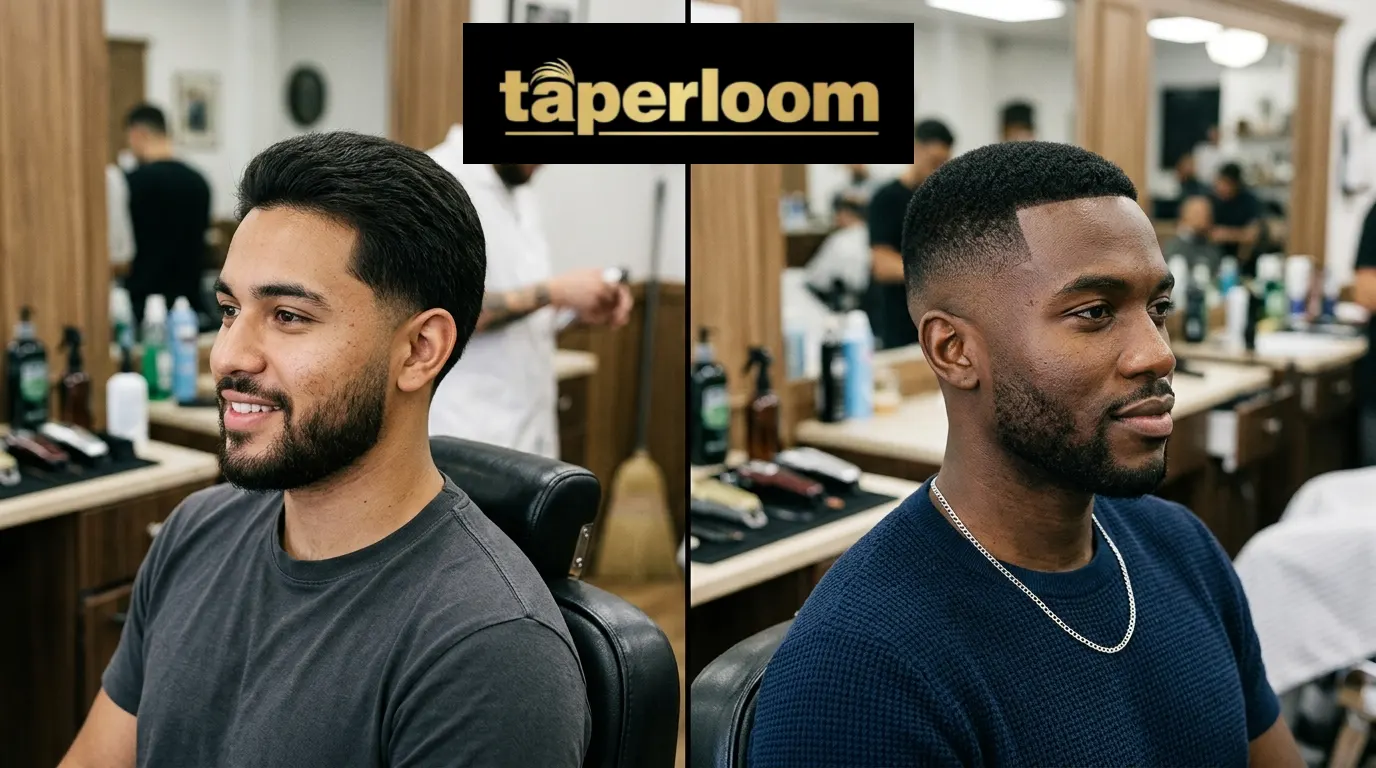
Both haircuts start low, right around your ears. That’s exactly why people mix them up.
Here’s the short answer: a low taper blends gradually and keeps hair on the sides. A low fade cuts down to skin for sharp contrast. Same starting point, completely different finish.
Barbers describe the split in one word: contrast. Everything else follows from that.
Quick Answer
- Both start at or below the ear line
- Taper blends gradually and keeps hair on the sides. Fade drops to skin for sharper contrast
- Taper holds for 4–5 weeks. Fade needs a trim every 10–14 days
- A fade usually costs a few dollars more per visit because the skin line takes extra time to cut clean
What Is a Low Taper?
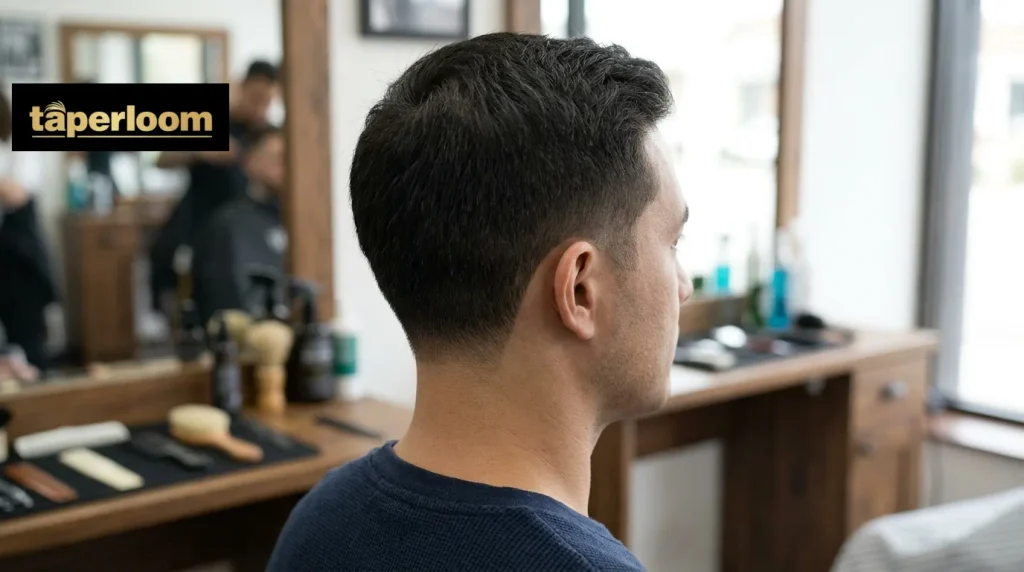
A low taper is a haircut where the hair on the sides gets shorter in a smooth, gradual line, starting just above the ears and neckline. There’s no hard edge and no bare skin. The hair simply fades from longer to shorter as it moves down.
That gradual blend is exactly what separates it in the low taper vs low fade comparison. Nothing about it is sharp or sudden. It just tapers off.
Most barbers use scissors or clippers with a longer guard for this, keeping the sides full enough that the cut still looks natural once it grows out. You won’t see a visible line where the hair changes length. It just gets shorter, gently, until it meets the neckline.
“A taper is forgiving,” one barber put it. “You can go three or four weeks without it looking messy.”
That’s the appeal. It reads as neat without looking like you just left the barber’s chair. Works for the office, works for a wedding, works if you just don’t want to think about your hair every morning.
What Is a Low Fade?
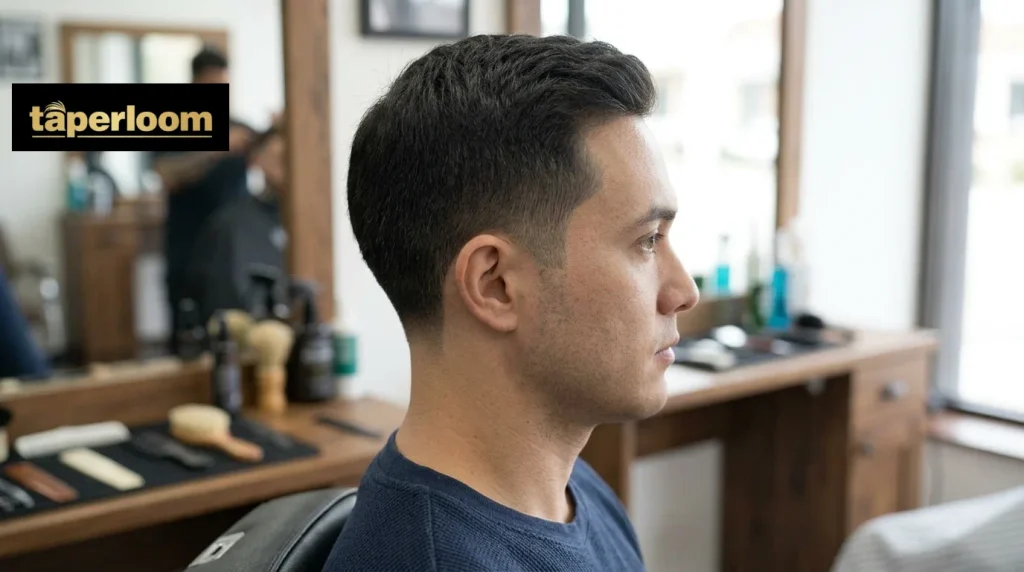
A low fade also starts near the ears and neckline, but it doesn’t stop at a soft blend. The hair drops from longer on top to very short, often right down to skin, in a tight zone close to the bottom of the head.
That visible drop is the whole point. In the low taper vs low fade split, this is the side that goes for contrast instead of blending in.
Barbers usually work this with a short guard, sometimes a #1 or a #0.5, taken straight into the skin near the ears. The line between long and short is sharp on purpose. It’s meant to be noticed.
The payoff is a clean, sharp finish that a taper can’t quite match. It pairs well with a textured top, curls, or anything with volume, since the tight sides make the top stand out more.
The catch is upkeep. That sharp line softens fast as new hair grows in, usually within a week or two. If you’re fine with regular barber visits, a low fade gives you the crispest result around.
Low Taper vs Low Fade: Side by Side Comparison
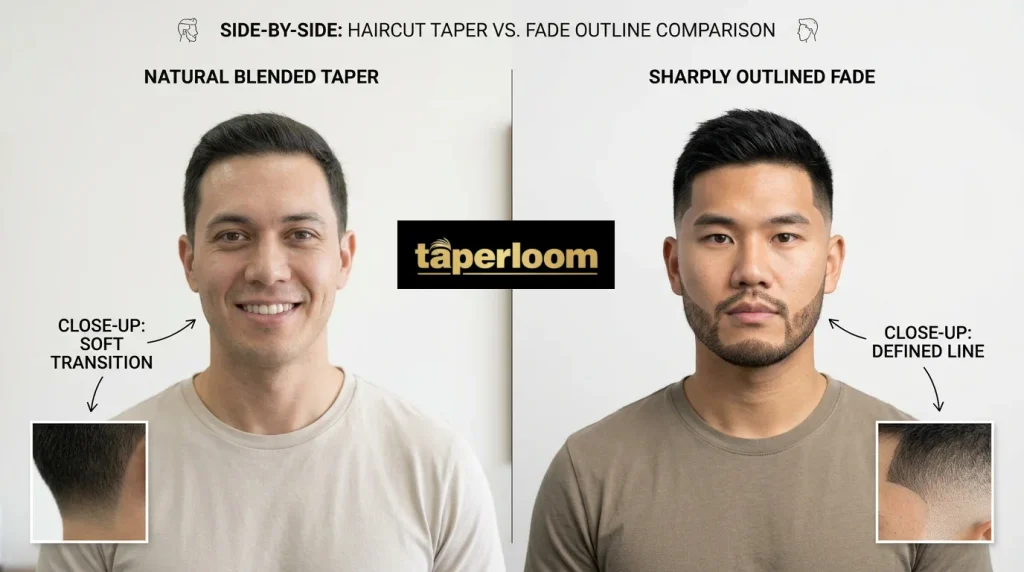
Here’s how a low taper and a low fade compare on the things that actually matter once you’re in the chair.
| Feature | Low Taper | Low Fade |
|---|---|---|
| Starting point | Low, near ears and neckline | Low, near ears and neckline |
| Contrast level | Subtle and gradual | Sharp and high |
| Skin exposure | Little to none | Down to skin |
| Barber time (avg) | 15 to 20 minutes | 25 to 35 minutes |
| Cost difference | Baseline | Often $2 to $5 more |
| Touch up frequency | Every 3 to 5 weeks | Every 10 to 14 days |
| Best clipper guard | #2 to #4, blended | #0.5 to #1, into skin |
| Best for face shape | Long, oblong, square | Round, heart shaped |
| Best for hair type | Fine, thin, straight | Curly, coily, thick |
| Grow out appearance | Stays neat and natural | Shows a visible regrowth line |
That table is really the whole low taper vs low fade decision in one place.
If you’re comparing the perbedaan low fade dan taper fade, the main difference comes down to how much of the sides and back are faded and how noticeable the transition looks.
A low taper keeps the change more subtle around the edges, while a low fade creates a stronger transition into the sides.
You may also see variations such as a low fade V, where the hair at the back is shaped into a subtle V for a more defined finish.
This gives the low fade a slightly different look while keeping the fade low around the sides and neckline.
If you want something that stays looking good with less effort, a low taper generally needs fewer touch-ups, while a low fade gives you a sharper, more noticeable finish when freshly cut.
Which Looks More Natural?
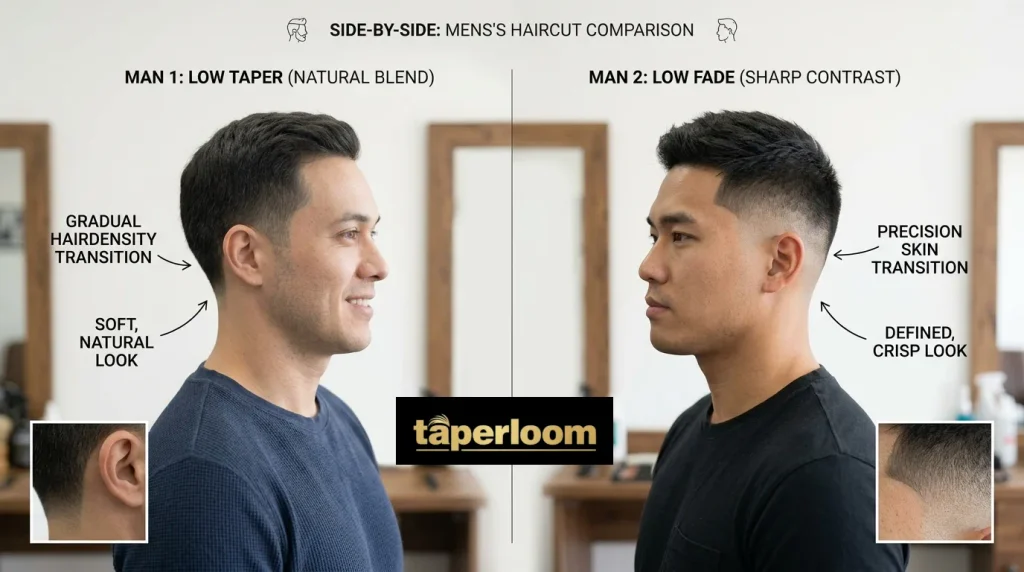
If natural is what you’re after, the taper wins almost every time. It follows the way hair actually grows, softening toward the sideburns instead of cutting a visible line into the side of your head.
A fade does the opposite on purpose. The sharper it looks, the more obvious the line, and that’s exactly why people choose it.
Setting matters here too. In the low taper vs low fade choice, a taper reads as polished without looking styled, which fits conservative workplaces and formal grooming rules.
A fade earns its keep in casual, social settings, where a bold, defined look is the goal, not something to avoid.
Simple way to think about it: taper when you want to blend in, fade when you want to stand out.
Low Taper vs Low Fade by Face Shape
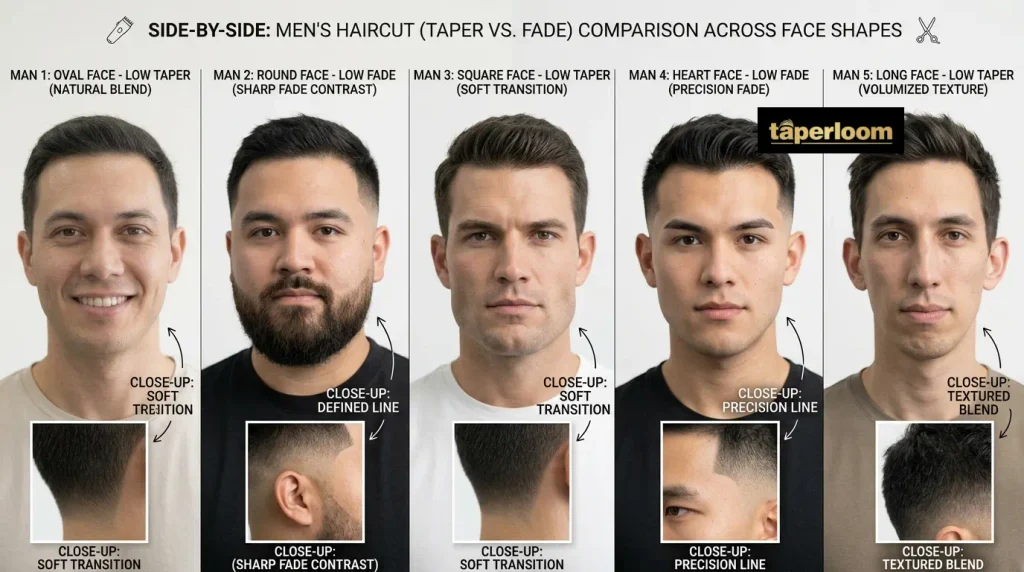
Face shape isn’t a hard rule, but it’s worth a quick check before you sit down.
Round. A fade adds definition, since the sharp sides make the face look a little longer. A taper works too, especially with some height on top.
Oval. The most flexible shape. Both cuts suit it, so pick on looks alone.
Square. A taper tends to flatter it, since the soft blend doesn’t add extra sharpness to an already strong jaw. A fade can still work with a softer top.
Long or oblong. A taper is usually kinder here. Keeping the sides soft avoids stretching the face further.
Heart shaped. Either can work. A taper keeps things balanced, while a fade with volume on top can draw more attention to the forehead.
Low Taper vs Low Fade by Hair Type
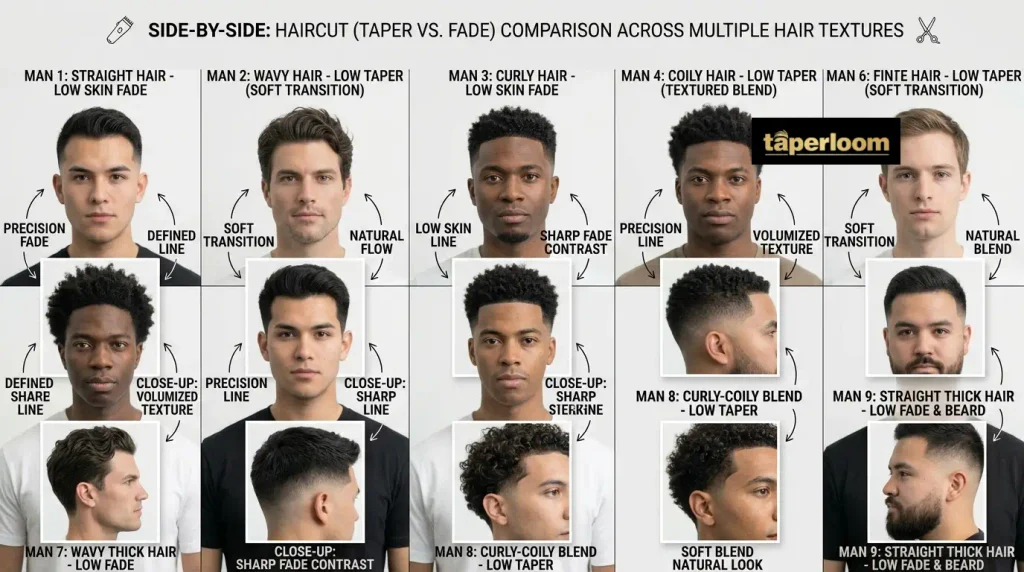
Both cuts work on most hair, but texture and density change how they look.
Straight hair. Shows structure clearly. A fade shows off its line especially well, while a taper gives a smooth, even finish. For more examples and barber guidance, see the low taper fade straight hair guide.
Wavy. Suits either. A taper looks effortless with the natural movement, and a fade under a textured top adds strong contrast.
Curly. Leans toward the fade for most people. A clean faded base frames the curls and sharpens the whole shape. See the low taper fade curly hair guide for more variations.
Coily. Responds well to a fade, which carves a crisp line and brings out the texture on top. A taper still works, but the blend is harder to see given the density.
Thick. Holds either shape without trouble. A fade looks bold here because the contrast is so clear.
Fine or thin. Usually does better with a taper. A heavy fade can leave the sides looking sparse, while a taper keeps the appearance of fullness.
Density matters as much as texture. Thick, dense hair can carry a fade’s sharp line without looking patchy. Fine or low density hair often looks better with a taper, since a fade can expose more scalp than you want.
Short version: a taper looks natural across the widest range of hair types. A fade adds the sharpest definition, especially on curly, coily, and thick hair.
Mistakes People Make When Choosing
Most bad haircuts here aren’t about skill. They’re about what got said, or didn’t, in the chair.
- Asking for “low” without saying taper or fade. Both are low. Only one of them fades to skin. Name the technique, not just the height.
- Choosing a fade without knowing the upkeep. A fade looks sharp for about a week, then needs a trim. If you can’t get back in every 10 to 14 days, it won’t hold up.
- Ignoring cowlicks or hairline shape. A fade line drawn without accounting for a cowlick or an uneven hairline can end up looking crooked once it grows in.
- Skipping the reference photo. “Low taper” and “low fade” mean slightly different things to different barbers. A photo removes the guesswork on both sides.
Getting the low taper vs low fade choice right usually comes down to avoiding these four things, not finding some perfect cut.
Maintenance, Cost, and How Long Each Lasts
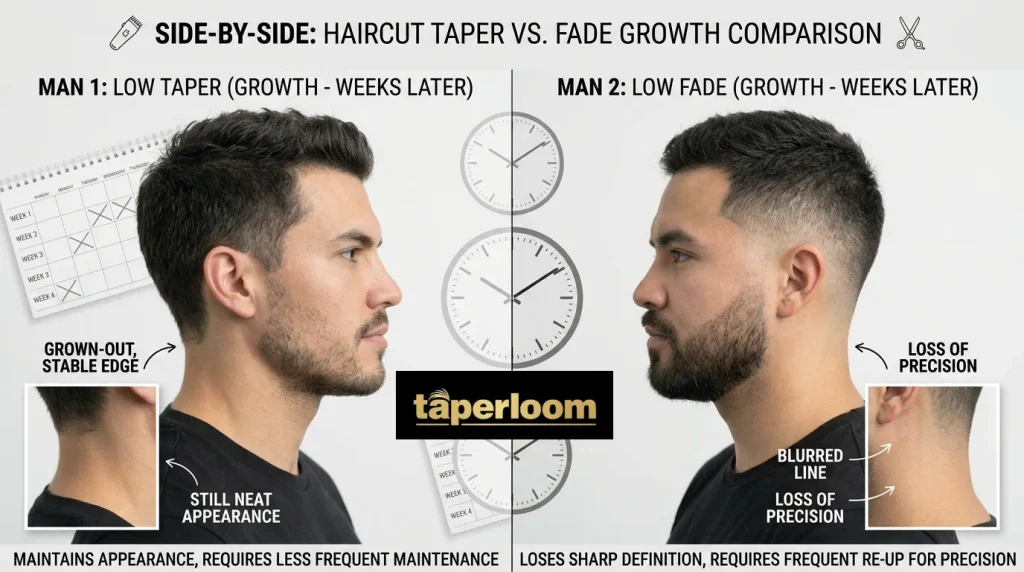
This is the most practical question before you commit: how often will you actually be back in the chair?
A taper is forgiving. Because the blend is soft, it grows out looking longer rather than messy. Most people go three to five weeks between visits before it starts looking overgrown.
A fade asks for more. The same sharpness that makes it look good is the first thing to fade as new hair fills in. Plan on a touch up every 10 to 14 days to keep the line crisp.
Cost follows the same pattern. A fade usually runs a few dollars more per visit, often $2 to $5, since cutting a clean skin line takes more time than a soft blend. Add up the extra visits over a year and a fade costs noticeably more to maintain than a taper.
It’s even more demanding with a skin fade, taken all the way to bare skin. It looks sharp when fresh, but new growth shows within days. A shadow fade, which stops just short of skin, lasts a bit longer but still needs more attention than a taper.
If your schedule is tight or barber visits are irregular, the taper is the practical pick in the low taper vs low fade decision.
Pairing With Styles on Top
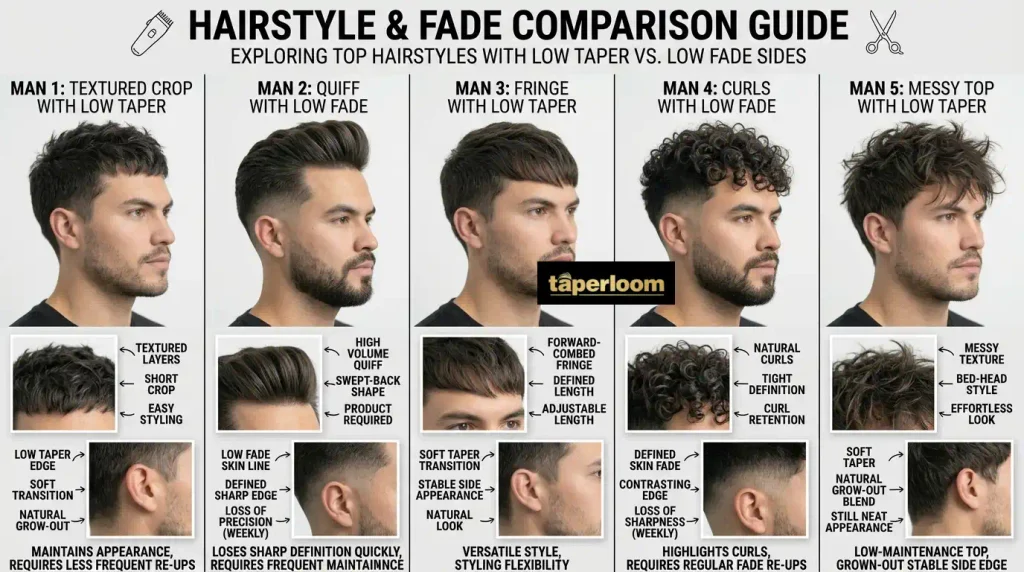
The sides are only half the picture. What you keep on top decides a lot.
If you’re keeping more length on top, see our low taper fade long hair guide for longer styles and styling options.
A textured crop is another strong pairing. A fade gives it a sharper, more modern frame, while a softer taper keeps the overall look more natural.
For shorter top lengths and detailed barber specifications, see the low taper fade on short hair guide.
If you want the current textured version specifically, the low taper fade with trending textured crop guide covers the cut, face-shape matching, hair types, and barber instructions in more detail.
A buzz cut gives you a very low-maintenance option. A taper keeps it uniform and understated, while a fade adds more definition around the base.
The low taper fade buzz cut guide breaks down the different versions and guard lengths.
A fringe can also go either direction. A taper keeps a fringe classic and low key, while a fade gives it a sharper frame.
For variations and styling advice, see the low taper fade fringe haircuts guide.
A curly top usually works especially well with a fade because the defined sides set off the volume on top.
If you want to compare different curl patterns and variations, the low taper fade curly hair guide goes deeper into the options.
A mullet is a less common pairing, but a low taper or low fade underneath keeps the shape intentional instead of unkempt.
The low taper fade mullet guide covers the different versions and maintenance requirements.
For guys who want more volume and movement rather than a tight short top, a fluffy hairstyle can work well with a low taper.
The low taper fade fluffy hair guide covers the longer textured top and different hair-type combinations.
If you want the fade itself to become more of a visual feature, the low taper fade designs guide covers carved designs, placement options, maintenance, and different design styles.
For a rounded line instead of a straight one, a taper low burst fade curves the fade around the ear and can work particularly well with textured tops, curls, and mullets.
And if you’re choosing a haircut for a younger guy, the low taper fade for kids guide covers age-appropriate variations, hair types, and barber instructions.
How to Ask Your Barber (Exact Words)
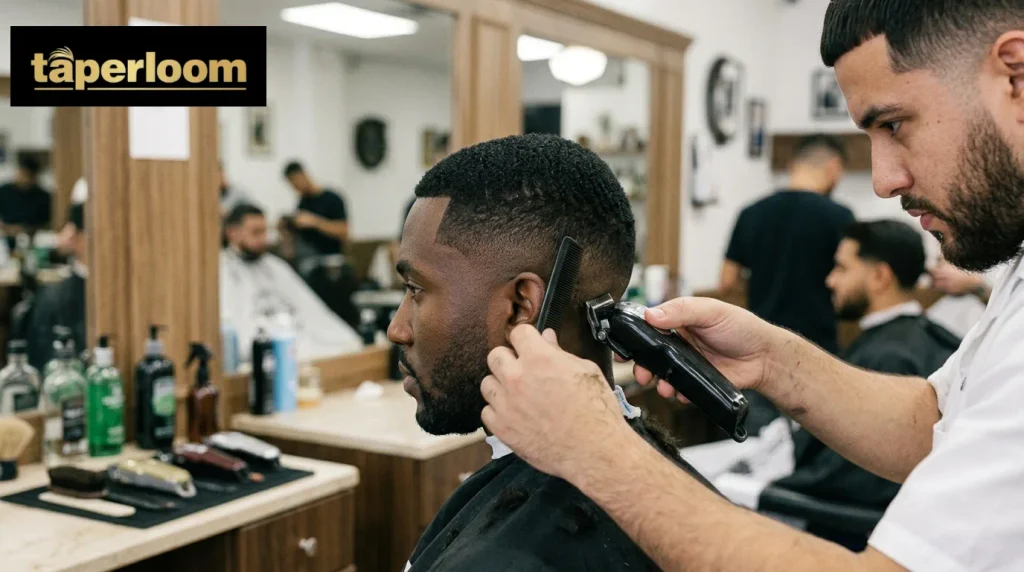
Walking in knowing what you want is half the job. Here’s how to say it clearly.
- Name the technique first. Say “taper” or “fade,” not just “low.” These are two different methods, and mixing them up is where most bad haircuts start.
- Say how low. Ask for the blend to stay down near the ears and neckline, not climb up the sides.
- Pin down the finish. Tell your barber if you want it down to skin, to a close shadow, or a soft blend that leaves no scalp showing.
- Talk neckline and sideburns. Say whether you want the back tapered naturally into the neck or a squared, defined outline.
- Mention the top. Whether you’re growing it out or keeping it short, the top and sides need to work together.
- Bring a photo. Even experienced barbers like one. It removes the guesswork on both sides.
A couple of lines that work well in the chair:
“Low taper around the sideburns and neckline, just a soft, natural blend.”
“Low fade starting just above the ears, taken down to a shadow.”
So, Which Should You Choose?
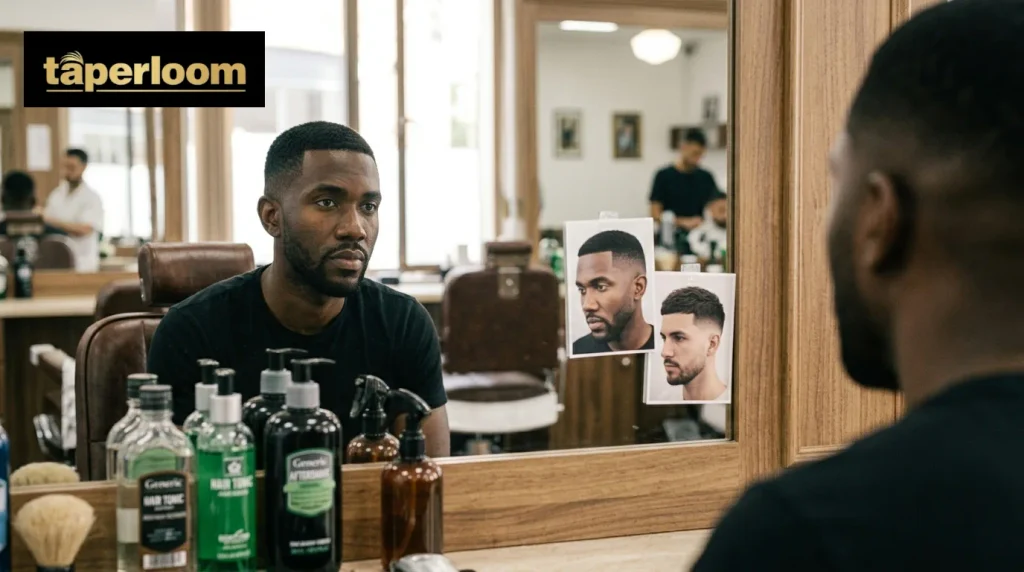
Both are good cuts. The right one comes down to you, not some universal winner.
Lean low taper if
- You want a subtle, natural finish
- Your workplace or school expects conservative grooming
- You’d rather not visit the barber every two to three weeks
- You have fine or thin hair and want to avoid exposing the scalp
- You’re new to tapers and fades and want a versatile start
Lean low fade if
- You want a sharper, more defined look
- You wear textured, curly, or high volume hair on top
- You’re happy to keep it up with regular visits
- You want strong contrast between the top and the sides
Your routine, your workplace, and your hair type all feed into the low taper vs low fade decision. There’s no universal right answer here, just the one that fits how you actually live.
FAQs About Low Taper vs Low Fade

Is a low taper better than a low fade?
Neither is objectively better. A taper wins if you want a subtle look with less maintenance. A fade wins if you want sharper contrast and a more modern finish. It comes down to your routine, your hair type, and how often you actually get to the barber.
Does a low fade show more skin than a low taper?
Yes, usually. A low fade brings the hair down to very short or skin level near the ears and neckline, so more scalp shows at the base. A taper stops short of bare skin for a softer, more covered finish.
Which lasts longer between barber visits?
The taper. Its gradual blend grows out looking natural rather than messy, so it can hold for three to five weeks or more. A fade loses its sharp line faster, usually within 10 to 14 days.
Can I switch from a low taper to a low fade later?
Yes, easily. Your barber can take a low taper into a low fade in one visit by cutting the sides shorter until they reach skin. Going the other way takes more patience, since you’ll need to grow the sides out before they blend into a softer taper again.
Which is better for summer or hot weather?
A low fade usually feels cooler, since more skin is exposed on the sides and back. A taper still keeps you comfortable, but it holds more hair in place, which can feel warmer on a hot day.
How much does a low fade cost compared to a low taper?
A low fade typically costs a few dollars more per visit, often $2 to $5, since the clean skin line takes more time to cut. Over a year of extra touch ups, a fade adds up to noticeably more than a taper.
Is a low taper or low fade better for a receding hairline?
A low taper is usually the safer choice. It keeps more hair around the sides and doesn’t draw attention to the hairline the way a sharp fade line can. A fade isn’t off limits, but it works best when the hairline is even, since any unevenness shows up more clearly against a hard line.
What should I say if I’m not sure which I want?
Be honest about that in the chair. Show a photo of a look you like and say how much contrast you want, soft and subtle or clean and sharp. A good barber will ask the right questions and suggest what suits your face shape, hair type, and routine.
The Bottom Line
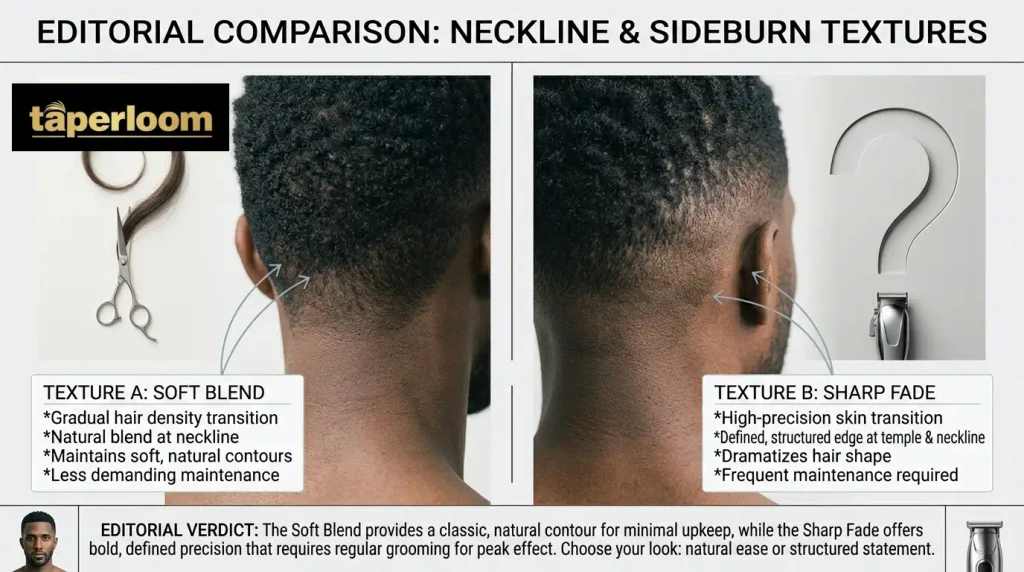
The whole low taper vs low fade decision comes down to one question: soft blend or sharp edge?
A taper suits people who want something understated and low maintenance that works across any setting.
A fade suits people who want a bolder, more defined look and don’t mind the extra barber visits.
Know your routine, factor in your hair type, and say it clearly in the chair. Either way, you’re walking out with a clean, deliberate cut.
Read Next : Low Taper Fade vs Mid Taper Fade: Which One Should You Get?

Muhammad Kaleem is a content creator who writes about hair care, hairstyles, grooming, and everyday hair trends. He enjoys turning hair-related topics into simple, practical, and easy-to-understand content that helps readers make informed choices about their hair and personal style.