
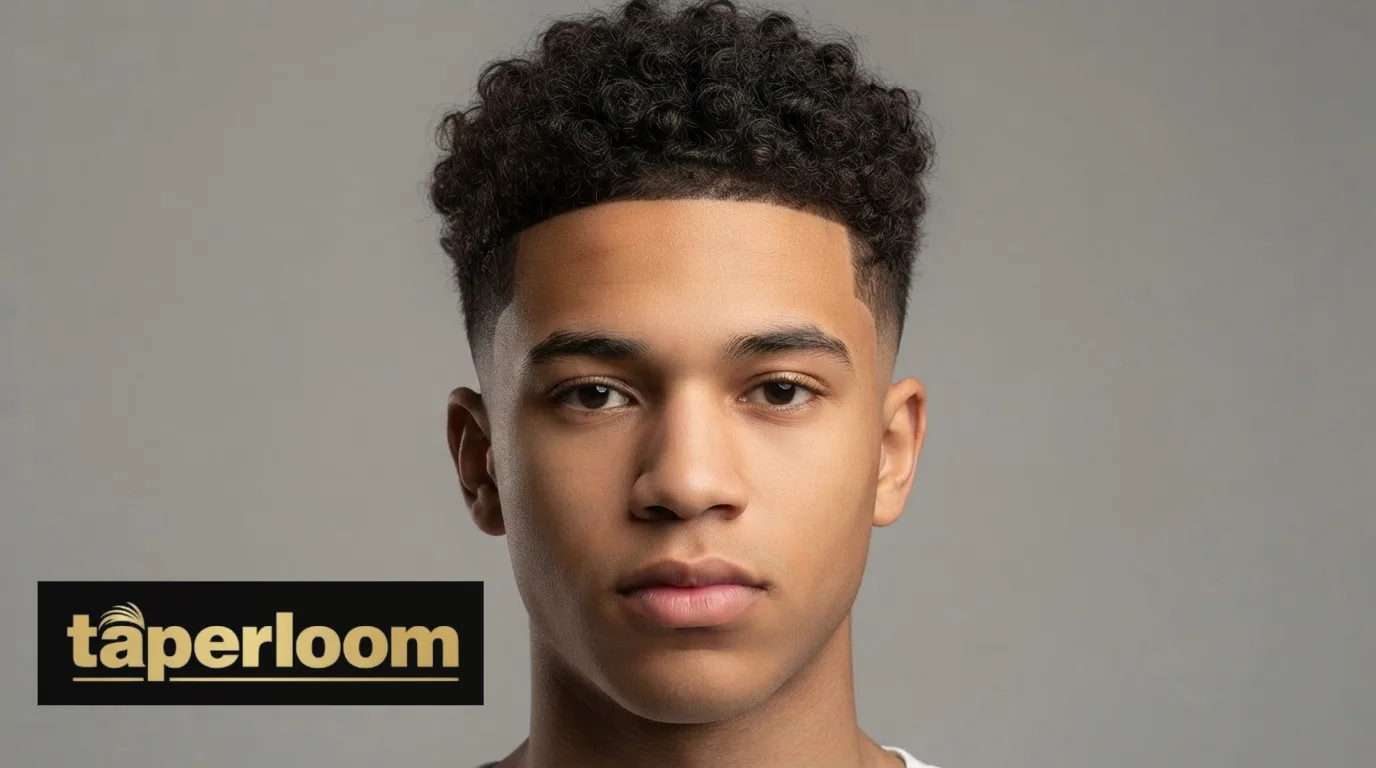
A low taper fade curly hair haircut keeps your natural curls long on top while the sides fade gradually, starting about an inch above the ear and blending down to the neckline.
It’s one of the most requested low-maintenance curly haircuts for men because it keeps more of your curl pattern intact than a mid or high fade.
This guide covers every curl type, the exact words to use with your barber, and how to keep your curls looking fresh between cuts.
Low Taper Fade Curly Hair Men: Why It Works
A low taper fade curly hair men’s cut keeps your natural curls full on top while the sides shorten gradually from just above the ear.
Men choose it because it removes bulk from the sides, looks clean at work, and still shows off the curl pattern. If you searched for a curly hair low taper fade or a low taper fade with curly hair, this is the cut you want.
It works on every curl type, from loose waves to tight coils, and only the guard size changes.
What Is a Low Taper Fade on Curly Hair?
A low taper fade on curly hair is a fade haircut where the blend starts just above your ear and gradually shortens down to your neckline, while your curls stay full and untouched on top.
Unlike a high or mid fade, it doesn’t remove much hair from the upper sides, so more of your natural texture stays visible, and the contrast between “faded” and “curly” feels soft instead of sharp.
That’s the whole appeal for curly hair: you get a clean, barbershop-fresh finish without sacrificing volume or curl definition.
Guys with thick curly hair especially like it because it trims bulk from the sides without flattening what’s on top.
Here’s how it stacks up against the other fade heights:
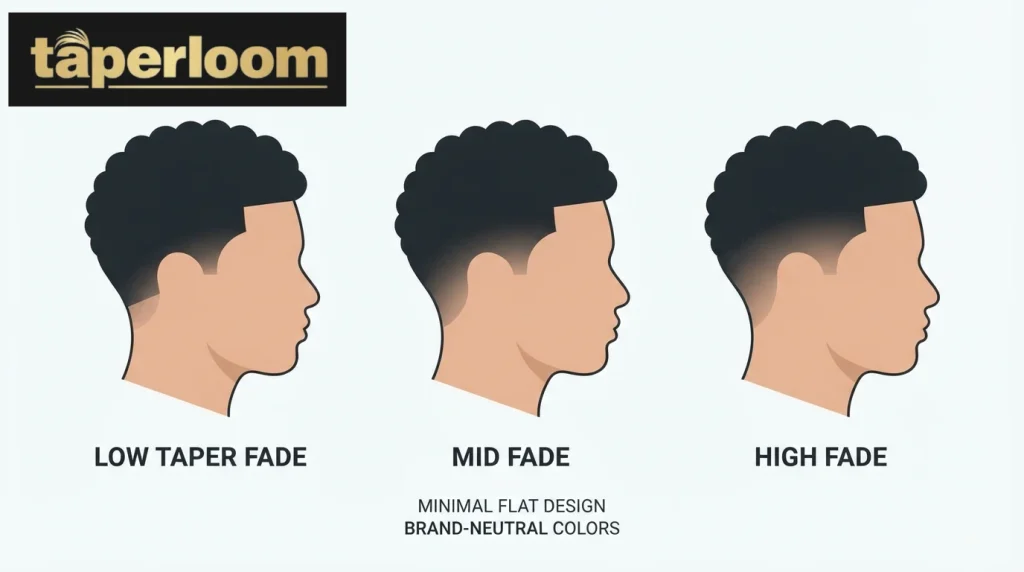
| Fade Type | Where It Starts | Contrast Level | Best For | Touch-Up Frequency |
| Low Taper Fade | ~1 inch above the ear | Soft, subtle | Natural curls, everyday wear, low-maintenance look | Every 2–3 weeks |
| Mid Taper Fade | At the temple | Moderate | More defined edges, still keeps length on top | Every 2–3 weeks |
| High Taper Fade | Above the temple, near the crown | Bold, sharp | Thick or coily hair, statement styles | Every 1–2 weeks |
| Skin Fade | Varies (can start anywhere) | Fades to bare skin | Maximum contrast, sharpest look | Every 1–2 weeks |
If you want your curls to be the focus of the haircut, not the fade, a low taper is almost always the right call. Save the higher fades for when you want the sides to compete with the top for attention.
Low Fade vs Low Taper Fade on Curly Hair
A low fade goes shorter at the bottom, sometimes down to bare skin, while a low taper fade keeps a soft layer of hair. For curly hair, the taper is safer because it keeps more texture and blends cleanly.
| Cut | Bottom length | Look | Best for |
|---|---|---|---|
| Low taper fade | Short, not bald | Soft, natural | Everyday curls |
| Low fade | Very short or skin | Sharper contrast | Bold, clean looks |
| Curly low fade with line up | Skin at the edges | Defined | Tight curls and coils |
If you want a curly low fade or a low fade curly hair look, start with a taper. You can always go shorter next visit, but you cannot add length back.
A low fade with curly hair also needs more frequent touch-ups, usually every 2 weeks.
What Is a Curly Taper Fade?
A curly taper fade is a haircut where the sides and back shorten gradually while the curls on top stay long.
The word “taper” means the length decreases slowly, so there is no hard line. A taper fade curly cut works on loose waves, springy curls and coils, because the barber only changes the guard size and leaves the top natural.
Most men pick the low version, since it keeps more of the curl pattern visible. A taper fade curly style is also the easiest way to test a fade without a big change.
Curl Type Breakdown (2A–4C) with Guard Numbers
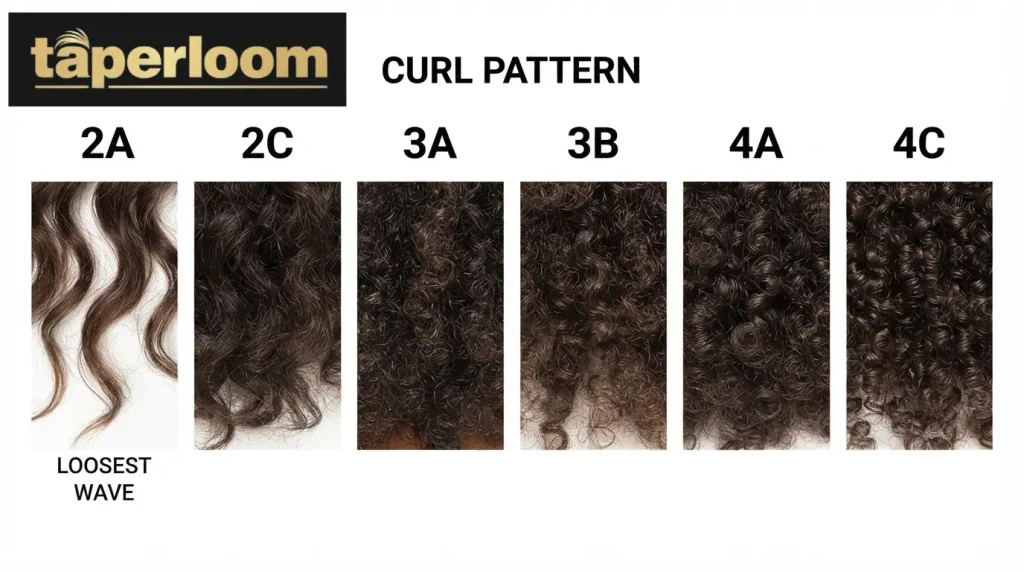
Not every curl type needs the same fade. A looser wave and a tight coil respond differently to clipper guards, so knowing your curl type before you sit in the chair helps you get a cleaner result.
Curl types are usually classified from 2A (loose waves) through 4C (tight coils), and that pattern affects which guard your barber should use on the sides.
Hair with a more elliptical, tightly curved shape tends to be more fragile at each bend, which is one reason barbers often use slightly larger guards and more careful blending on tighter curl types instead of cutting close to the skin.
Here’s a practical guard guide by curl type:
| Curl Type | Description | Recommended Guard (Sides) | Best Fade Style |
| 2A–2C | Loose waves to defined waves | #2 to #3 | Low taper, soft blend |
| 3A–3B | Springy loose curls to tighter ringlets | #1.5 to #2 | Low taper with textured top |
| 3C | Tight, dense curls | #1.5 to #2 | Low taper, slightly more defined line |
| 4A–4B | Coily hair, less curl definition, more shrinkage | #1 to #1.5 | Low taper with line up |
| 4C | Tightest coils, most shrinkage | #1 (avoid going lower) | Low taper afro, blowout low taper |
A general rule: the tighter your curl pattern, the shorter your guard can safely go on the sides, but you never want to drop below a #1 on curly or coily hair.
Going too low removes the texture your barber needs to blend cleanly, and it can leave patchy or uneven spots once the curls dry and shrink back up.
If you have mixed texture, looser curls in front, tighter coils in back, which is common, tell your barber both patterns exist. They’ll usually adjust the guard slightly as they move around your head instead of using one setting for the whole cut.
Curly Loose Curl Taper Fade
For loose curls (2A to 3A), ask for a #2 or #3 guard with a soft blend. A curly loose curl taper fade keeps the wave pattern visible on top and avoids a flat look on the sides.
Use a lightweight curl cream so the curls do not weigh down, and skip heavy pomades.
20+ Best Low Taper Fade Curly Hair Styles
Once you know your curl type and guard range, the next step is picking the actual style. Here are the most popular low taper fade curly hair looks right now, grouped by category so you can find what suits your length, texture, and lifestyle.
Classic & Everyday Styles
1. Classic Low Taper Curly Top
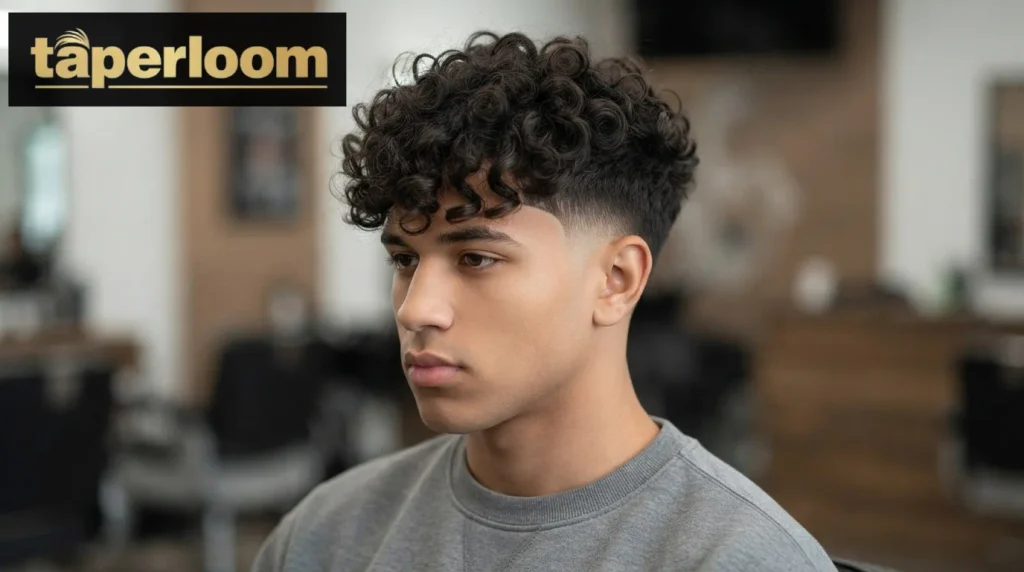
Natural curls stay untouched on top while the sides fade softly from the ear down. It’s the easiest version to maintain and works for school, work, or casual wear.
Tip: Ask for a soft blend, not a hard line, if you want the most natural everyday look.
2. Curly Crop with Low Taper
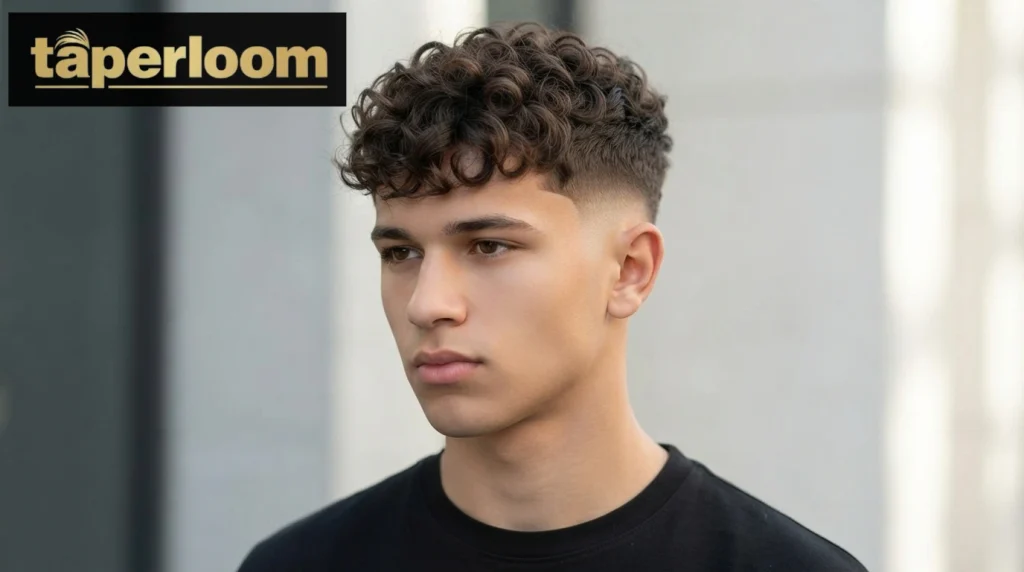
Short, textured curls on top paired with a clean low taper on the sides. Low maintenance, no daily styling needed.
Tip: A light curl cream on damp hair is enough to define this style.
3. Curly Side Swept Low Taper
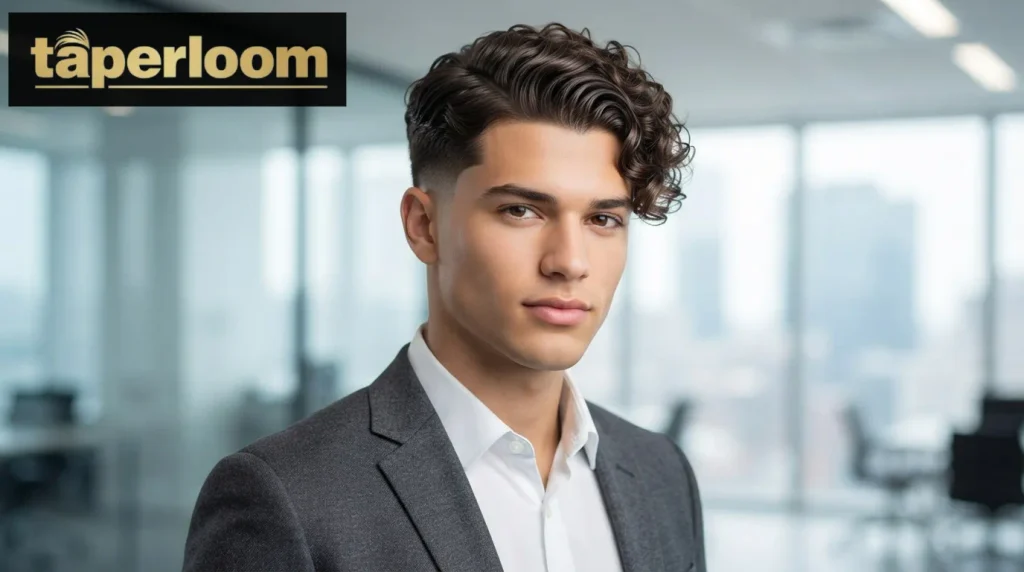
Curls are combed to one side for a slightly more polished, professional look. Works well for office settings or formal occasions.
Tip: Use a medium hold pomade and comb while hair is still damp for control.
4. Curly Hard Part Low Taper
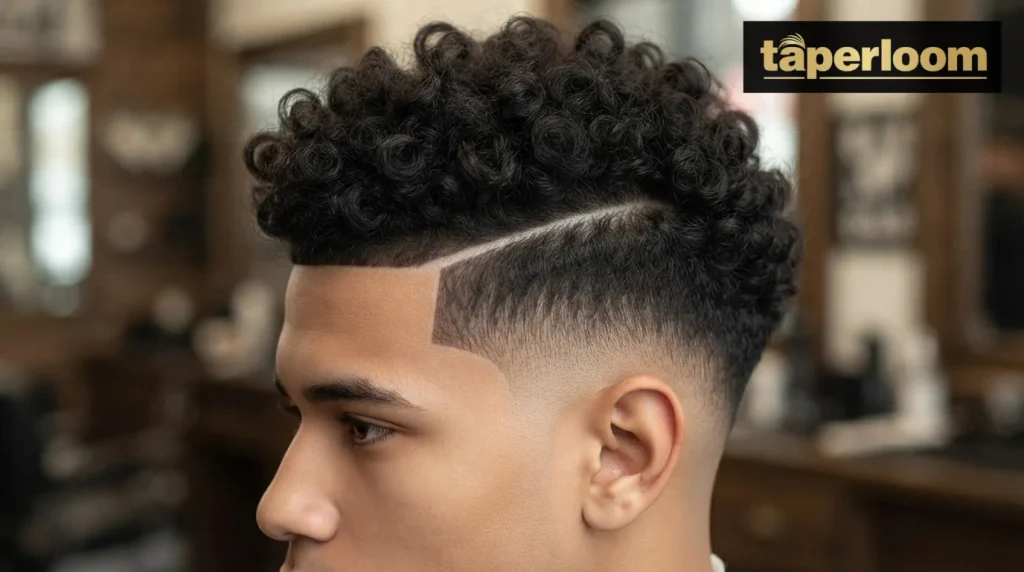
A shaved line separates the fade from the curls on top, adding a sharp, intentional detail. It suits guys who want structure without going too bold.
Tip: Touch up the hard part every 1 to 2 weeks since it grows out faster than the fade.
5. Wet Look Curly Low Taper
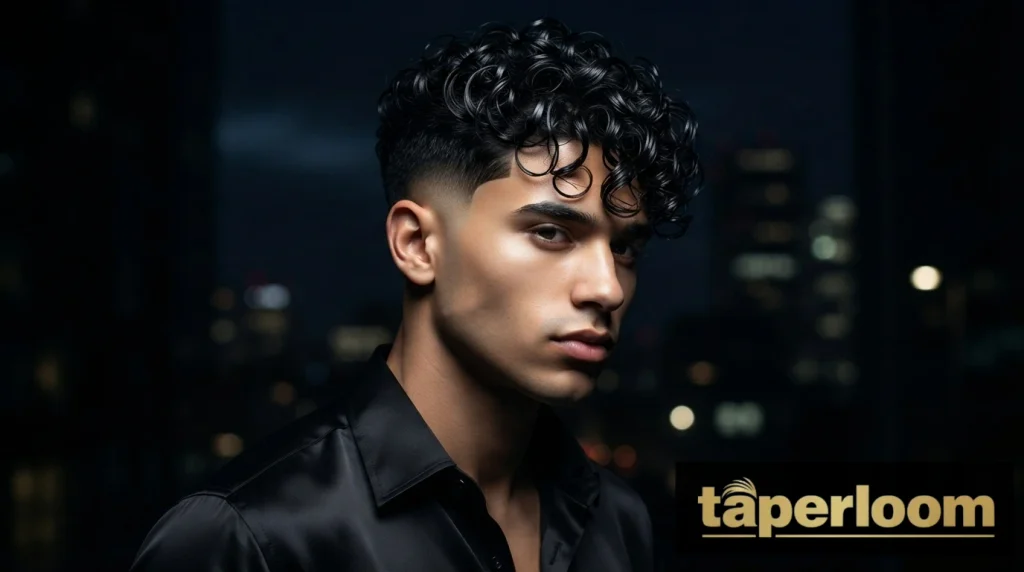
Curls are styled with gel or mousse for a glossy, defined finish. This works best for nights out or when you want extra shine and hold.
Tip: Apply product to soaking wet hair, not just damp, for the strongest wet look effect.
Curly Fringe & Textured Top Styles
6. Curly Fringe with Low Taper
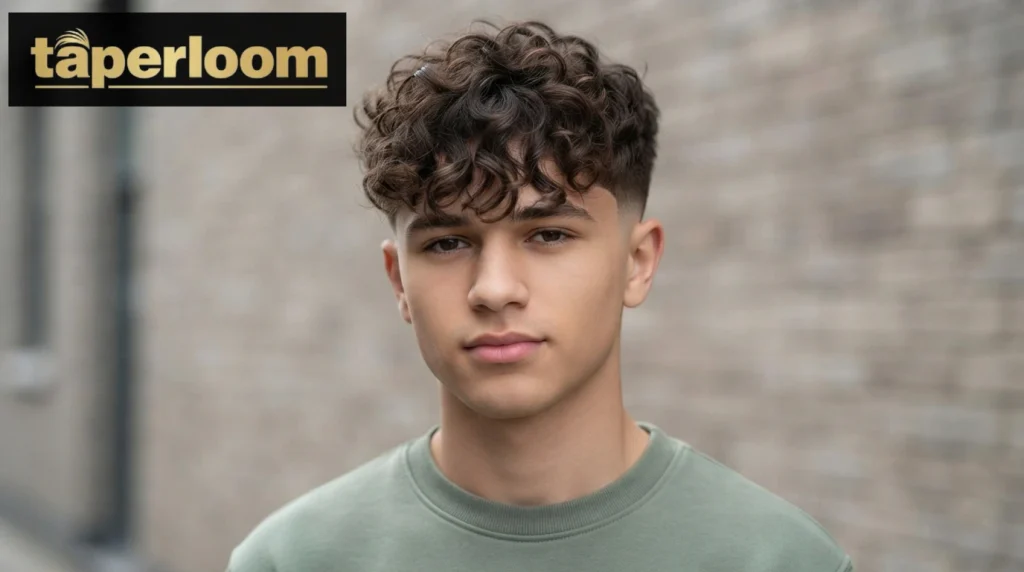
Curls fall forward across the forehead while the sides stay clean and faded. This style suits rounder faces since the fringe adds vertical length.
Tip: Ask your barber to cut the fringe section separately, leaving two to three extra inches at the front.
7. Curtain Bangs Low Taper
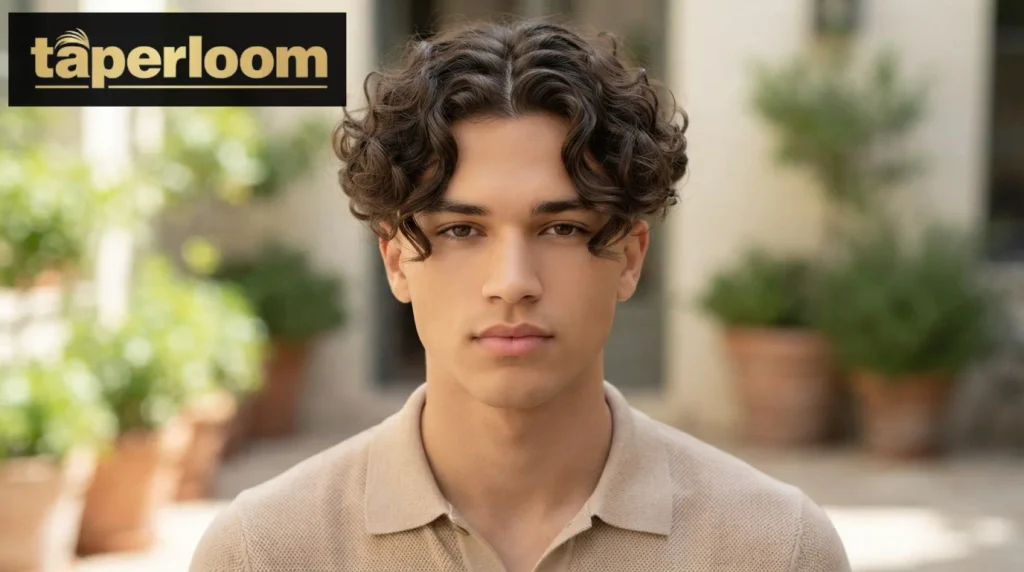
Curls are parted in the middle and swept to both sides, framing the face. It pairs naturally with 2C and 3A curl patterns.
Tip: Blow dry with a diffuser and finger comb the part to keep it from looking stiff.
8. Textured Curly Crop Low Taper
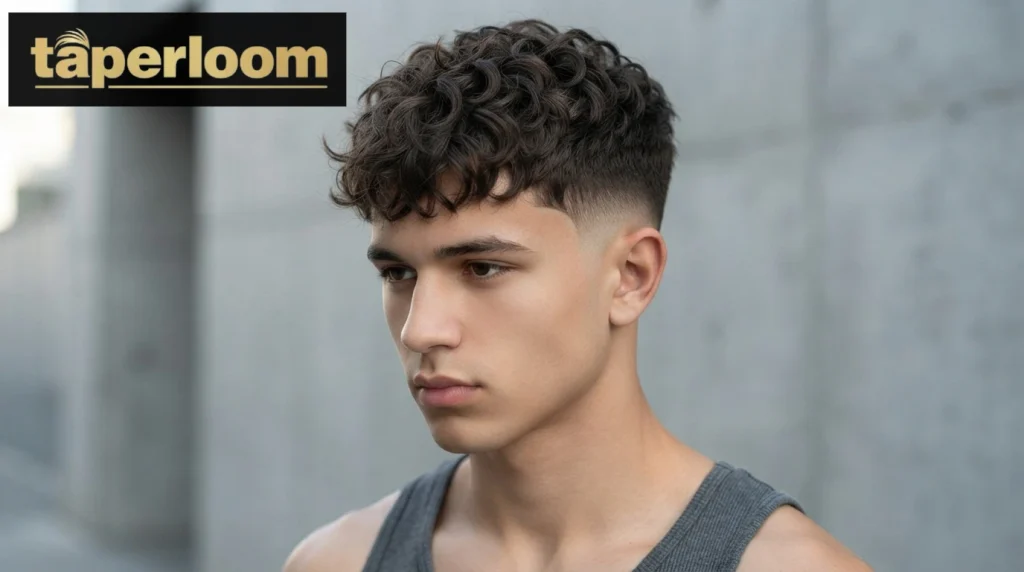
Short, choppy texture on top with a low taper underneath. The relaxed, slightly messy finish makes it a favorite for teens and younger guys.
Tip: Work texture clay through damp hair for definition without weighing curls down.
Messy Curly Hair Low Fade
A messy curly hair low fade pairs loose, tousled curls on top with a clean low fade on the sides. The contrast makes the curls look relaxed and effortless.
- Best for: Wavy to springy curls (2B to 3B)
- Top length: 3 to 4 inches
- Product: Sea salt spray or light curl cream, scrunched in and air dried
- Tell your barber: “Low fade on the sides, keep the top long and messy, point cut for texture.”
- Alt text: messy curly hair low fade men
9. Layered Curly Low Taper
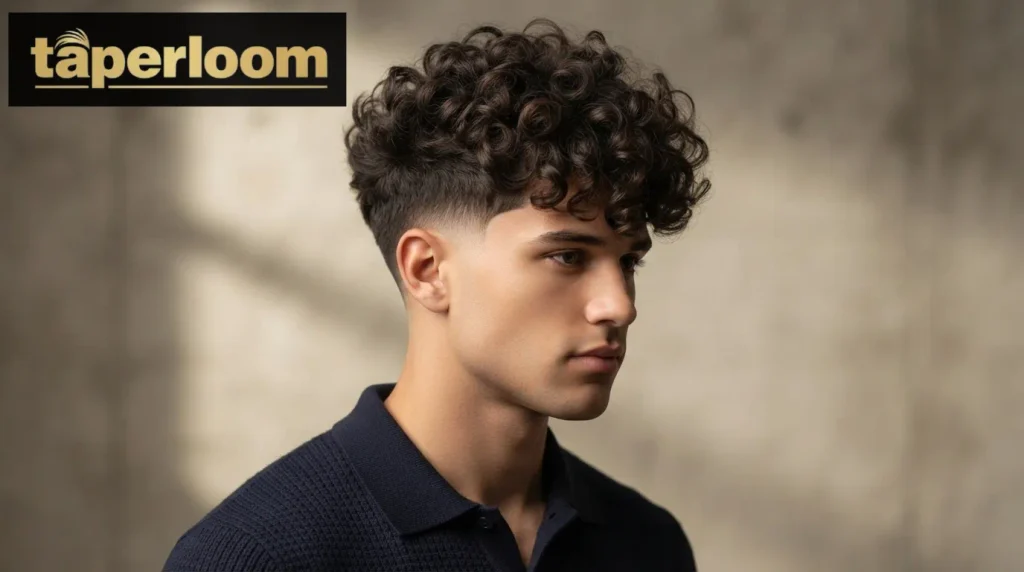
Layers add movement and reduce bulk for guys with thick curly hair. The low taper keeps the sides balanced against the extra volume on top.
Tip: Ask for point cutting instead of a blunt trim to keep the layers soft.
10. Curly Blowout Low Taper
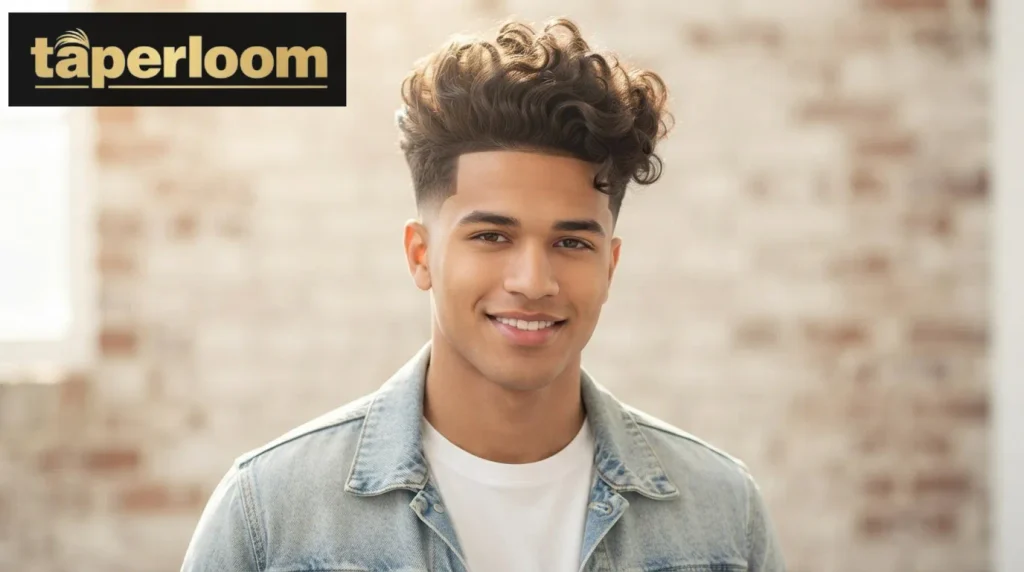
Curls are blow dried and lifted for maximum height and volume on top. It’s one of the fastest growing variations for guys with medium curly hair.
Tip: Diffuse on low heat and lift at the roots with a pick for the best blowout shape.
Longer & Mullet Styles
11. Curly Mullet Low Taper
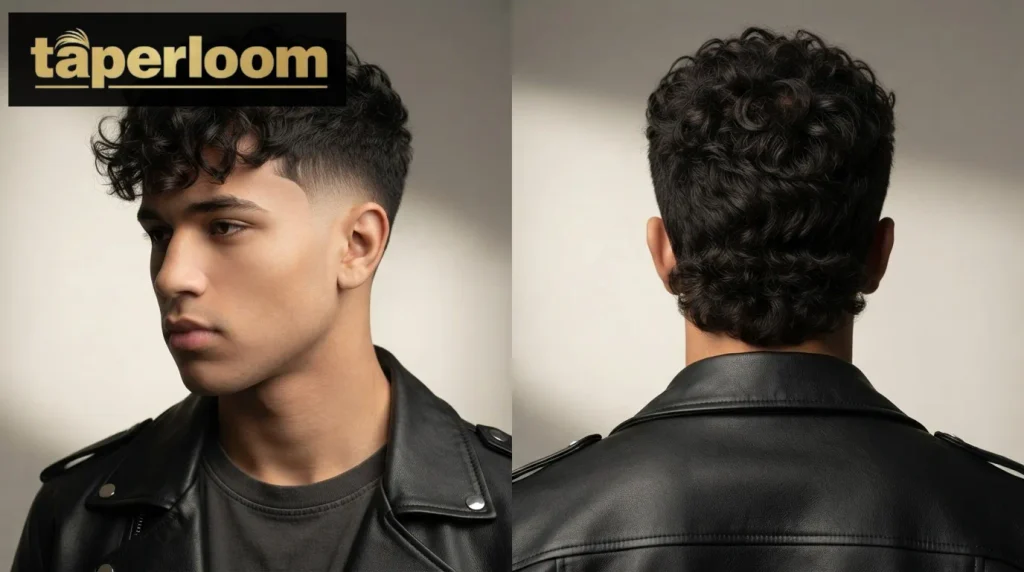
Short, faded sides with length left at the back and natural curls throughout the crown. It’s a bold, retro leaning look that’s stayed popular through 2026.
Tip: Trim the back every few weeks to keep the mullet shape from getting shaggy.
12. Curly Shag Low Taper
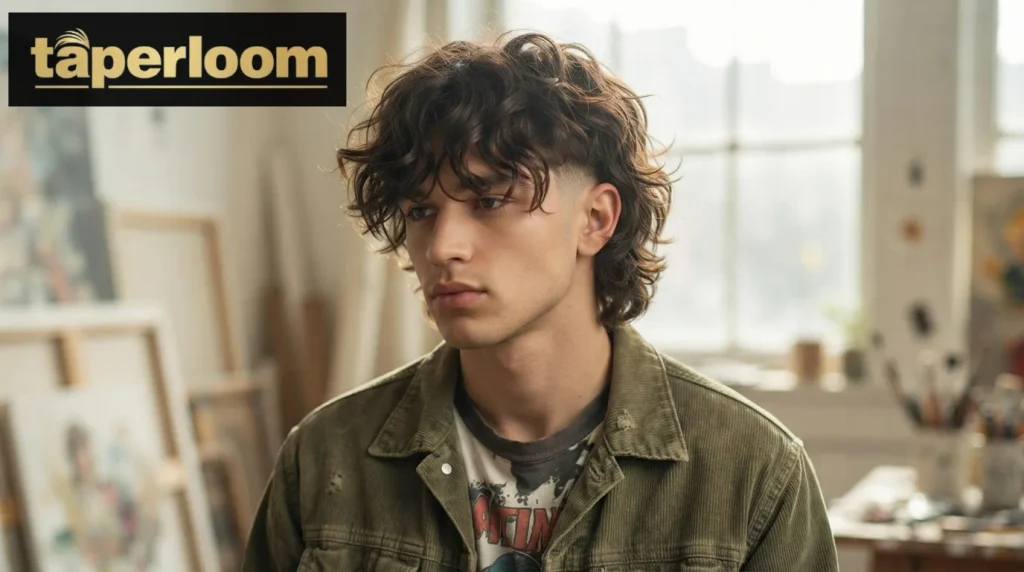
Choppy, layered curls on top with a low taper for contrast. This style thrives on texture and works well if you like a slightly undone, lived in look.
Tip: Scrunch curl cream into damp hair and let it air dry for the most natural shag texture.
13. Curly Wolf Cut Low Taper
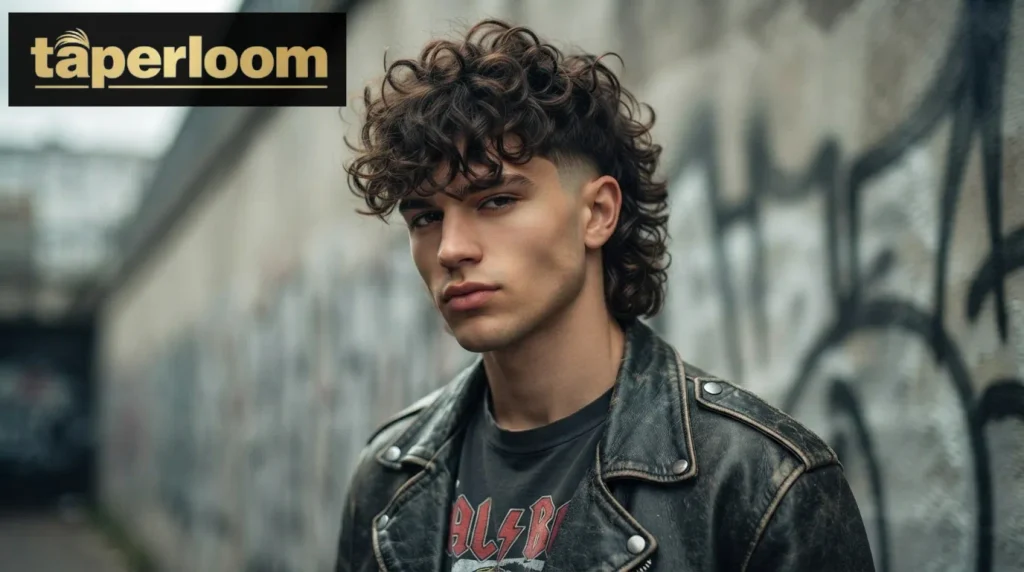
A mix of a mullet and a shag, with heavy layering and a low taper on the sides. It suits guys who want maximum texture and movement.
Tip: Ask specifically for a wolf cut by name since barbers cut it differently from a standard shag.
14. Long Curly Top Low Taper
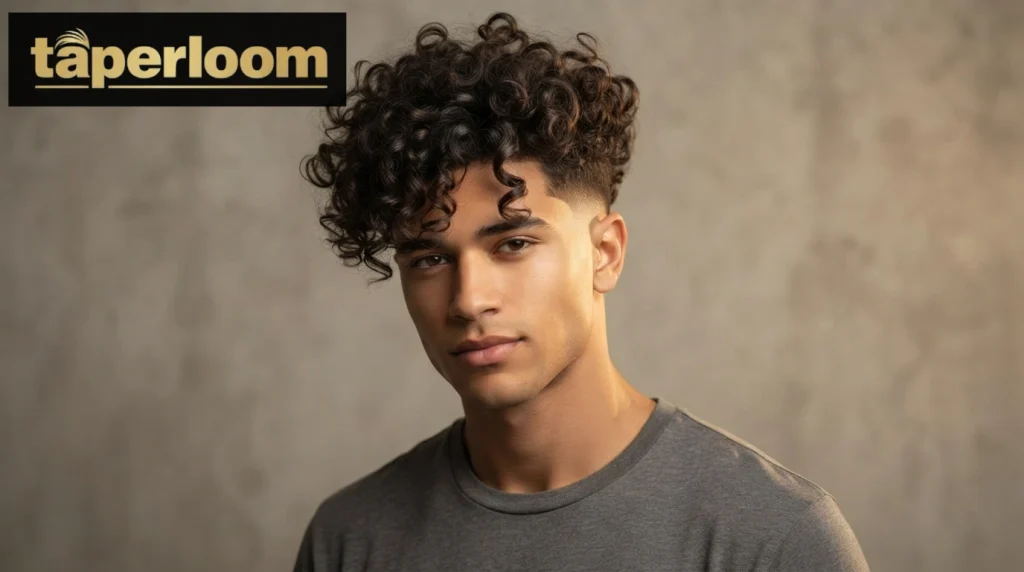
Curls are left long and full on top, sometimes four to six inches, with a low taper doing all the work on the sides. Great for guys who want to show off natural curl length.
Tip: Use a leave in conditioner daily to keep longer curls from drying out and frizzing.
Afro, Coily & Blowout Styles
15. Low Taper Curly Afro
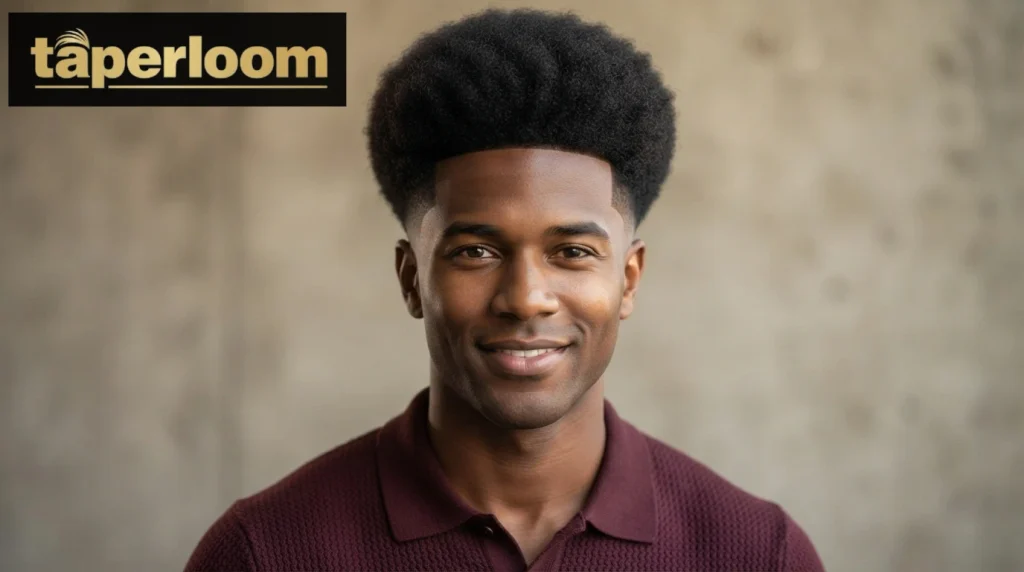
Full, rounded natural texture on top with a clean low taper underneath. This is one of the most requested styles for 4A to 4C coily hair.
Tip: A curl sponge helps define individual coils without disturbing the afro shape.
16. Curly Edgar Low Taper
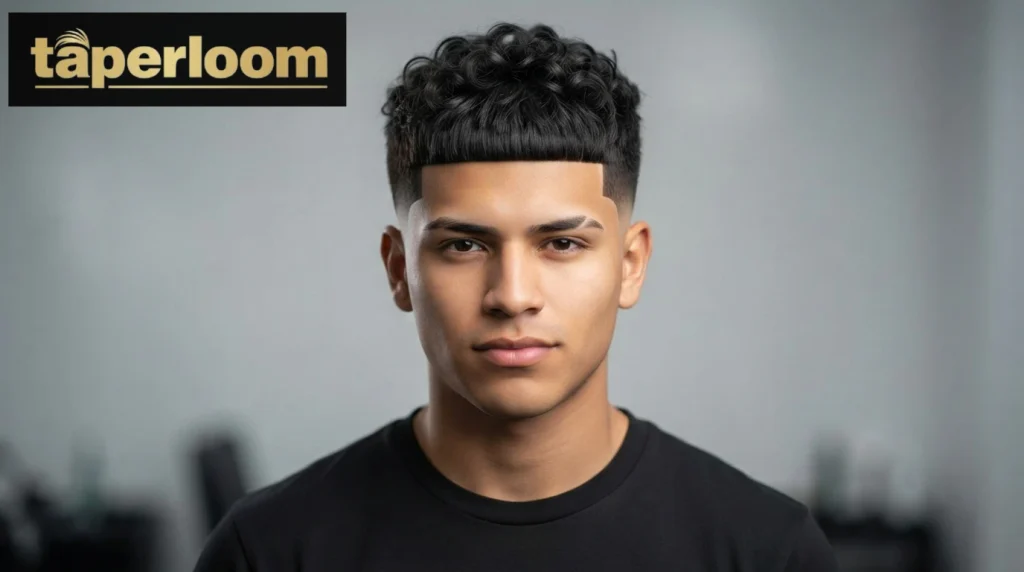
A blunt, straight across fringe paired with a low taper and sharp line up. Popular with teens and guys who want a bold, modern silhouette.
Tip: The fringe needs regular trimming to keep the straight edge crisp.
17. Sponge Curls Low Taper
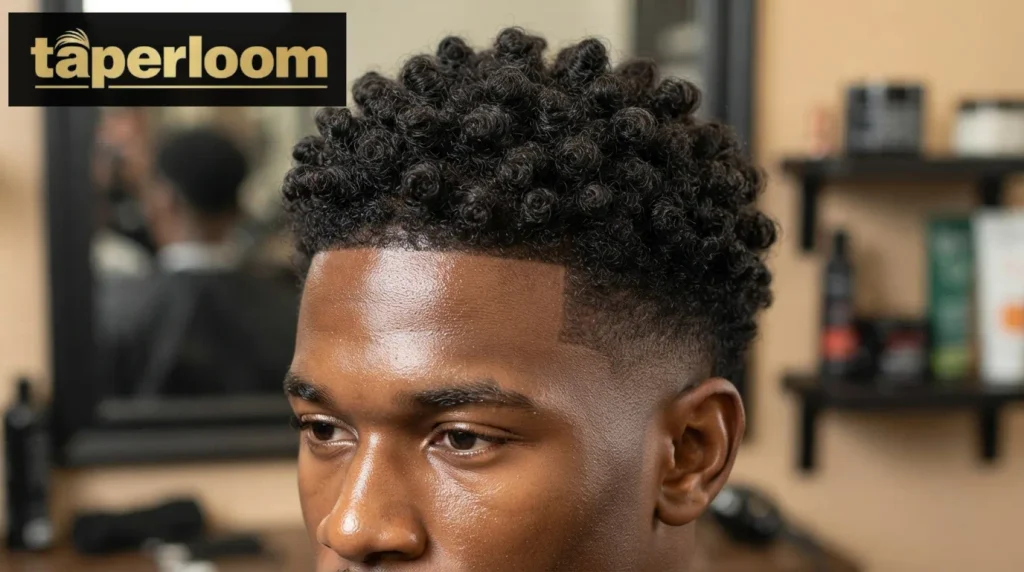
Short, defined curls created using a curl sponge, paired with a low taper for a neat, structured finish. Works especially well for 4B and 4C hair.
Tip: Twist in small circular motions with the sponge on damp hair for tighter, more even curls.
18. Curly Blowout with Highlights
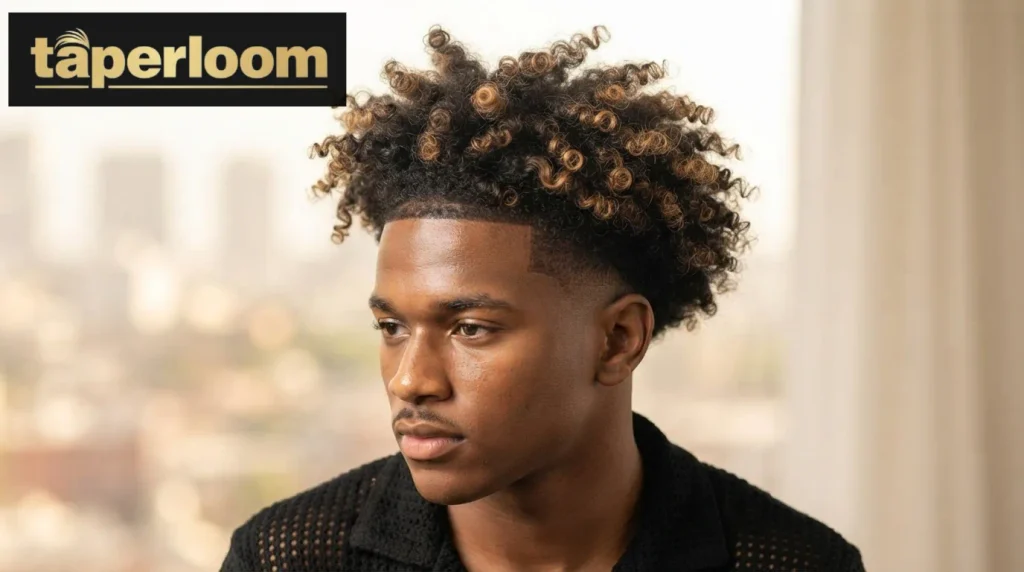
A blowout low taper with subtle highlights added for extra dimension. The lighter strands catch the light and make individual curls stand out more.
Tip: Ask a colorist for face framing highlights rather than an all over color to keep it natural looking.
19. Low Taper for Thin Curly Hair
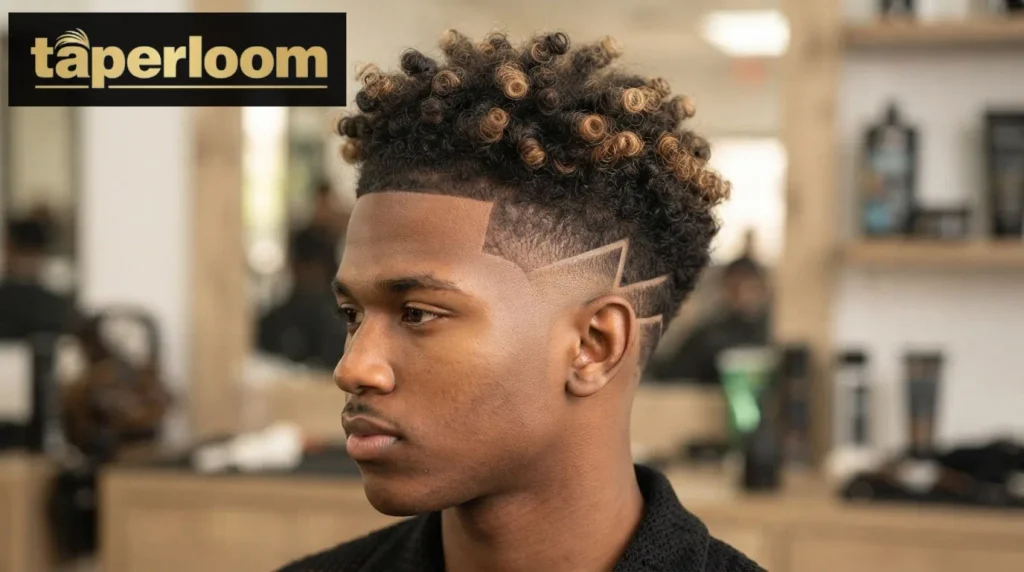
A tighter guard and slightly shorter top length help thin curly hair look fuller and more textured. The low taper reduces visible scalp on the sides.
Tip: Volumizing mousse at the roots adds lift without making thin curls look flat.
With Beard, Line Up & Design Combos
20. Low Taper Fade with Line Up
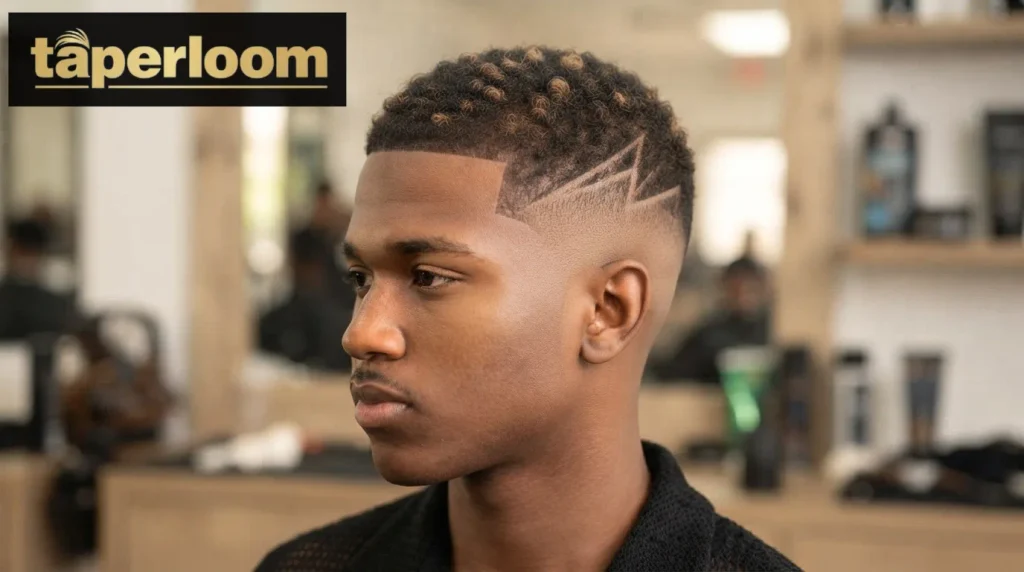
A sharp, defined line around the forehead and temples paired with a low taper. This combo works especially well with tight curls and coily hair for extra definition.
Tip: Get the line up touched up weekly since it grows out faster than the fade itself.
21. Low Taper Curly Hair with Beard
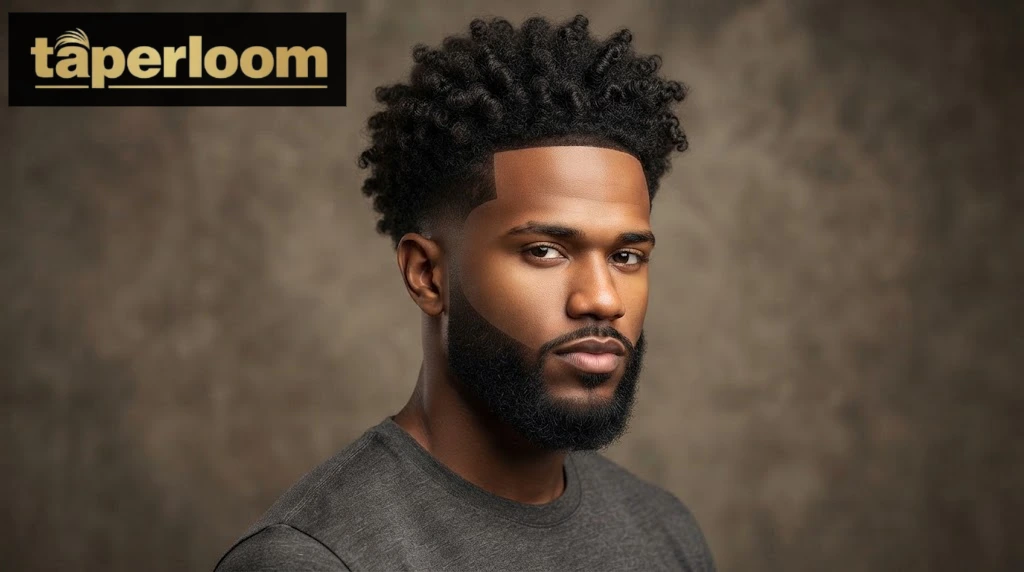
The fade blends smoothly into a full beard for a cohesive, masculine look. It’s a favorite for guys who want their curls and facial hair to look intentional together.
Tip: Ask your barber to connect the fade directly into the beard line so there’s no visible gap.
22. Burst Fade Curly Hair
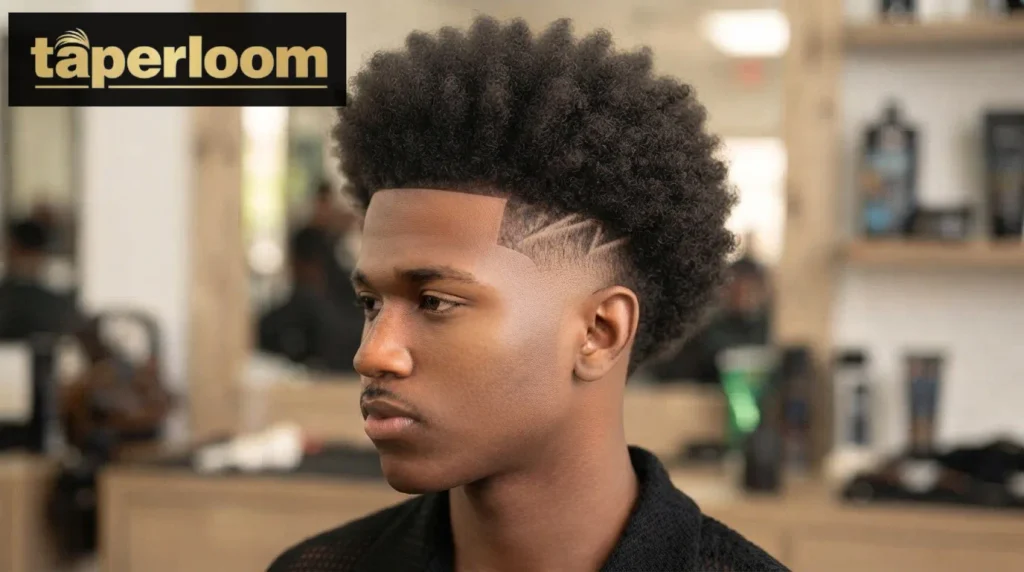
The fade curves in a half circle behind the ear instead of running in a straight line. It gives a cleaner, more custom blend than a standard low taper.
Tip: This style needs a skilled barber, so bring a reference photo to avoid a choppy blend.
23. Curly Mohawk Low Taper
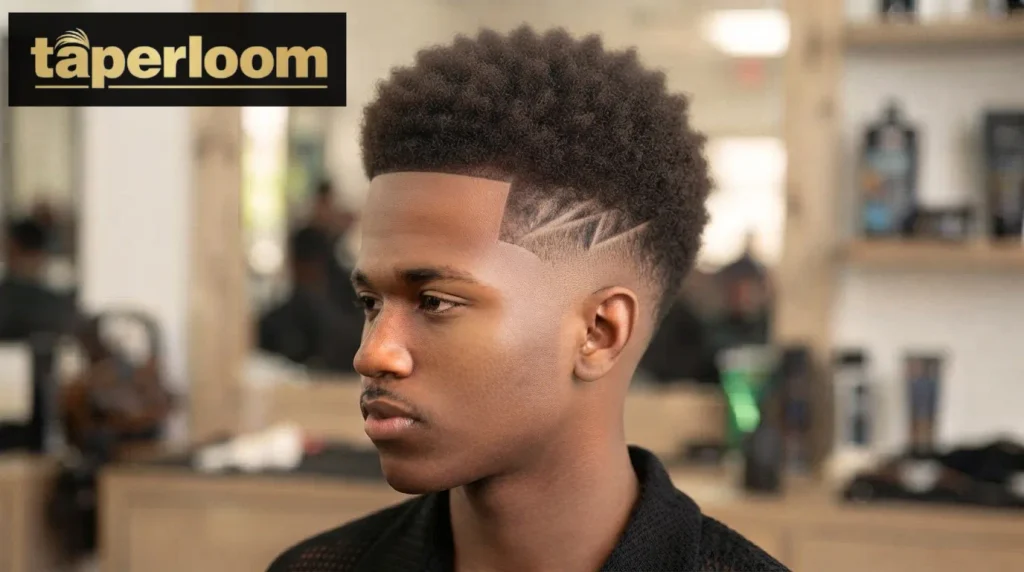
Curls are pushed up and toward the center while the sides fade low and clean. It’s a bold, statement making style that still keeps a low key fade underneath.
Tip: Use a strong hold gel to keep the mohawk shape locked in throughout the day.
24. Curly Undercut Low Taper
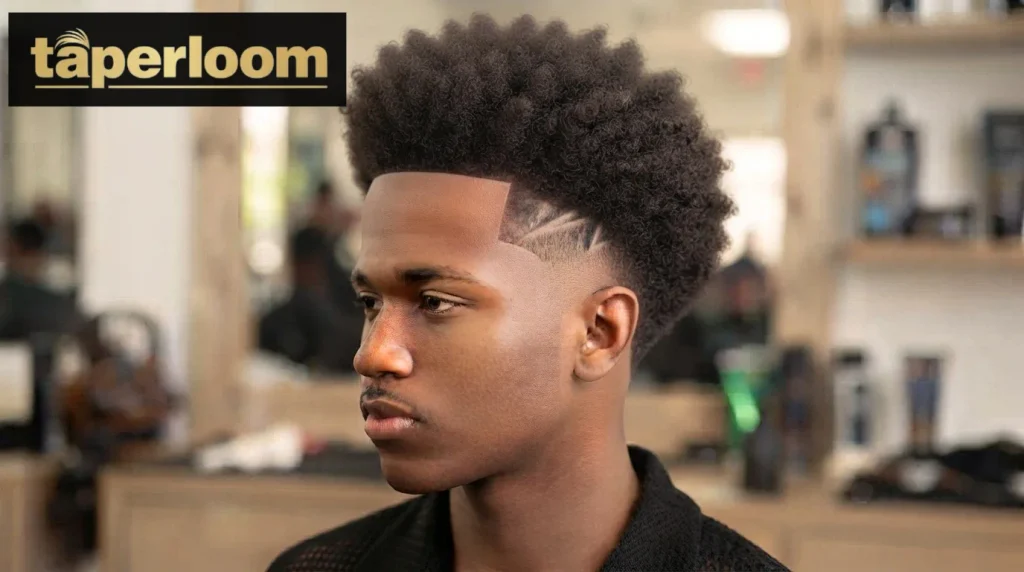
The sides are cut very short before blending into the low taper, creating extra contrast against the curls on top. Suits guys who want a bit more edge than a standard taper.
Tip: This style requires touch ups every two to three weeks to keep the contrast sharp.
Exact Barber Script: What to Say for Your Curl Type
Knowing what you want is only half the job. If you don’t describe it clearly, you can walk out with a mid taper instead of a low one, or find your barber took off more length than you wanted. Here’s exactly what to say, broken down by curl type, so there’s no room for guesswork in the chair.
General Script (Any Curl Type)
Start with this base request every time:
“I’d like a low taper fade starting about an inch above my ear, blending down to my neckline. Please don’t fade all the way to the skin, and don’t touch the length on top.”
This one sentence covers the three things barbers most often get wrong: fade height, fade intensity, and top length.
For Loose Waves and Curls (2A to 3A)
“I have loose curls, so please use a number 2 or 3 guard on the sides and keep the transition really soft. I want the top left completely natural, no thinning.”
Looser curl patterns show a shorter guard length more easily, so you want to stay cautious with your wording here.
For Springy Curls (3B to 3C)
“My curls are tighter, around a 3B to 3C pattern. Use a number 1.5 to 2 guard on the sides, and please don’t cut into the curls on top, just clean up the shape if needed.”
Mentioning your curl type by name helps the barber picture the density and adjust their approach before they even pick up the clippers.
For Coily Hair (4A to 4C)
“I have coily hair, 4A to 4C. Please keep the guard at a number 1 on the sides, never lower, and connect the fade cleanly into my hairline. I’d like the top left full for volume.”
This is also the moment to specify if you want a line up. Add: “Can you also do a clean line up around my forehead and temples?”
For Thick or Dense Curly Hair
“My hair is thick and holds a lot of volume. Please thin or texturize the top slightly so it’s easier to style, but keep the overall length the same.”
For Curly Hair with a Beard
“I’d like the taper fade to blend directly into my beard line, so there’s no gap or hard edge between the two.”
A Few Extra Lines Worth Adding
- “Can you show me in the mirror before you finish the neckline?”
- “Please use scissors or texturizing shears on top instead of a blunt trim.”
- “I want to keep this low maintenance, so nothing that needs daily styling.”
Bring a reference photo whenever possible, even with a clear script. Curl patterns vary so much from person to person that a photo removes any last bit of guesswork, especially for styles like a burst fade or a hard part.
How the Cut Is Done: Step by Step
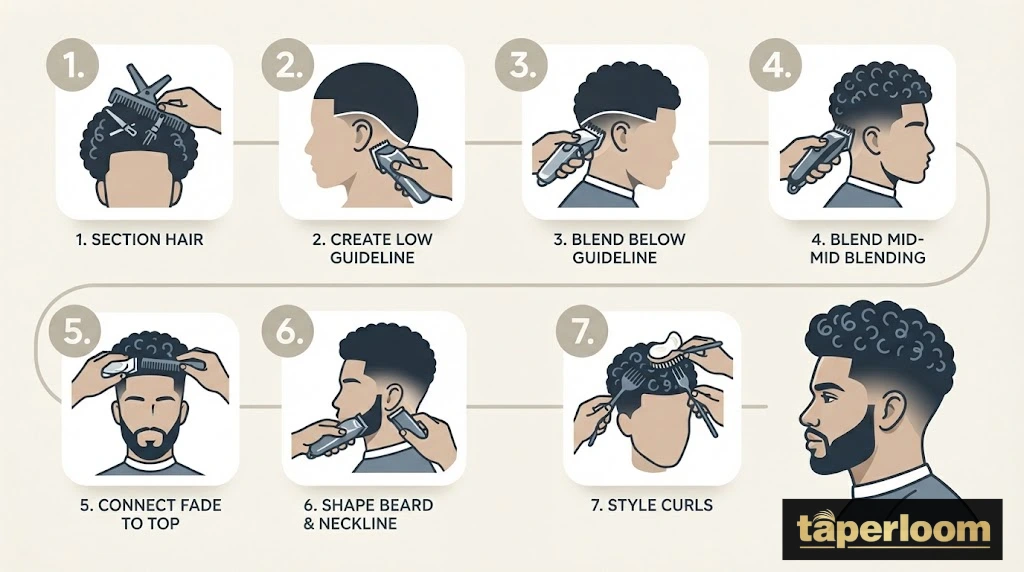
You don’t need to cut this yourself, and honestly, you shouldn’t. Curly hair hides mistakes until it dries and shrinks back up, so a low taper fade on curly hair is best left to a barber who works with curls regularly.
Still, knowing what happens in the chair helps you spot a good cut from a rushed one.
- Consultation and sectioning The barber checks your curl type, density, and how much length you want to keep on top. Longer curls get clipped up out of the way so they don’t get caught in the guard by accident.
- Setting the guideline Your barber finds the starting point, about an inch above the ear, and creates a guideline around the head at that height using a number 2 guard. This line marks where the fade begins.
- Blending the fade Working from the guideline down, the barber steps through progressively shorter guards, usually moving from a 2 down to a 1.5, then a 1, blending each pass so there’s no visible line between lengths.
- Shaping the neckline A trimmer or outliner cleans up the neckline and sideburns with a soft, natural arch rather than a hard, straight edge. This keeps the whole fade looking intentional instead of choppy.
- Checking the blend The barber checks the fade in a hand mirror from multiple angles, looking for any dark spots or visible lines where one guard length meets the next, and fixes them before moving on.
- Working on top If you’re keeping length, the barber uses scissors or texturizing shears to clean up the shape without cutting into your curl pattern. This step is skipped or kept minimal if you want to preserve as much volume as possible.
- Final check and styling The barber dries or lightly styles your curls so you can see the finished result, since curly hair often looks different wet than it does once it settles into its natural shape.
The whole process usually takes between 20 and 45 minutes, depending on your hair length and how much detail work the fade needs.
Maintenance by Curl Type
A great fade only stays great if the curls on top get proper care between visits. Maintenance needs shift depending on your curl pattern, so here’s what actually works for each type.
Loose Waves and Curls (2A to 3A)
- Wash two to three times a week with a moisturizing, sulfate free shampoo so natural oils aren’t stripped too often.
- Apply a lightweight leave in conditioner on damp hair to control frizz without weighing down the wave pattern.
- Use a light curl cream or mousse for hold that still looks soft and natural.
- Air dry when possible, or diffuse on low heat if you want extra volume.
Springy Curls (3B to 3C)
- Wash once or twice a week, and use a curl refresher spray between washes to revive shape without stripping moisture.
- Apply curl cream to soaking wet hair, not just damp hair, for the best definition.
- A diffuser on low heat helps lock in the curl pattern and reduce frizz.
- Sleep on a satin or silk pillowcase to cut down on friction and overnight frizz.
Coily Hair (4A to 4C)
- Wash once a week at most, since coily hair holds less natural moisture and dries out faster with frequent washing.
- Deep condition weekly, especially near the neckline where the fade meets the coils, since that area tends to dry out first.
- Use a thicker, heavier moisturizing cream compared to looser curl types, since coily hair needs more product to stay hydrated.
- A curl sponge on damp hair helps define individual coils without disturbing the overall shape.
General Rules for Every Curl Type
- Get your fade touched up every two to three weeks. Curly hair hides regrowth better than straight hair, but the line between skin and hair still grows out and softens.
- Avoid heat styling more than a few times a week. When you do use heat, keep the diffuser or dryer on the lowest setting.
- Switch to a silk or satin pillowcase if you haven’t already. Cotton pulls moisture out of curls and causes frizz overnight.
- If your curls start feeling dry or brittle, add a weekly protein treatment, especially if you color or bleach your hair.
Keeping the top healthy is just as important as keeping the fade sharp. A crisp fade with dry, undefined curls on top still looks unfinished, so treat both sides of the haircut as one routine, not two separate jobs.
Low Taper Fade Krullen (Dutch Term)
In Dutch, “krullen” means curls, so low taper fade krullen is simply a low taper fade on curly hair. The cut, guard sizes and styling in this guide apply exactly the same way.
FAQ
Does a low taper fade work on curly hair?
Yes, a low taper fade works well on every curl type, from loose 2A waves to tight 4C coils. It removes bulk from the sides while leaving your natural curl pattern untouched on top, which makes it one of the most versatile fades for curly hair.
How is a low taper different from a mid taper on curly hair?
A low taper starts about an inch above the ear, while a mid taper starts higher, around the temple. The difference is roughly an inch of hair, but it changes how much curl definition stays visible on the sides and how bold the overall contrast looks.
How often should I get a low taper fade touched up?
Most guys need a touch up every two to three weeks. Curly hair hides regrowth longer than straight hair does, but the line between the fade and your natural hairline still softens over time and needs a refresh to stay sharp.
Can I cut a low taper fade on curly hair myself at home?
It’s possible, but not recommended for curly hair. Curls shrink and shift shape once they dry, so blending guards evenly is much harder without professional training. A barber who works with curly hair regularly will get a cleaner, more even result.
Does a low taper fade work with 4C or coily hair?
Yes, and it’s one of the most popular choices for 4A to 4C hair. The low taper keeps the sides clean without cutting too close to the skin, which helps avoid patchy spots once tightly coiled hair dries and shrinks back up.
What products keep curls defined after a low taper fade?
A leave in conditioner, curl cream, and a light hold gel or mousse cover most curl types. Coily hair usually needs a thicker moisturizing cream, while looser waves do better with lightweight products that won’t weigh the curl pattern down.
Does a low taper fade suit every face shape?
Yes, since the fade itself sits low and soft, it doesn’t add much width or height to change your face shape. Adjusting the top length and style, like a fringe for round faces or added height for longer faces, is what really tailors the cut to you.
How much length should I keep on top for a low taper fade?
That depends on your curl type and how much volume you want. Most guys keep two to four inches for a classic look, while longer styles like a curly mullet or blowout can go up to six inches or more.
Can I get a low taper fade with a beard?
Yes, and it’s a popular combination. Ask your barber to blend the fade directly into your beard line so there’s no visible gap, which creates one clean, connected look from your sideburns down to your jaw.
Is a low taper fade low maintenance?
Yes, compared to higher fades, it’s one of the easiest to maintain. Because it starts lower and blends more gradually, regrowth is less noticeable between visits, and you can usually stretch touch ups to every two to three weeks.
Read Next : Textured Fringe With Low Taper Fade: The Complete 2026 Style Guide

Muhammad Kaleem is a content creator who writes about hair care, hairstyles, grooming, and everyday hair trends. He enjoys turning hair-related topics into simple, practical, and easy-to-understand content that helps readers make informed choices about their hair and personal style.