
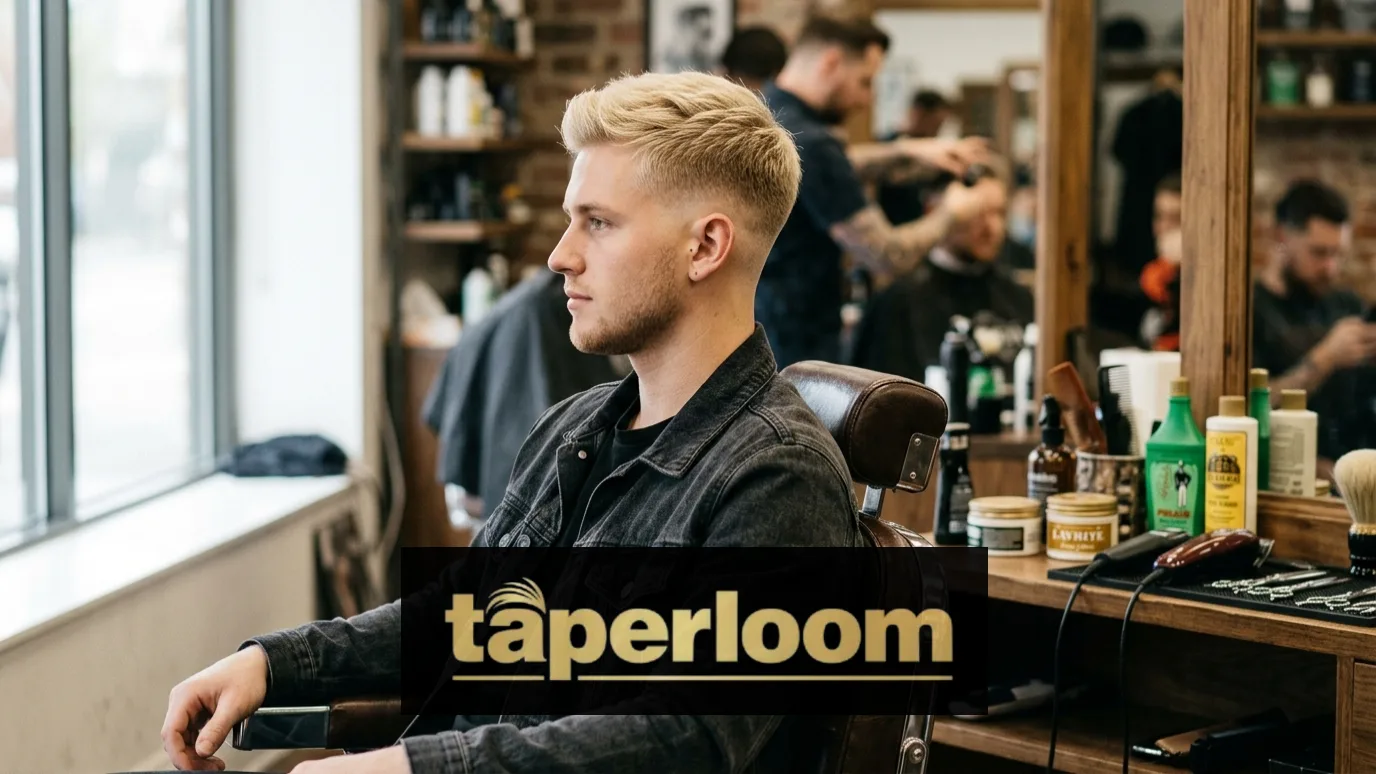
A low taper fade blonde hair haircut pairs a soft fade that starts just above the ears and nape with blonde hair on top. It works with straight, wavy, curly, and coily hair, needs a trim every 2 to 3 weeks, and suits almost any face shape when you adjust the top length.
Walk into any barbershop right now and you’ll hear the same request: low taper, blonde on top. It’s become one of the go to combinations for men who want a sharp side profile without an aggressive fade line. The blonde does the heavy lifting up top, it catches light, shows off texture, and makes even a simple cut look intentional.
This guide covers 22 style variations, the best blonde shades for different skin tones, how to talk to your barber, real maintenance costs, and the small mistakes that quietly ruin an otherwise great cut. If you want the full breakdown of the base cut itself before diving into color, our low taper fade hub covers every variation of the style.
What Is a Low Taper Fade Blonde Haircut?
A low taper fade blonde haircut is a cut where the hair gradually shortens starting just above the ears and blending into the neckline, while the top stays blonde.
Unlike a mid or high fade, the transition sits close to the hairline, so the contrast stays soft instead of sharp.
This build works because the fade only removes bulk where it’s needed. The blonde hair on top gets to be the focal point, whether you’re wearing it as a quiff, a textured crop, or natural curls.
It suits straight, wavy, curly, and coily hair equally well, and it pairs easily with a beard or an undercut.
Barbers often recommend it to men who want a noticeable upgrade from their usual cut without going for a fully shaved or skin fade look.
It reads as clean and put together, which is why it works just as well in an office as it does on a night out.
Suitable for: straight, wavy, curly, and coily hair types Typical trim frequency: every 2 to 3 weeks Best paired with: beards, undercuts, longer top sections
Low Taper vs Mid vs High Fade
Before you pick a style, it helps to know exactly where your fade sits on the head, since this changes the whole look of the haircut. Here’s how the three main fade heights compare.
| Fade Type | Where It Starts | Overall Look | Maintenance |
| Low Taper Fade | Just above the ears and around the nape | Soft, subtle contrast | Every 2 to 3 weeks |
| Mid Fade | Around the middle of the sides, near the temple | Balanced, noticeable contrast | Every 2 to 3 weeks |
| High Fade | Higher up, closer to the crown | Bold, sharp contrast | Every 10 to 14 days |
A low taper fade is the most forgiving option of the three. It grows out slowly and evenly, so you’re not stuck with an awkward, patchy look between barber visits.
A mid fade sits in the middle, giving you more definition without the intensity of a high fade. A high fade removes the most hair and creates the sharpest line, but it also demands the most upkeep since regrowth shows quickly.
If you want your blonde color to be the main event rather than competing with an aggressive fade line, the low taper is the safer, more versatile choice.
It lets the color do the talking while keeping the sides clean underneath.
Why Blonde Hair Works So Well With a Low Taper
Blonde hair and a low taper fade complement each other for a simple reason: light strands reflect more light than dark strands, which means every wave, curl, or layer you’re wearing on top gets shown off instead of blending into a flat, dark mass.
Dark hair on a low taper can look a bit flat under normal lighting, especially indoors. Blonde hair on that same cut reads as more dimensional, since the eye can actually pick up on the texture and movement in the top section.
That’s part of why barbers see so many requests for this exact pairing.
There’s also a contrast effect at play. Because the fade stays low and soft, there’s no harsh line competing with the color for attention.
The blonde naturally draws the eye upward, and the quiet fade underneath just cleans up the frame without fighting for focus. The result looks deliberate rather than like two unrelated decisions stacked on top of each other.
This is also why the placement of the taper matters more with blonde hair than with darker shades.
A fade that climbs too high can flatten the visual balance between the color and the cut, while a properly low fade lets the blonde hair keep its natural brightness and shape.
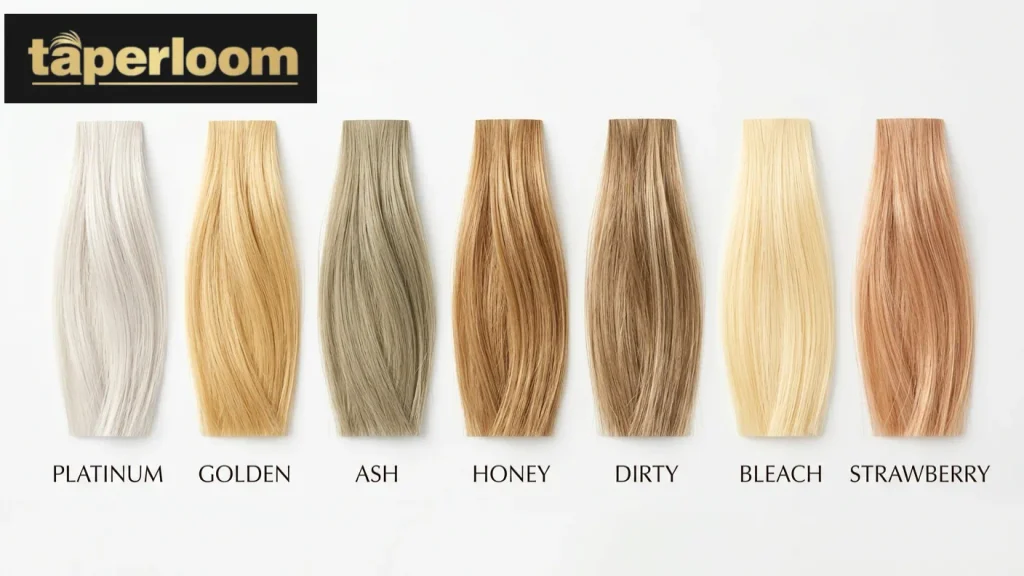
Best Blonde Shades Guide
Not all blonde shades work the same way with a low taper fade. Here’s a quick breakdown to help you pick one that matches your skin tone and upkeep level.
| Shade | Best For | Skin Tone Match | Maintenance |
| Platinum Blonde | Bold, high contrast looks | Cool undertones | High, weekly purple shampoo |
| Golden Blonde | Natural, sun kissed vibe | Warm undertones | Medium |
| Ash Blonde | Cooler, muted tone | Cool undertones | Medium, controls brassiness |
| Honey Blonde | Warm, soft finish | Medium to warm undertones | Medium |
| Dirty Blonde | Low key, easy grow out | Most skin tones | Low |
| Bleach Blonde | Maximum brightness | Best on buzz cuts, short crops | High |
| Strawberry Blonde | Warm with a red tint | Fair to medium, warm undertones | Medium |
Quick tip: if this is your first time going blonde, start with dirty blonde or dark blonde. Both need less bleaching and grow out without an obvious root line.
22 Low Taper Fade Blonde Hairstyles
Each style below uses the same low taper base, so the fade stays consistent. What changes is what’s happening on top.
1. Low Taper Fade Blonde Quiff
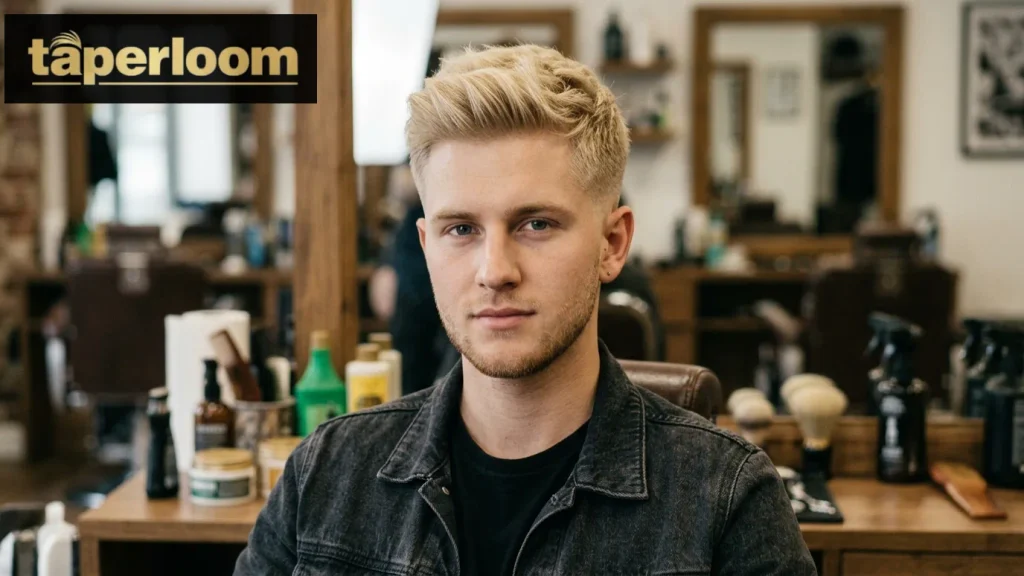
Hair on top gets blow dried upward and slightly back, and the blonde tone adds extra brightness to the raised section. A light hold wax keeps it standing through the day.
- Suitable Hair Type: straight, thick hair
- Styling Tip: blow dry upward with a round brush, then set with medium hold wax
- Maintenance: every 2 to 3 weeks
- Pros: classic look, adds height, works for formal and casual settings
- Cons: needs daily styling, heat tools can dry out bleached hair
2. Low Taper Fade Blonde Textured Crop
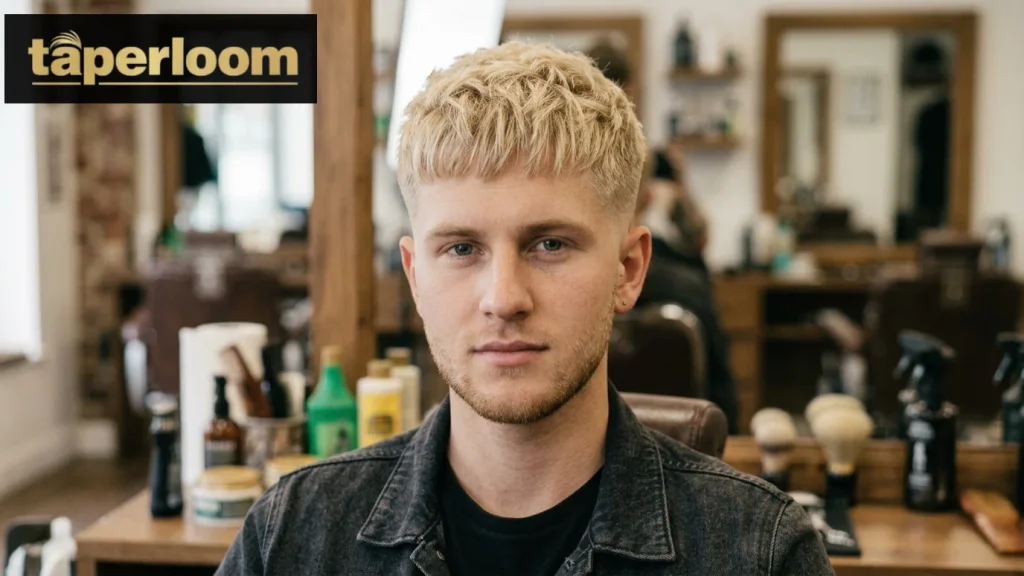
Short, choppy pieces on top give this cut visual movement without looking messy, and the blonde color makes each strand more visible. If this style catches your eye, our full textured crop guide breaks down 30 variations of the cut.
- Suitable Hair Type: fine, straight, or thinning hair
- Styling Tip: work a small amount of matte clay through dry hair and push pieces upward
- Maintenance: every 2 weeks, since short crops grow out fast
- Pros: low effort daily styling, sharp modern look
- Cons: needs frequent trims to hold its shape
3. Low Taper Fade Blonde Curly Hair
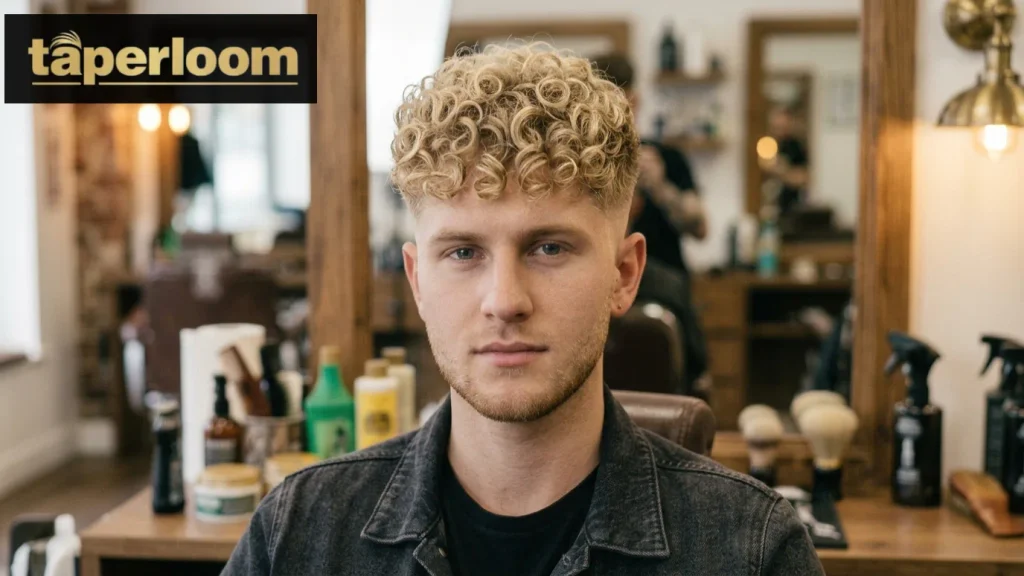
Natural curls stay untouched on top while the low taper keeps the sides tight, which stops curls from spreading too wide. For more on cutting and styling this texture, see our curly hair guide.
- Suitable Hair Type: curly or coily hair
- Styling Tip: apply curl cream to soaking wet hair and let it dry undisturbed
- Maintenance: deep condition twice a week, bleached curls dry out faster
- Pros: shows off natural texture, low daily styling once set
- Cons: curls need extra moisture care, shrinkage can hide length
4. Low Taper Fade Blonde Straight Hair
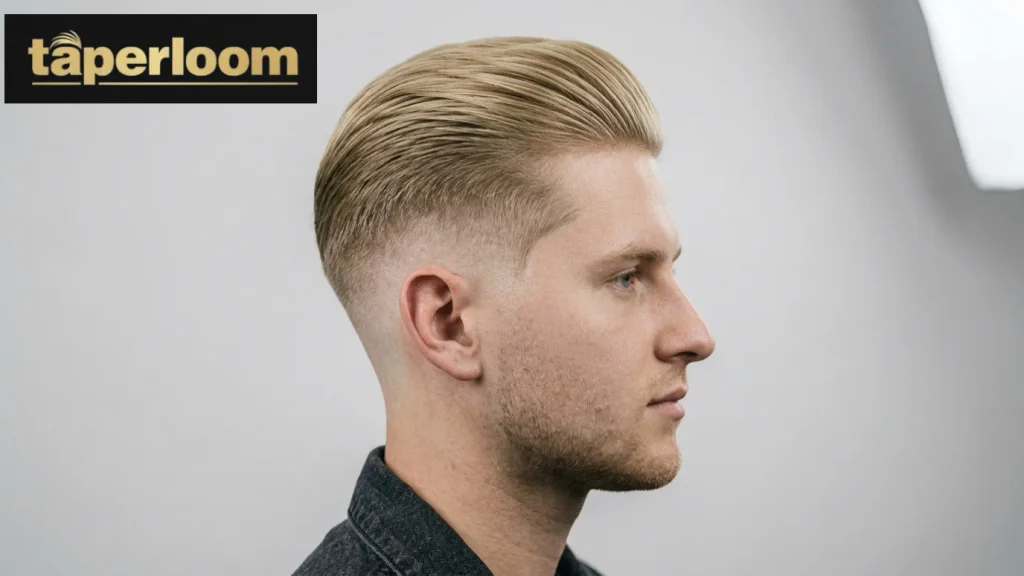
Straight hair lays flat against the fade, which makes the blend line look sharp and precise from every angle. Our dedicated straight hair guide covers this in more depth.
- Suitable Hair Type: fine or thick straight hair
- Styling Tip: run a drop of light hair oil through damp hair before combing into place
- Maintenance: every 2 to 3 weeks
- Pros: clean and low maintenance, grows out evenly
- Cons: can look flat without added texture product
5. Low Taper Fade Blonde Wavy Hair
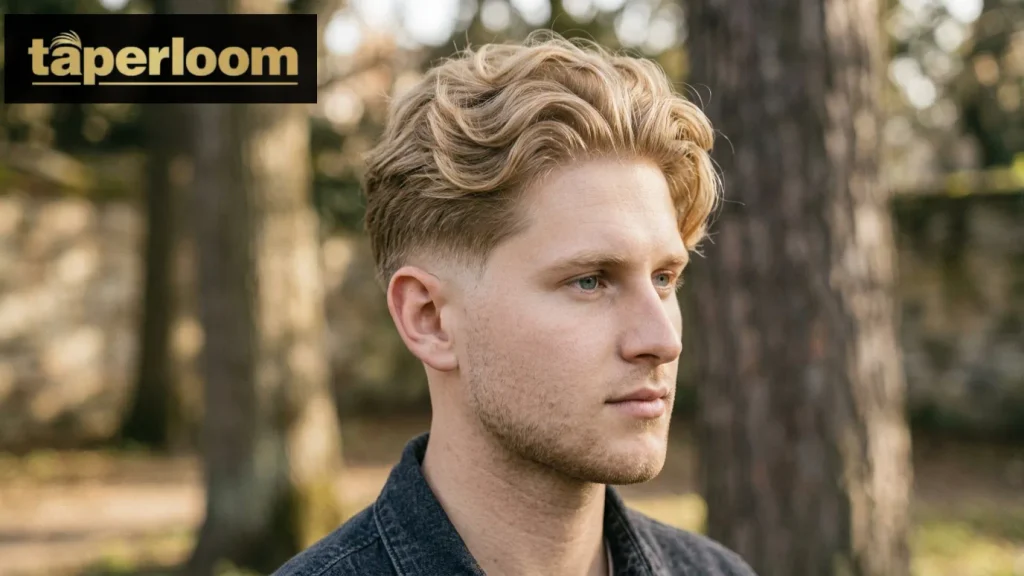
Natural waves get to move and catch light on top, while the low fade keeps the base of the haircut looking clean and deliberate.
- Suitable Hair Type: naturally wavy, medium density hair
- Styling Tip: scrunch a light mousse into towel dried hair instead of brushing it out
- Maintenance: trim every month to keep wavy ends from splitting
- Pros: natural movement, minimal daily effort
- Cons: shape can shift with humidity
6. Low Taper Fade Blonde Fluffy Hair
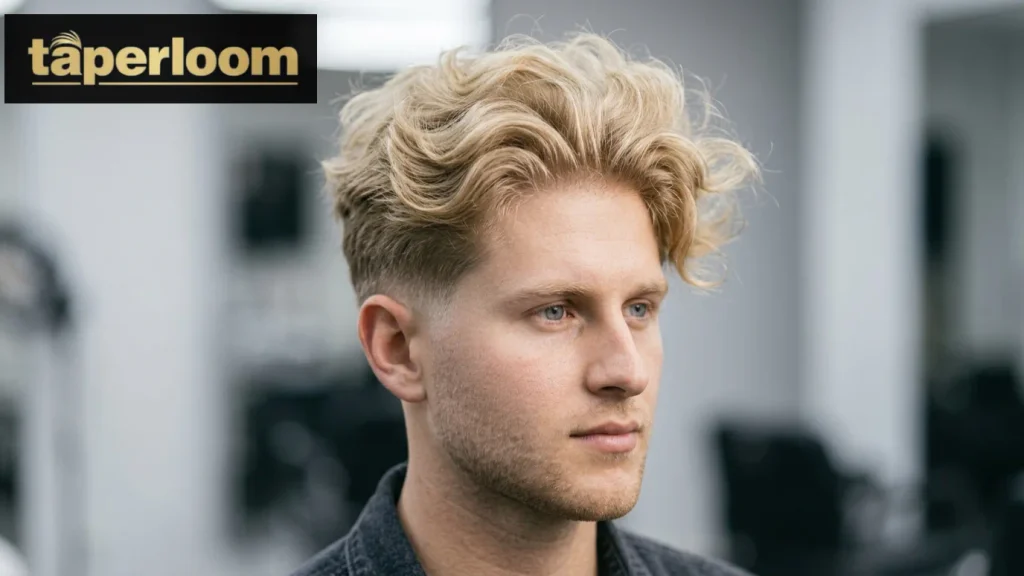
Extra volume on top gives this cut a soft, tousled finish, and the blonde shade exaggerates that airy look across the whole crown. Check out our fluffy hair styles guide for more variations on this look.
- Suitable Hair Type: thick or naturally wavy hair
- Styling Tip: rough dry upward with a paddle brush, then add a lightweight mousse
- Maintenance: every 2 to 3 weeks
- Pros: adds fullness, youthful look
- Cons: heavy pomades will flatten the volume this style needs
7. Low Taper Fade Blonde Messy Hair
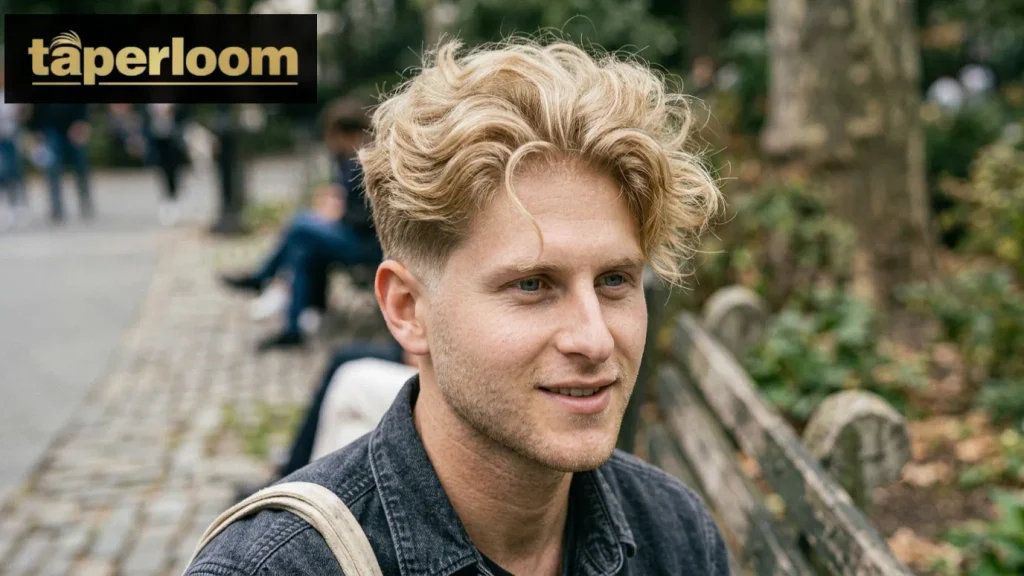
This deliberately tousled style keeps things casual, with enough length on top that it falls naturally instead of holding one fixed shape.
- Suitable Hair Type: fine to medium hair with some natural wave
- Styling Tip: scrunch a sea salt spray into damp hair and let it air dry
- Maintenance: weekly leave in treatment keeps blonde ends from feeling dry
- Pros: effortless daily look, forgiving of bad hair days
- Cons: can look unkempt if hair is too fine to hold texture
8. Low Taper Fade Blonde Side Part
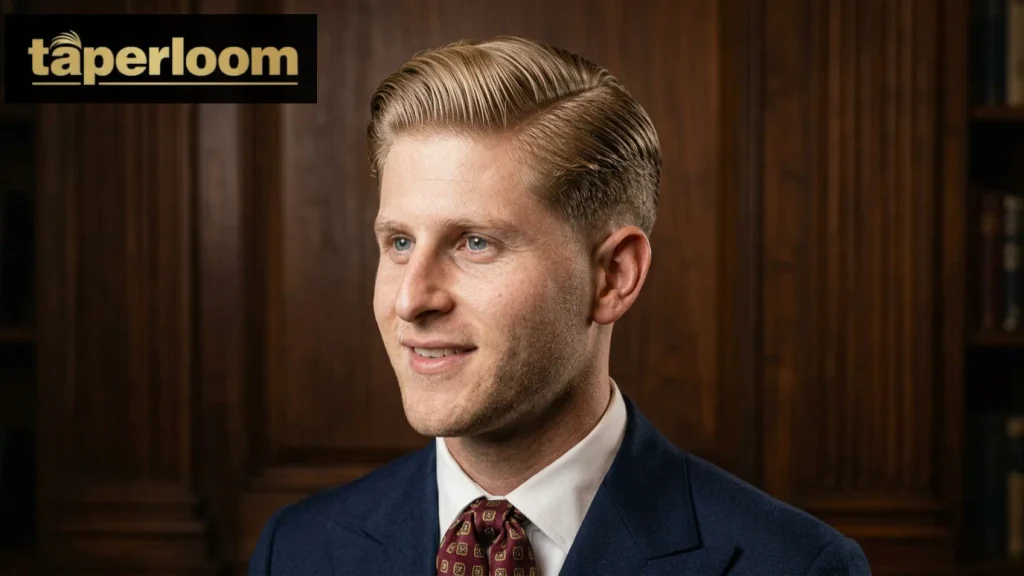
A crisp side part adds a refined, almost vintage feel to the blonde top, and it works especially well for office or formal settings.
- Suitable Hair Type: straight or fine hair
- Styling Tip: comb the natural part while hair is damp, then lock it with a matte pomade
- Maintenance: every 3 weeks to keep the part line crisp
- Pros: professional look, easy to maintain
- Cons: can look dated without the right product finish
9. Low Taper Fade Blonde Slick Back
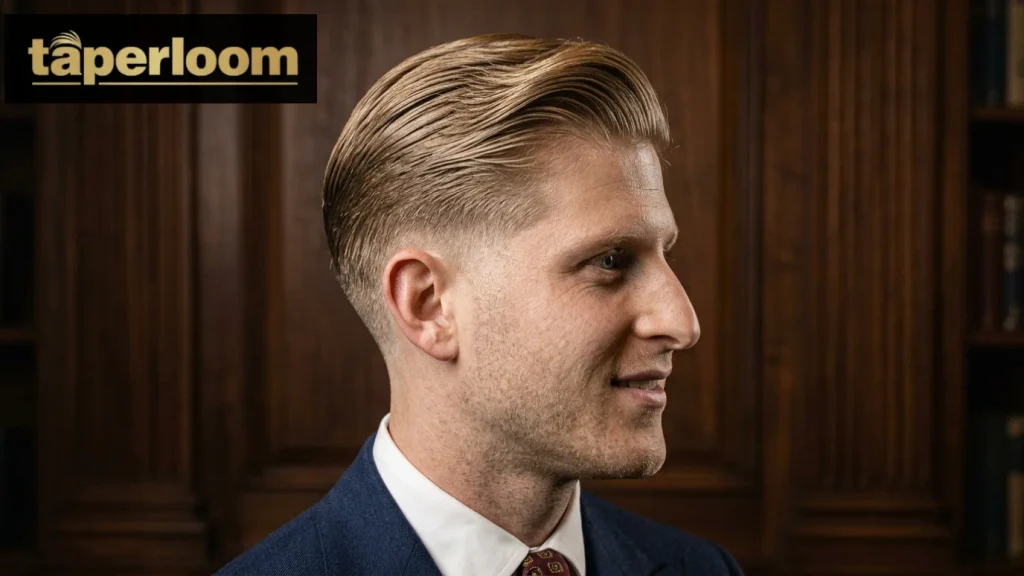
Hair is combed straight back for a smooth, polished finish, and the low fade blends cleanly into the back and sides.
- Suitable Hair Type: straight or medium length hair
- Styling Tip: apply strong hold pomade to damp hair, comb from front to crown
- Maintenance: wash product out daily to avoid buildup near the hairline
- Pros: sharp, classic finish, works for formal events
- Cons: needs daily restyling, product buildup if not washed properly
10. Low Taper Fade Blonde Pompadour
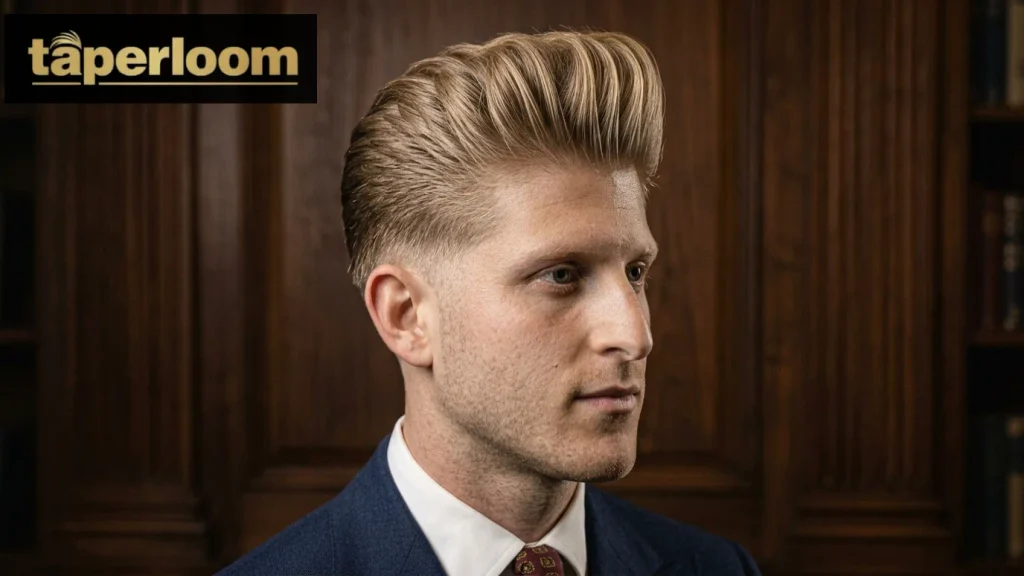
A modern take on a retro favorite, combining volume at the front with a tapered back, and the blonde color amplifies the height.
- Suitable Hair Type: straight or wavy, medium to thick hair
- Styling Tip: blow dry the front up and back over a round brush, set with strong hold cream
- Maintenance: high, needs daily styling to hold shape
- Pros: bold, standout look
- Cons: high maintenance, not ideal for humid climates
11. Low Taper Fade Blonde with Beard
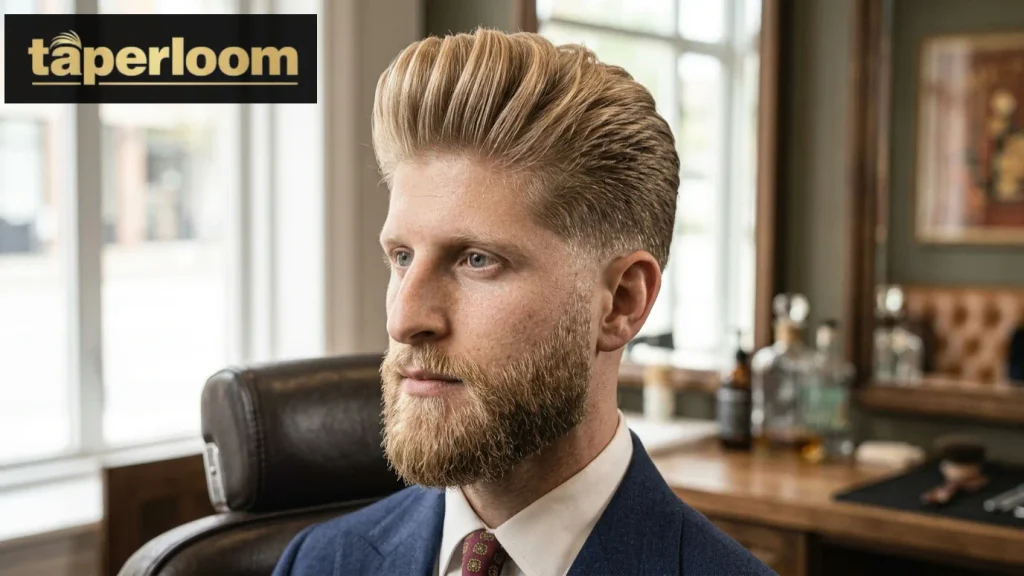
The taper blends smoothly into a full, well groomed beard, creating a bold contrast against the lighter top.
- Suitable Hair Type: any top texture, paired with facial hair
- Styling Tip: condition the beard with oil daily and style the top with a light clay
- Maintenance: line up the beard weekly to match the fade
- Pros: cohesive, masculine look, works with most face shapes
- Cons: needs consistent beard upkeep alongside the haircut
12. Low Taper Fade Blonde Spiky Hair
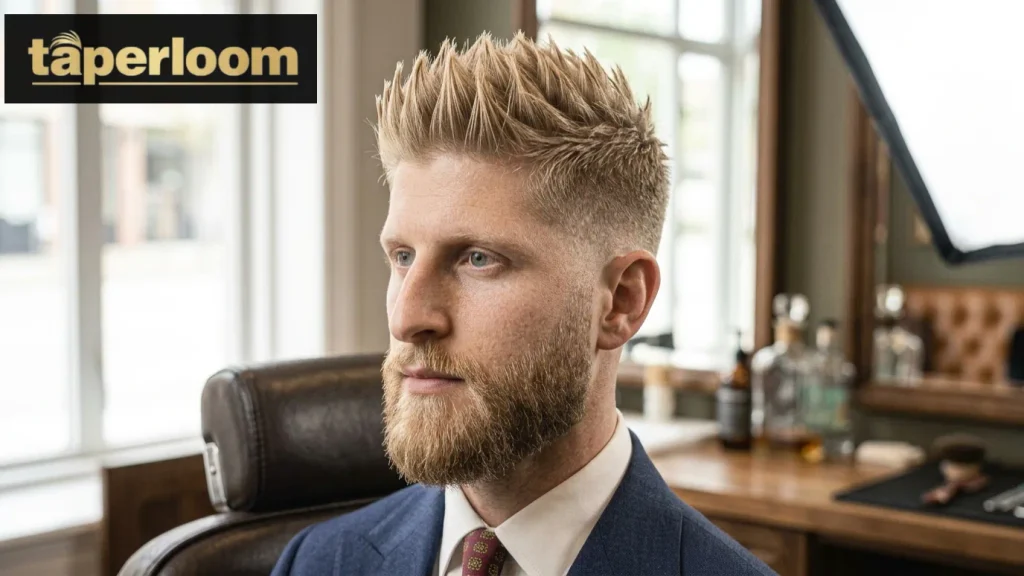
Short spikes give off an energetic vibe, and the blonde color makes each spike stand out against the tapered sides.
- Suitable Hair Type: straight, medium density hair
- Styling Tip: apply a strong hold wax to dry hair and pull pieces up between fingers
- Maintenance: every 2 to 3 weeks
- Pros: youthful, low effort once styled
- Cons: hold can weaken by end of day, not ideal for humid weather
13. Low Taper Fade Blonde Long Hair
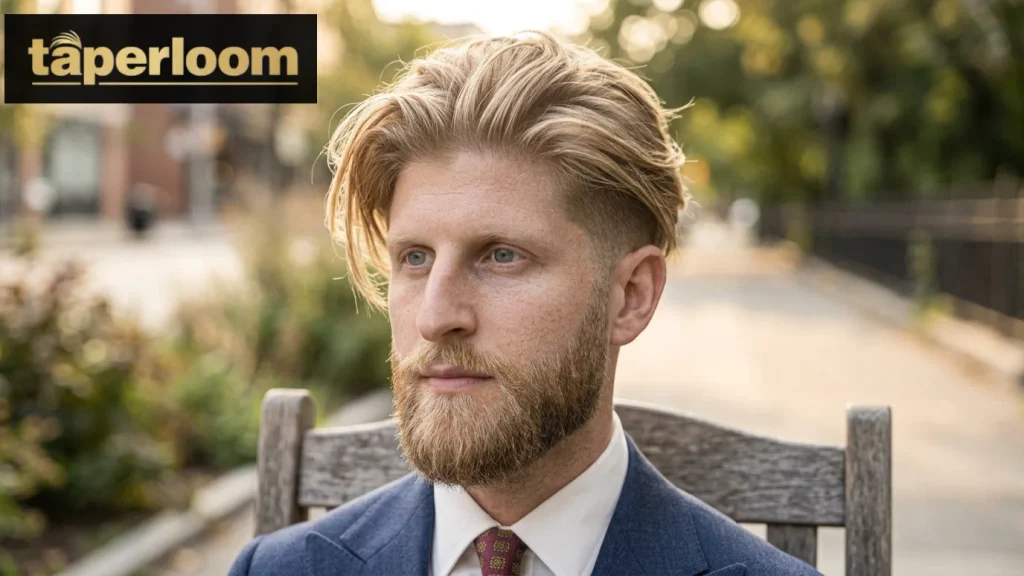
Keeping real length on top opens the door to slicked back looks or loose natural waves, while the low taper keeps the sides from looking neglected. Our long hair guide has more styling options for this length.
- Suitable Hair Type: long wavy or straight hair
- Styling Tip: apply leave in conditioner to damp ends and air dry to avoid frizz
- Maintenance: trim split ends every 8 weeks
- Pros: versatile styling options, strong contrast with the fade
- Cons: longer bleached hair needs more moisture upkeep
14. Low Taper Fade Blonde Buzz Cut
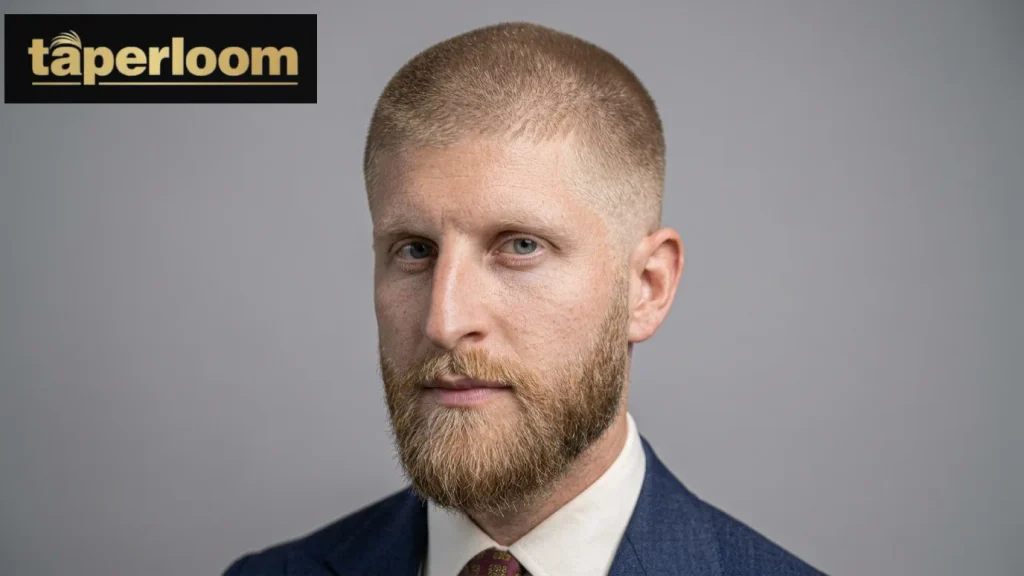
A buzzed top paired with a low fade delivers a sharp, uniform look, and the blonde shade still shows through even at short lengths. For guard length specifics, see our buzz cut guide.
- Suitable Hair Type: any hair type cut close to the scalp
- Styling Tip: no daily product needed, apply scalp sunscreen if outdoors often
- Maintenance: rebleach roots and refresh the taper every 2 weeks
- Pros: minimal upkeep between color touch ups, clean look
- Cons: color needs frequent refreshing since roots show fast at this length
15. Low Taper Fade Blonde Faux Hawk
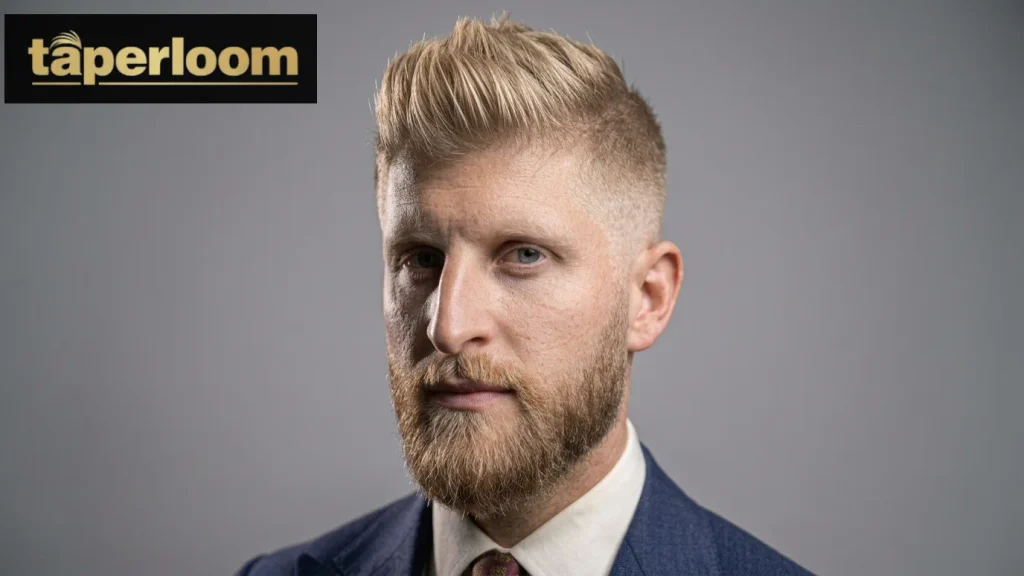
Sides are tapered down while the center section is styled upward, creating a subtle mohawk effect that’s bold without being extreme.
- Suitable Hair Type: straight or thick hair, medium length on top
- Styling Tip: blow dry the center strip upward, set with strong hold gel
- Maintenance: every 2 to 3 weeks
- Pros: distinctive look, blonde tone makes the center strip pop
- Cons: requires daily styling effort
16. Low Taper Fade Blonde Fringe
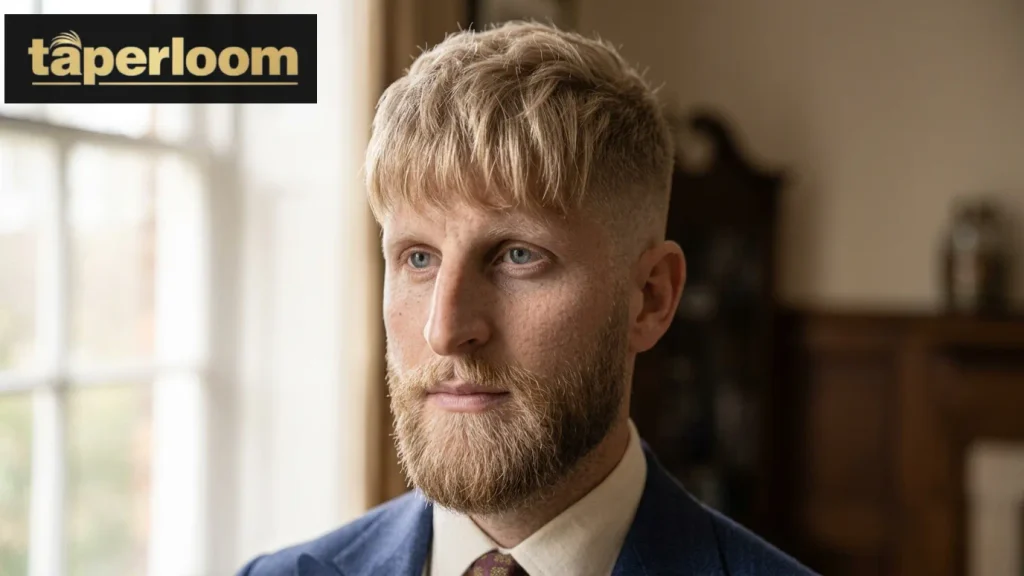
A soft fringe falls over the forehead, softening the overall look and adding a youthful edge to the blonde top. If fringe styles are your focus, our low taper fade fringe guide covers 27 variations with barber specs.
- Suitable Hair Type: straight to slightly wavy hair
- Styling Tip: rub a pea sized amount of paste through the front for separated strands
- Maintenance: trim the fringe every 2 weeks so it doesn’t drop into the eyes
- Pros: softens facial features, easy to style
- Cons: frequent fringe trims needed to keep the shape
17. Low Taper Fade Blonde Undercut
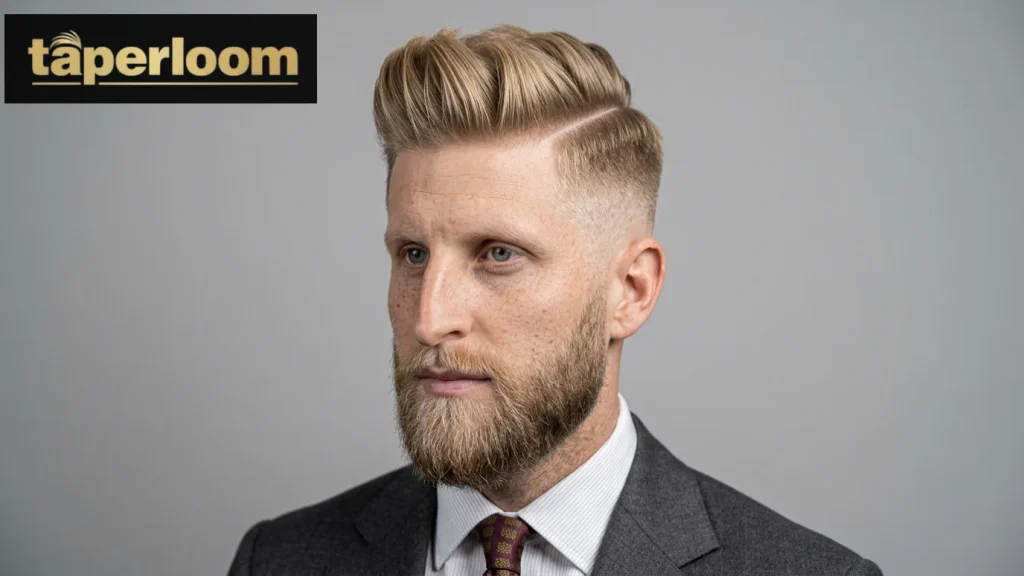
The sides and back are cut noticeably shorter than the top, creating a clear line of separation that makes the blonde section stand out even more.
- Suitable Hair Type: straight or wavy, medium to thick hair
- Styling Tip: blow dry the top in your preferred direction, then set with a matte cream
- Maintenance: every 2 to 3 weeks
- Pros: strong contrast, versatile styling on top
- Cons: grows out unevenly between the top and sides
18. Low Taper Fade Blonde Platinum
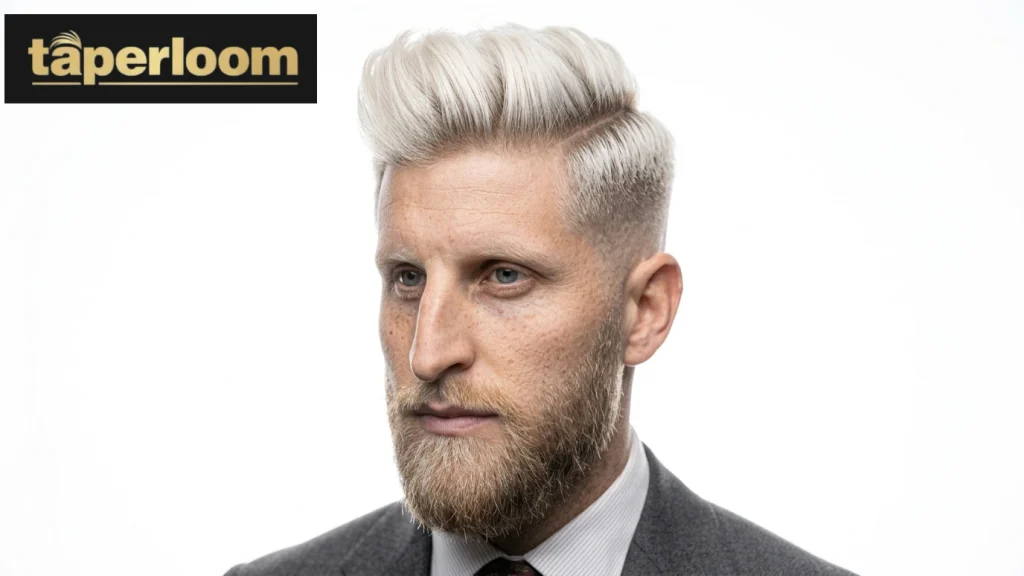
The boldest shade on this list, creating the strongest contrast against the fade, especially when natural roots are visible underneath.
- Suitable Hair Type: short to medium straight hair
- Styling Tip: use purple shampoo once a week to stop the tone turning yellow
- Maintenance: touch up roots every 3 to 4 weeks
- Pros: maximum brightness, modern edgy look
- Cons: high upkeep, root grow out shows quickly
19. Low Taper Fade Dirty Blonde Hair
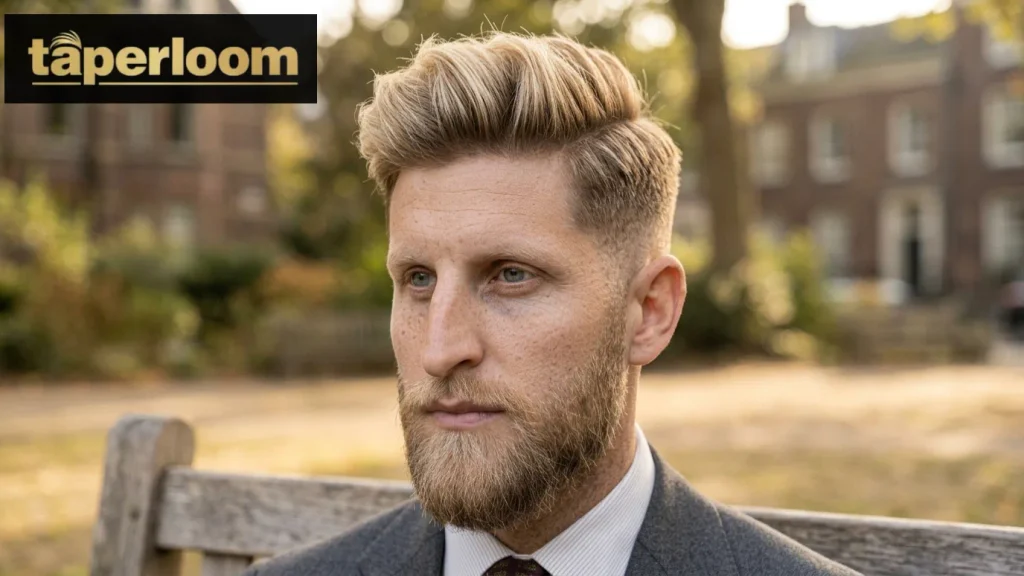
Dirty blonde blends brown roots into blonde ends, making this one of the lowest maintenance color choices on this list.
- Suitable Hair Type: straight, wavy, or thick hair
- Styling Tip: dust texture powder at the roots to bring out the natural two tone effect
- Maintenance: trims every 3 to 4 weeks, root growth barely shows
- Pros: easy grow out, natural looking
- Cons: less dramatic contrast than brighter shades
20. Low Taper Fade Blonde Caesar Cut
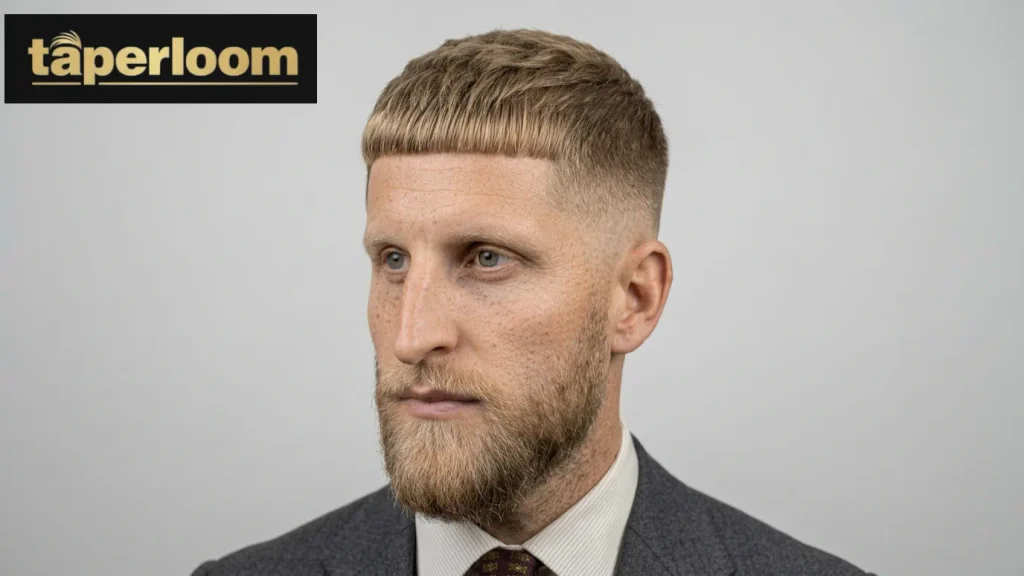
A short, straight fringe sits across the forehead, and pairing it with a low taper gives this old school cut a cleaner modern edge.
- Suitable Hair Type: straight or fine hair
- Styling Tip: brush the fringe forward with a soft bristle brush and light styling cream
- Maintenance: trim the fringe straight across every 2 to 3 weeks
- Pros: clean, low effort daily styling
- Cons: less flexible for changing up the look
21. Low Taper Fade Blonde Middle Part
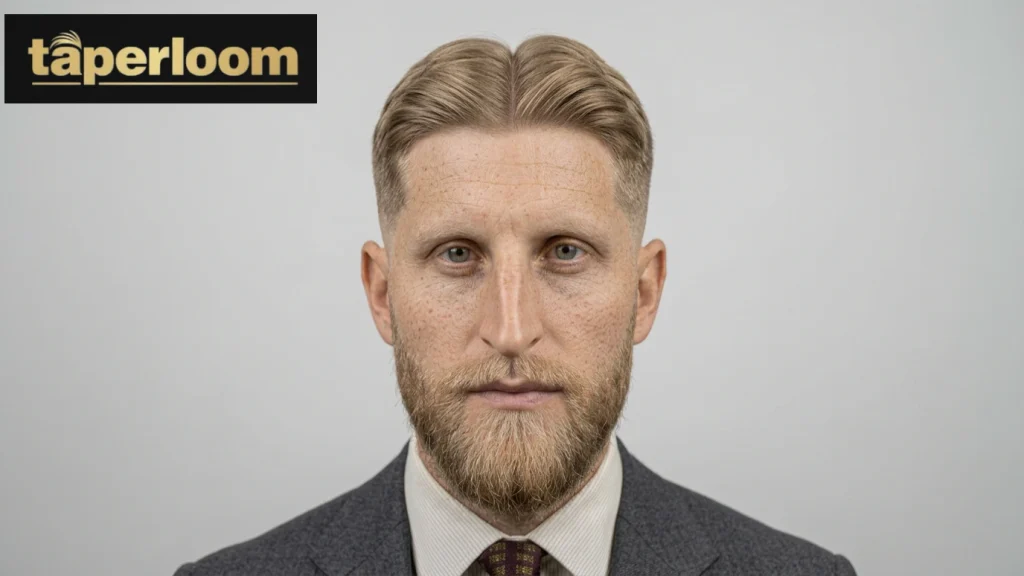
Splitting blonde hair down the center frames the face symmetrically, while the low taper keeps the sides from bulking out the shape.
- Suitable Hair Type: medium to long straight or wavy hair
- Styling Tip: part damp hair with a comb, blow dry on low so the part sets naturally
- Maintenance: light hold spray keeps the part from shifting during the day
- Pros: trendy, symmetrical look
- Cons: needs the right face shape to look balanced
22. Low Taper Fade Blonde Combed Backwards
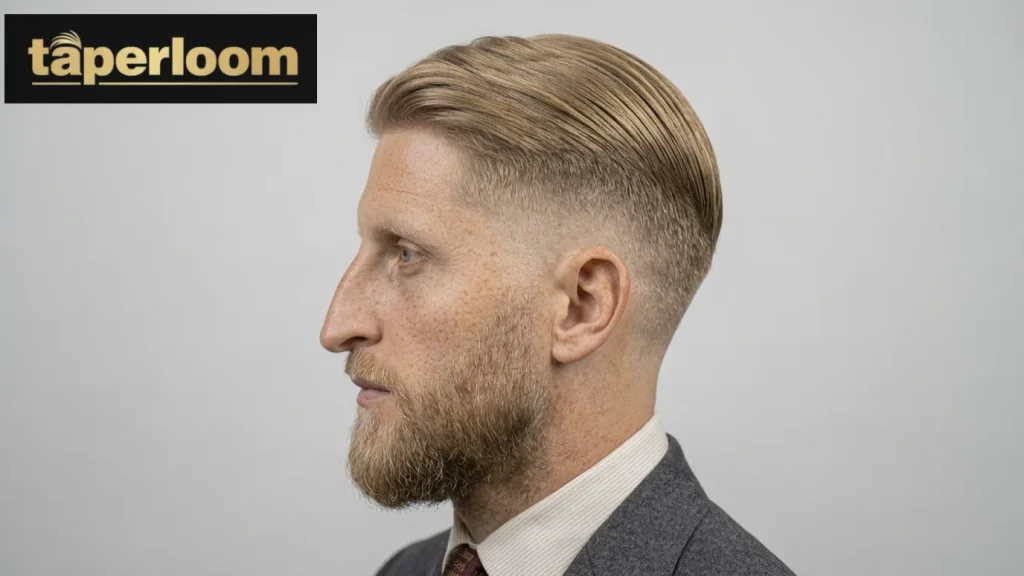
Hair is combed straight back for a smooth, classic finish, and a shine pomade gives the whole style a polished look.
- Suitable Hair Type: straight or medium length hair
- Styling Tip: apply pomade to damp hair and comb backward in one direction
- Maintenance: every 2 to 3 weeks
- Pros: timeless, professional appearance
- Cons: can look greasy if too much product is used
Quick Comparison Table
Here’s every style from this guide in one place, so you can compare hair type and upkeep at a glance before your barber visit.
| Style | Best Hair Type | Maintenance Level |
| Quiff | Straight, thick | Medium |
| Textured Crop | Fine, straight | Medium to High |
| Curly Hair | Curly, coily | Medium |
| Straight Hair | Fine or thick straight | Low |
| Wavy Hair | Wavy, medium density | Low to Medium |
| Fluffy Hair | Thick, wavy | Medium |
| Messy Hair | Fine to medium | Low |
| Side Part | Straight, fine | Medium |
| Slick Back | Straight, medium length | Medium |
| Pompadour | Straight, wavy | High |
| With Beard | Any, with facial hair | Medium |
| Spiky Hair | Straight, medium density | Medium |
| Long Hair | Long wavy or straight | Medium to High |
| Buzz Cut | Any | Low |
| Faux Hawk | Straight, thick | High |
| Fringe | Straight to wavy | Medium |
| Undercut | Straight, wavy | Medium |
| Platinum | Short to medium straight | High |
| Dirty Blonde | Straight, wavy, thick | Low |
| Caesar Cut | Straight, fine | Medium |
| Middle Part | Medium to long | Medium |
| Combed Backwards | Straight, medium length | Medium |
Best Style by Face Shape
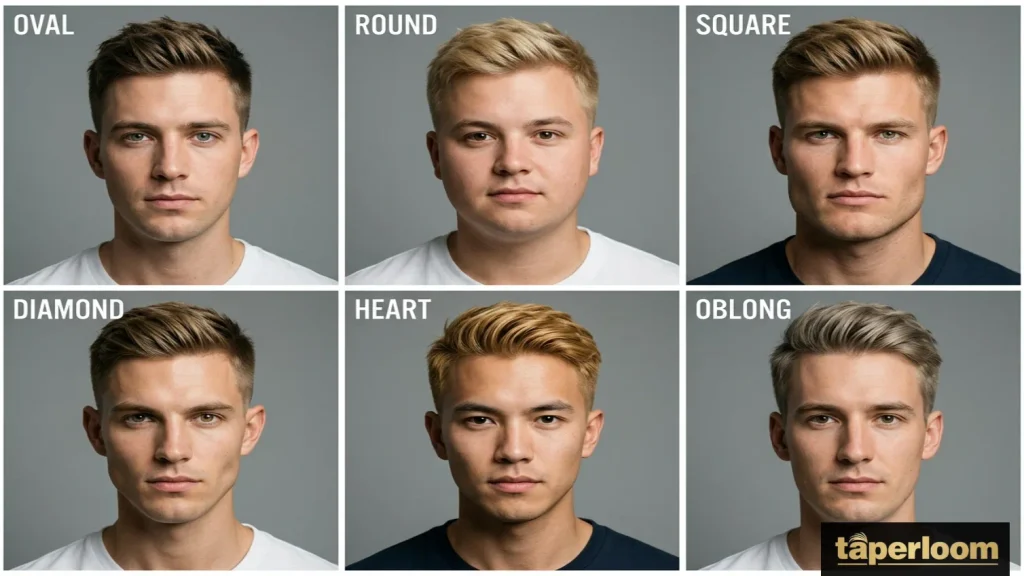
Picking a style that fits your face shape makes a bigger difference than the fade itself. Here’s a quick guide to match yours.
| Face Shape | Best Style Match | Why It Works |
| Oval | Almost any style on this list | Balanced proportions suit nearly every top length |
| Round | Quiff, pompadour, faux hawk | Added height elongates the face while the taper narrows the sides |
| Square | Textured fringe, messy hair | Softer texture eases a strong, angular jawline |
| Diamond | Long hair, side swept styles | Softens wide cheekbones and balances a narrower forehead |
| Heart | Fringe, middle part | Covers extra width at the forehead |
| Oblong | Textured crop, buzz cut, Caesar cut | Avoids adding length to an already long face |
Quick tip: if you’re unsure of your face shape, look at your hairline and jawline in a mirror without hair covering either.
The width of your forehead compared to your jaw usually gives you the answer.
Best Style by Hair Density
Hair density changes how a low taper fade blonde hair style actually behaves, sometimes more than texture does. Here’s how to match your density to the right approach.
Fine Blonde Hair
Fine strands can make the fade look less substantial since there’s less hair to work with on top.
- Keep some length around the crown instead of cutting it too short
- Avoid heavy pomades, which flatten fine hair fast
- Texture powder at the roots helps create the illusion of more volume
Thick Blonde Hair
Dense hair gives a barber more room to shape and texturize without losing fullness.
- Ask for internal weight removal so the top doesn’t sit heavy
- Works well with quiffs, pompadours, and textured crops
- Handles longer top lengths without looking bulky
Wavy Blonde Hair
Natural wave adds dimension on its own, so the cut should work with it rather than against it. If you want a wave paired with forward movement, our textured fringe guide shows how this plays out.
- Keep the taper conservative, since removing too much side hair can make the top look disconnected
- Scrunch products in rather than brushing, which preserves the wave pattern
- Trim monthly to stop ends from splitting and losing shape
Curly Blonde Hair
Curls need a bit more planning since they shrink noticeably once dry.
- Get curls cut dry, or account for shrinkage if cut wet
- Use a curl cream on soaking wet hair, then avoid touching it until fully dry
- Deep condition twice a week since bleached curls dry out faster than straight hair
Bleached Blonde Hair
Bleaching changes the hair’s condition regardless of its natural texture or density.
- Avoid aggressive thinning, since chemically treated hair is more fragile
- Always use heat protectant before blow drying
- Space out touch ups to limit cumulative damage
How to Ask Your Barber
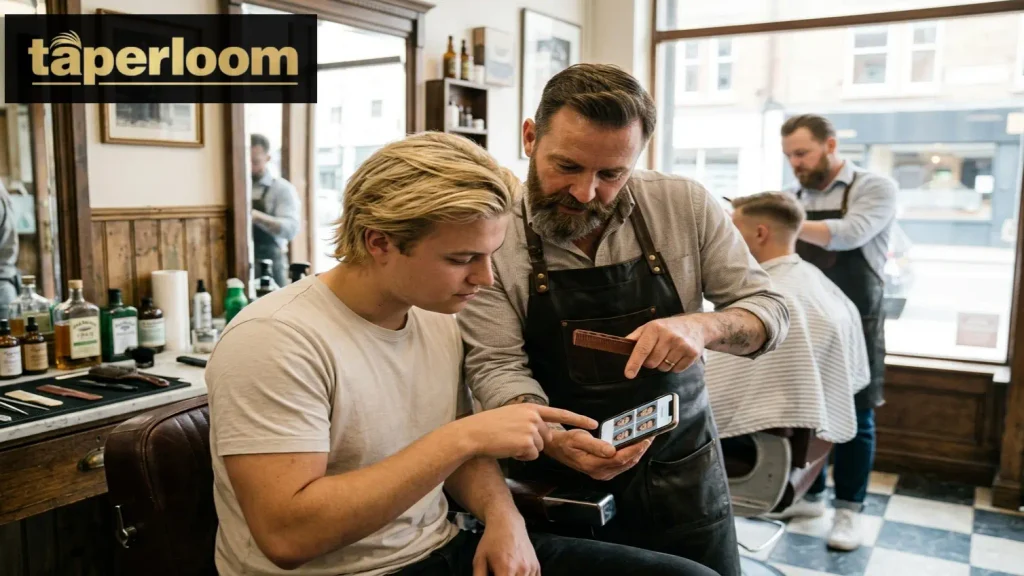
Getting the exact look you want starts with clear communication. A vague request like “give me a blonde low taper” leaves too much room for interpretation.
Say this instead:
“I want a low taper fade, keep the fade starting just above my ears and at the nape, not higher. On top, I want [quiff, textured crop, natural curls, etc.]. For color, I’m thinking [platinum, golden, ash, dirty blonde].”
That one sentence covers fade height, top style, and color intent in a single request.
Follow up with these details:
- Bring a reference photo, since fade height and blonde shade can vary a lot between barbers
- Mention whether you want natural or sharp temple corners
- Ask how much length to leave for your specific top style
- Confirm whether you want the fade to connect into a beard
- Ask about touch up timing for both the fade and the color
Questions to ask before you leave the chair:
- How often should I come back for a trim?
- When should I book a root touch up?
- What products do you recommend for this hair type?
Bringing one or two clear photos and asking these questions upfront removes almost all the guesswork, and it’s the easiest way to avoid leaving with a cut that doesn’t match what you pictured.
Cost Breakdown
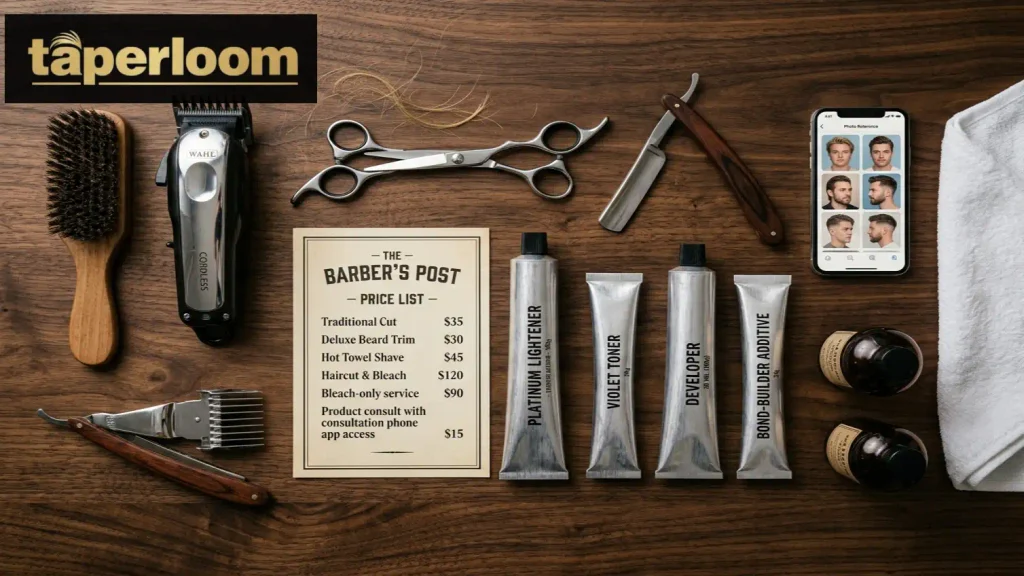
Prices vary by city and barber tier, but here’s a realistic range to plan around before your appointment.
| Service | Average Price Range |
| Low taper fade haircut only | $25 to $50 |
| Haircut at a premium/barbershop | $50 to $80 |
| Full bleach and tone (first time) | $80 to $200 |
| Root touch up | $40 to $90 |
| Toner refresh (no full bleach) | $30 to $60 |
| Purple shampoo (at home upkeep) | $12 to $25 |
| Beard line up add on | $10 to $20 |
A few things that affect the total:
- Longer or thicker hair takes more bleach and time, which raises the price
- Platinum and other high lift shades usually cost more than dirty or dark blonde
- Salons typically charge more than barbershops for color services
- First time bleaching often costs more than maintenance touch ups since it requires more product and processing time
Budget tip: if you’re new to blonde, starting with a dirty blonde or dark blonde shade keeps both the initial cost and the touch up frequency lower, since it needs less bleach and the regrowth blends in more naturally.
Styling Routine
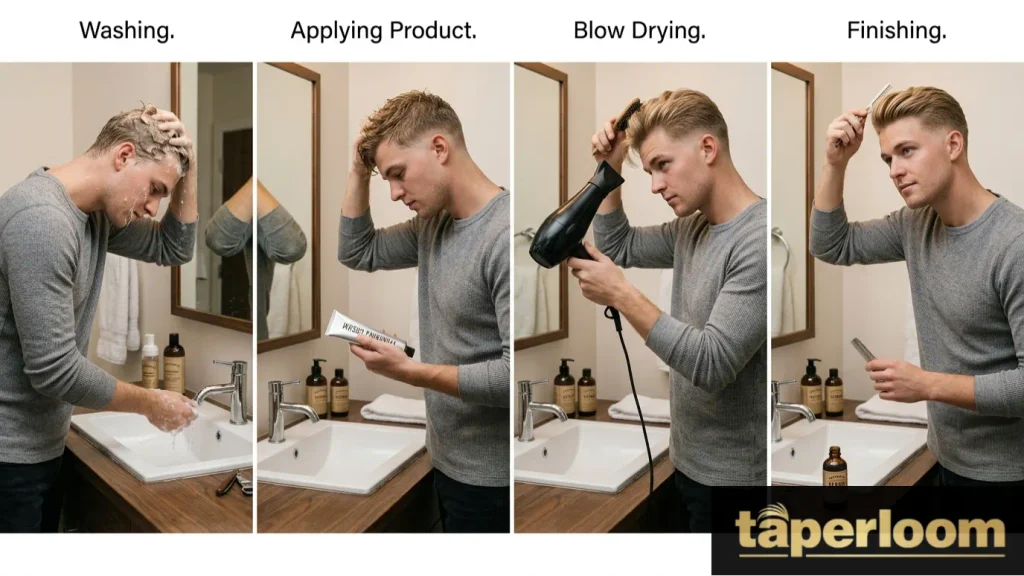
Here’s a simple, repeatable routine that works for most low taper fade blonde hair styles, adjust the direction and product based on your specific cut.
- Wash and towel dry. Clean hair holds product and shape far better than hair with oil buildup. Squeeze out excess water rather than rubbing.
- Apply a lightweight product while hair is still damp. Sea salt spray, mousse, or a light styling cream all work depending on your texture.
- Blow dry with direction in mind. Upward for a quiff or faux hawk, forward for a fringe or crop, back for a slick back or pompadour.
- Add texture at the roots. A pinch of texture powder gives fine or thin hair extra lift and makes the cut look fuller.
- Lock the style with your final product. Apply matte clay, wax, or pomade last, using a small amount and building up if needed rather than starting heavy.
- Check the fade line. Run a comb or your fingers along the sides to make sure the transition still looks clean before you head out.
Go easy on product amounts. Over applying anything on blonde hair tends to darken it and make it look greasy instead of styled. Start small, you can always add more.
Best Products
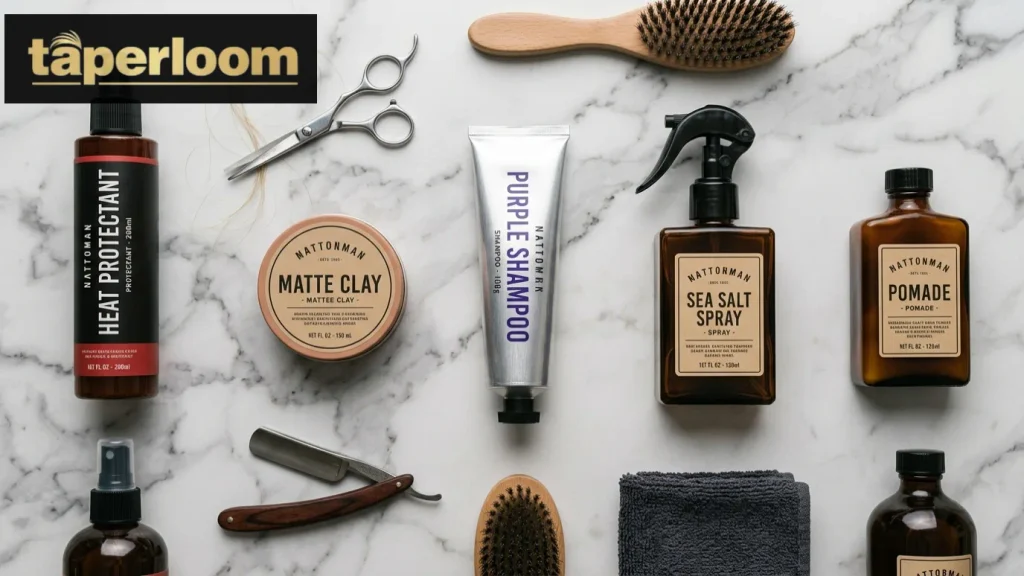
Different low taper fade blonde hair styles call for different finishes. Here’s what to reach for and why.
- Matte Clay — strong hold with zero shine, best for crops and textured tops
- Styling Cream — lighter hold, works well for wavy or medium length hair
- Sea Salt Spray — adds grit and a natural, beachy texture
- Texture Powder — instant root lift, ideal for fine or thin hair
- Hair Wax — flexible hold that suits side parts and quiffs
- Volumizing Mousse — builds body into damp hair before blow drying
- Strong Hold Pomade — best for slick backs and pompadours that need to hold shape all day
- Curl Cream — defines curls and controls frizz without weighing them down
- Heat Protectant — shields bleached strands from blow dryer and hot tool damage
- Purple Shampoo — keeps blonde tones cool and cancels out brassiness
- Leave In Conditioner — adds moisture to bleached or longer hair between washes
- Deep Conditioning Mask — weekly treatment for chemically treated hair that needs extra repair
Quick tip: if you only buy three products, start with a heat protectant, a purple shampoo, and a matte clay or cream depending on your style.
These three cover damage prevention, color maintenance, and daily styling.
Maintenance & Aftercare Schedule
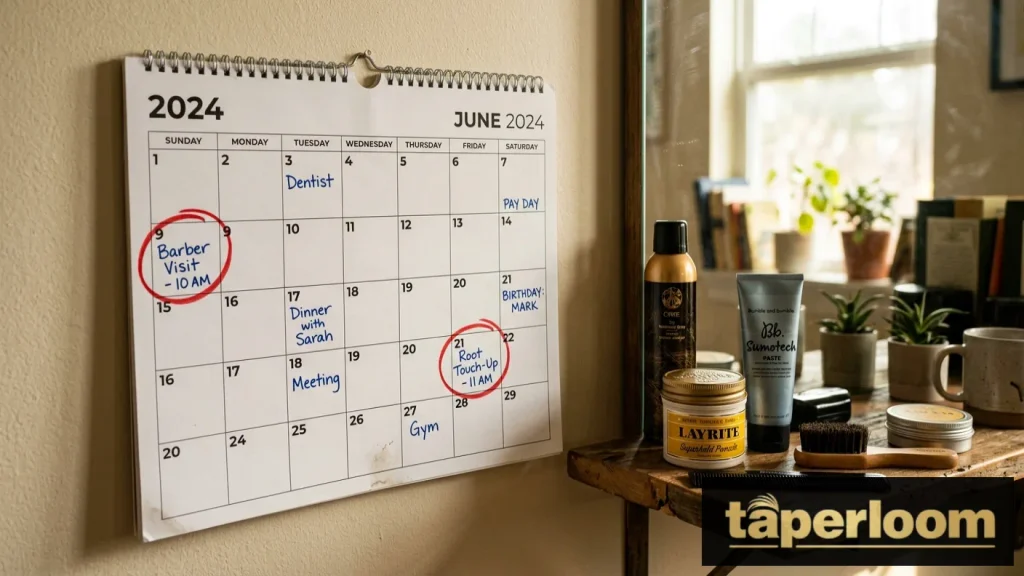
Keeping a low taper fade blonde hair look sharp comes down to sticking to a schedule rather than waiting until it looks overgrown.
| Task | Frequency |
| Barber visit for fade | Every 2 to 3 weeks |
| Root touch up | Every 4 to 6 weeks |
| Deep conditioning treatment | Once a week |
| Purple shampoo | 1 to 2 times a week |
| Regular wash | 2 to 3 times a week |
| Heat protectant application | Every time you blow dry or use hot tools |
| Beard line up (if applicable) | Weekly |
A few habits worth building in:
- Wash less often than you think you need to. Over washing strips moisture from bleached hair faster than almost anything else.
- Always condition, even on days you skip shampoo. A quick rinse through with conditioner keeps strands from drying out.
- Protect your color from the sun. A hat or a UV protecting spray helps stop blonde tones from turning brassy outdoors.
- Don’t stretch touch ups too far. Waiting too long between root appointments makes the next session longer and more expensive.
Why this matters: bleached hair is more porous than natural hair, which means it loses moisture faster and shows damage sooner if you skip steps. Sticking to this schedule is what keeps the color looking fresh and the fade looking clean between barber visits.
Common Mistakes to Avoid
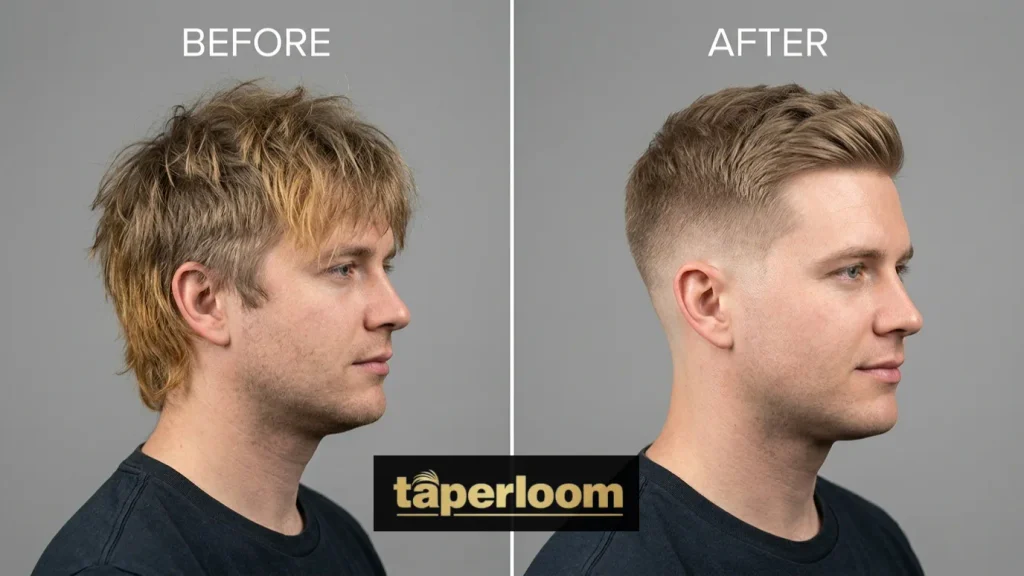
Even a well cut low taper fade blonde hair style can look off if you run into one of these common issues.
- Picking the wrong shade for your undertone. This leaves blonde hair looking either too orange or too ashy against your skin.
- Letting the taper creep too high. A low fade slowly turns into a mid fade if you don’t confirm the height every visit.
- Over bleaching in one session. This weakens hair strands and can lead to breakage, especially on hair that’s already color treated.
- Using heavy, shiny products. These make blonde hair look oily instead of styled, particularly on fine or thin strands.
- Skipping conditioner. This dries out bleached hair faster than almost any other single mistake.
- Ignoring heat protectant. Skipping this compounds damage every single time you blow dry or use hot tools.
- Waiting too long between trims. This lets the fade grow out and lose its clean shape, making the next cut take longer to fix.
- Cutting curly or wavy hair without accounting for shrinkage. Hair can look considerably shorter once it’s fully dry.
- Judging the fringe or top length while hair is wet. Wet hair sits differently than dry hair, so the finished shape should be checked once it’s dry.
- Copying a reference photo without matching hair density. A style that looks great on thick hair can look thin and flat on fine hair, and vice versa.
Quick fix: most of these mistakes come down to communication. Confirming fade height, product routine, and touch up timing with your barber at every visit avoids almost all of them.
Low Taper Fade Blonde vs Skin Fade vs Mid Fade
Here’s how the three most requested fade styles stack up against each other when paired with blonde hair on top.
| Feature | Low Taper Fade | Mid Fade | Skin Fade |
| Fade Position | Starts near ears and nape | Starts around the middle of the sides | Wraps the whole head, down to bare skin |
| Overall Look | Soft and understated | Sharper, more noticeable contrast | Bold, high contrast |
| Best Setting | Office, casual, everyday wear | Sporty, semi formal looks | Streetwear, athletic styles |
| Maintenance | Every 2 to 3 weeks | Every 2 weeks | Every 1 to 2 weeks |
| Hair Coverage | Sides stay mostly covered | Sides show more skin near the temple | Sides shaved down to bare skin |
| Grow Out | Gradual, forgiving | Noticeable within a week or two | Fast, needs frequent upkeep |
| Best For | Men who want blonde color as the main focus | Men who want more definition without going extreme | Men who want maximum contrast and don’t mind frequent visits |
Bottom line: if you want your blonde hair to stay the focal point with minimal fuss, the low taper fade is the easiest to live with.
If you want a sharper edge, a mid fade adds contrast without becoming a full commitment. A skin fade delivers the boldest look, but it comes with the most frequent barber visits by far.
FAQ
Is a low taper fade good for blonde hair?
Yes. The low fade keeps the sides clean while blonde hair on top shows off texture and shine far better than dark hair does.
How often should I get my low taper fade blonde hair trimmed?
Every 2 to 3 weeks keeps the taper line sharp and the top style holding its shape.
What’s the difference between a low taper fade and a high fade?
A low taper starts near the ears and nape, while a high fade starts closer to the crown and removes noticeably more hair.
Can curly or wavy hair work with this style?
Yes. Curly, wavy, straight, and thick hair all work well, though styling products differ slightly for each texture.
Does bleaching damage hair long term?
Bleaching does dry out hair over time, but regular conditioning and heat protectant keep the damage manageable.
What’s the best blonde shade for a first timer?
Dirty blonde or dark blonde are the easiest starting points since they need less bleaching and grow out gracefully.
Is a mid fade different from a low taper fade?
Yes. A mid fade starts higher on the sides, giving more contrast while staying less dramatic than a high fade.
How much does it cost to maintain blonde hair with a fade?
Expect $25 to $50 for the haircut and $40 to $90 for root touch ups every few weeks, depending on your barber and shade.
Will a low taper fade work with my face shape?
Yes, almost any face shape works with this fade since the top style is what changes to suit your proportions.
Can I add a beard to this haircut?
Yes. The low taper blends smoothly into a beard, and many barbers recommend this combination for a cohesive look.
More Low Taper Fade Guides
If this style worked for you, here are a few more ways to take the same base cut in a different direction:
- Taper Low Burst Fade — for a rounded, curved fade around the ear instead of a straight blend
- Low Taper Fade Designs — for adding carved patterns into an already clean cut
- Low Taper Fade Mullet Haircuts — for pairing the fade with length at the back
- Low Taper Fade on Short Hair — for a tighter, lower maintenance version of the cut
- Low Taper Fade for Kids — if you’re looking for a barber script for a younger family member
Conclusion
A low taper fade blonde hair haircut earns its popularity for a simple reason: it works with nearly any hair type, face shape, and lifestyle without demanding constant upkeep. Pick a shade that matches your skin tone, choose a top style that suits your hair density, and the rest falls into place easily.
Bring a clear reference photo to your next barber visit, use the exact wording from this guide to explain the fade height and shade you want, and stick to the maintenance schedule above. That’s really all it takes to keep this cut looking sharp well past 2026.
Ready to book your next cut? Save this guide, screenshot your favorite style, and bring it straight to your barber.
Read Next : Low Taper vs Low Fade: The Real Difference, Explained by a Barber

Muhammad Kaleem is a content creator who writes about hair care, hairstyles, grooming, and everyday hair trends. He enjoys turning hair-related topics into simple, practical, and easy-to-understand content that helps readers make informed choices about their hair and personal style.