
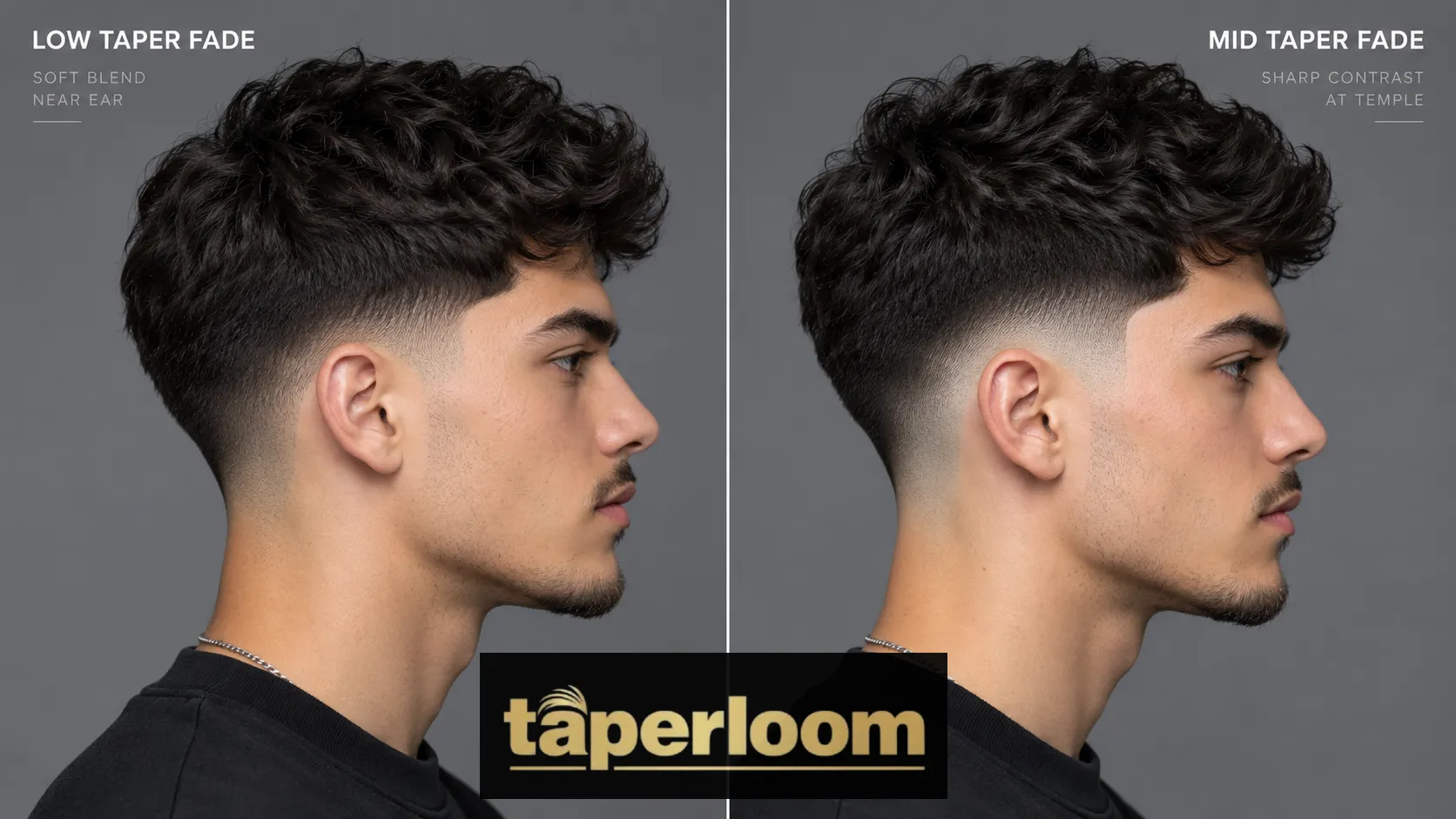
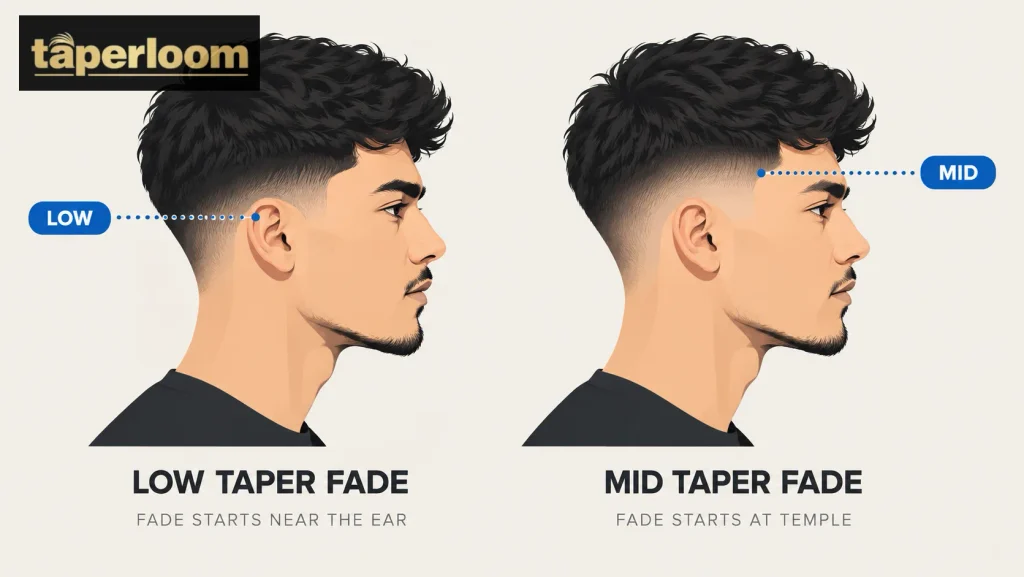
The main difference between a low taper fade and a mid taper fade is where the blend begins. A low taper fade starts just above the ear and along the neckline, so the fade stays subtle and low-contrast.
A mid taper fade starts around the temple, roughly level with the top of your ear, which gives you a sharper, more visible contrast between the sides and the top.
That one difference changes almost everything else. It affects how the cut frames your face shape, how it works with your hair texture, how often you’ll be back in the barber’s chair, and how much you’ll spend on upkeep over a year.
I’ve cut both of these every single day for years, and most guys pick the wrong one for a simple reason: they choose from a photo instead of from their own hair and face.
This guide fixes that. You’ll get guard numbers, a week-by-week grow-out timeline, real cost math, and the exact words to say to your barber.
Low Taper Fade vs Mid Taper Fade
- Choose a low taper fade if you work in an office or go to school, want a clean but subtle look, have fine or thin hair, have a long or oval face, or wear a beard.
- Choose a mid taper fade if you want visible contrast, have thick, curly, or coily hair, have a round or square face, and don’t mind a touch-up every 2 to 3 weeks.
- Low taper fade = fade starts near the ears, tapered neckline and sideburns, 3 to 4 weeks between cuts.
- Mid taper fade = fade starts higher on the sides, defined sides, 2 to 3 weeks between cuts.
- Not sure? Start low. It’s easier to go higher next time than to grow a mid taper back out.
- Want both? Ask for a “low-mid taper,” which sits one finger-width above the ear.
Low Taper Fade vs Mid Taper Fade: Quick Comparison
Here’s every real difference between the two cuts in one place. Read the left column first, find the rows that matter most to you, then jump to the matching section below.
| Feature | Low Taper Fade | Mid Taper Fade |
| Where the fade starts | Just above the ear, along the neckline | At the upper side of the head, level with the top of the ear |
| Typical guard at the bottom | #1, sometimes #0.5 | #0.5, often down to skin |
| Contrast level | Low, subtle appearance | Medium, sharper contrast |
| Visible from the front? | Barely | Clearly |
| Sideburns | Kept, softened at the edge | Shorter and tighter |
| Hairline shape (the “C-cup” around the ear) | Fully intact | Partially blended away |
| Best face shapes | Oval, oblong, long, heart | Round, square, diamond |
| Best hair types | Fine, thin, straight | Thick, curly, coily |
| Touch-up frequency | Every 3 to 4 weeks | Every 2 to 3 weeks |
| Grow-out | Still looks tidy at week 5 | Looks shaggy by week 4 |
| Workplace fit | Corporate, formal, school-safe | Casual, creative, most modern offices |
| Barber visits per year | About 13 | About 17 |
How to read this: if most of your answers land in the left column, the low taper fade is your cut. If they land on the right, go mid. If you’re split, the low-mid taper section further down solves that.
Taper vs Fade: What’s the Actual Difference?
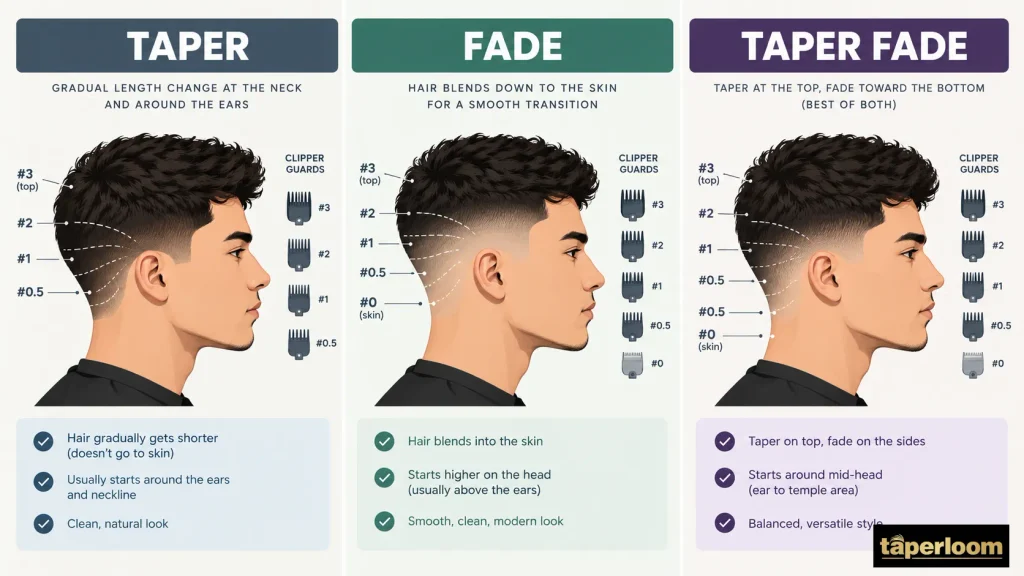
A taper and a fade aren’t the same haircut, even though most people use the words interchangeably.
A taper only shortens the hair at your sideburns and neckline, leaving the rest of the sides at one length. A fade shortens the hair across the entire side of your head, blending it down to the skin or close to it.
A taper fade is the hybrid. It uses fade techniques (blending down to very short or skin) but keeps the blend concentrated around the ears and neck instead of climbing high up the head.
When people say “low taper fade” or “mid taper fade,” they’re describing how high that blend sits.
Here’s the simplest way to remember it:
- Taper: Sideburns and neckline only. Hair behind the ear stays untouched. Softest look.
- Fade: The whole side of the head blends down. Highest contrast.
- Taper fade: Blend around the ears and neck, but taken shorter than a classic taper. Low and mid are the two most common heights.
If you’re picturing a side profile, imagine three horizontal lines. The bottom line sits just above the ear (low taper fade).
The middle line hits the temple (mid taper fade). The top line runs near the corner of the forehead (high taper fade). Everything in this article lives on those first two lines.
What Is a Low Taper Fade?
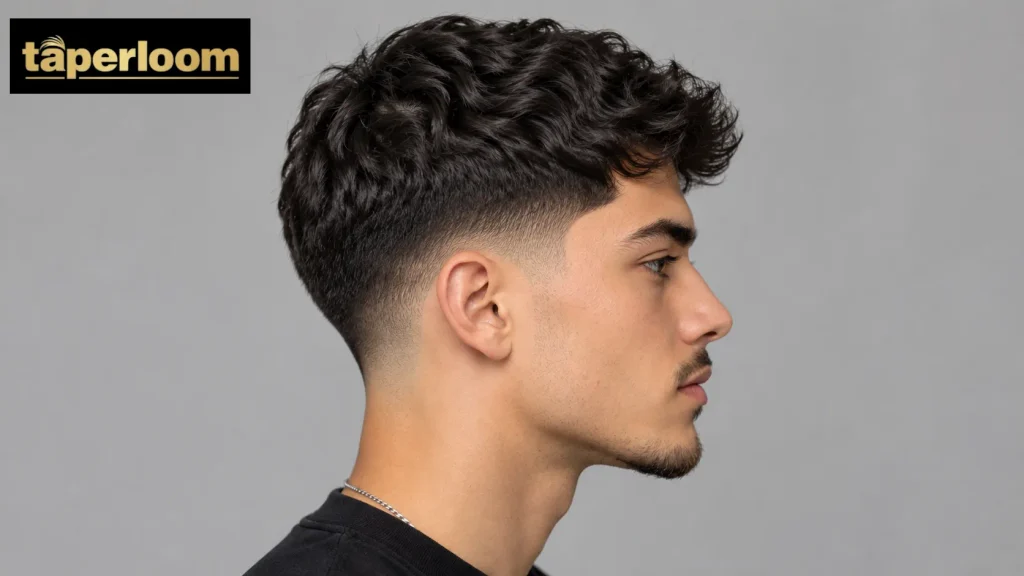
A low taper fade is a haircut where the hair gradually shortens starting about half an inch above the ear and following the natural neckline, while the rest of the sides stay at one uniform length.
It’s the most subtle version of a taper fade and the one barbers recommend most for first-timers.
Where It Starts and How It’s Cut
The low taper fade sits below the occipital bone at the back and just above the ear on the sides. Your barber leaves the curve of hair that wraps around your ear (barbers call it the “C-cup”) completely intact, which is the biggest visual clue you’re looking at a low taper and not a mid.
Typical clipper settings look like this:
- Sides: #2 or #3 guard, depending on how much length you want
- Blend zone: #1 to #1.5 guard, kept tight to the ear and neckline
- Bottom edge: #0.5, with optional skin only at the neckline
If you want the cleanest possible neckline without a visible band, ask for a “skin taper at the neck.” That keeps the sides soft but sharpens the finish where your collar sits.
How It Looks From the Front, Side, and Back
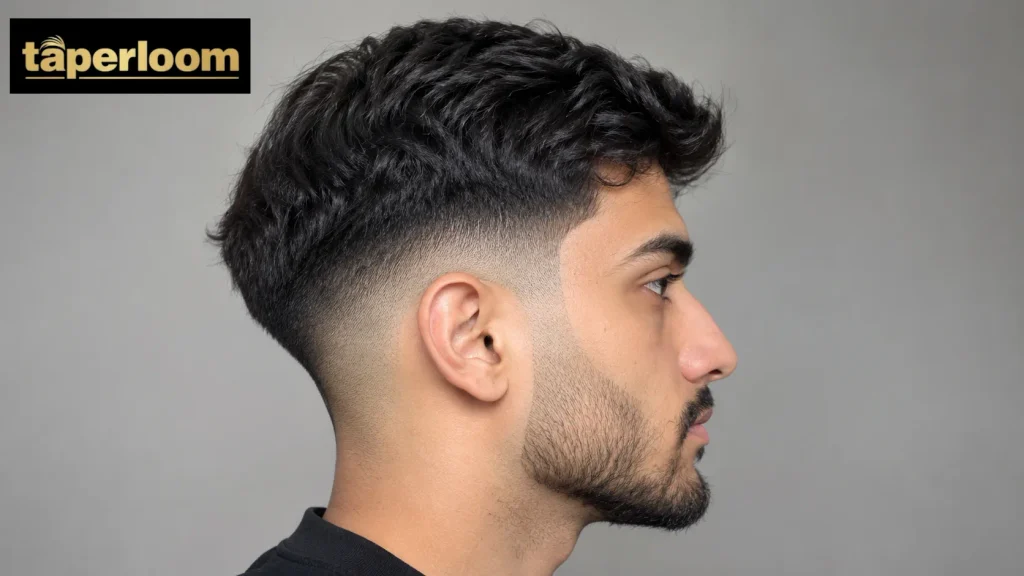
From the front: You can barely see the fade. The sides look neat and even, with a slight tightening right above the ears. Anyone facing you sees a clean, classic cut with no obvious contrast line.
From the side: The blend is visible but short. The sideburns taper gradually into the skin, and the hair behind the ear keeps its full shape. The overall silhouette stays rounded and natural.
From the back: This is where the low taper fade does most of its work. The neckline blends down cleanly with no hard edge, which keeps the cut looking fresh even as it grows.
Who a Low Taper Fade Suits Best

- Anyone in a corporate, formal, or dress-code-strict environment
- Students who need a cut that passes school rules
- First-timers who want a modern edge without committing to high contrast
- Men with fine or thin hair who want to keep as much density as possible
- Long, oblong, or oval face shapes that don’t need extra visual height
- Beard wearers who want the fade to melt into their beard line
- Anyone who prefers 3 to 4 weeks between barber visits
Low Taper Fade Pros and Cons
| Pros | Cons |
| Subtle and professional in any setting | Less noticeable if you want a bold look |
| Grows out gracefully, still tidy at week 5 | Can look bulky on thick, straight hair |
| Keeps hair density around the sides | Doesn’t slim a round face much |
| Blends naturally into a beard | Easy for a rushed barber to leave a visible line at the neck |
| Cheapest long-term (about 13 visits a year) | Limited contrast for curly textures that want definition |
What Is a Mid Taper Fade?
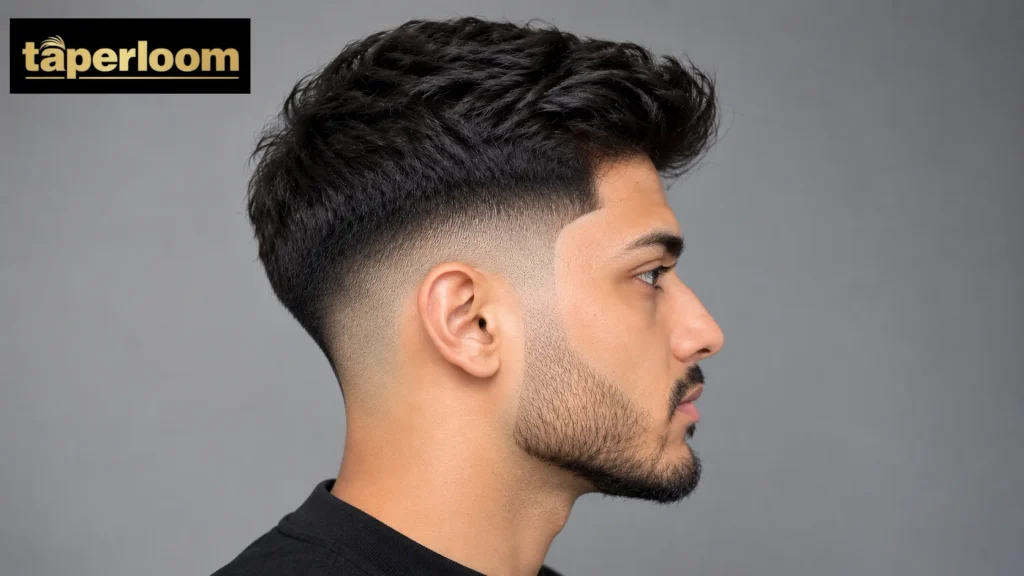
A mid taper fade is a haircut where the hair starts shortening higher on the sides, roughly level with the top of your ear, and blends down to very short or skin around the ears and neckline.
It sits about one to two inches higher than a low taper fade. This gives you clear contrast between the sides and the top without going as bold as a high fade.
Where It Starts and How It’s Cut
The mid taper fade begins higher on the sides. It runs back along a line that stays level with the top of the ear. At the back, it sits right around the occipital bone.
The “C-cup” of hair that curves around your ear gets partially blended away. This makes the area around the ear look tighter and more defined than a low taper.
Typical clipper settings look like this:
- Sides: #2 guard, sometimes #1.5 for more contrast
- Blend zone: #1 down to #0.5 across the upper side and ear area
- Bottom edge: #0.5 or skin, usually skin at the sideburns and neckline
Most barbers take the mid taper fade to skin at the bottom by default. If you’d rather keep a soft shadow instead of bare skin, say “leave a shadow, no skin” before the clippers.
How It Looks From the Front, Side, and Back
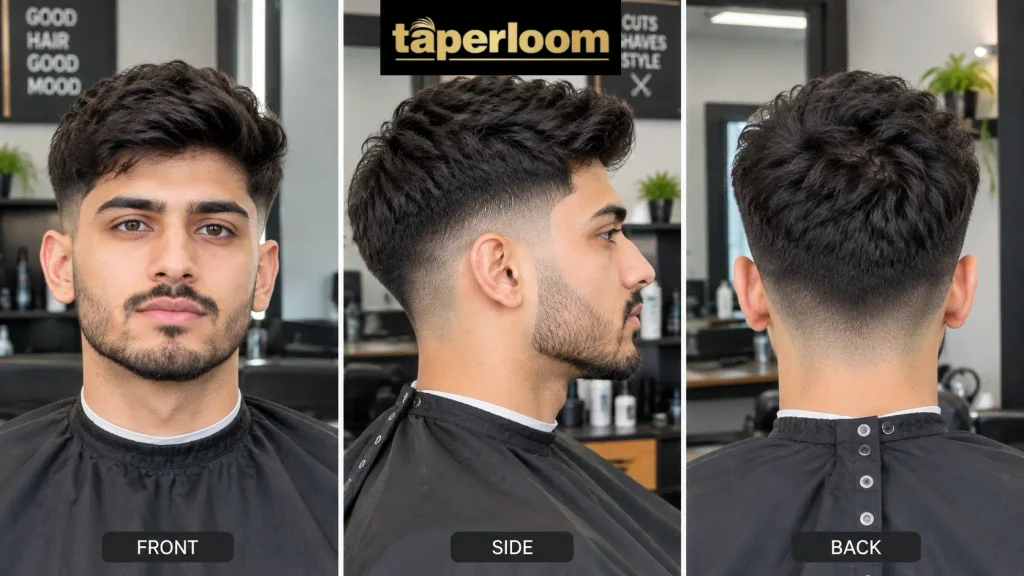
From the front: The fade is clearly visible. You’ll see the sides tighten in noticeably at the temples, which pulls attention upward and makes the top look fuller. This is the angle where the mid taper fade earns its reputation for sharpening a face.
From the side: The blend covers a bigger area. The sideburns are short and tight, the skin shows through around the ear, and the transition from short to long has a defined but smooth gradient.
From the back: The neckline fades up higher than a low taper, so the back of the head looks tighter and more shaped. It’s a cleaner look on day one but shows regrowth faster.
Who a Mid Taper Fade Suits Best
- Anyone who wants the fade to actually be visible in photos and from the front
- Men with thick, curly, or coily hair that needs bulk removed from the sides
- Round or square face shapes that benefit from slimmer sides and added height
- Casual, creative, or modern office environments
- Guys who pair their cut with textured tops like quiffs, curly tops, or French crops
- Anyone who’s fine with a touch-up every 2 to 3 weeks
Mid Taper Fade Pros and Cons
| Pros | Cons |
| Sharp, defined contrast that photographs well | Shows regrowth by week 3 |
| Slims round faces and adds visual height | Can stretch an already long face |
| Removes bulk from thick or curly sides | Costs more per year (about 17 visits) |
| Works with almost any textured top style | Harder to blend into a full beard |
| Still safe for most modern workplaces | Less forgiving of a bad barber, mistakes show |
Low Taper vs Mid Taper: Side-by-Side
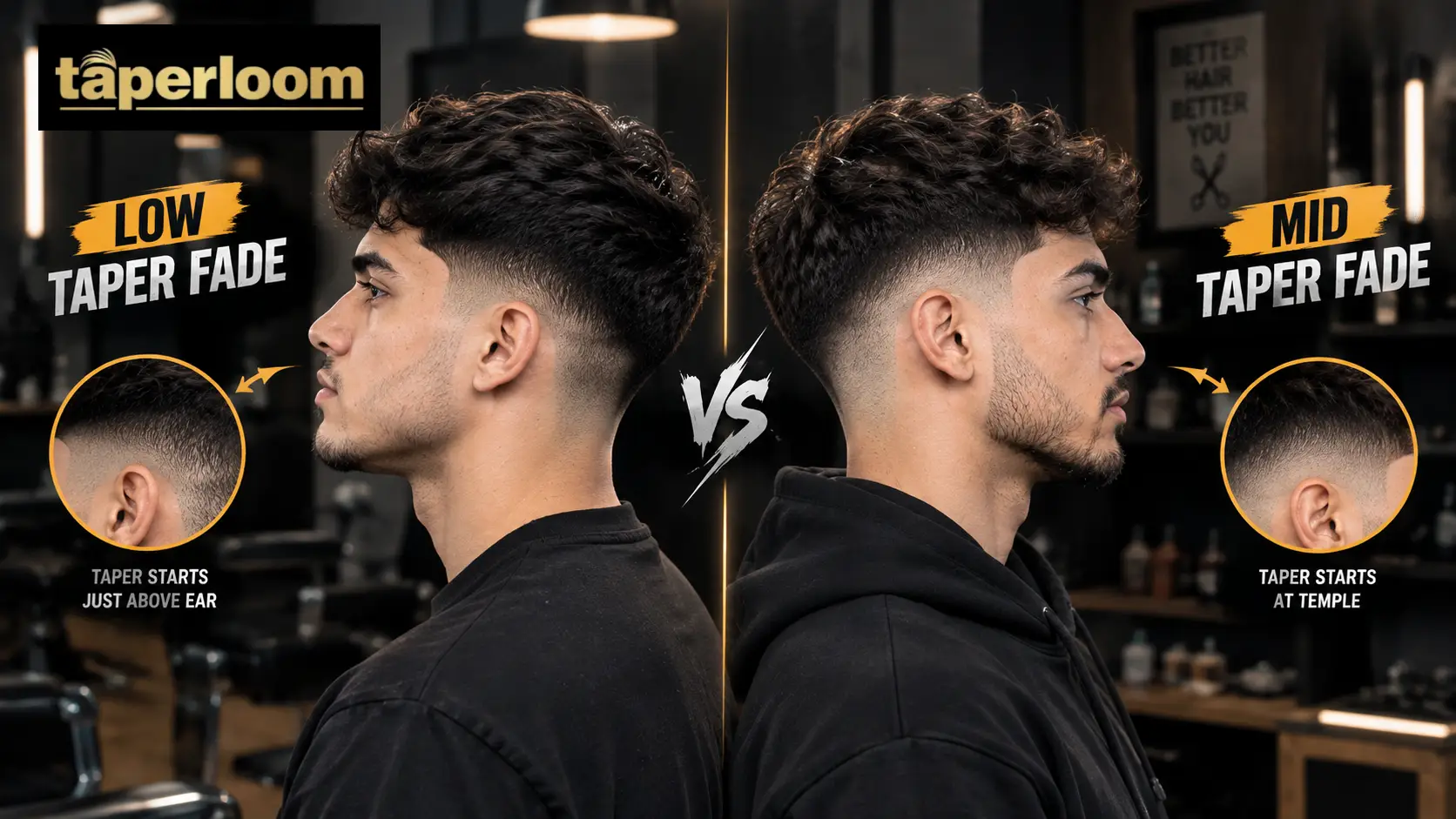
Photos flatten the difference between these two cuts because the camera catches the top of the head, not the blend around the ears.
In person, the gap between a low taper fade and a mid taper fade is obvious from three angles. Here’s what to look for in each one.
Front view
- Low taper fade: sides look uniform, fade almost invisible, sideburns full
- Mid taper fade: sides visibly narrow at the temples, top looks taller, sideburns thin out
- Quick test: if you can see the fade in a passport-style photo, it’s a mid
Side view
- Low taper fade: the hair curve around the ear stays complete, blend covers about a half inch
- Mid taper fade: the curve around the ear is partly blended away, blend covers one to two inches
- Quick test: cover the top of the head with your hand. If the sides still look faded, it’s a mid
Back view
- Low taper fade: neckline blends softly, hair behind the ears keeps length
- Mid taper fade: neckline fades higher, back of the head looks tighter and more sculpted
- Quick test: look at the hair just behind the ear lobe. Full length means low, faded means mid
The single biggest tell is the hairline around your ear. A low taper fade keeps it whole. A mid taper fade cuts into it. If you’re ever unsure which cut you got last time, that one spot gives you the answer.
Which Taper Fade Suits Your Face Shape?
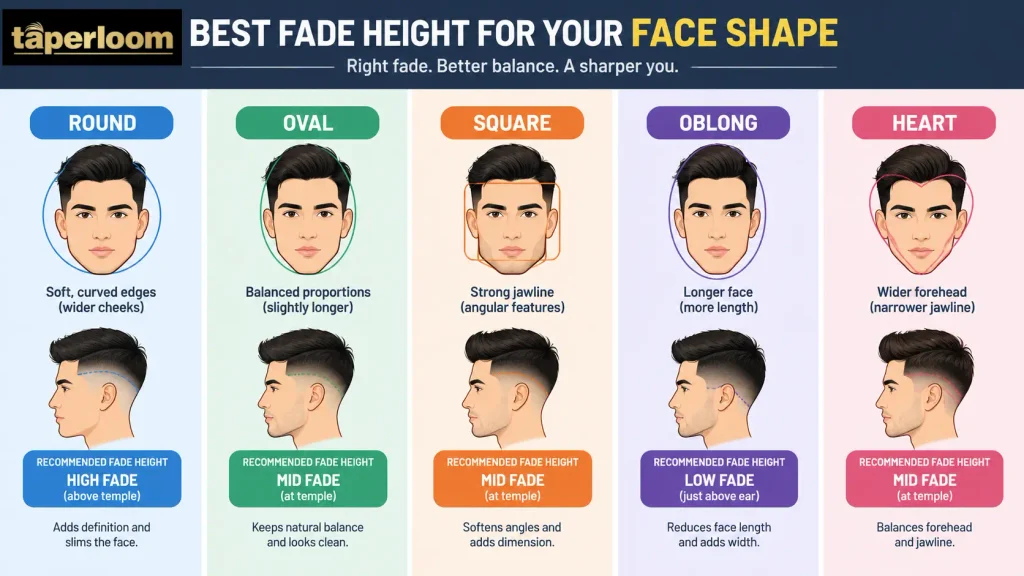
Several online guides tell men with round faces to get a low taper fade. Most barbers disagree.
A round face needs less width at the sides and more height on top, and a mid taper fade does exactly that by tightening the temples and pulling the eye upward.A low taper fade leaves the sides fuller, which keeps the face looking wide.
The rule is simple: pick the fade that does the opposite of what your face already does. Long faces need width kept, so they go low.
Round and square faces need width removed, so they go mid. Oval faces can go either way.
| Face Shape | Best Pick | Why It Works | Top-Length Tip |
| Round | Mid taper fade | Slims the sides and adds visual height | Add 1 to 2 inches of height on top, avoid flat styles |
| Oval | Either | Balanced proportions handle both | Default to low for work, mid for a sharper look |
| Square | Either | Low softens a strong jaw, mid sharpens it | Keep the top textured, not slicked flat |
| Oblong / Long | Low taper fade | Keeps width at the sides so the face doesn’t stretch | Keep the top under 2 inches, skip tall quiffs |
| Diamond | Mid taper fade | Narrow temples already, mid keeps them clean and balances wide cheekbones | Medium-length top with a soft fringe works well |
| Heart | Low taper fade | Fuller sides balance a wide forehead and narrow chin | Side-swept or textured fringe adds balance |
Is a Low Taper or Mid Taper Better for a Round Face?
A mid taper fade is better for a round face. It removes bulk from the sides and around the ears, which makes the face look narrower and longer.
Pair it with at least 1.5 inches of height on top, and you’ll get the most slimming effect. A low taper fade keeps the sides fuller and does little to change a round face’s proportions.
Which Taper Fade Works Best for Your Hair Type?
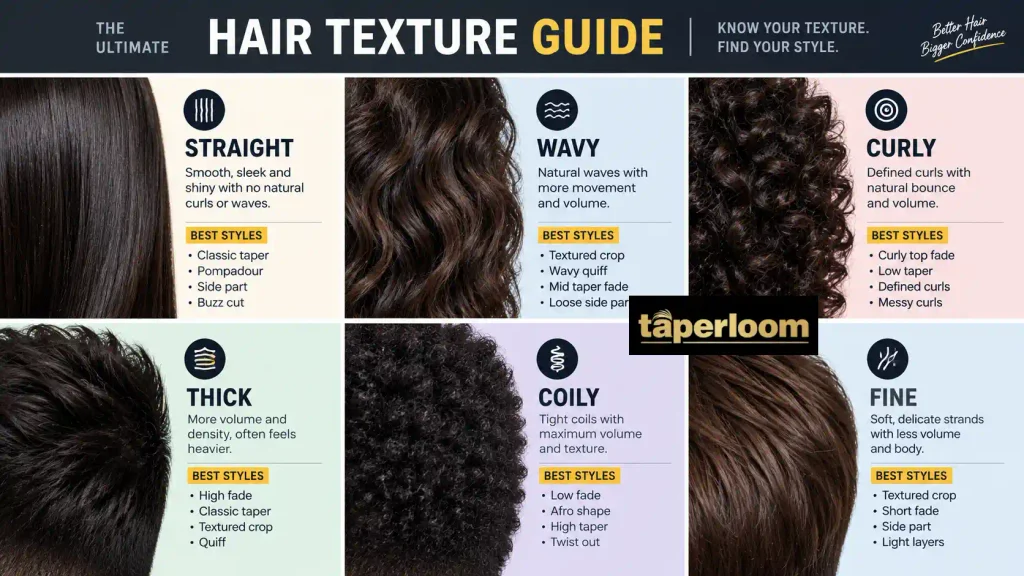
Your hair texture matters as much as your face shape, and sometimes more. Thick hair pushes outward and needs a higher blend to control it.
Fine hair needs every bit of density it can keep. Here’s how each texture behaves with both cuts.
Straight Hair
Straight hair shows every line, so the blend needs to be clean on either cut. If your straight hair is thick, a low taper fade can leave the sides looking boxy or puffy (the “mushroom effect”).
A mid taper fade removes that bulk and keeps the shape tight. Fine straight hair does better with a low taper fade, which keeps the sides looking full.
Wavy Hair
Wavy hair is the most flexible texture and suits both cuts. A low taper fade gives you a relaxed, natural look that lets the waves do the work on top.
A mid taper fade adds contrast and makes the waves on top look more deliberate. Go mid if your waves get bushy at the sides after two weeks.
Curly Hair
Curly hair works well with a mid taper fade because the contrast highlights the texture on top and stops the sides from expanding outward.
Choose a low taper fade if you want to keep volume all around for a rounder, fuller shape. Either way, ask your barber to cut the curls on top dry so the length reads correctly.
Thick or Coarse Hair
Thick hair almost always looks better with a mid taper fade. The higher blend takes weight off the sides, keeps the cut from looking heavy, and lasts longer between visits because there’s less bulk to grow back.
A low taper fade on thick hair works only if you keep the sides at a #1.5 guard or shorter.
Fine or Thin Hair
Fine or thin hair does best with a low taper fade. Keeping more hair at the sides makes the whole cut look denser, and the low blend avoids exposing scalp higher up the head.
Skip the skin fade at the bottom and ask for a #0.5 finish instead so the transition stays soft. A mid taper fade can make thin hair look thinner by creating a hard contrast against a sparse top.
Coily or Type 4 Hair
Coily hair holds shape well, so a mid taper fade paired with a crisp line-up gives you a sharp, geometric silhouette that stays clean for two to three weeks.
A low taper fade suits a fuller, rounder shape, like a small afro or twist-out on top. Both cuts benefit from a skin finish at the sideburns and neckline for a clean edge.
Dense Straight Hair (Common in Asian Hair Types)
Dense, straight hair grows outward rather than downward, so the sides can stick out fast. A mid taper fade controls that spread and keeps the shape defined as it grows.
If you want a low taper fade, have your barber point-cut the sides to remove weight, or the cut will look boxy within two weeks.
The Low-Mid Taper Fade: The Middle Option Most Guides Skip
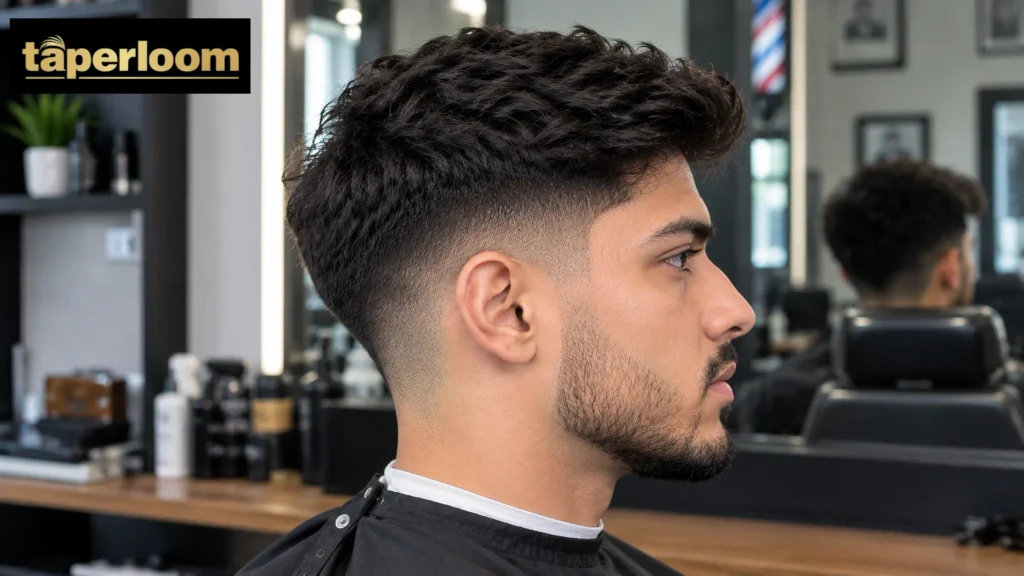
A low-mid taper fade starts about one finger-width above the top of the ear, sitting exactly between a low taper fade and a mid taper fade.
It gives you more contrast than a low taper without cutting as far into the hairline around your ear as a mid does. Most guides don’t mention it, but barbers cut it every day.
This is the cut to ask for when your answers in the comparison table were split. You get a fade that’s visible from the side and lightly visible from the front, but it still grows out cleanly and stays safe for almost any workplace.
- Who it’s for: Oval or square faces, medium-thick hair, anyone moving up from a low taper who isn’t ready for a full mid
- Why it works: The hairline around the ear stays mostly intact, so regrowth looks tidy for about four weeks, but the temples tighten enough to add shape
- What to say: “Give me a low-mid taper fade, start it one finger above the ear, and take the neckline to skin”
If you’ve had a low taper fade for a while and feel like it’s disappearing into a regular haircut, the low-mid is the natural next step.
Maintenance and Grow-Out: Week-by-Week
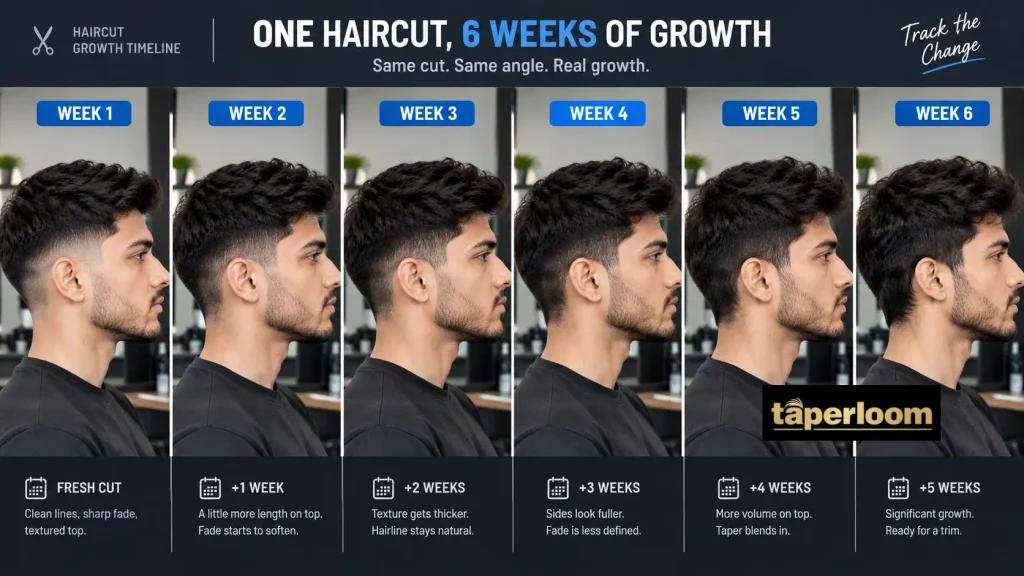
A low taper fade needs a touch-up every 3 to 4 weeks, while a mid taper fade needs one every 2 to 3 weeks.
The mid grows out faster because the blend covers a larger area, so even a small amount of regrowth softens the contrast you paid for.
Hair grows about half an inch per month, according to the American Academy of Dermatology. That half inch barely shows on a low taper fade because the blend is short and sits near the ears.
On a mid taper fade, the same half inch fills in the skin at the temples and blurs the line that defines the cut.
| Week | Low Taper Fade | Mid Taper Fade |
| Week 1 | Fresh and sharp | Fresh and sharp |
| Week 2 | Still looks freshly cut | Contrast starts to soften at the temples |
| Week 3 | Light shadow at the neckline, still tidy | Skin fills in, needs a trim to look intentional |
| Week 4 | Time to rebook, still passable | Looks shaggy, sides start to puff |
| Week 5 | Soft but acceptable, reads as a regular short cut | Overgrown, fade is mostly gone |
| Week 6 | Needs a cut but doesn’t look neglected | Looks like you skipped the barber |
How to Stretch Your Cut Between Visits
- Clean your own neckline. A cheap trimmer along the natural neckline every 10 days keeps a low taper fade looking fresh for an extra week
- Ask for a softer blend. A shadow finish instead of skin grows out more evenly on both cuts
- Book a “lineup only.” Many barbers offer a 10-minute edge-up for the sideburns and neckline at a lower price than a full cut, which works well for stretching a mid taper fade
- Use less product. Heavy pomade weighs the sides down and makes regrowth more obvious, especially on a mid taper fade
Cost: What Each Fade Costs Per Year

A mid taper fade costs more per year than a low taper fade, not because the haircut itself is pricier, but because you’ll get it cut about four more times.
At average US barbershop prices, that adds up to roughly $120 to $180 extra every year.
Here’s the math based on typical US pricing of $30 to $45 per cut:
| Low Taper Fade | Mid Taper Fade | |
| Touch-up interval | Every 4 weeks | Every 3 weeks |
| Visits per year | About 13 | About 17 |
| Cost at $30 per cut | $390 | $510 |
| Cost at $45 per cut | $585 | $765 |
| Yearly difference | $120 to $180 more |
Add a beard trim or lineup to each visit and the gap widens. If budget matters, the low taper fade is the cheaper cut over time.
If you’ve got a favorite barber and don’t mind the extra visits, the mid taper fade’s sharper look is worth the difference for a lot of guys.
Best Hairstyles to Pair With a Low Taper Fade
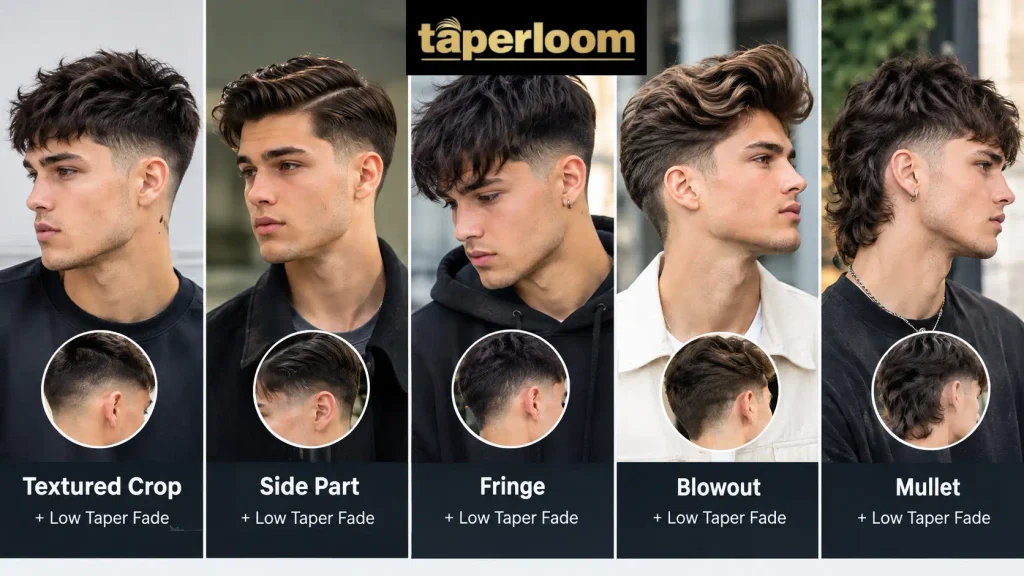
A low taper fade works best with tops that keep some length and look natural. Because the sides stay fuller, the top doesn’t need extra height to balance the cut.
These five styles get requested most with a low taper fade, and each one suits a specific hair type.
1. Textured Crop
- Hair type: Straight, wavy, or thick
- Product: Matte clay or styling paste
The top is cut short and choppy with a blunt fringe, and the low taper fade keeps the sides soft so the texture on top stands out without harsh contrast. This is the most popular pairing for office and school settings
2. Side Part
- Hair type: Straight or fine
- Product: Light pomade or cream
A classic side part with a low taper fade reads as a modern take on a traditional cut. The soft blend at the ears keeps it professional, and the part adds structure to fine hair
3. Fringe or Curtain Bangs
- Hair type: Wavy or straight, medium length
- Product: Sea salt spray
Longer hair pushed forward or split down the middle pairs well with a low taper fade because the sides stay full enough to match the weight up top. Popular with younger guys and anyone growing their hair out
4. Blowout
- Hair type: Thick, wavy, or curly
- Product: Volumizing mousse and a blow dryer
The blowout pushes hair up and back for volume, and the low taper fade grounds it so the whole cut doesn’t look top-heavy. Keep the sides at a #2 for the right balance
5. Modern Mullet
- Hair type: Wavy or curly
- Product: Texture powder or cream
A low taper fade keeps the sides tidy while the back stays long, which is what separates a modern mullet from an overgrown one. The low blend keeps the transition natural at the neckline
Best Hairstyles to Pair With a Mid Taper Fade
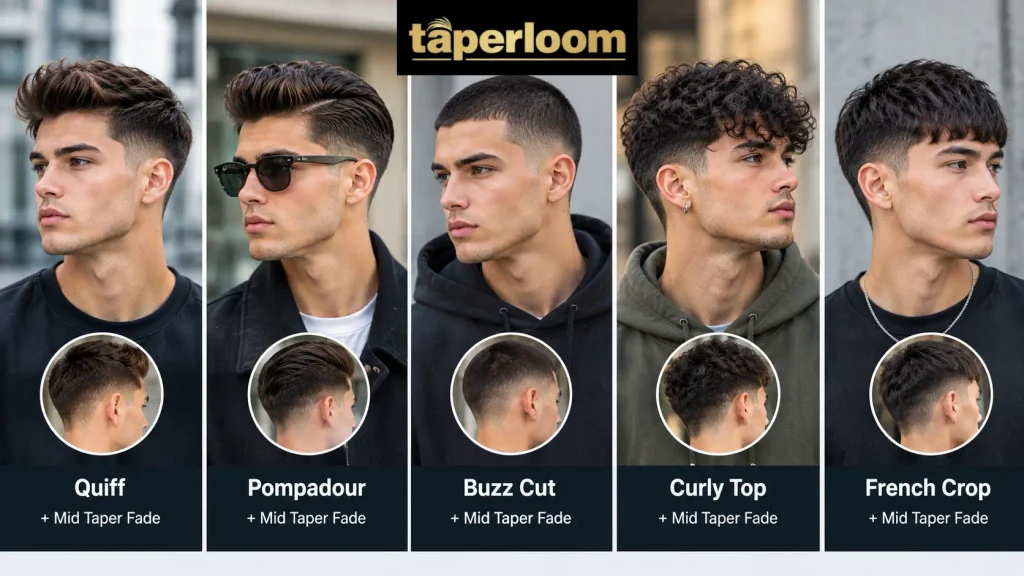
A mid taper fade needs a top with height or texture to balance the tighter sides. Flat, plain tops make the contrast look unfinished. These five styles are the strongest matches and cover every hair texture.
1. Quiff
- Hair type: Straight, wavy, or thick
- Product: Pomade or strong-hold clay
Hair swept up and back with volume at the front. The mid taper fade slims the sides so the height on top looks deliberate. This is the go-to pairing for round faces
2. Pompadour
- Hair type: Thick or straight
- Product: High-shine pomade
Taller and more polished than a quiff. The mid taper fade adds clean contrast at the temples, which sharpens the whole shape. Works best with 3 to 4 inches on top
3. Buzz Cut
- Hair type: Any, especially thick or coily
- Product: None, or a light moisturizer for the scalp
A #2 or #3 buzz on top with a mid taper fade is the cleanest low-effort cut available. The fade gives a plain buzz shape and structure, and a line-up at the front finishes it
4. Curly Top
- Hair type: Curly or coily
- Product: Curl cream or leave-in conditioner
Natural curls left 2 to 4 inches long on top with a mid taper fade underneath. The contrast makes the curls look defined instead of bushy, and the tight sides stop the shape from spreading
5. French Crop or Edgar Cut
- Hair type: Straight or thick
- Product: Matte paste
A short, forward-cut top with a straight, blunt fringe. The mid taper fade tightens the temples so the strong fringe line looks sharp. The Edgar version takes the fringe even straighter and the sides even shorter
Low vs Mid Taper Fade With a Beard
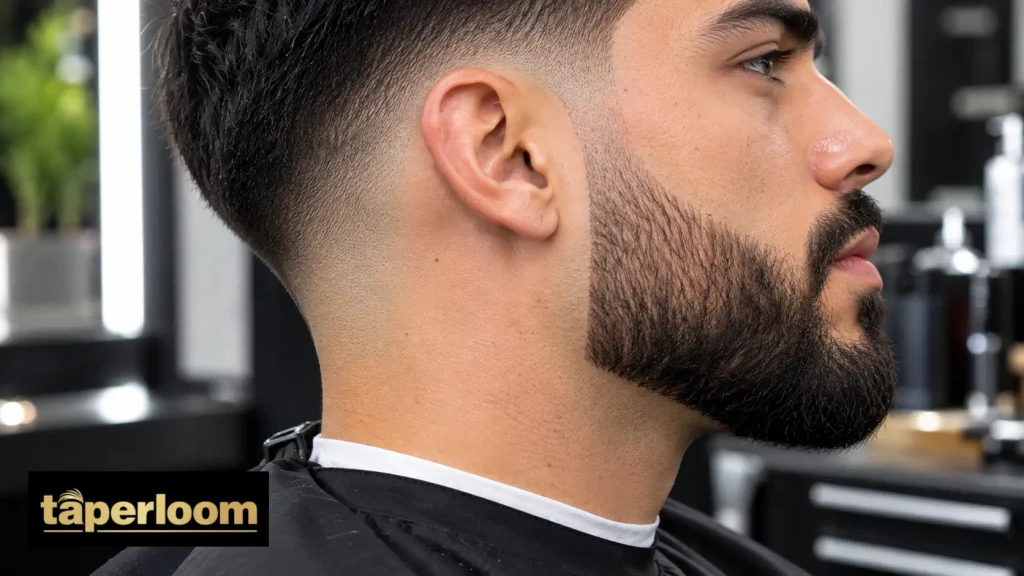
A low taper fade blends into a beard more naturally than a mid taper fade. Because the low fade sits right at the ear and the sideburns stay fuller, the hair can run continuously into the beard with no gap.
A mid taper fade creates skin between the fade and the beard, so the two need to be styled as separate shapes.
With a low taper fade: Ask your barber to taper the sideburns straight into the beard so there’s no visible break.
This works especially well with medium to full beards and gives the whole head one continuous outline. It’s the cut most barbers recommend for men who keep a beard year-round.
With a mid taper fade: You’ve got two options. Either fade the beard too, tapering it up toward the ear so the skin gap looks intentional, or keep a sharp disconnect with a clean line at the top of the beard.
A faded beard suits shorter beards and a sharp disconnect suits fuller ones. Whichever you choose, tell your barber before the cut starts so both shapes get planned together.
Keep the beard edges crisp on either cut. A neat cheek line and neckline do more for the overall look than the fade height ever will.
Which Taper Fade Is More Professional?

A low taper fade is the more professional option because the fade stays hidden from the front and the sides look like a neat, classic cut.
It passes in every workplace, from law firms to hospitals to strict school dress codes. A mid taper fade is still acceptable in most modern offices, but the visible contrast reads as more styled, which some conservative environments treat as too casual.
Here’s how each cut fits by industry:
| Environment | Low Taper Fade | Mid Taper Fade |
| Finance, law, government | Safe choice | Usually fine, but check the culture first |
| Healthcare | Safe choice | Fine in most settings |
| Tech, startups, marketing | Safe choice | Safe choice |
| Creative, media, fashion | Fine, but may look too plain | Best fit |
| Trades, fitness, hospitality | Fine | Best fit, stays cool and low-effort |
| Military or uniformed services | Meets most regulations | Check regs, some limit how high a fade can go |
For students and school dress codes: A low taper fade is the safest pick. Most school policies ban “extreme” or “distracting” cuts, and a mid taper fade with a skin finish sometimes gets flagged.
If your school allows fades at all, ask for a low taper fade with a #0.5 bottom instead of skin and you’ll have no problems.
For job interviews: Go low, or get your mid taper fade at least a week before the interview so the contrast has softened slightly.
Styling Products for Each Fade
The fade height changes how much product you need on top. A low taper fade keeps more hair at the sides, so a heavy product weighs the whole shape down.
A mid taper fade has tighter sides, so the top can carry more hold without looking bulky.
| Hair Goal | Low Taper Fade | Mid Taper Fade |
| Natural, low-shine finish | Light styling cream | Matte clay |
| Volume and height | Sea salt spray plus a light mousse | Volumizing powder plus strong-hold clay |
| Slick or polished look | Water-based pomade, light amount | Water-based or oil-based pomade |
| Curly or coily hair | Curl cream, leave-in conditioner | Curl cream plus a light gel for definition |
| Fine or thin hair | Texture powder only | Texture powder, skip anything heavy |
One rule that applies to both cuts: use half the product you think you need. Work it through dry or slightly damp hair, then add more only if the style doesn’t hold.
Too much product flattens the top, and a flat top makes any fade look heavier than it is.
How to Ask Your Barber for a Low or Mid Taper Fade
The best way to ask for a low or mid taper fade is to name the cut, point to where you want the fade to start, give a guard number for the sides, describe the top, and show one reference photo.
Barbers hear “taper fade” a dozen times a day, and the height is what they need you to be specific about.
5 Steps to Get the Exact Cut You Want
- Name the cut. Say “low taper fade” or “mid taper fade,” not just “taper” or “fade.”
- Point to the start line. Touch the spot on your head where you want the blend to begin. Just above the ear for low, at the temple for mid.
- Give a guard number for the sides. A #2 is the safest default. Go #1.5 for more contrast or #3 to keep more length.
- Describe the top. Tell your barber how much length to leave and what style you’re going for.
- Show one photo. Pick a photo of someone with a similar hair type to yours. Photos of a different texture set false expectations.
Copy-and-Paste Scripts
For a low taper fade: “I want a low taper fade. Start the blend just above my ear and keep the neckline tapered. Leave the sides at a #2 and keep the hair around my ears full. Just trim the top and keep the texture.”
For a mid taper fade: “I want a mid taper fade. Start the fade at my temple, about level with the top of my ear, and take it down to skin at the sideburns and neckline. Sides at a #2. Leave enough on top for a quiff.”
For a low-mid taper fade: “Give me a low-mid taper fade. Start it about one finger above my ear, take the neckline to skin, and leave the sides at a #2. Keep the top the same length.”
Barber Terms Worth Knowing
- Guard number: The plastic clipper attachment that sets length. #0.5 is 1/16 inch, #1 is 1/8 inch, #2 is 1/4 inch, #3 is 3/8 inch
- Blend: The gradual transition between two lengths with no visible line
- Skin or bald: Shaved down to the skin with no guard
- Shadow: The shortest length before skin, leaves a faint stubble
- C-cup: The curve of hair that wraps around the top of your ear. Intact on a low taper, blended on a mid
- Weight line: A visible ridge where a longer length meets a shorter one. You don’t want this
- Line-up or shape-up: Sharp, straight edges cut into the hairline at the forehead and temples
6 Mistakes Men Make Choosing Between Low and Mid
Most bad taper fades come from a decision made before the barber picked up the clippers. These six mistakes cause almost all of them.
- Choosing from a photo of a different hair type. A mid taper fade on thick curly hair looks nothing like the same cut on fine straight hair. Match the photo to your texture, not just the style.
- Not naming the height. Saying “taper fade” leaves the barber guessing. Say low or mid every time.
- Getting a mid taper fade on a long face with a tall top. The high blend plus height on top stretches the face further. Go low or keep the top under 2 inches.
- Getting a low taper fade on thick, straight hair without thinning the sides. The sides puff out within two weeks and the cut looks boxy. Go mid or ask for point-cutting.
- Booking a mid taper fade every 4 to 5 weeks. It’s overgrown by week 4. If you can’t commit to 2 to 3 weeks, get a low taper instead.
- Confusing “skin” with “taper.” Skin is the length at the bottom. Taper is the shape. You can have a low taper fade with a skin finish or a mid taper fade with a shadow finish. Be clear about both.
Low Taper vs Mid Taper: Which Should You Choose?
Answer these five questions honestly. Count how many times you pick the first option versus the second.
- Where do you spend most of your week? Formal office or school (low) / Casual, creative, or hands-on job (mid)
- What’s your hair texture? Fine, thin, or straight (low) / Thick, curly, or coily (mid)
- What’s your face shape? Long, oval, or heart (low) / Round, square, or diamond (mid)
- How often can you realistically visit the barber? Every 3 to 4 weeks (low) / Every 2 to 3 weeks (mid)
- Do you wear a beard? Yes, and you want it to connect (low) / No, or you like a defined separation (mid)
Your verdict:
- 4 or 5 first options: Get a low taper fade. It fits your life and grows out on your schedule.
- 4 or 5 second options: Get a mid taper fade. You’ll get the contrast you want and you can handle the upkeep.
- Split down the middle: Ask for a low-mid taper fade. It gives you visible shape without the maintenance of a full mid.
- Still unsure: Start with a low taper fade. Going higher at your next visit takes ten minutes. Growing a mid back out takes a month.
Low vs Mid vs High Taper Fade at a Glance
If you’re also weighing the high taper fade, here’s how all three heights compare. The high taper starts near the corner of the forehead and delivers the most contrast of the three.
| Feature | Low Taper Fade | Mid Taper Fade | High Taper Fade |
| Fade starts | Just above the ear | At the temple | Near the forehead corner |
| Contrast | Low | Medium | High |
| Best face shapes | Long, oval, heart | Round, square, diamond | Round, oval |
| Best hair types | Fine, thin, straight | Thick, curly, coily | Thick, coily |
| Touch-up frequency | 3 to 4 weeks | 2 to 3 weeks | 1 to 2 weeks |
| Workplace fit | All settings | Most settings | Casual and creative only |
The high taper fade is the boldest of the three and grows out the fastest. Most men who want more contrast than a mid taper fade find the high taper too much for everyday wear, which is why low and mid remain the two most requested heights.
Frequently Asked Questions
What is the main difference between a low taper fade and a mid taper fade?
The difference is where the fade starts. A low taper fade begins just above the ear and along the neckline, while a mid taper fade begins at the temple, level with the top of the ear.
Which is better, low taper or mid taper?
Neither is better overall. A low taper fade is better for subtle looks, fine hair, long faces, and fewer barber visits, while a mid taper fade is better for contrast, thick or curly hair, round faces, and a sharper style.
Which taper fade is more professional?
The low taper fade is more professional because the fade is barely visible from the front and passes in any workplace. A mid taper fade is still fine in most modern offices.
Is a low taper or mid taper better for a round face?
A mid taper fade is better for a round face because it slims the sides and adds visual height. Pair it with at least 1.5 inches of height on top for the best effect.
Which fade is better for curly hair?
A mid taper fade is usually better for curly hair because it removes bulk from the sides and makes the curls on top look defined. Choose a low taper fade if you want a fuller, rounder shape.
Does a mid taper fade grow out badly?
A mid taper fade looks shaggy by week 4 because regrowth fills in the skin at the temples and blurs the contrast. Booking a touch-up every 2 to 3 weeks keeps it sharp.
How often should I get a mid taper fade touched up?
Every 2 to 3 weeks. A low taper fade can stretch to 3 to 4 weeks because the blend is smaller and sits closer to the ear.
Is a mid taper fade the same as a mid fade?
No. A mid fade blends the entire side of the head down to skin, while a mid taper fade keeps the blend concentrated around the ears and neckline with less contrast.
Is a low taper fade good for school?
Yes. A low taper fade is the safest choice for school dress codes because the fade is subtle and looks like a neat, classic cut. Ask for a #0.5 finish instead of skin if your school is strict.
Can I switch from a mid taper fade to a low taper fade without growing it out?
Not right away. You’ll need about 3 to 4 weeks of growth so the hair around your ears is long enough to hold a low blend. Ask your barber for a low-mid taper in the meantime.
What guard number is used for a low taper fade?
A low taper fade typically uses a #2 or #3 guard on the sides, a #1 to #1.5 in the blend zone, and a #0.5 or skin only at the neckline.
Is a low taper fade good for thin hair?
Yes. A low taper fade is the best choice for thin or fine hair because it keeps more density at the sides and avoids exposing scalp higher up the head. Skip the skin finish for the softest look.
Final Thoughts
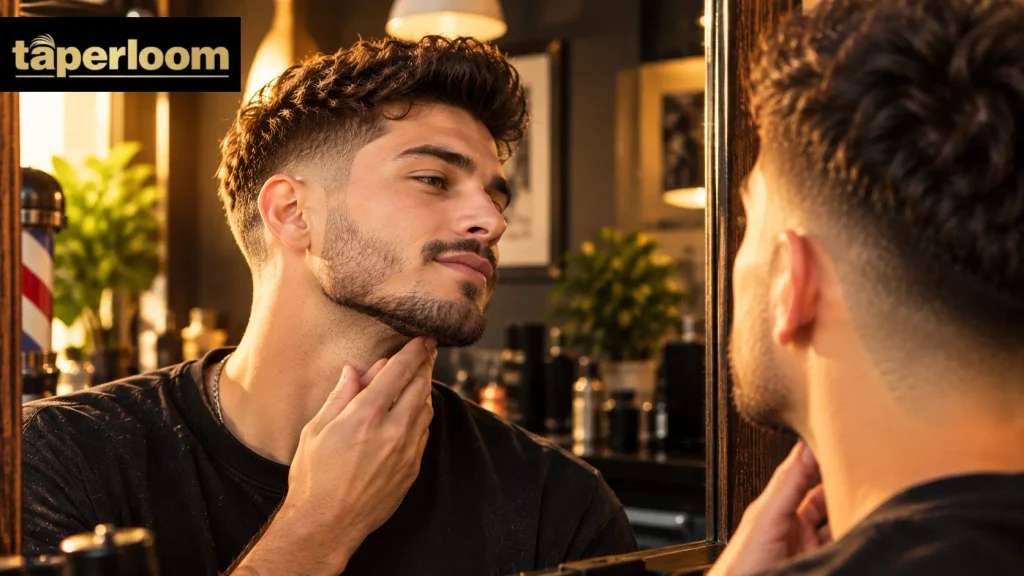
The low taper fade vs mid taper fade decision comes down to one line on your head. A low taper fade starts at the ear and stays subtle, grows out slowly, and fits everywhere. A mid taper fade starts at the temple and delivers real contrast, sharper shape, and more frequent barber visits.
Match the cut to your face shape, your hair texture, and how often you’ll actually sit in the chair, and you’ll never get the wrong one again. If you’re still torn, start low. You can always go higher next time.
Related guides: Low Taper Fade Guide | Mid Taper Fade Guide | High Taper Fade Guide | Low Taper vs Low Fade |

Muhammad Kaleem is a content creator who writes about hair care, hairstyles, grooming, and everyday hair trends. He enjoys turning hair-related topics into simple, practical, and easy-to-understand content that helps readers make informed choices about their hair and personal style.