
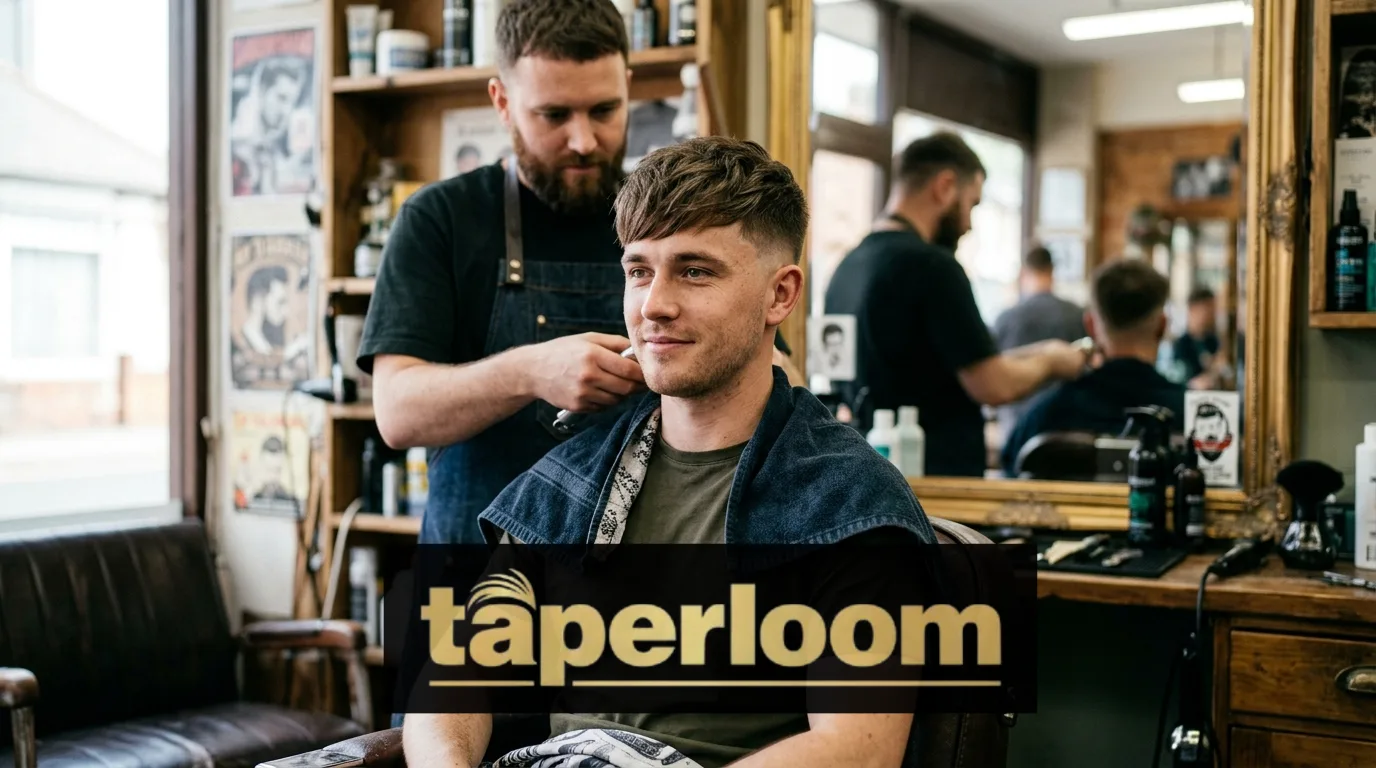
A low taper fade fringe haircut keeps your sides low and blended while your front hair grows out into a fringe you can style forward, textured, or off to one side.
It’s one of the most requested cuts in barbershops right now, and for good reason, it works on straight, wavy, curly, and coily hair alike, and it barely needs styling to look put together.
What makes this cut so easy to live with is the low taper itself. Instead of a sharp, high contrast fade that grows out awkwardly within two weeks, the low taper stays soft and close to your natural hairline.
That means fewer barber trips and a haircut that still looks intentional on week three, not just day one.
Below you’ll find 27 low taper fade fringe styles, from textured and messy to curly, curtain, and wolf cut fringes, plus the exact clipper numbers to give your barber, a face shape and hair type breakdown, real cost ranges, and a 5 minute home styling routine.
What Is a Low Taper Fade Fringe?
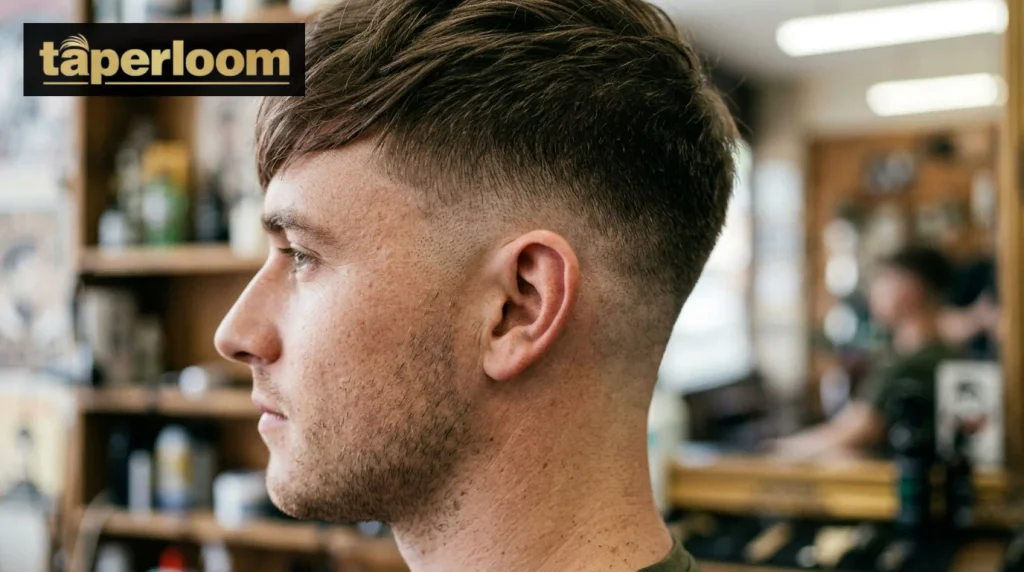
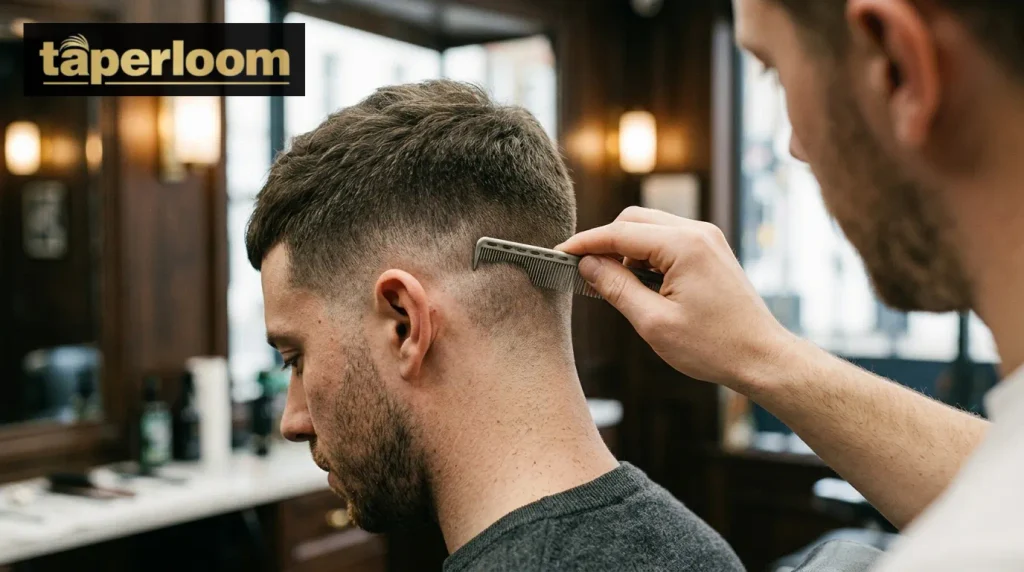
A low taper fade fringe is a men’s haircut that blends the sides close to skin near the ears and neckline, while the front hair stays long enough to style forward as a fringe.
The taper starts low, so you keep more length on the sides than you would with a mid or high fade.
This combination gives you two things at once. The taper keeps your neckline and sideburns clean without much upkeep, and the fringe becomes the real style statement up top.
You can wear it textured, messy, straight, or swept to one side, and it still reads as the same core cut.
Because the fade stays low and soft, this haircut grows out gracefully.
You won’t see a harsh line reappear after a week like you would with a skin fade, which makes it a solid pick if you don’t want to sit in the barber’s chair every two weeks.
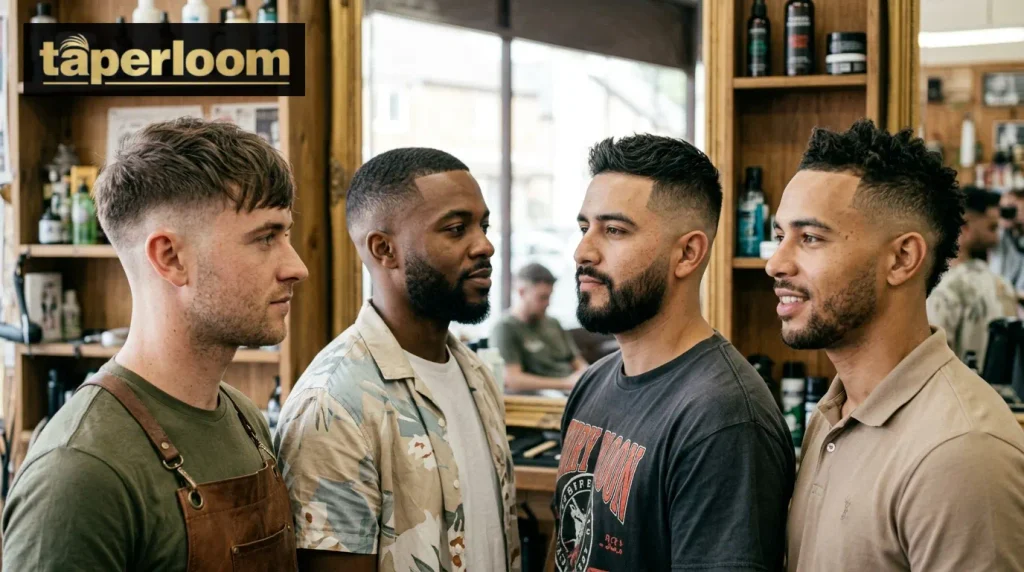
Low Taper vs Mid vs High vs Burst Fade
| Fade Type | Where It Starts | Contrast Level | Grow Out Time | Best For |
| Low Taper Fade | Just above the ear | Soft, subtle | 4 to 6 weeks | Professional settings, first time fade wearers |
| Mid Fade | Around the temple | Medium | 3 to 4 weeks | Most face shapes, everyday versatility |
| High Fade | Above the temple, near the crown | Sharp, bold | 2 to 3 weeks | Thick hair, statement looks |
| Burst Fade | Curves around the ear only | Medium to sharp | 3 to 4 weeks | Curly or coily hair, rounded silhouettes |
The low taper fade sits at the gentlest end of this spectrum. Since the fade line starts low, your hair keeps more natural volume on the sides, and the transition into your fringe looks smooth rather than sudden.
If you want a haircut that still looks sharp two or three weeks after your last trim, this is the version that holds up best.
A mid or high fade gives you more contrast, but it also means more frequent barber visits to keep that clean line intact.
A burst fade is a different shape entirely, built around the curve of your ear rather than a straight line down the side, which makes it a favorite for curly hair.
Low Taper Fringe vs French Crop vs Textured Crop
| Feature | Low Taper Fade Fringe | French Crop | Textured Crop |
| Fringe Length | Medium to long, flexible | Short and blunt | Short, choppy layers |
| Fringe Shape | Natural, can be worn forward or swept | Straight line across the forehead | Piece y, uneven ends |
| Sides | Low taper fade | Usually tapered or faded higher | Faded or tapered, varies |
| Styling Effort | Low to medium | Very low | Medium |
| Overall Vibe | Modern and adaptable | Clean and classic | Sharp and current |
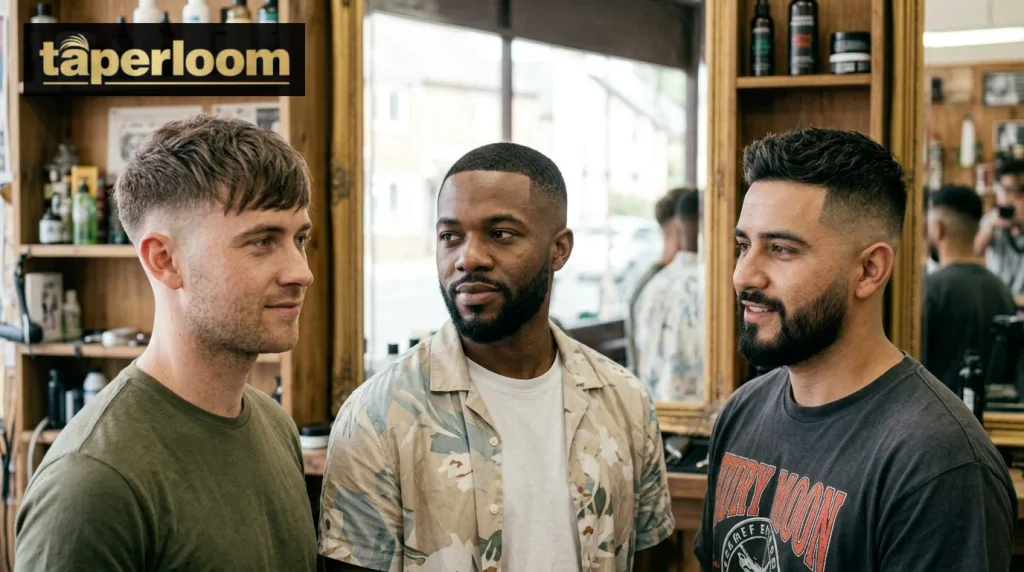
These three cuts get confused a lot because they all pair short sides with longer hair on top. The difference comes down to what you do with the front.
A French crop keeps the fringe short, blunt, and cut in a straight line. It barely needs product, which is why it’s popular with guys who want a low effort routine.
A textured crop goes the opposite direction, with choppy, uneven layers that need a bit of matte clay to hold their shape.
The low taper fade fringe sits between the two. You get more length than a French crop and more flexibility than a textured crop, so you can style it differently depending on the day, forward, messy, or side swept, without changing the haircut itself.
How to Ask Your Barber for a Low Taper Fade Fringe
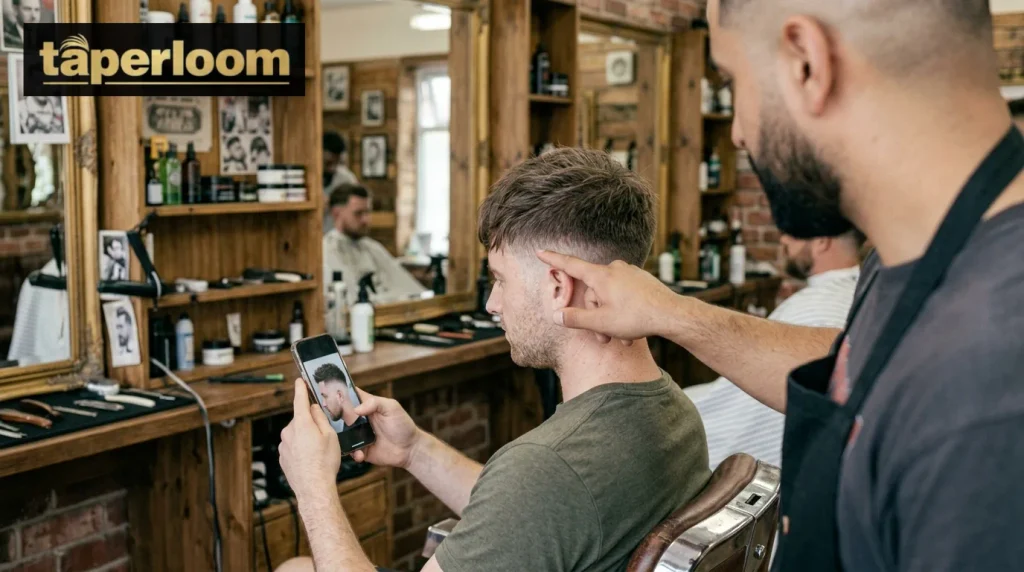
Walking in and saying “low taper fade” isn’t enough. Barbers hear that phrase a dozen times a day, and it can mean something slightly different depending on who’s holding the clippers.
Being specific about the fade height, the fringe length, and how much styling you’re willing to do gets you a much more accurate result.
Say this to your barber:
“I’d like a low taper fade on the sides and back, starting just above the ear and blending down to skin at the neckline.
Keep about three inches on top and cut it into a textured fringe that falls past my eyebrows. I want it soft, not choppy, and easy to style forward.”
Clipper guard chart:
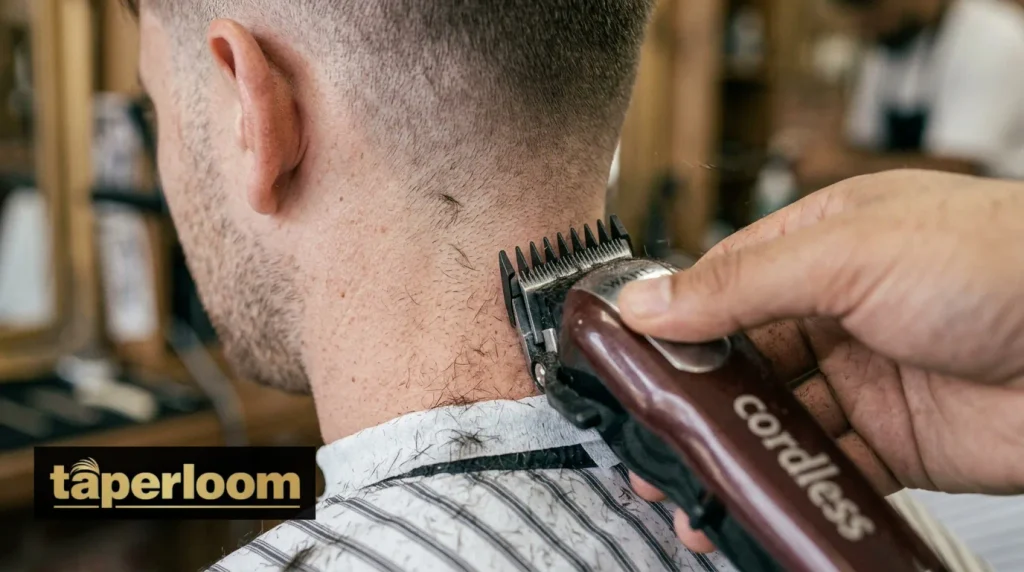
| Area | Guard Number | Note |
| Nape and sideburn taper | #0.5 to #1 | Blend upward into the sides |
| Sides above the taper | #2 to #3 | Follow your natural head shape |
| Top | Scissor cut, 2.5 to 4 inches | Point cut for texture |
| Fringe | 4 to 6 cm past the hairline | At the eyebrow or slightly below |
Three phrases to avoid saying:
- “Just a fade”, too vague, your barber won’t know where to start it
- “Whatever looks good”, you’ll end up with their default cut, not yours
- “Not too short”, this means nothing without a number attached
Bring a reference photo if you have one. Barbers work visually, and even a rough picture on your phone removes most of the guesswork. If you can’t find a photo, describe the fade height in relation to your ear, since that’s the detail barbers rely on most.
27 Best Low Taper Fade Fringe Haircuts
1. Textured Low Taper Fade Fringe
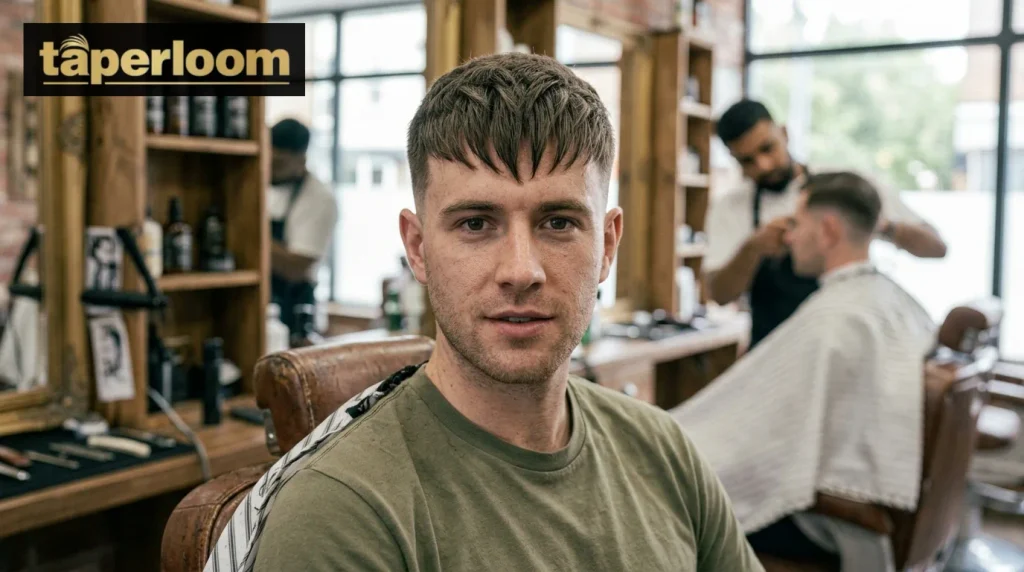
This is the version most guys ask for by default, and it’s easy to see why. Point cut layers through the fringe create natural separation instead of one flat block of hair, while the low taper keeps the sides quiet and clean.
You don’t need a big styling routine either. Work a small amount of matte clay through dry hair, push it forward, and you’re done in under two minutes.
- Best for: An easy, everyday look that still feels current
- Face shape: Oval, square, diamond
- Hair type: Straight, wavy, medium to thick
- Maintenance: Every 3 to 4 weeks
- Styling product: Matte texture paste
- Barber tip: Ask for point cut layers through the fringe, not blunt scissor cuts. It’s the difference between texture and a flat wall of hair.
2. Messy Low Taper Fade Fringe
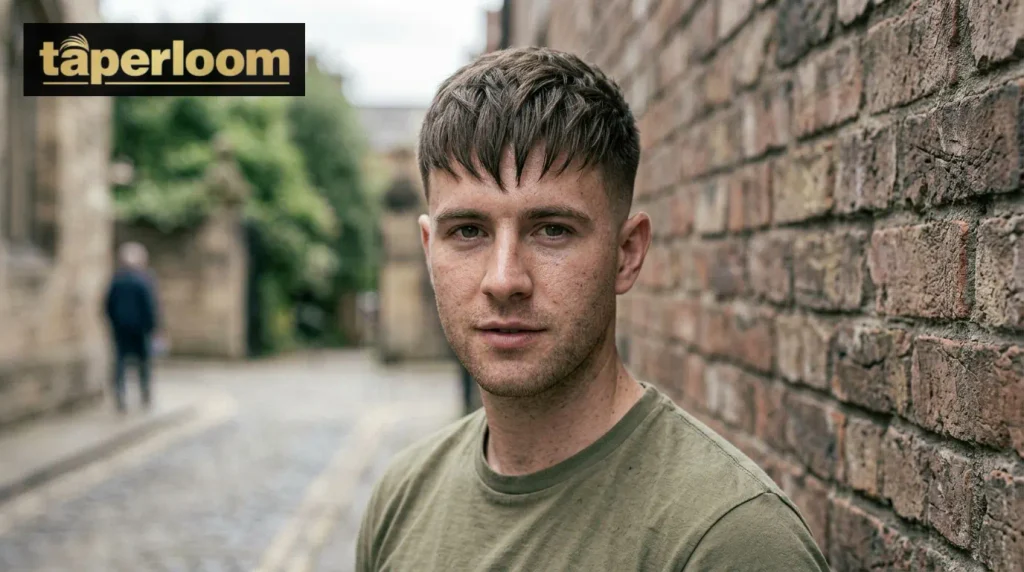
The messy fringe leans into imperfection on purpose. Hair falls forward loosely with visible separation, and it looks like you rolled out of bed with good hair, even though it took thirty seconds of styling.
The low taper underneath does the real work here, keeping the sides tidy so the messy top reads as a choice rather than an accident.
- Best for: Casual, low effort mornings
- Face shape: Oval, round, diamond
- Hair type: Straight, wavy
- Maintenance: Every 3 weeks
- Styling product: Sea salt spray and matte clay
- Barber tip: Style with your fingers instead of a comb. Combing it flattens the movement you’re trying to create.
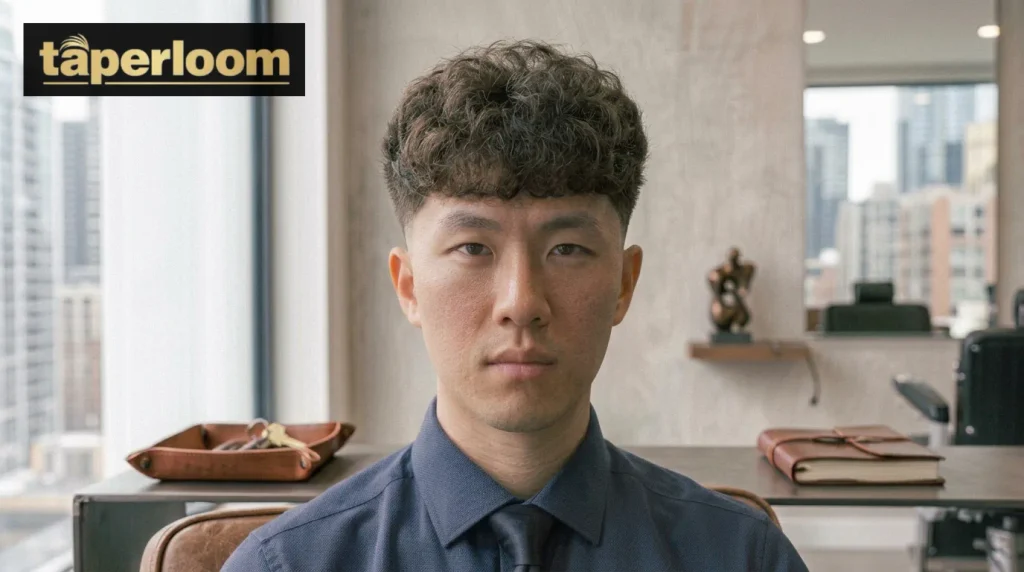
3. Curly Low Taper Fade Fringe
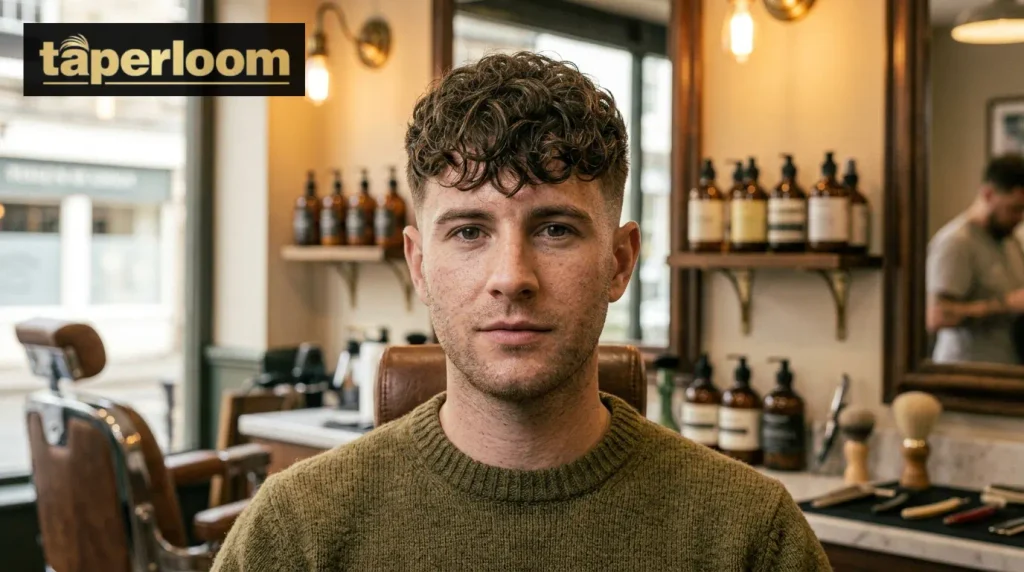
Curly hair and a low taper fade were made for each other. The taper removes bulk from the sides so your natural curl pattern on top gets to be the focal point instead of fighting for attention.
Push the curls forward for a fringe effect, or let them sit naturally and fall where they want to.
- Best for: Naturally curly or coily hair that wants to be the main feature
- Face shape: Oval, heart, square
- Hair type: Curly, coily
- Maintenance: Every 3 to 4 weeks
- Styling product: Curl cream or a light leave in conditioner
- Barber tip: Ask your barber to avoid over thinning the fringe. Curly hair loses definition fast when too much weight is removed.
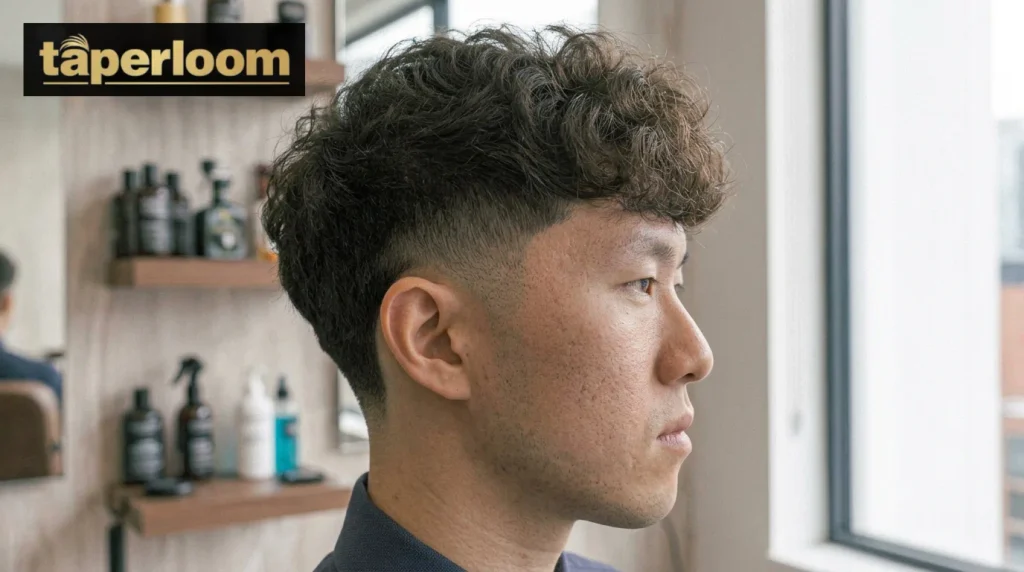
4. Wavy Low Taper Fade Fringe

Wavy hair gives you movement without any real effort. Let it air dry and the waves fall forward into a natural, relaxed fringe on their own. The low taper keeps the sides from competing with all that texture on top, so the whole cut still looks controlled even though nothing about the styling is fussy.
- Best for: Guys who want texture without a daily styling routine
- Face shape: Oval, diamond, heart
- Hair type: Wavy, medium to thick
- Maintenance: Every 3 to 4 weeks
- Styling product: Sea salt spray
- Barber tip: Let it air dry when you can. Heavy pomades flatten waves and cancel out the natural movement you’re going for.
5. Korean Inspired Low Taper Fringe
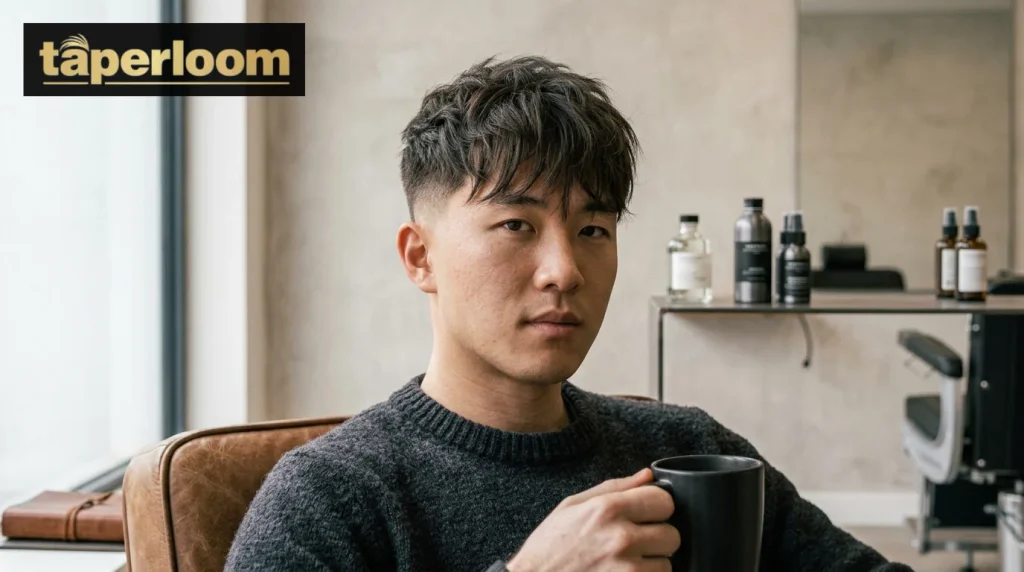
This style borrows from Korean men’s hairstyling, known for soft, lightweight layering and a fringe that falls naturally rather than looking sculpted.
The low taper stays conservative here, starting right above the ear, so it doesn’t fight with the fullness on top. It reads clean and a little youthful without trying too hard.
- Best for: A modern, polished look for students and young professionals
- Face shape: Oval, heart, diamond
- Hair type: Straight, fine to medium
- Maintenance: Every 3 to 4 weeks
- Styling product: Lightweight styling cream
- Barber tip: Keep the fringe slightly textured rather than cutting it pin straight. A completely flat fringe loses the softness that makes this style work.
6. Long Fringe Low Taper Fade
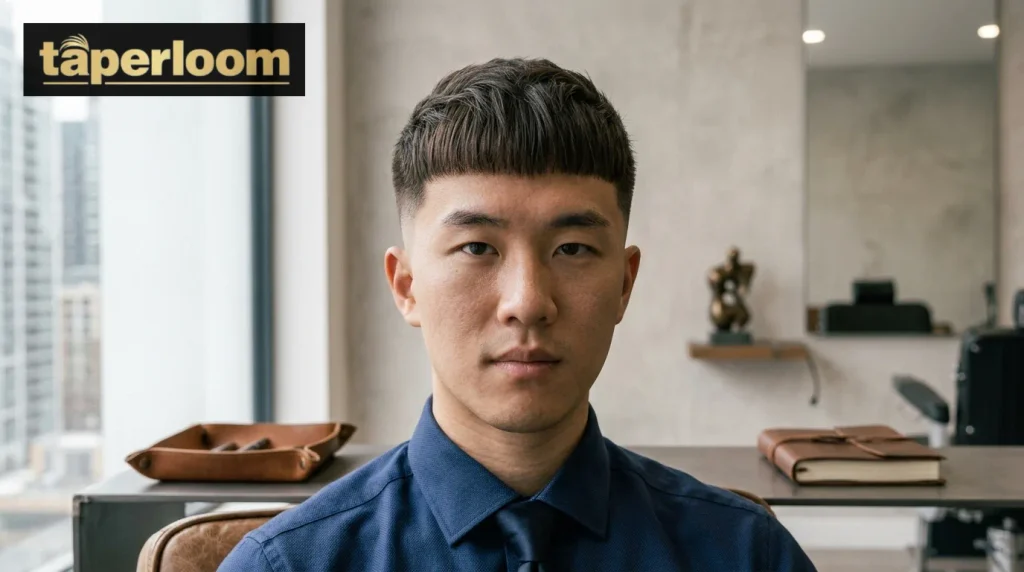
If you want options, this is the style to get. The fringe grows past your eyebrows, giving you enough length to blow dry it forward, sweep it to one side, or leave it loose and textured depending on your mood that day.
The low taper on the sides keeps everything balanced so the length on top doesn’t overwhelm the cut.
- Best for: Guys who like changing up their style without a new haircut
- Face shape: Oval, round, square
- Hair type: Straight, wavy
- Maintenance: Every 3 weeks
- Styling product: Matte styling cream
- Barber tip: Ask for layers through the length so it moves naturally instead of hanging heavy and flat.
7. Short Fringe Low Taper Fade
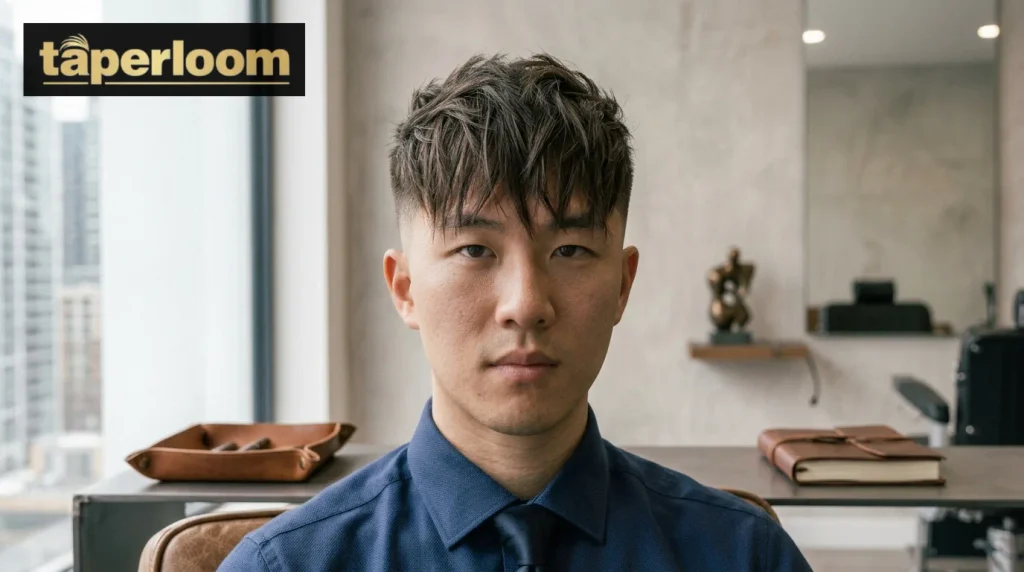
For guys who want structure over movement, the short fringe stays tight, sitting just a centimeter or two past the hairline.
It reads sharp and put together with almost no daily effort, which makes it one of the most office friendly versions of this cut. The low taper on the sides keeps the whole look balanced and understated.
- Best for: Professional settings and low maintenance mornings
- Face shape: Square, round, oval
- Hair type: Straight, medium
- Maintenance: Every 3 to 4 weeks
- Styling product: Light matte paste
- Barber tip: Ask your barber to keep the fringe blunt but not heavy. A little point cutting at the ends stops it from looking like a solid block.
8. Choppy Low Taper Fade Fringe
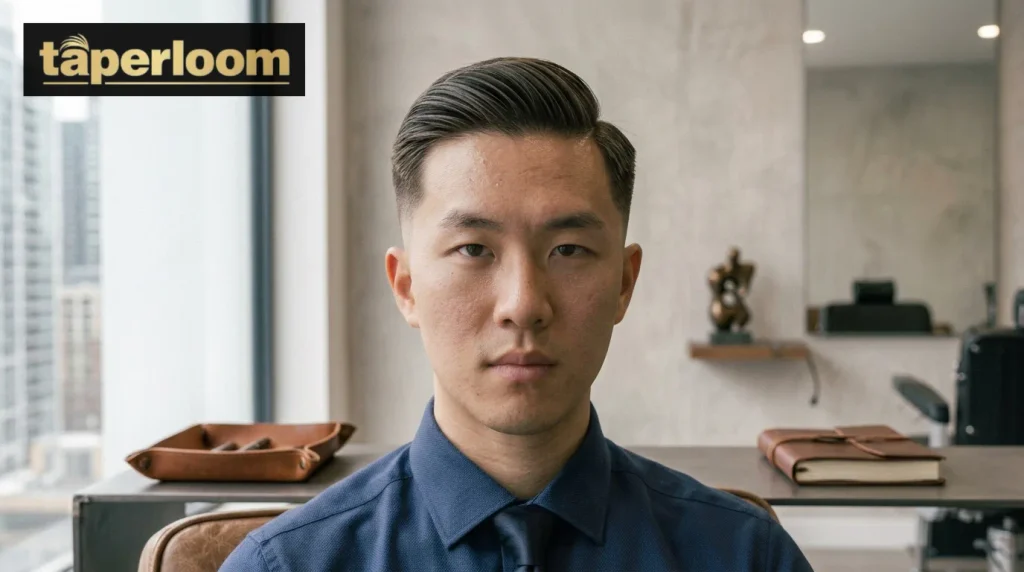
Choppy layers bring in controlled unevenness, the kind that looks deliberate rather than sloppy. Instead of one smooth line across the forehead, you get separated pieces that add real texture and a slightly edgier feel. Paired with the low taper, the sides stay clean enough that the choppy top never tips into messy.
- Best for: A textured, slightly edgy everyday look
- Face shape: Oval, diamond, square
- Hair type: Thick, straight
- Maintenance: Every 3 weeks
- Styling product: Texture paste
- Barber tip: Point cutting is what creates the separation here. Blunt scissor work will flatten the effect completely.
9. Side Swept Low Taper Fade Fringe
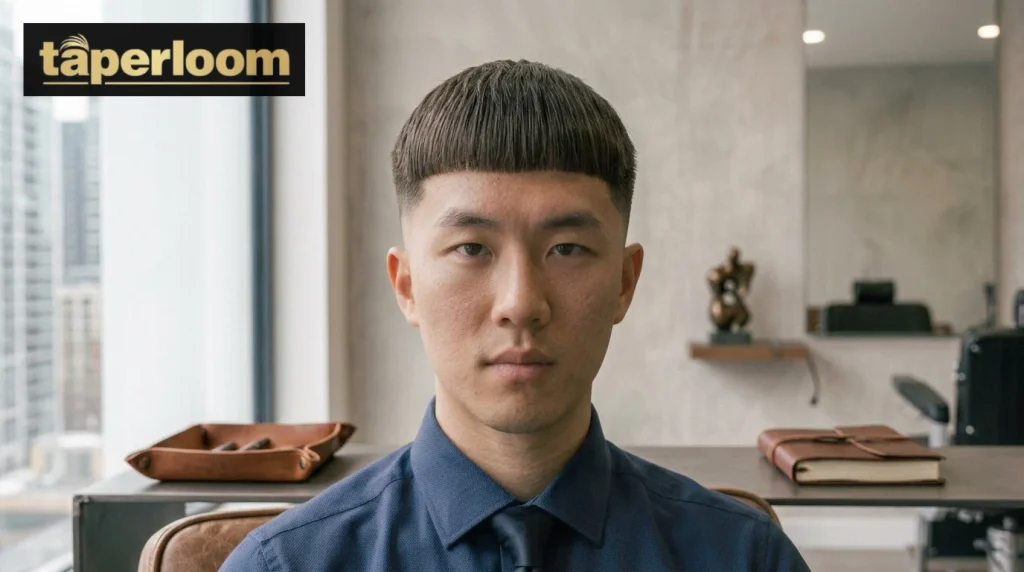
Sweeping the fringe to one side instead of straight forward gives you a cleaner, more polished finish.
It opens up your face a little and reads as more refined than a forward fringe, which is why it’s a favorite among professionals and guys who want their haircut to look intentional without being flashy.
- Best for: A refined, workplace ready look
- Face shape: Round, oval, heart
- Hair type: Straight, wavy
- Maintenance: Every 3 to 4 weeks
- Styling product: Grooming cream
- Barber tip: Blow dry the fringe in the direction you want it to fall before applying any product. Product on unset hair won’t hold the sweep.
10. Blunt Fringe Low Taper Fade (French Crop Style)
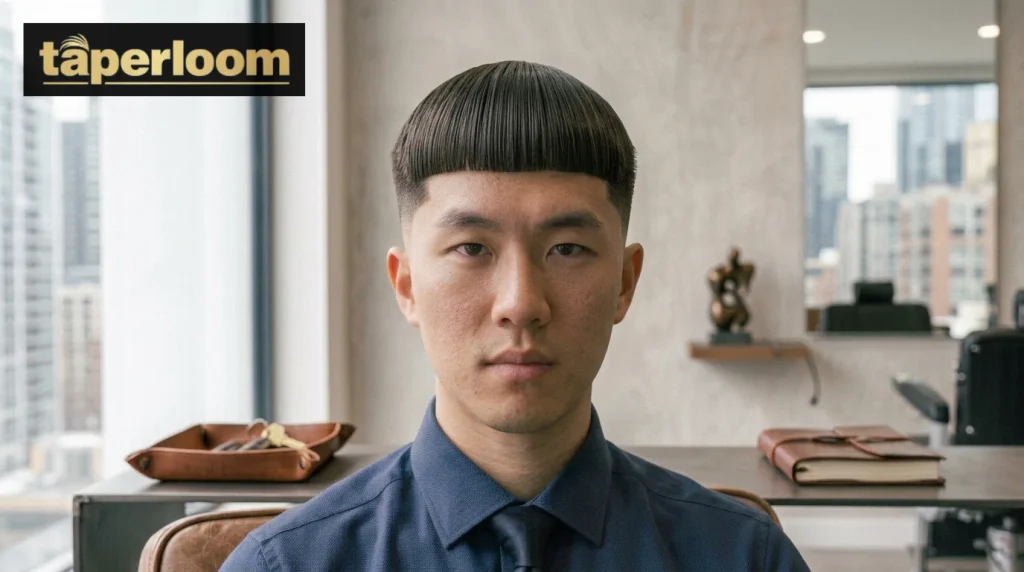
This version borrows the straight, blunt line of a French crop but keeps a bit more length and softness in the taper.
The fringe is cut cleanly across the forehead with minimal texturizing, giving you a crisp, no fuss look that barely needs product to hold its shape through the day.
- Best for: Minimal styling with a clean, classic finish
- Face shape: Oval, square
- Hair type: Straight, fine to medium
- Maintenance: Every 3 to 4 weeks
- Styling product: Light hold paste, optional
- Barber tip: Ask for the fringe to be cut dry, not wet. Hair sits differently once it dries, so a wet cut often ends up shorter than planned.
11. Straight Hair Low Taper Fringe
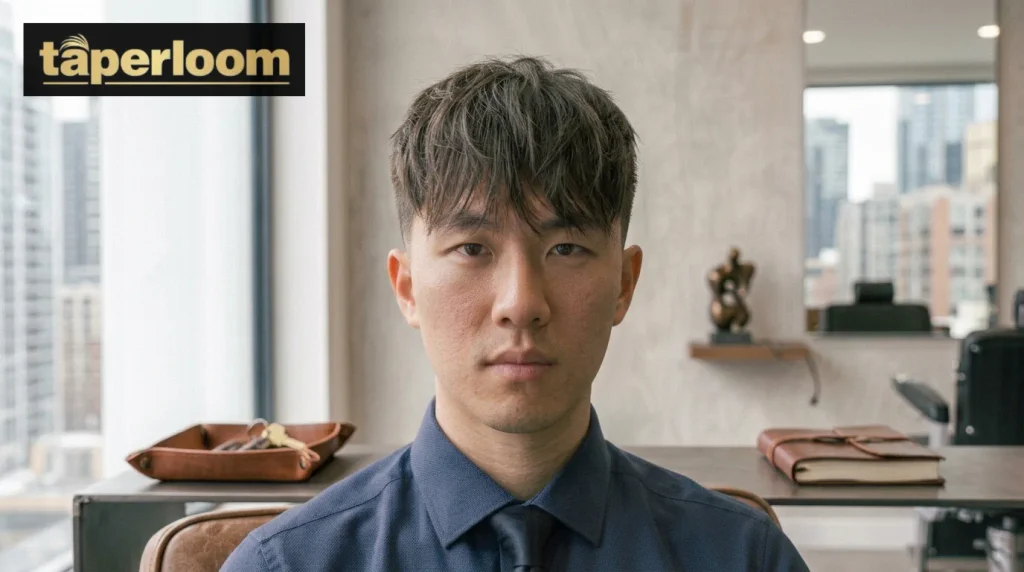
Straight hair shows off the precision of a well done low taper better than almost any other texture.
The clean fade line and the crisp edge of the fringe both stay visible without fighting any natural curl or wave. A touch of texture through the fringe keeps it from looking flat or overly stiff.
- Best for: A clean, structured look that highlights sharp lines
- Face shape: Oval, square, heart
- Hair type: Straight
- Maintenance: Every 3 to 4 weeks
- Styling product: Matte paste
- Barber tip: Add light texture through the fringe with point cutting. A completely blunt cut on straight hair can look stiff rather than sharp.
12. Feathered Low Taper Fade Fringe
Feathering uses light layering to create soft, airy movement instead of one heavy mass of hair up front.
The fringe falls naturally rather than sitting flat, which gives the whole cut a relaxed, easygoing feel. It works especially well if your hair is on the finer side and a heavier fringe would look weighed down.
- Best for: Lightweight texture without bulk
- Face shape: Oval, heart, diamond
- Hair type: Straight, wavy, fine to medium
- Maintenance: Every 3 to 4 weeks
- Styling product: Lightweight texture cream
- Barber tip: Ask for soft feathered layers rather than blunt cutting. Over layering fine hair can thin it out too much.
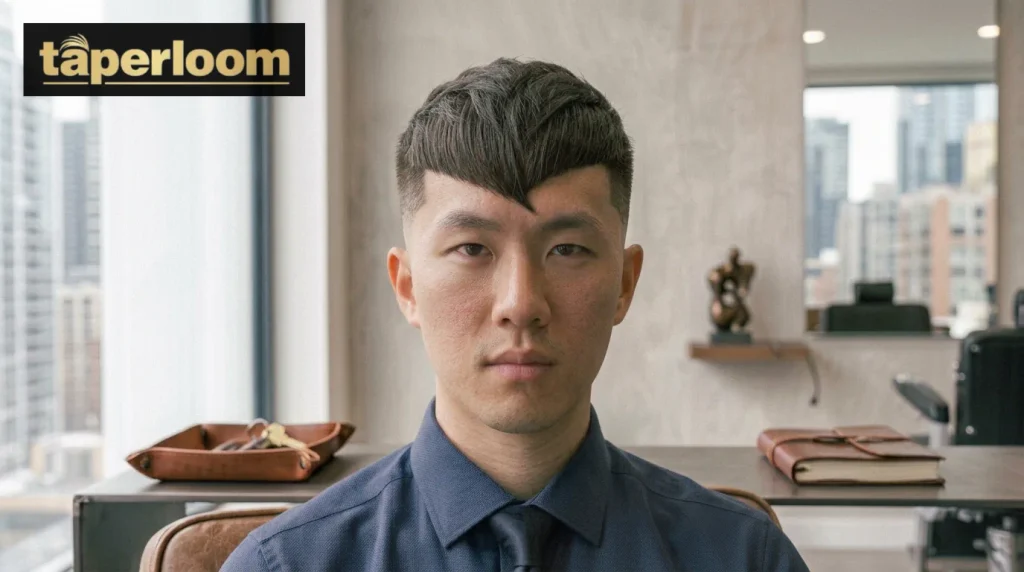
13. Angular Fringe Low Taper Fade
An angular fringe falls diagonally across the forehead instead of straight down, giving the front a sharper, more graphic shape.
It creates real definition without going to an extreme, which makes it a good pick if you want something bolder than a standard fringe but still wearable day to day.
The low taper keeps the sides soft enough to balance the sharper line on top.
- Best for: A bolder, more defined front profile
- Face shape: Round, oval, square
- Hair type: Straight, thick
- Maintenance: Every 3 weeks
- Styling product: Matte clay
- Barber tip: Keep the angle subtle. A steep diagonal line is hard to style consistently and can look uneven as it grows out.
14. Curtain Fringe with Low Taper
The curtain fringe splits down the middle and falls to either side, framing the face from both sides at once.
It’s one of the more recognizable fringe shapes out there, and pairing it with a low taper gives it a cleaner, more grown up finish than the shaggier curtain looks from a few years back.
- Best for: A face framing, fashion forward look
- Face shape: Oval, heart, diamond
- Hair type: Straight, wavy
- Maintenance: Every 4 weeks
- Styling product: Styling cream or sea salt spray
- Barber tip: Blow dry each side away from the center part. This trains the curtain to fall naturally instead of fighting the part line.
How to Pick Your Fringe Length (Short vs Medium vs Long)
Before we get to the rest of the list, it helps to know how fringe length changes the whole feel of the cut.
A short fringe, sitting just past the hairline, reads clean and professional with almost no styling needed.
A medium fringe, falling near the eyebrows, gives you the most flexibility since it can go forward, messy, or side swept. A long fringe, past the brow line, needs more daily effort but gives you the boldest, most changeable look.
If you’re not sure which to pick, medium length is the safest starting point since it can be trimmed shorter over time but can’t be un cut once it’s gone.
15. Fluffy Fringe Low Taper Fade
Also called a broccoli fringe, this style piles volume on top through layering and a round brush blowout, creating a soft, rounded shape that sits above the forehead.
It’s a favorite with younger guys chasing a Gen Z look right now, and it pairs surprisingly well with a low taper since the quiet sides let all that volume on top stand out.
- Best for: Maximum volume and a trend forward look
- Face shape: Oval, round, square
- Hair type: Thick, wavy, curly
- Maintenance: Every 3 to 4 weeks
- Styling product: Volumizing mousse
- Barber tip: Ask for heavy layering underneath to reduce weight. Without it, thick hair won’t hold the rounded shape and just falls flat.
16. Low Drop Taper with Fringe
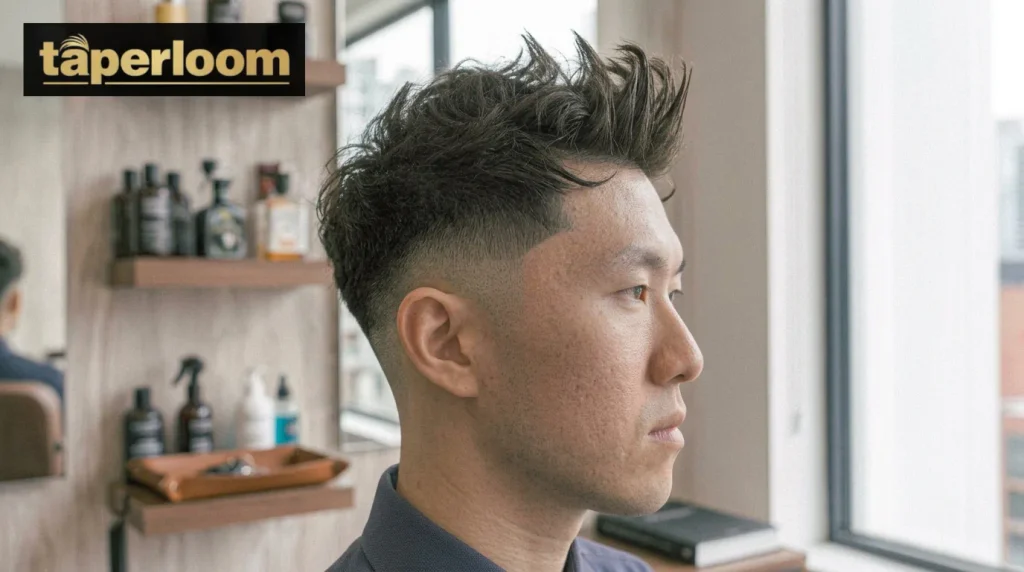
A drop taper curves downward behind the ear instead of running in a straight line, following the natural shape of your head.
It gives the cut a bit more dimension than a standard straight taper while staying just as low key. Combined with a fringe on top, it’s a subtle way to add detail without going for a bolder fade.
- Best for: Added dimension without extra contrast
- Face shape: Oval, round
- Hair type: Any texture
- Maintenance: Every 3 to 4 weeks
- Styling product: Matte paste
- Barber tip: Make sure your barber follows the curve behind your ear closely. A drop taper that’s cut too straight loses the effect entirely.
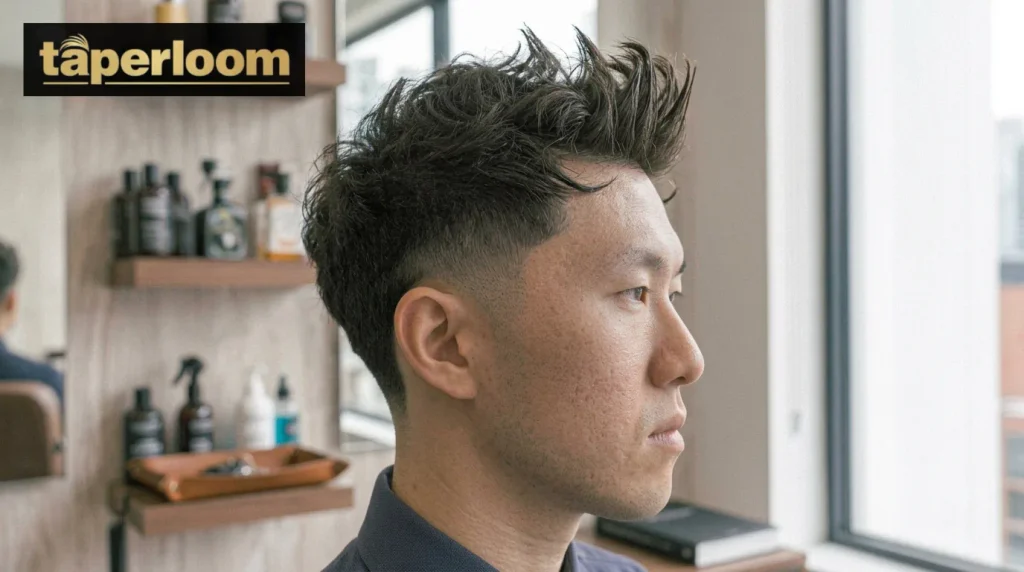
17. Spiky Fringe Low Taper Fade
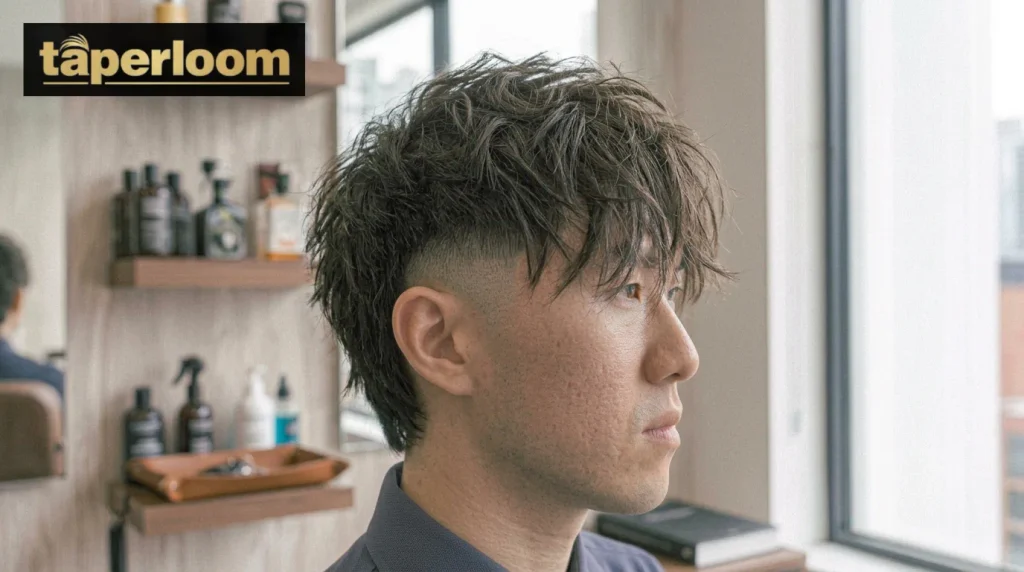
The spiky fringe uses a strong hold product to lift individual pieces up and forward, creating a textured, slightly retro look with real height.
It’s more of a styled, put together finish rather than a wash and go cut, but the payoff is a fringe with noticeably more presence than a softer, natural style.
- Best for: A bolder, more styled look with height
- Face shape: Round, oval, square
- Hair type: Straight, medium to thick
- Maintenance: Every 3 weeks
- Styling product: Strong hold wax or gel
- Barber tip: Blow dry the fringe upward while it’s still damp before applying product. Product alone won’t create lift on dry hair.
18. Disconnected Fringe Low Taper Fade
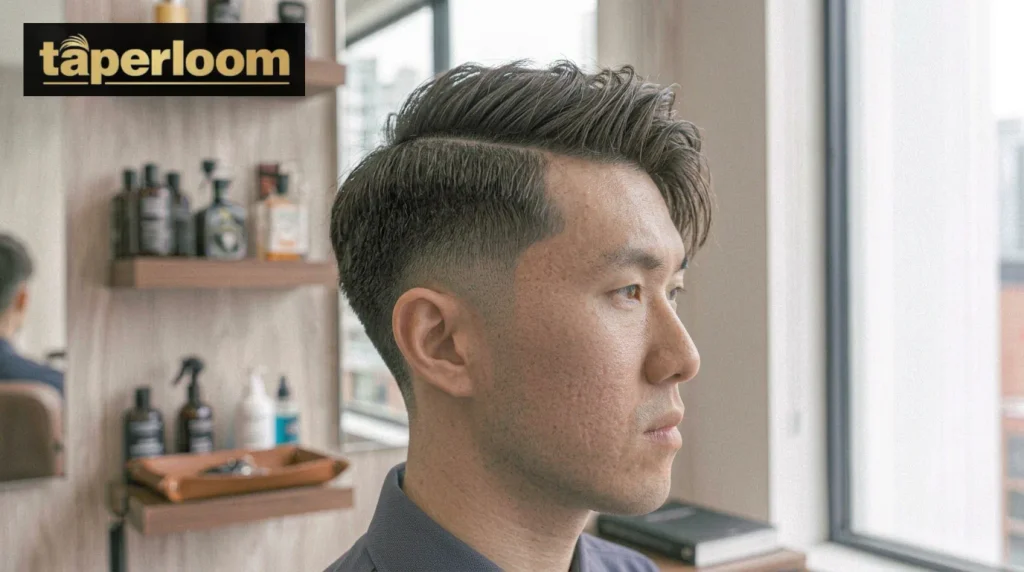
A disconnected fringe creates a visible break between the length on top and the low taper below, rather than blending smoothly from one into the other.
That contrast makes the fringe stand out as its own distinct element instead of flowing directly into the fade. It’s a more graphic, statement style compared to the softer blended cuts on this list.
- Best for: A bold, statement making silhouette
- Face shape: Oval, square, diamond
- Hair type: Straight, thick
- Maintenance: Every 3 weeks
- Styling product: Matte clay
- Barber tip: Ask your barber to leave a visible line where the length starts. Blending it too much defeats the disconnected effect.
19. Wolf Cut Fringe with Low Taper
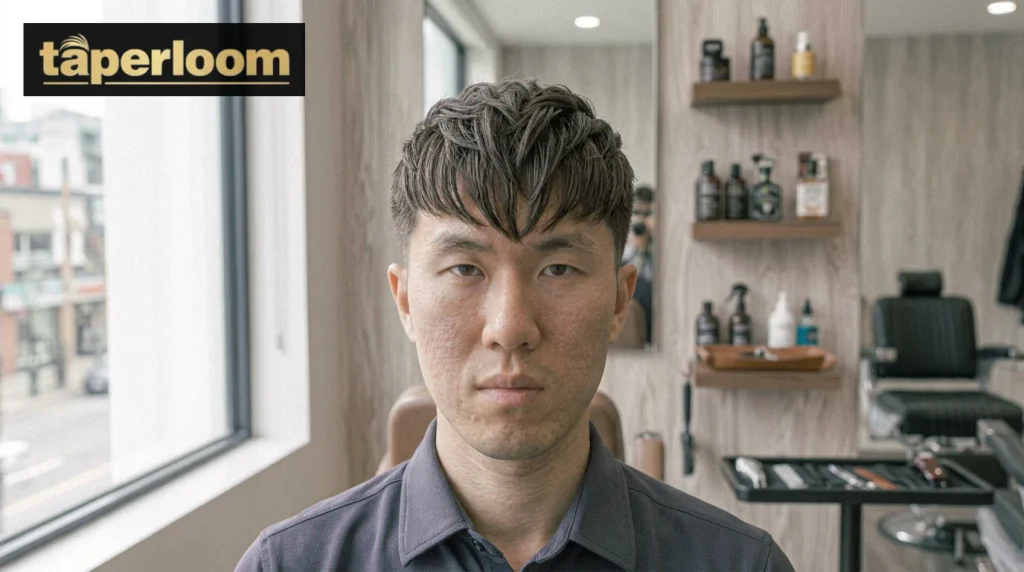
The wolf cut mixes a shag’s heavy layering with a mullet’s length at the back, and pairing it with a low taper gives it a cleaner, more wearable base than the usual shaggy version.
Up front, the fringe stays choppy and textured, while the low taper keeps the sides from adding to the overall volume. It’s a lot of style packed into one cut, so it works best if you’re already comfortable with a bit of daily upkeep.
- Best for: A trend driven, high volume look
- Face shape: Oval, round, heart
- Hair type: Thick, wavy, curly
- Maintenance: Every 3 to 4 weeks
- Styling product: Texture spray and light wax
- Barber tip: Heavy layering throughout is what makes this cut work. Without it, the shape reads as long hair rather than a wolf cut.
20. Low Taper Fringe with Hard Part
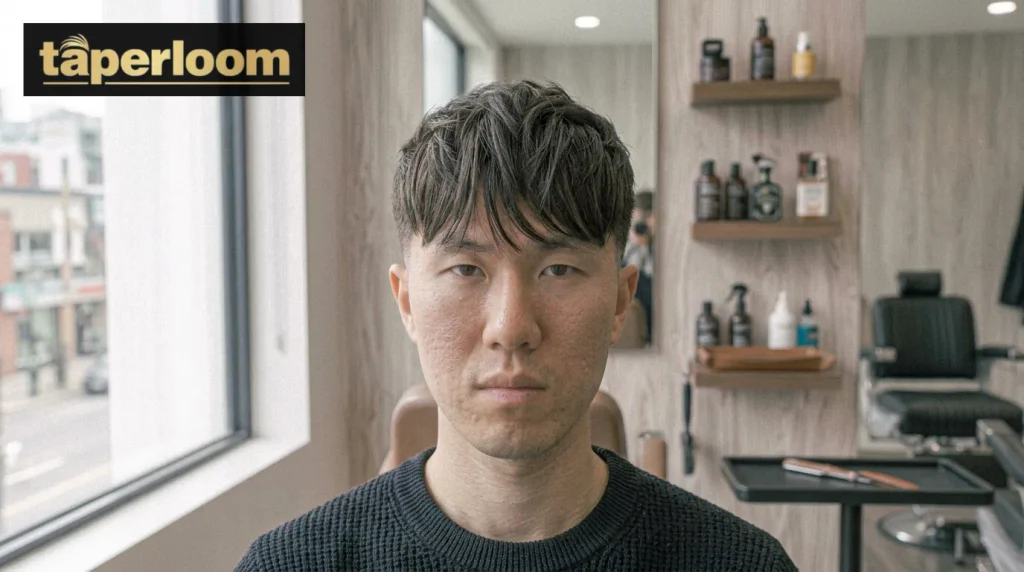
A hard part is a thin line shaved into the side of your head, usually just above the taper. It adds a sharp, deliberate detail to an otherwise soft haircut, and the fringe can be styled to fall away from it for a bit of natural asymmetry. It’s a small addition, but it changes how intentional the whole cut looks.
- Best for: Extra detail on an otherwise simple cut
- Face shape: Square, oval
- Hair type: Straight, thick
- Maintenance: Every 1 to 2 weeks for the part, every 3 to 4 weeks for the cut
- Styling product: Matte paste
- Barber tip: The hard part needs its own upkeep since it grows out faster than the rest of the cut. Plan for quick touch ups between full trims.
21. Layered Fringe Low Taper Fade
Layering adds depth by cutting the fringe at slightly different lengths throughout, so it falls with more movement instead of sitting as one flat piece.
It’s particularly useful if your hair is thick and tends to look heavy up front, since the layers remove bulk without shortening the overall length.
- Best for: Thick hair that needs less weight up top
- Face shape: Round, oval
- Hair type: Thick, coarse
- Maintenance: Every 3 to 4 weeks
- Styling product: Light texture cream
- Barber tip: Ask for layers cut throughout the fringe, not just at the ends. Trimming only the ends won’t reduce the weight underneath.
22. Thick Fringe Low Taper Fade
If you’ve got dense hair, this style puts it to use instead of thinning it out. The fringe stays full and blunt, worn forward as a bold, deliberate statement rather than something softened with layers.
The low taper keeps the sides quiet, so all the visual weight stays exactly where you want it, up top.
- Best for: Making the most of naturally dense hair
- Face shape: Oval, square
- Hair type: Thick, straight
- Maintenance: Every 3 to 4 weeks
- Styling product: Matte clay
- Barber tip: Resist the urge to over thin it. Thick hair is the whole point of this style, so keep the density and let the taper do the balancing.
23. Thin Fringe Low Taper Fade
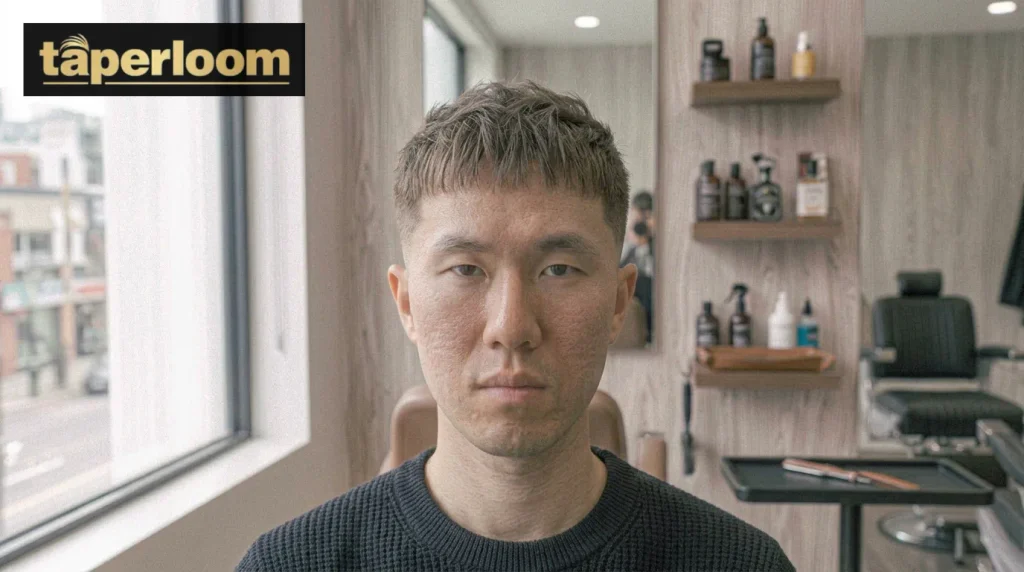
Fine hair needs a different approach than thick hair, and this style respects that instead of fighting it.
The fringe stays light and airy, just enough coverage to frame the forehead without looking sparse or overworked. A small amount of texture powder adds grip and a bit of lift without weighing the strands down.
- Best for: Fine or thin hair that needs volume, not more length
- Face shape: Most shapes work
- Hair type: Fine, thin
- Maintenance: Every 3 to 4 weeks
- Styling product: Texture powder
- Barber tip: Keep the fringe on the shorter side. Fine hair grown too long tends to separate and reveal the scalp underneath.
24. Fringe with Volume (Quiff Hybrid)
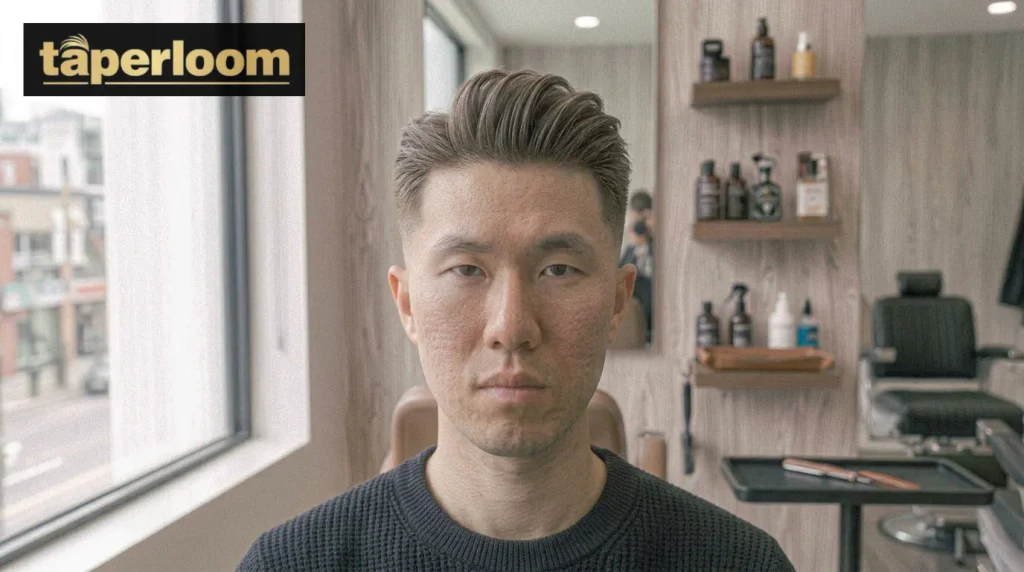
This version blow dries the fringe up and forward at the same time, creating lift at the root before the hair falls into place.
The result sits somewhere between a classic fringe and a quiff, with real height up front and a clean, low taper underneath to keep the sides from competing with all that volume.
- Best for: Thin or flat hair that needs a lift
- Face shape: Oval, heart
- Hair type: Fine to medium
- Maintenance: Every 3 to 4 weeks
- Styling product: Volumizing mousse
- Barber tip: Dry the fringe with a round brush pointed upward, then let it fall forward once it’s mostly dry. Styling it fully dry loses the lift.
25. Low Taper Fringe with Highlights
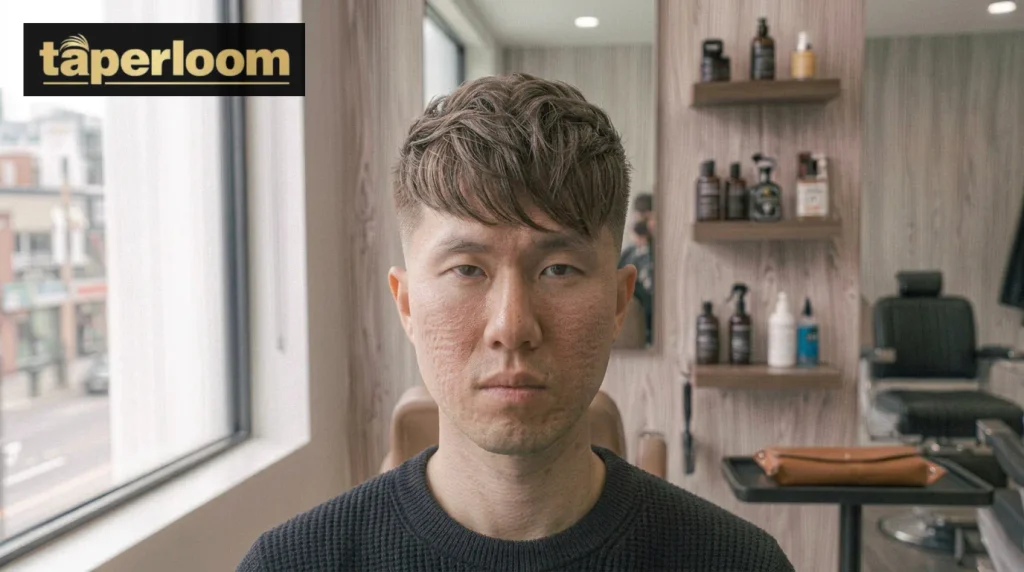
Adding color to the fringe brings a bit of contrast and depth that a single flat tone can’t. Subtle highlights, like brown, caramel, or ash tones, tend to look the most natural and require the least upkeep, while bolder colors make more of a statement if that’s what you’re after.
Either way, the low taper stays understated so the color has room to stand out.
- Best for: Guys open to adding some color detail
- Face shape: All shapes
- Hair type: Any, works best on lighter base colors
- Maintenance: Every 3 to 4 weeks for the cut, every 6 to 8 weeks for color touch ups
- Styling product: Color safe styling cream
- Barber tip: Ask for foils placed only through the fringe rather than all over. It keeps the cost down and still gives you visible contrast.
26. Low Taper Fringe for Round Faces
Round faces do best with added height and less width, and this version is built around that. A textured fringe with lift at the root makes the face look longer, while the low taper avoids adding any extra width at the sides.
Skip a heavy, blunt fringe here since flat hair across the forehead tends to widen a round face rather than balance it.
- Best for: Round face shapes specifically
- Face shape: Round
- Hair type: Any texture
- Maintenance: Every 3 to 4 weeks
- Styling product: Light texture paste or mousse for lift
- Barber tip: Ask for the fringe to be textured with some root lift, not cut flat. Height does more for a round face than length does.
27. Ivy Inspired Low Taper Fringe
This style borrows the neatness of a classic Ivy League cut and adds a softer, more textured fringe on top.
It sits right at the line between polished and relaxed, which makes it one of the more workplace friendly options on this list without looking stiff or overly formal.
- Best for: Office settings that still want a modern edge
- Face shape: Oval, square, heart
- Hair type: Straight, wavy
- Maintenance: Every 3 to 4 weeks
- Styling product: Grooming cream
- Barber tip: Keep the sides subtle and avoid fading too high. This style depends on staying understated, not sharp.
Best Low Taper Fade Fringe by Face Shape
| Face Shape | Best Fringe Style | Avoid | Why It Works |
| Round | Textured or spiky fringe with root lift | Heavy, blunt fringe | Height elongates the face instead of widening it |
| Square | Side swept fringe, soft texture | Sharp angular lines | Softens strong jaw and forehead angles |
| Oval | Almost any fringe style | Nothing in particular | Balanced proportions suit most lengths and shapes |
| Long or Oblong | Blunt or straight fringe | High volume on top | Visually shortens the forehead |
| Heart | Medium textured fringe, side swept | Very short blunt fringe | Balances a wider forehead against a narrower jaw |
| Diamond | Curtain or feathered fringe | Tight, blunt crops | Adds width near the forehead to soften cheekbones |
Your face shape doesn’t lock you into one style, but it does narrow down what’s going to look best without much extra work. Round faces get the most benefit from length and lift on top since flat, wide fringes tend to fight against the shape rather than balance it.
Square and diamond faces have the opposite issue, they already have strong angles, so a softer, more textured fringe rounds things out instead of adding more sharpness.
Oval faces have it easiest here. Because the proportions are already balanced, almost every style on this list works, which is why it shows up as the top match for more than half the cuts above.
Best Low Taper Fade Fringe by Hair Type
Straight hair
holds a fringe exactly where you cut it, which makes it the easiest texture to style and the one that shows off clean, sharp lines best. It pairs especially well with the Straight Hair Low Taper Fringe or Blunt Fringe Low Taper Fade since both depend on precise, visible edges.
Wavy hair
brings natural movement without much effort, so it works best left slightly undone rather than forced flat. Try the Wavy Low Taper Fade Fringe or Curtain Fringe with Low Taper to let the waves do the styling for you.
Curly hair
should be worked with, not against. Moisture rich products keep the curl pattern defined, and styles like the Curly Low Taper Fade Fringe are cut specifically to let curls sit as the main feature.
Coily hair
benefits from the same approach as curly hair, just with even more emphasis on hydration to avoid dryness and frizz. The Wolf Cut Fringe with Low Taper and the curly option above both give coily textures room to hold their natural shape.
Thin or fine hair
looks best with volume added at the root rather than length added up front, since extra length on fine hair tends to look flat and thin out fast. The Thin Fringe Low Taper Fade and Fringe with Volume are both built around that.
Thick or coarse hair
usually needs weight removed rather than added, so layering matters more here than for any other texture. The Thick Fringe Low Taper Fade and Layered Fringe Low Taper Fade both handle that density well.
How to Style a Low Taper Fade Fringe at Home (5 Minutes)
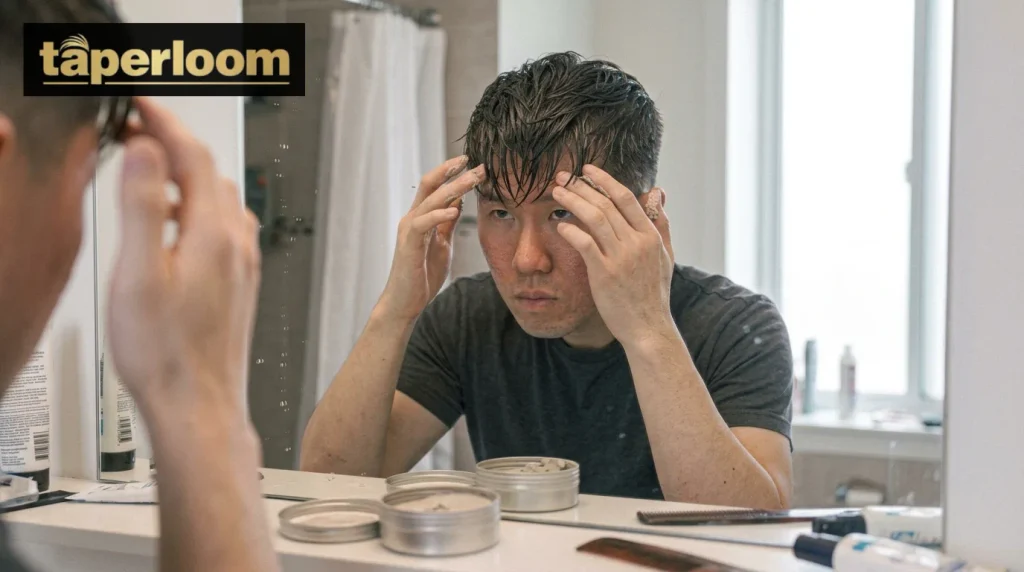
- Start with damp hair. Towel dry until it’s damp, not soaking. Product spreads more evenly on damp hair than on fully dry or dripping wet hair.
- Apply a pre styler. Work a small amount of sea salt spray or a lightweight styling cream through the fringe first. This gives your blow dryer something to grip onto.
- Blow dry forward. Point the dryer down and forward while running your fingers through the fringe. Ten seconds of directional heat is usually enough to train the hair to fall the way you want.
- Add your main product. Rub a small amount of matte clay or texture paste between your palms, then work it through from mid length to the ends. Avoid the roots here, since product too close to the scalp makes hair look greasy rather than textured.
- Finger shatter the fringe. Use your fingertips to separate individual pieces instead of combing them into one smooth shape. Finish with a light pass of hairspray if you want the texture to hold through the day.
Three quick variations:
- Rainy day: Skip the blow dry step and use a stronger hold paste instead. It resists moisture better than a lighter cream.
- Gym day: Use less product overall, since sweat combined with heavy clay tends to look greasy fast.
- Date night: Add a small amount of shine spray after your usual routine for a slightly more polished finish without changing the shape.
Best Products for a Low Taper Fade Fringe (Named and Priced)
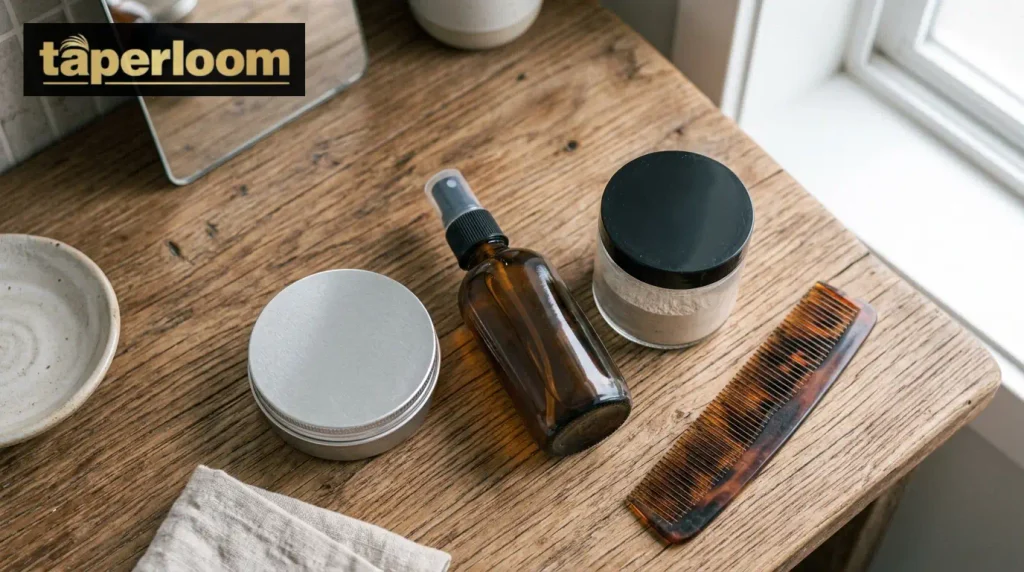
| Hair Type | Product Type | Example | Price Range |
| Fine or thin | Sea salt spray | Osmo Salt Water Sea Salt Spray | $10 to $15 |
| Fine or thin | Texture powder | Osmo Grunge Texture Powder | $15 to $20 |
| Thick or coarse | Matte clay | American Crew Fiber | $15 to $20 |
| Thick or coarse | Molding paste | Hanz de Fuko Claymation | $25 to $30 |
| Curly or coily | Curl cream | Cantu Coiling Custard | $8 to $12 |
| Curly or coily | Leave in conditioner | SheaMoisture Curl Enhancing Smoothie | $10 to $14 |
| Straight | Light hold paste | Layrite Original Pomade | $15 to $18 |
| Straight or wavy | Grooming cream | Baxter of California Clay Pomade | $20 to $25 |
| Any, needing volume | Volumizing mousse | Redken Guts 10 Mousse | $18 to $22 |
| Any, needing shine | Shine spray | Sexy Hair Weather Proof Shine Mist | $18 to $22 |
You don’t need every product on this list. Pick one or two that match your hair type and your desired finish, then build from there once you know how your hair responds.
A matte clay works for most straight to wavy hair, while curly and coily textures do better with cream based, moisture heavy products instead of anything with a strong hold or matte finish.
Price ranges above are typical retail costs at drugstores or barbershop retail counters, and can vary by region and where you buy.
How Much Does a Low Taper Fade Fringe Cost?
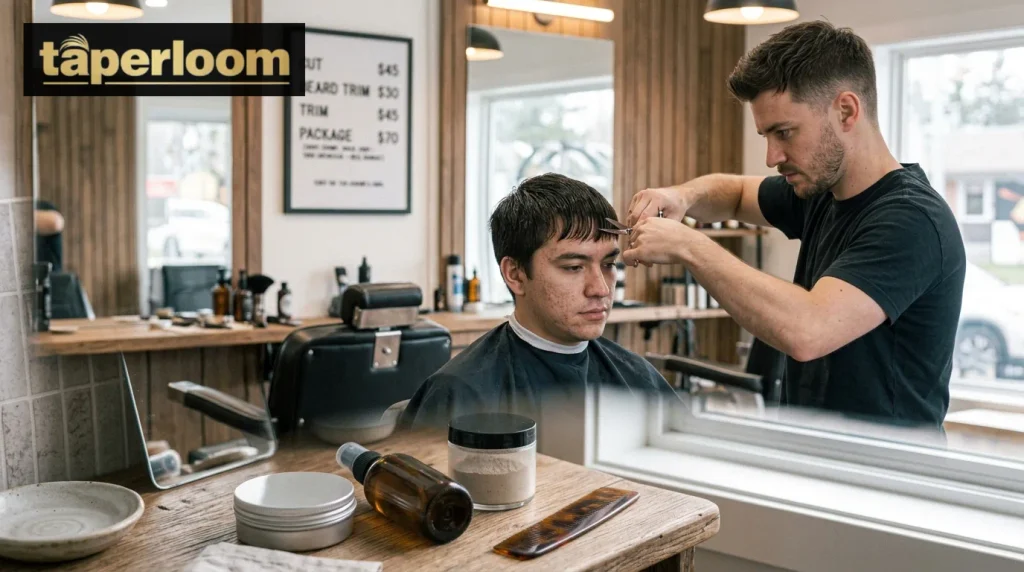
A low taper fade fringe typically costs between $25 and $70 at a barbershop, depending on where you live and the barber’s experience level. Big city shops and specialty barbers tend to sit at the higher end, while smaller towns and chain barbershops usually land closer to $25 to $35.
| Service | Typical Cost |
| Basic barbershop cut | $25 to $40 |
| Experienced or specialty barber | $45 to $70 |
| Touch up (neckline and taper only) | $10 to $20 |
| Cut plus beard trim | $35 to $80 |
| At home clipper kit (one time cost) | $30 to $60 |
Touch ups. Since the fringe grows slower than the taper needs trimming, many guys book a quick $10 to $20 touch up between full cuts to keep the neckline and sides sharp without paying full price.
Tipping. A 15 to 20 percent tip is standard in most areas, and it’s worth a bit more if your barber spends extra time getting the fringe length exactly right.
Cutting it at home. A decent clipper kit costs $30 to $60 upfront and pays for itself after two or three skipped barbershop visits, though the taper blend is the hardest part to get right without practice. Most guys who cut their own hair still get the fringe length trimmed by a barber every few months to keep the shape clean.
Maintenance and Grow Out Timeline
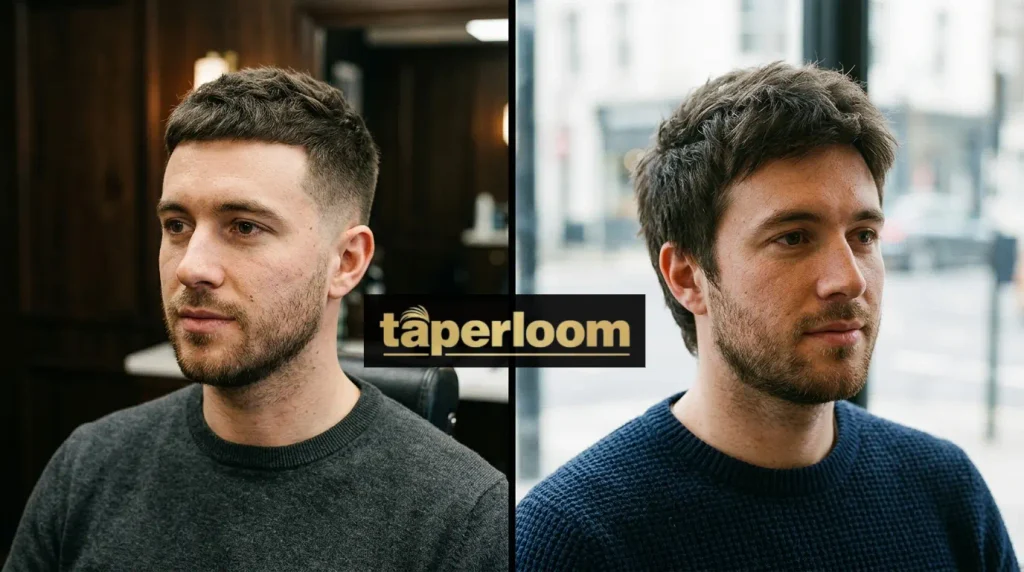
| Week | What It Looks Like | What to Do |
| Week 0 to 1 | Sharpest version of the cut, fade line is crisp | Just style as usual, no trim needed |
| Week 2 | Taper starts softening, fringe still holds its shape | Optional touch up on the neckline and sideburns |
| Week 3 | Fringe starts creeping toward your eyes | Fringe only trim if you want to keep the original length |
| Week 4 | Taper has grown out noticeably, fringe is longer and heavier | Book a full cut to reset both the taper and the fringe |
| Week 5 to 6 | Cut has fully grown out into a longer, softer shape | Either rebook now or let it transition into a new style |
The low taper fade holds its shape longer than a mid or high fade would, which is one of the main reasons guys choose it.
You can usually stretch to four weeks between full cuts without the fade line looking messy, especially if you get a quick neckline touch up around week two.
Self trimming the neckline between visits: if you want to stretch even further, a basic trimmer on a low guard length can clean up your neckline and sideburns at home. Go slow, work with the grain of your hair growth, and stop as soon as the edge looks clean.
This buys you extra time before you need a full barber visit without touching the taper blend itself, which is much harder to get right without practice.
7 Common Mistakes to Avoid
- Cutting the fringe blunt when you wanted texture. A flat, straight line across the forehead reads stiff. Ask for point cutting if you want movement instead.
- Confusing a taper with a fade. A taper blends gradually with no bare skin showing, while a fade can go down to skin. Mixing up the terms with your barber often leads to a shorter cut than you expected.
- Using wet look gel on a textured style. Wet look products flatten the separation that makes a textured fringe work in the first place. Stick to matte products instead.
- Waiting too long between trims. Past six weeks, the taper loses its shape completely and the fringe can start covering your eyes. Four weeks is the sweet spot for most guys.
- Applying product at the roots. Product belongs from mid length to the ends. Rubbing it into the roots just makes hair look greasy and weighed down.
- Ignoring your face shape. A style that looks great on a reference photo won’t always suit your own proportions. Talk through your face shape with your barber before committing to a specific fringe length.
- Not bringing a reference photo. Describing a haircut in words alone leaves too much room for misunderstanding. Even a rough photo saves you from a result you didn’t ask for.
What Barbers Say
Barbers who cut this style regularly tend to repeat a handful of the same points to clients:
“Most guys undersell how much the fringe length matters. Two centimeters is the difference between a clean, styleable fringe and one that’s already annoying you by week two.”
“The low taper is forgiving. It’s the cut I recommend to first timers because it still looks intentional even if you can’t make it back in exactly four weeks.”
“The biggest fix I make in the chair is toning down what people ask for. A lot of guys request ‘choppy’ when what they actually want is soft texture. Bring a photo so we’re both looking at the same thing.”
These reflect common advice shared across barber forums and consultations rather than a single named source, but the themes hold up across most professional recommendations for this cut.
Frequently Asked Questions
What is a low taper fade fringe haircut?
It’s a men’s haircut with a low, subtle fade on the sides and a longer fringe on top that’s styled forward. The fade starts just above the ear and blends toward the neckline.
How do I ask my barber for a low taper fade with fringe?
Use the exact script above: name the fade height, the guard numbers, and how long you want the fringe. Bring a reference photo if you have one.
What’s the difference between a low taper and a low fade?
A taper blends gradually without showing skin, while a fade can go all the way down to skin. A low taper fade is typically softer and grows out more gracefully.
Low taper vs mid fade, which is better?
It depends on how much contrast you want. A low taper is subtler and more professional, while a mid fade gives you a bolder, more defined look.
Does a low taper fade fringe work on curly hair?
Yes. The taper removes bulk from the sides while the curls on top stay as the main feature of the cut.
Is it good for thin or fine hair?
Yes, as long as you keep the fringe on the shorter side and add volume at the root instead of extra length.
How often should I get it trimmed?
Every 3 to 4 weeks for a full cut, with an optional touch up around week 2 to keep the neckline clean.
How long does the haircut take?
Most barbers finish it in 30 to 45 minutes, depending on how much detail work goes into the fringe.
Is a low taper fade fringe professional or office appropriate?
Yes, especially the shorter or side swept fringe versions. It’s one of the most workplace friendly fringe styles available.
Can I have a beard with it?
Yes. Many barbers recommend blending the sideburn directly into a beard fade for a cohesive look.
What’s the best product for a textured fringe?
Matte clay or texture paste works best for most hair types. Curly hair does better with a curl cream instead.
How long does my hair need to be for a fringe?
You generally need at least 2 to 3 inches on top to style a proper forward fringe.
Will a fringe suit a round face?
Yes, if it’s textured with some root lift. A heavy, blunt fringe tends to widen a round face rather than balance it.
Can I cut a low taper fade fringe at home?
The fringe length is manageable at home with basic scissors, but the taper blend on the sides is difficult to get right without practice or clippers built for fading.
Final Verdict Which One Should You Pick?
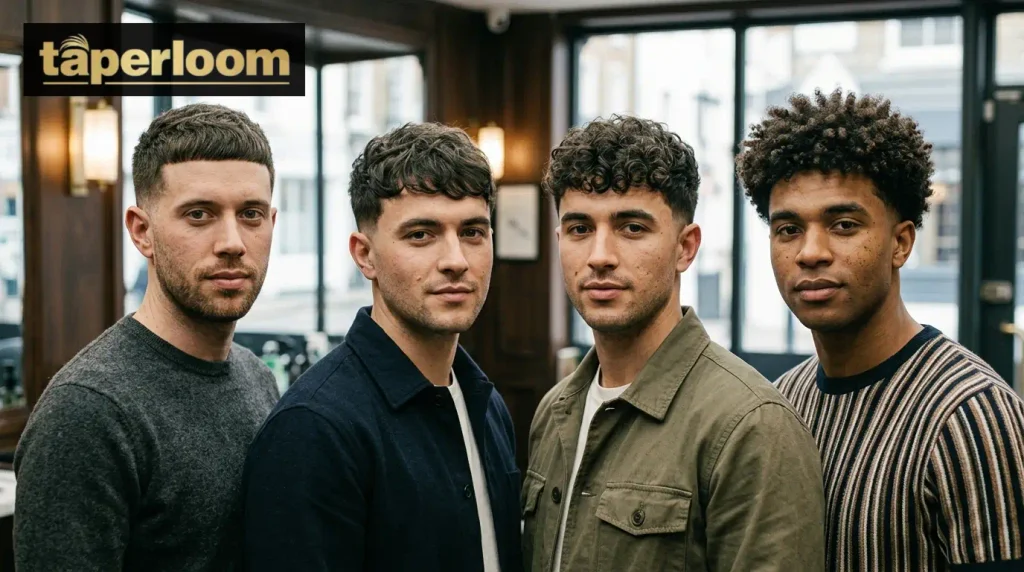
If your hair is thick and you want it to do the talking, go with the thick fringe or the layered fringe, both are built to handle density without looking bulky. If you’ve got curls or coils, don’t fight them, the curly fringe and the wolf cut are cut specifically to let your natural texture lead.
And if you just want something low effort that still looks sharp three weeks after your cut, the textured fringe or the short fringe are the safest, most forgiving picks on this list.
Whichever style you land on, the low taper underneath is doing more work than it gets credit for. It’s the reason this haircut still looks intentional on week three instead of needing a trim the moment it grows out even slightly.
Reviewed for accuracy by a licensed barber. This guide was written using current barbering terminology, standard clipper guard sizing, and consultation practices used in professional barbershops. Clipper guard numbers and pricing can vary slightly by barber and region, so use the ranges here as a starting point for your own consultation.
Read Next : Low Taper Fade Curly Hair: The Complete Guide (2026)

Muhammad Kaleem is a content creator who writes about hair care, hairstyles, grooming, and everyday hair trends. He enjoys turning hair-related topics into simple, practical, and easy-to-understand content that helps readers make informed choices about their hair and personal style.