
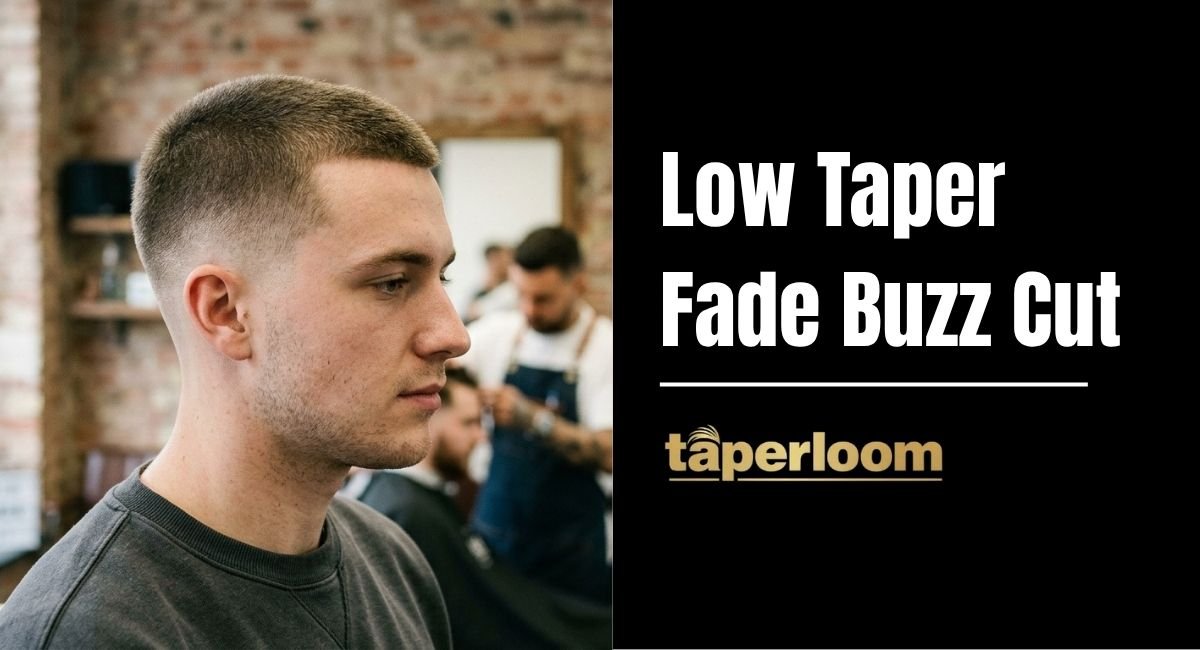
A low taper fade buzz cut pairs a buzzed top with sides that fade low and clean sharp enough to look intentional, subtle enough to skip the daily styling. It’s one of the most requested cuts in barbershops right now, and for good reason: it works on almost every face shape, holds up on straight, wavy, curly, and coily hair, and grows out gracefully instead of looking patchy after a week.
But “low taper fade buzz cut” isn’t one haircut it’s a category. The guard number you pick, where the fade starts, and how sharp you take the line-up all change the final result.
This guide breaks down 25 real style variations, a full clipper guard chart, face-shape and hair-type recommendations, what this cut actually costs, and the exact words to use in the chair so you walk out with what you asked for.
Quick Answer
- A low taper fade buzz cut = a buzzed top (usually a #2–#4 guard) + sides that taper low, starting just above the ear, and never reach bare skin.
- Most guys get it touched up every 2–3 weeks.
- The most requested guard on top is a #3 thinner hair looks fuller at a #4, thick hair holds up fine at a #2.
- It’s one of the most office-friendly fades because the low fade placement keeps contrast subtle.
What Is a Low Taper Fade Buzz Cut?
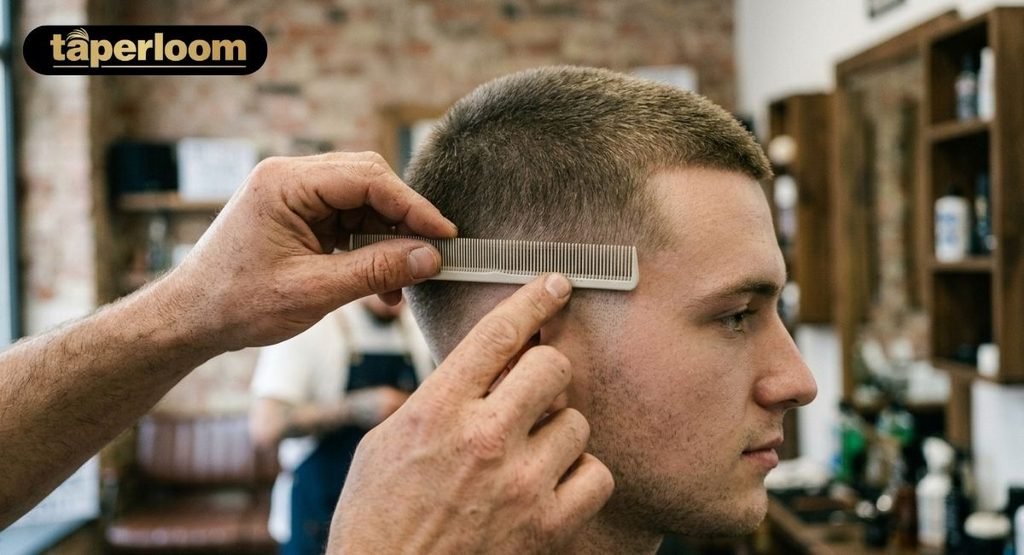
A low taper fade buzz cut is a short men’s haircut that combines two techniques. The top is clipped evenly with a guard, usually a #2 to #4, so it sits short and even instead of something you’d comb or part.
The sides and back use a taper fade that starts low, just above the ear, and gets shorter as it drops toward the neckline, without ever going to bare skin.
The word “low” tells you where the fade begins. That single detail changes the whole look. A high fade starts near the temples and creates sharp contrast against the buzzed top.
A mid fade starts around the top of the ear. A low taper fade buzz cut keeps that transition much lower, so the sides stay fuller for longer and the blend reads as soft and subtle rather than bold.
That’s also what separates a taper from a full fade. A taper never touches skin. Even at its shortest point, it leaves a bit of length, usually a #1 or a light trim.
A low taper fade buzz cut uses this to its advantage: it looks structured and deliberate without the stark skin line you’d get from a skin fade, and it hides uneven density far more forgivingly on fine or thinning hair.
| Term | What it means in this haircut |
| Buzz cut | The top, clipped to one even length with a guard |
| Taper | Sides that gradually shorten but never reach bare skin |
| Fade | The blend technique used to soften the transition between lengths |
| Low | The starting point of the fade, just above the ear |
Why This Haircut Is So Popular Right Now
A few practical reasons explain why the low taper fade buzz cut keeps showing up as the most requested cut in barbershops.
- Low maintenance. No blow-drying, no product required, and the top stays neat with almost zero daily effort.
- Works with most face shapes. A round face gets more length on top for lift, a square face pairs naturally with a sharp line-up, and an oval face works with nearly any guard.
- Handles every hair type. Straight, wavy, curly, and coily hair all take a low taper fade buzz cut well, with only the guard number changing.
- Grows out clean. Since the taper never hits skin, regrowth blends in instead of leaving a hard line, so it stretches two to three weeks between visits.
- Office-friendly. The low, subtle fade placement reads as tidy and professional rather than trend-chasing.
- Social proof. Barbers on TikTok and Instagram post it constantly, which keeps it visible and in demand.
Low Taper Fade Buzz Cut Guard Length Chart (#1–#6)
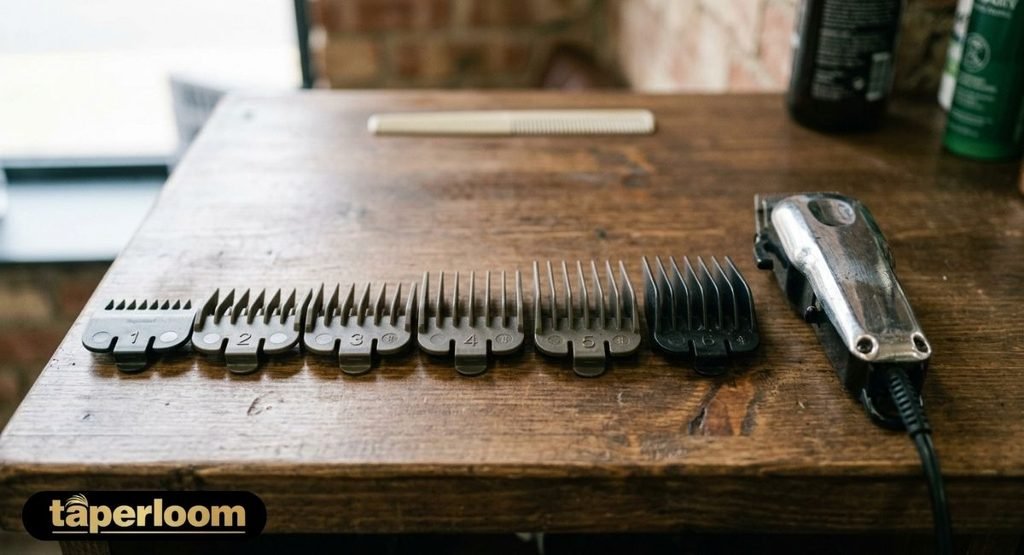
Guard numbers decide how much length stays on top, and the jump between sizes is bigger in person than it looks on paper.
| Guard | Length | Look |
| #1 | 1/8 inch (3mm) | Very close, scalp visible through hair |
| #2 | 1/4 inch (6mm) | Short and sharp, classic buzz look |
| #3 | 3/8 inch (10mm) | Slight texture, still low maintenance |
| #4 | 1/2 inch (13mm) | Noticeable texture, light styling possible |
| #5 | 5/8 inch (16mm) | Enough length to comb through or add product |
| #6 | 3/4 inch (19mm) | Longer, textured top with real movement |
A #1 or #2 gives the sharpest contrast against a low taper fade, though it shows more scalp, worth knowing if you’re conscious about thinning.
A #3 is the most requested length overall since it looks intentional without any real upkeep. A #4 to #6 leaves room for texture and a light matte product, and suits guys who want a bit more on top without losing the low maintenance appeal.
Hair density matters as much as preference. Thick hair holds shape at shorter guards, while fine or thinning hair looks fuller at a #3 or #4, since going too short can expose the scalp and highlight sparse spots.
25 Best Low Taper Fade Buzz Cut Styles
“Low taper fade buzz cut” covers a lot of ground. Here are 28 real variations barbers cut, grouped so you can find the one that fits your hair, your face, and your routine.
Classic & Everyday Styles
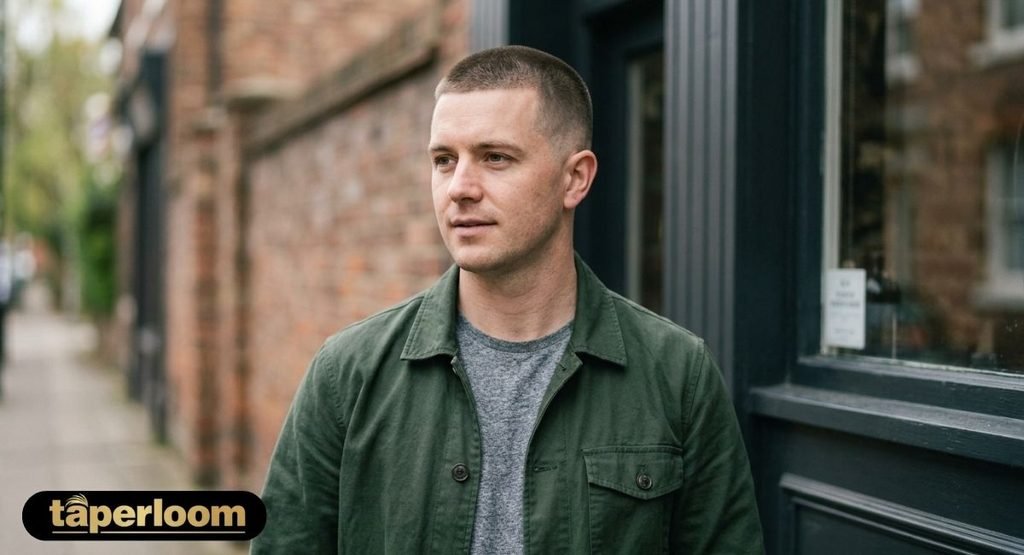
Uniform Buzz. One guard length across the top, usually a #3, tapering low into a #1 near the ears. Zero styling needed and it grows out evenly. Ask for “a 3 on top, low taper on the sides.”
Classic C-Taper. The taper wraps around the ear in a soft C shape instead of a straight line. Traditional, flattering on most face shapes, and easy for any barber to execute.
Short Buzz. A #1 or #2 on top with the taper close behind it. Sharp contrast, minimal scalp coverage, and the closest thing to a military cut without going bald.
Casual Taper. A relaxed #3 or #4 on top with a soft, natural blend and no line-up. Built for guys who want low effort over sharp detail.
Professional Office Cut. A tight #2 or #3 with a conservative taper and clean edges. Reads as groomed and reliable, ideal for corporate settings and client meetings.
Bold & Design Styles
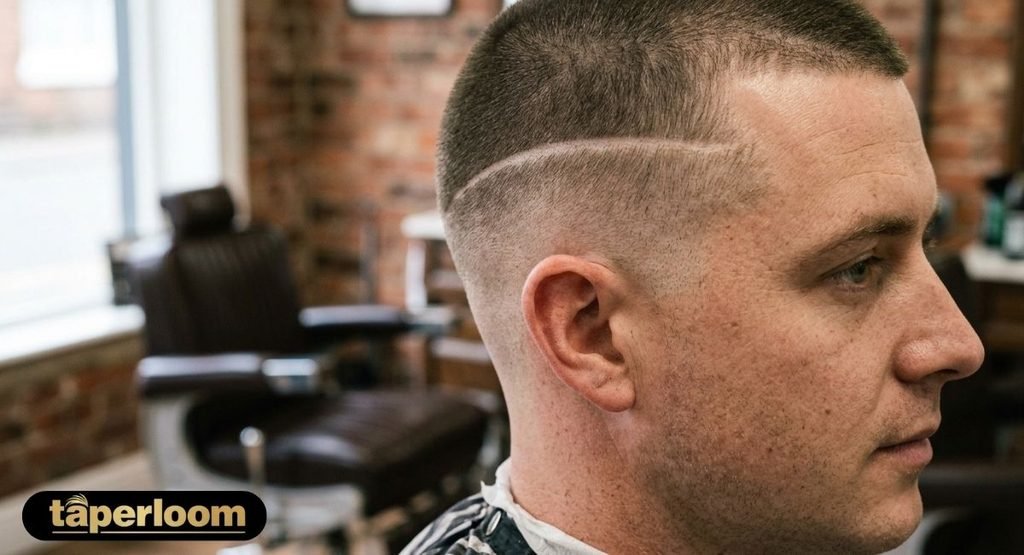
Line-Up Buzz. Adds a crisp, razor-cut edge along the front hairline and temples after the fade is blended. Squares off the hairline and gives the whole cut more definition.
Hard Part Taper. A shaved line carved into one side of the buzzed top, creating a deliberate part that doesn’t move. Pairs well with a #3 or #4 top.
Skin-Fade-Within-Taper. The taper drops to bare skin at its lowest point while staying low on the head. More contrast than a standard taper, still reads as a low fade overall.
Geometric Design Taper. A shape or line carved into the faded section near the temple, usually a triangle, arrow, or thin stripe. A bolder pick for guys who want their cut to stand out.
Faux Hawk. The center strip stays slightly longer while the low taper keeps the sides grounded. Reads as stylish rather than aggressive, since the low fade tones down the contrast.
Temple Taper. Extra attention around the temples for a smooth, defined transition right at the sides of the forehead. A subtle upgrade that sharpens the whole front profile.
By Hair Texture
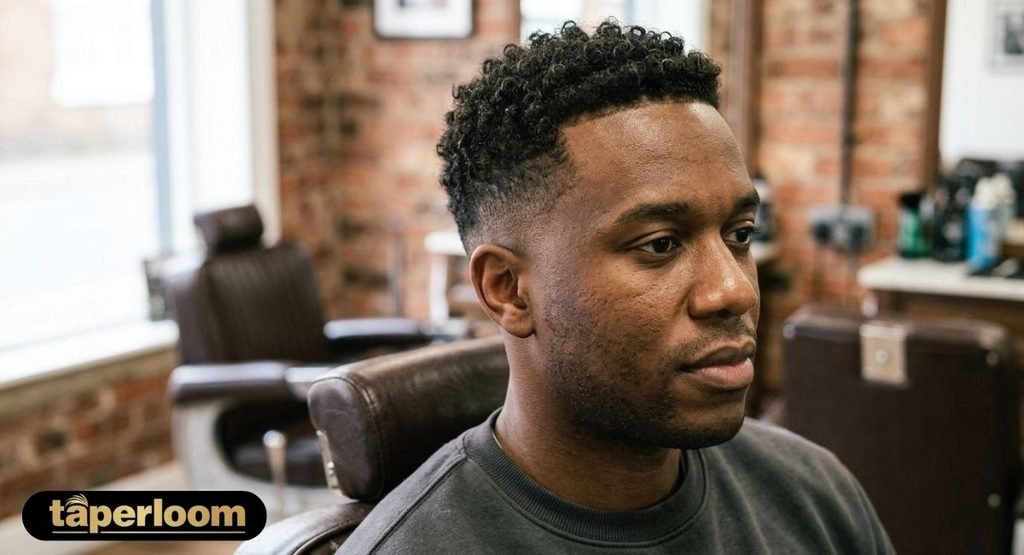
Curly Buzz. Keep the top at a #3 or #4 to hold curl definition, since curls shrink once cut and dried. The low taper avoids scalping the curl pattern.
Coily Buzz. A taper works better than a skin fade here, since a hard skin line looks disconnected against a dense, coiled top. Leave extra length on a first visit.
Wavy Buzz. A #2 or #3 shows subtle wave with zero product. Barbers often spend extra time blending the crown, where waves tend to swirl.
Thick Hair Buzz. Thick hair holds shape at shorter guards, so a #2 or #3 stays full without looking heavy. The taper removes bulk from the sides cleanly.
Textured Crop. For fine or thinning hair, a #4 or #5 with light texturizing adds fullness on top while the low taper keeps the sides tidy and forgiving.
By Demographic
Low Taper Fade Buzz Cut for Black Men. Coily and tightly textured hair holds shape well with a taper instead of a skin fade, plus a sharp line-up for a finished look.
Low Taper Fade Buzz Cut for White Guys. Straight hair takes the clean lines of this cut especially well, since there’s no shrinkage to account for. A #2 or #3 reads sharp.
Low Taper Fade Buzz Cut for Boys. A softer, less aggressive version with a #3 or #4 top and a gentle blend. Easy to maintain between school-week trims.
Low Taper Fade Buzz Cut for Older Men. A slightly longer top, #4 or #5, works well over grey or thinning hair, since it adds fullness without exposing the scalp.
Trending 2026 Variations
Low Burst Taper Buzz. The fade curves around the ear in a burst shape instead of a straight line, adding a modern twist to a traditional low taper.
Skin-Taper Hybrid. Combines a taper on most of the side with a small skin-faded section near the hairline. A middle ground between subtle and sharp.
Textured Fringe Crop. A longer, textured top left loose at the front with a low taper underneath. More styling flexibility while keeping the sides clean and low maintenance.
How to Choose the Right Guard for Your Hair Density
Guard choice depends more on hair density than personal taste. The same number can look completely different on two people.
Thick hair holds up at shorter guards. A #2 or #3 still shows texture and body, and the taper removes bulk from the sides without looking flat.
Fine or thinning hair needs a bit more length to avoid looking sparse. A #3 or #4 adds fullness and hides the scalp better than going too short.
Medium density hair has the most flexibility. Anything from a #2 to a #5 works, so the choice comes down to how much upkeep you want.
Quick rule: if you can see a lot of scalp through your hair when it’s wet, size up one guard from what you were planning.
Theek hai, note kar liya — beard combos section hata diya aur 28 ko 25 kar diya title/headings mein. Ab aage badhta hoon.
Best Low Taper Fade Buzz Cut by Hair Type
The same guard number gives different results depending on your hair type, so the cut needs small adjustments to look right.
Straight hair is the most predictable. It lies flat, so the clippers glide evenly and the line between the buzzed top and tapered sides comes out crisp. A #2 or #3 reads sharper here than on curlier textures.
Wavy hair carries natural volume, so a #2 or #3 can still show a subtle wave with no product. Barbers sometimes spend extra time blending the crown where the wave pattern shifts direction.
Curly hair shrinks once it’s cut and dries, so it looks shorter than the guard suggests. Go a size or two longer than you would for straight hair, and ask for clipper over comb for more control.
Coily hair holds shape better with a taper than a full skin fade, since a hard skin line looks disconnected against a dense, coiled top. Leave extra length on a first visit, since it’s easier to go shorter next time than fix an overly aggressive cut.
| Hair type | Recommended guard | Note |
| Straight | #2–#3 | Sharpest, most even blend |
| Wavy | #2–#3 | Shows texture with no product |
| Curly | #4 (accounts for shrinkage) | Size up from what you’d guess |
| Coily | #3–#4, taper over skin fade | Protects density and curl pattern |
Best Low Taper Fade Buzz Cut by Face Shape
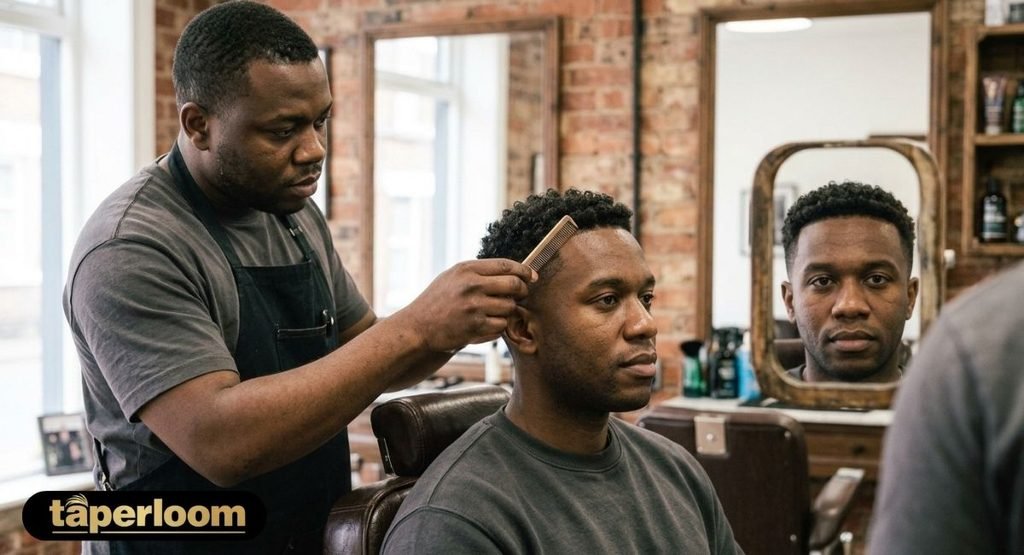
A well-cut fade can still look off if the top length doesn’t suit your face. The low taper is forgiving, but a small adjustment on top makes a real difference.
Round face. Go longer on top, a #4 or more, for vertical lift without adding width.
Square face. A #2 or #3 with a sharp line-up complements a strong jawline instead of competing with it.
Oval face. The most flexible shape. Nearly every guard and style works well here.
Diamond face. A #3 or #4 with a bit of texture softens wider cheekbones.
Heart-shaped face. A textured crop with some length balances a wider forehead and narrower chin.
Oblong face. Keep it short on top, a #2 or #3, to avoid adding more length to an already long face.
| Face shape | Recommended top length | Why it works |
| Round | #4 or longer | Adds height, avoids extra width |
| Square | #2–#3 with line-up | Highlights a strong jawline |
| Oval | Flexible, most guards work | Naturally balanced proportions |
| Diamond | #3–#4 with texture | Softens cheekbone width |
| Heart | #3–#4, textured crop | Balances a wider forehead |
| Oblong | #2–#3, minimal height | Prevents further elongation |
How Much Does a Low Taper Fade Buzz Cut Cost?
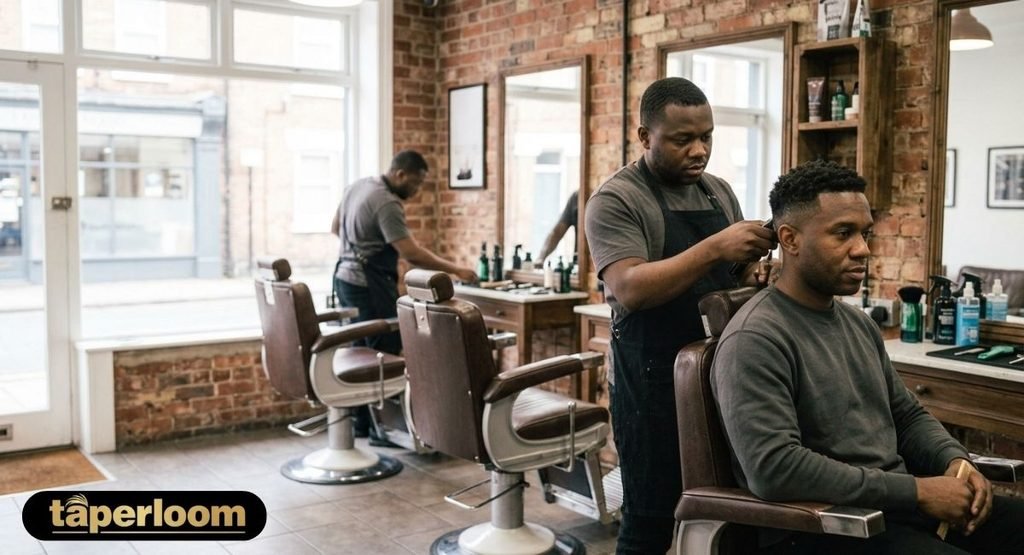
A low taper fade buzz cut typically runs $15 to $45 depending on where you go. A standard barbershop or chain sits at the lower end, while a premium barbershop or a barber with a strong reputation can charge $35 to $45 and up, especially in bigger cities.
At home, the cost works differently. A decent clipper set with guards runs $30 to $60 as a one-time purchase, and it pays for itself after two or three skipped barbershop visits if you’re comfortable maintaining the top yourself.
Most guys still leave the taper blend to a barber, since a clean fade on the sides is hard to do on your own head.
Tipping is standard practice at most shops, usually 15 to 20 percent, more if it’s a detailed line-up or a longer session.
| Option | Typical cost | Frequency |
| Standard barbershop | $15–$25 | Every 2–3 weeks |
| Premium barbershop | $30–$45+ | Every 2–3 weeks |
| At-home clippers (one-time) | $30–$60 | Ongoing, top only |
Over a year, a $25 cut every three weeks adds up to roughly $425. Keeping the top maintained at home between barbershop visits for the taper cuts that down noticeably, without giving up the clean blend a barber gets on the sides.
How to Get This Cut at Home — Step-by-Step
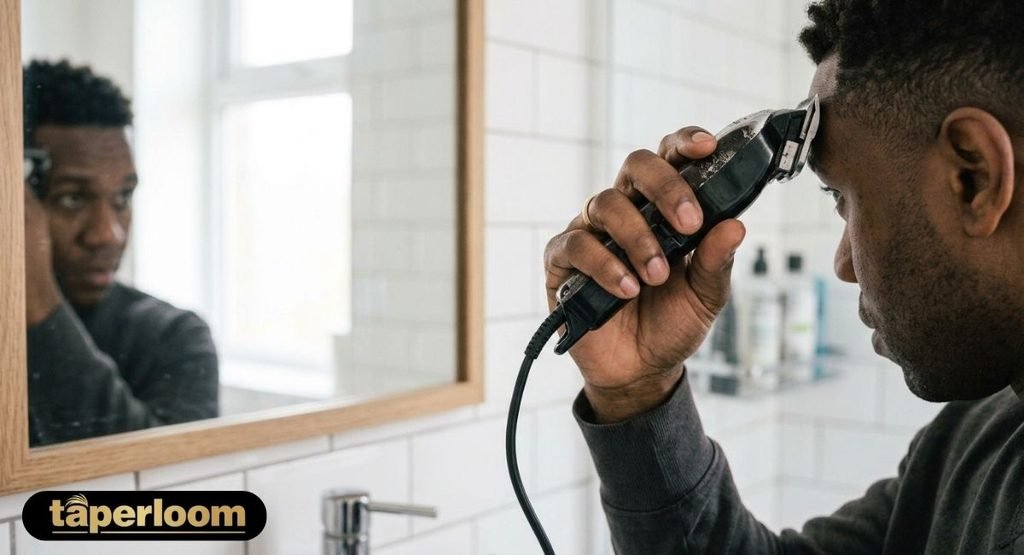
The top of a low taper fade buzz cut is realistic to maintain yourself. The taper blend on the sides is best left to a barber, but here’s how to keep the top sharp between visits.
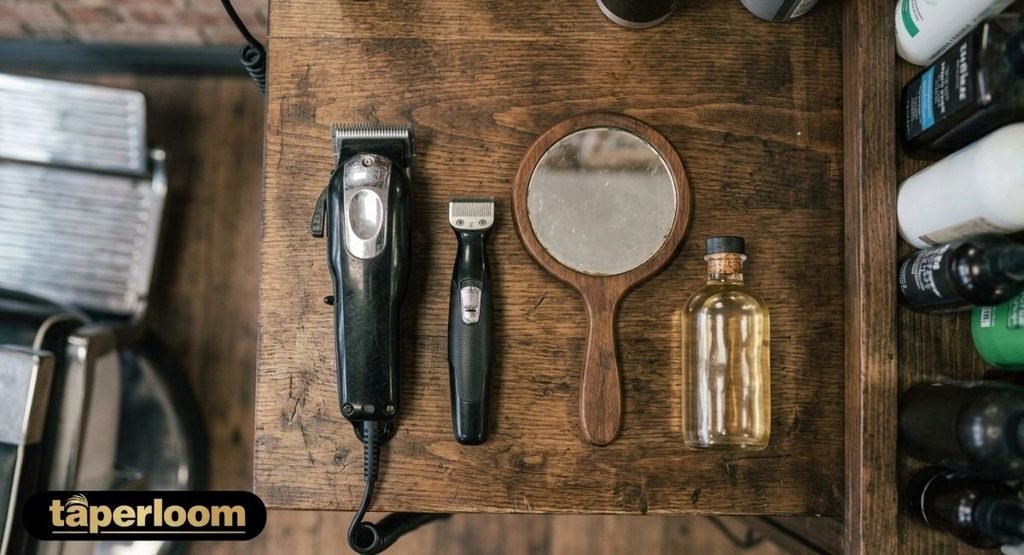
- Gather your tools. A clipper set with adjustable guards, a detail trimmer for edges, and a handheld mirror for checking the back.
- Start with dry hair. Wet hair clumps together and makes a guard read shorter than it actually is once it dries.
- Buzz the top first. Use the guard size you settled on with your barber and move against the grain in small, even sections.
- Check for missed spots. Use the mirror to look at the crown and back, the two areas hardest to judge by feel.
- Clean up the hairline and neckline. Switch to the detail trimmer for sharper, more controlled edges around the front and neck.
- Leave the taper alone. Don’t attempt to blend the sides yourself. A visible line near the ear or nape is far more noticeable than an uneven top.
Quick rule: run the same guard every time you touch up the top so the length stays consistent between barbershop visits.
Line-Ups, Shape-Ups & Edge Work
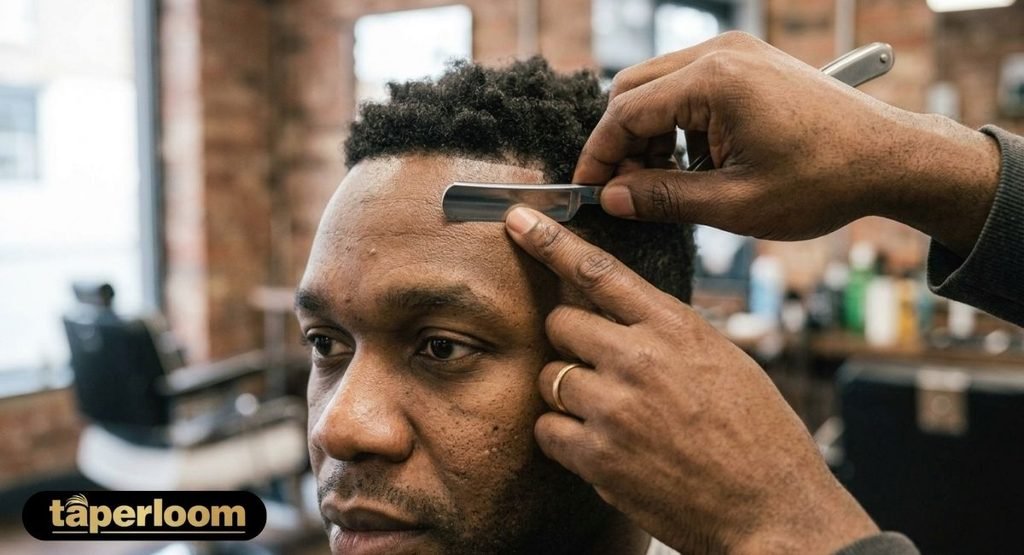
Once the fade is blended, the edges decide how finished the cut looks. A line-up sharpens the front hairline and squares off the temple corners.
A shape-up covers the whole outline, front, sides, sideburns, and neckline, pulling everything into one clean shape. Most barbers do both as a final step, switching from clippers to a razor or detail trimmer for lines a clipper alone can’t carve.
For a low taper fade buzz cut, this step matters more than people expect. Since the fade itself is subtle, a crisp edge is often what gives the cut that just-left-the-shop look. Skip it and even a well-blended taper can look soft.
A razor gives the sharpest, most defined line, but it grows out faster, usually within a week to ten days. A detail trimmer gives a softer edge that lasts a bit longer and suits sensitive skin better, since it lowers the chance of razor bumps.
| Tool | Result | Best for |
| Straight razor | Sharpest, most defined line | Guys who cut every 1–2 weeks |
| Detail trimmer | Softer, longer-lasting edge | Sensitive skin, less frequent cuts |
How to Ask Your Barber (Exact Script)
Most bad haircuts come down to vocabulary, not skill. Give your barber a guard number, a fade placement, and a finish, and they can execute it exactly.
“I’d like a 3 on top, low taper on the sides, start it just above my ear, not at the temple, and don’t take it to skin. A soft line-up at the front is fine, nothing too sharp.”
That covers length, placement, and finish in one sentence. If you’re at a shop where English isn’t the first language, or the barber trained under different terms for fade height, keep it even simpler and pair it with pointing to a reference photo:
“Short on top, number 3. Sides low, not high. Keep some hair here [point just above the ear], don’t go to skin.”
Before you leave the chair, check the cut from a few angles with a hand mirror. Catching an uneven blend now is much easier than fixing it the next morning.
Low Taper Fade vs Mid Taper vs High Taper vs Skin Fade
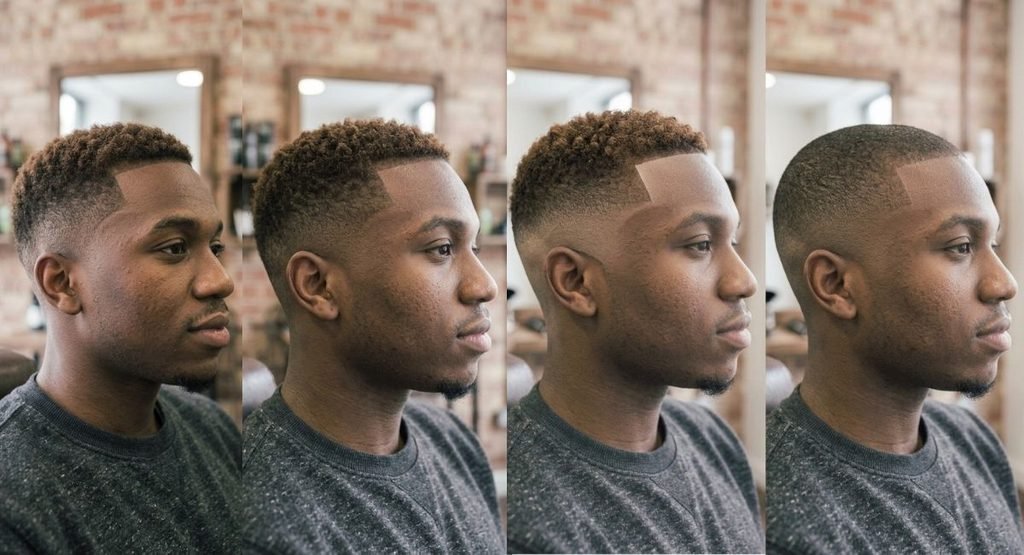
Most of the confusion around fades comes from mixing up two separate things: where the fade starts, and how short it gets at the bottom. Low, mid, and high describe the starting point. Taper, skin fade, burst, and drop describe the shape and finish.
A mid taper fade starts around the top of the ear, higher than a low taper, so there’s more visible contrast between the top and sides. A high taper fade starts near the temple and creates the boldest contrast of the three.
A skin fade isn’t about starting height at all, it means the sides go down to bare skin at the shortest point instead of keeping a light dusting the way a taper does.
A burst fade curves around the ear in a semicircle instead of a straight line. A drop fade dips lower behind the ear, following the curve of the head rather than a flat line.
| Type | Starting point | Bottom finish | Contrast |
| Low taper fade | Just above the ear or lower | Light length kept, never bare skin | Subtle |
| Mid taper fade | Top of the ear | Light length kept | Moderate |
| High taper fade | Near the temple | Light length kept | Bold |
| Skin fade | Varies (low, mid, or high) | Cut to bare skin | Sharp |
| Burst fade | Curves around the ear | Varies | Moderate to bold |
| Drop fade | Dips behind the ear | Varies | Moderate |
A low taper never touches skin, so it blends into the overall length as it grows and can go two to three weeks without looking unkempt. A skin fade loses its sharp line within a week to ten days.
How to Maintain It Between Visits
Fades grow out faster than most guys expect, and a low taper is no exception, though its subtlety hides regrowth a little longer than a high fade. Most barbers recommend a touch-up every 2 to 3 weeks, especially around the ears and neckline where hair returns first.
Between visits, wash regularly to keep the scalp clean, since so much skin is exposed on a cut this short. A light moisturizer or scalp oil helps with dryness and flaking. If you get the edges razored, a gentle exfoliating scrub once or twice a week cuts down on ingrown hairs and razor bumps.
Keep products minimal. A little matte clay or light pomade adds texture if the top has enough length. Heavier waxes and gels look greasy at this length and can clog the scalp.
- Clipper set with guards. Keeps the buzzed top fresh between visits.
- Detail trimmer. Cleans up the hairline and neckline where regrowth shows first.
- Handheld mirror. Checks the back and crown, nearly impossible to judge by feel.
- Scalp oil or light moisturizer. Prevents dryness and flaking on exposed skin.
Quick rule: past the 3-week mark, the fade tends to grow into a uniform length and lose its shape, so don’t stretch appointments much further.
Common Mistakes to Avoid
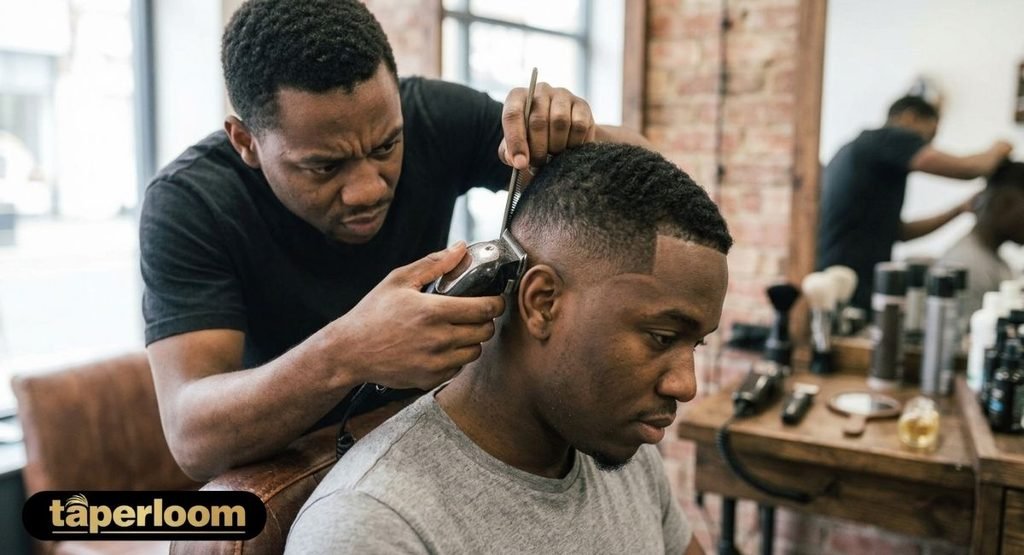
A few avoidable errors are why some guys walk out unhappy with this cut.
Going too short at home. Buzzing the top without checking guard size first can leave you with far less hair than planned. Always confirm the number before you start.
Skipping guard transitions. Jumping straight from a #4 to a #1 without blending in between leaves a visible line instead of a smooth taper.
Over-razoring the hairline. Getting a sharp line-up every single week can, over time, start to push the hairline back for some guys. A softer shape-up is the safer long-term habit.
Ignoring scalp care. A cut this short exposes a lot of skin. Skipping moisturizer or sun protection leads to dryness, flaking, and irritation.
Being vague with the barber. Saying “not too short” instead of a guard number leaves too much room for a barber to guess wrong.
Waiting too long between touch-ups. Past 3 weeks, the fade blurs into a uniform length and loses the shape that made it worth getting in the first place.
Frequently Asked Questions
What exactly is a low taper fade buzz cut?
A buzzed top, usually a #2 to #4 guard, paired with sides that taper down gradually starting just above the ear. The taper keeps a little length at its shortest point instead of going to bare skin.
How often does it need a touch-up?
Every 2 to 3 weeks keeps the blend sharp. Past that, the fade tends to grow into a uniform length and loses its shape.
How much does a low taper fade buzz cut cost?
Typically $15 to $45 at a barbershop, depending on the shop and location. A one-time clipper purchase ($30–$60) covers the top if you maintain it yourself between visits.
Can I do a low taper fade buzz cut myself with clippers?
The top, yes. The taper blend on the sides is best left to a barber, since a clean fade is difficult to execute on your own head.
Can I get a low taper fade with curly or coily hair?
Yes, and it often looks better than a skin fade on curly textures, since the retained length hides shrinkage and avoids a hard line against the curl pattern.
Is it appropriate for a professional office job?
It’s one of the most workplace-friendly fades available. The subtle blend and low contrast read as clean-cut rather than trend-chasing.
What guard number should I ask for on top?
A #3 is the most common starting point. Thinner hair often looks fuller at a #4, and thicker hair holds up well at a #2.
What’s the difference between a low taper and a low fade?
“Low taper” and “low fade” are often used interchangeably, but technically a taper never reaches bare skin while a fade can. A low skin fade starts low but still finishes at skin.
Does a low taper fade buzz cut suit thinning or fine hair?
Yes. A #3 or #4 on top adds fullness, and the taper hides uneven density better than a skin fade would.
What’s the difference between a low taper and a skin fade?
A low taper always keeps a small amount of length at its shortest point. A skin fade is cut all the way to bare skin for a sharper finish.
Final Verdict: Which Style Should You Pick
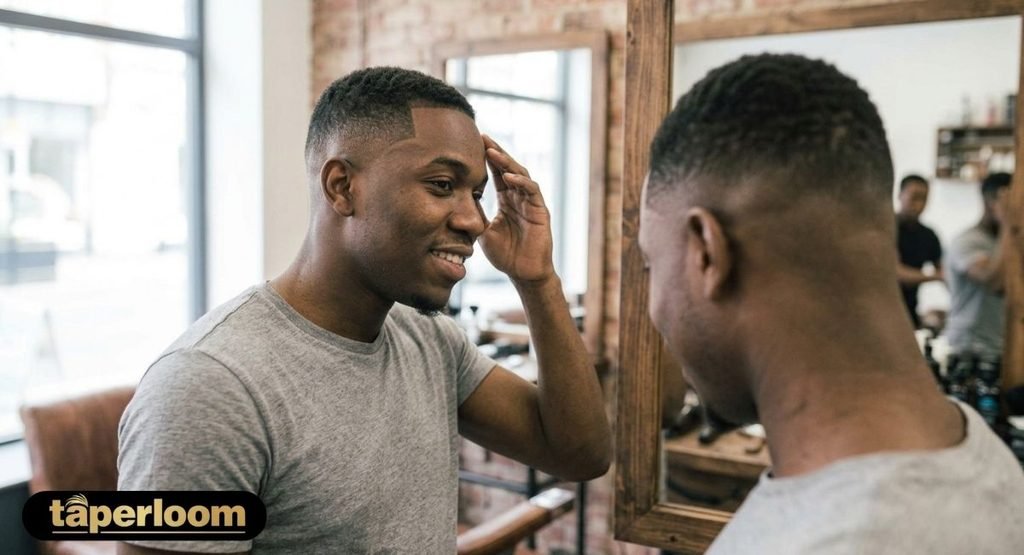
If you want the easiest possible routine, go with a classic uniform buzz at a #3, low taper on the sides, no line-up. It looks intentional with almost zero upkeep and works in any setting.
If you’re an office worker or heading into client meetings, the professional office cut, a tight #2 or #3 with a conservative taper and clean edges, reads as polished without drawing attention for the wrong reasons.
If you’re a student or athlete who wants something with a bit more edge, add a line-up or try a burst taper for a modern twist that still stays low maintenance.
If you want your cut to make a statement, a hard part, geometric design, or skin-taper hybrid gives you the contrast and detail without losing the low, forgiving fade placement that makes this style so easy to maintain.
Whatever you land on, the fundamentals stay the same: pick a guard that matches your hair density and face shape, decide how sharp you want the line-up, and give your barber the placement in plain words. Get those right and it becomes one of the easiest cuts to keep sharp, visit after visit.
Read Next : Low Taper vs Low Fade: The Real Difference, Explained by a Barber

Muhammad Kaleem is a content creator who writes about hair care, hairstyles, grooming, and everyday hair trends. He enjoys turning hair-related topics into simple, practical, and easy-to-understand content that helps readers make informed choices about their hair and personal style.