
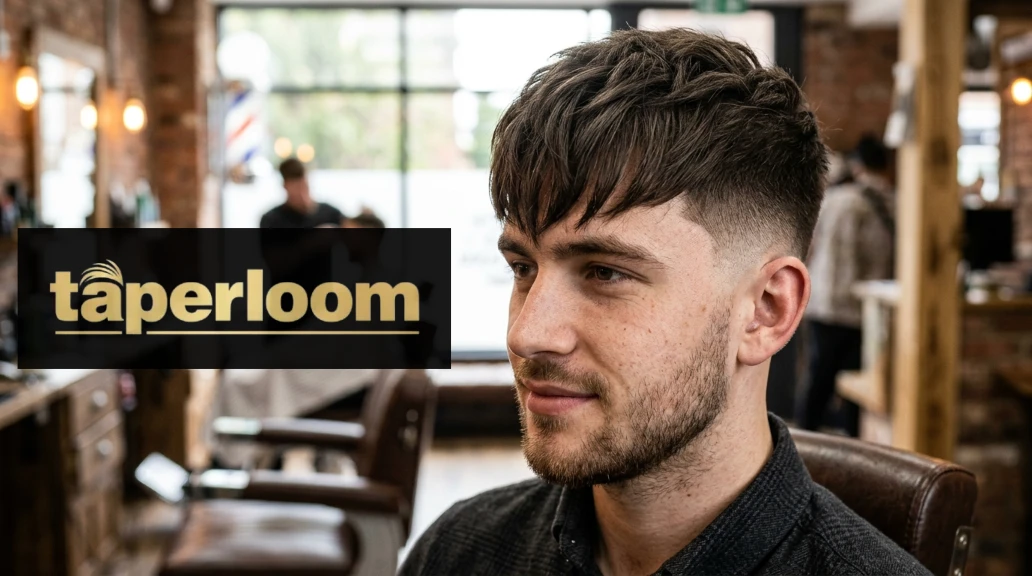
A textured fringe with low taper fade is a men’s haircut that pairs loose, textured hair on top (styled to fall forward over the forehead) with a fade that starts low, near the ears and neckline, and blends into the skin or short hair. The top gets its texture from point cutting or razor work; the sides stay clean but subtle, without the hard contrast of a mid or high fade.
Walk into any barbershop right now and you’ll hear it in almost every third chair: “textured fringe, low taper on the sides.” It’s not hype it’s just one of those rare cuts that looks put-together on a Tuesday morning and still works for a Friday night out, without you doing much of anything to it.
If you’ve screenshotted a few photos and aren’t sure what to actually say to your barber, or you want to know if this cut works with your hair type and face shape before you commit this guide covers all of it. What the cut is, how it compares to other fades, 20 variations you can ask for by name, real pricing, and the exact script to hand your barber.
What Is a Textured Fringe with Low Taper Fade?
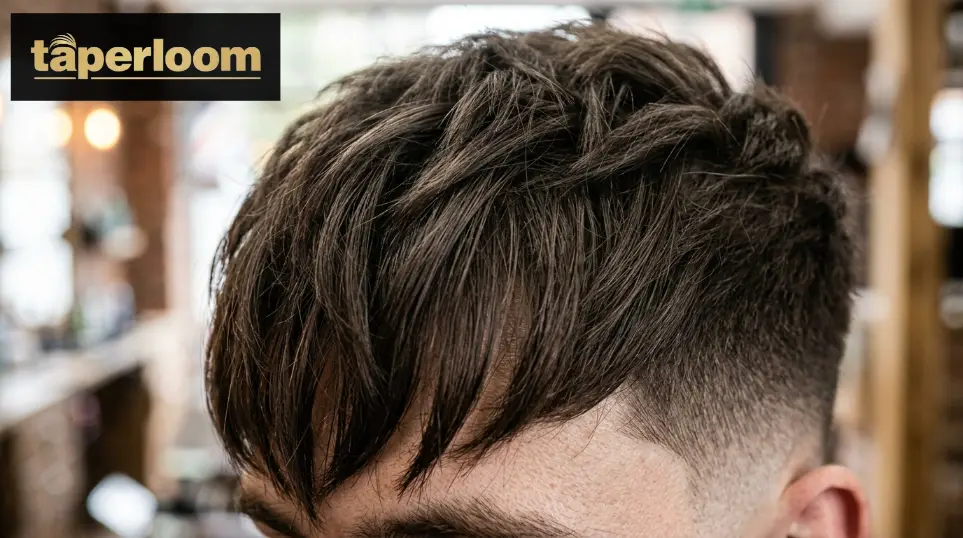
The textured fringe is the hair on top. It falls forward toward your forehead instead of lying flat or sweeping fully to one side. Barbers create the texture with point cutting, razor work, or texturizing shears.
These techniques remove weight from the hair, so it sits loose with natural movement instead of looking heavy or slicked down.
The low taper fade happens at the sides and back. A taper means your hair gets gradually shorter as it moves down toward the neckline. “Low” tells you where that fade starts.
It begins close to the ear and neckline, not higher up near the temple. That keeps the transition soft and the sides looking clean without a harsh line.
Put together, you get a cut with real contrast between top and sides, but nothing extreme. The top brings personality and movement.
The sides stay controlled and easy to maintain. That balance is exactly why the style works across so many ages, hair types, and settings.
A few related terms often get confused with this cut:
Crop. A shorter fringe, usually cut blunt and sitting higher on the forehead. Less length, more structure.
Taper. A gradual shortening of hair with no visible skin. A taper can exist without a fade at all.
Fade. A blend that goes down to the skin. “Low” only tells you where that blend starts, not how sharp it looks.
Low Taper vs Mid vs High Fade
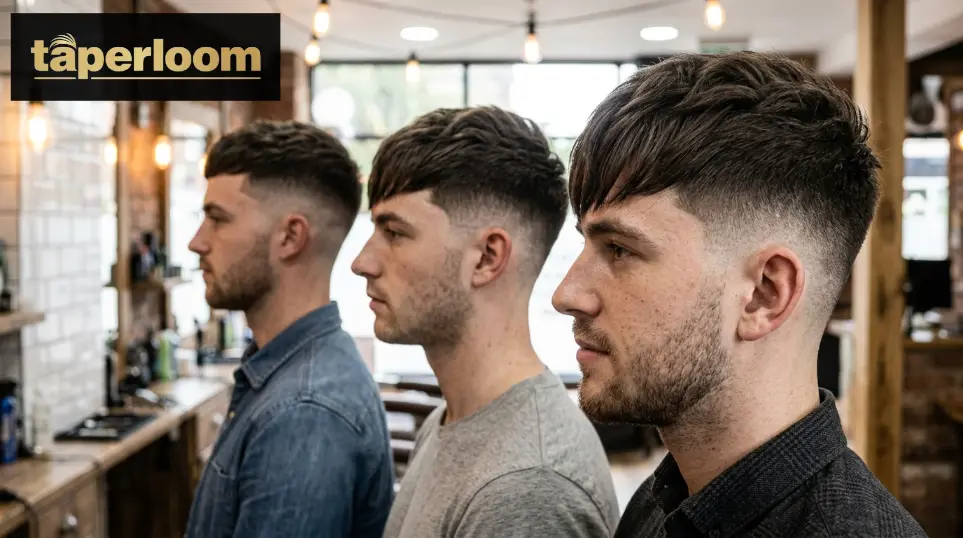
The word “low” changes everything about how this cut looks and how often you need a trim. Here’s how the three main fade heights compare.
| Fade Type | Where It Starts | Contrast Level | Best For | Trim Frequency |
| Low Taper Fade | Near the ear and neckline | Subtle | Office, school, everyday wear | Every 2 to 4 weeks |
| Mid Taper Fade | Around the temple | Moderate | A sharper, more defined look | Every 2 to 3 weeks |
| High Taper Fade | Above the temple, closer to the crown | Bold | Statement styles, shorter sides overall | Every 1 to 2 weeks |
A low taper keeps more hair on the sides, so the fade grows out slower and looks intentional for longer. A high fade looks sharper the day you leave the barbershop, but it needs frequent upkeep to avoid looking overgrown.
If you want a low-maintenance cut that still reads as groomed, low is the safer pick. If you want maximum contrast and don’t mind more barber visits, go higher.
Why It’s Trending in 2026
Men’s grooming has moved away from heavy, product-loaded looks. The gelled spikes and wet-look styles that dominated past decades feel dated now.
The shift is toward cuts that look intentional but natural, with matte finishes replacing high shine and soft blends replacing razor-sharp lines. The textured fringe with low taper fade sits right in the middle of that shift.
Search interest backs this up. “Low taper fade” related searches have climbed steadily through 2025 and into 2026, and barbershop booking platforms report it as one of the most requested reference photos across teen and young adult clients this year.
Part of the appeal is how little effort it takes. A pea-sized amount of matte clay, a quick scrunch with your fingers, and you’re done. No precise styling, no heavy product, no daily trip to the mirror with a comb.
The low taper also just holds up better. A high skin fade looks sharp on day one but starts blurring within two weeks.
A low taper keeps its shape longer, so you’re not back in the chair every other week. And it works everywhere: lectures, the office, a first date, a weekend out. Relaxed but groomed is a hard balance to strike, and this cut manages it without trying too hard.
Best Face Shapes
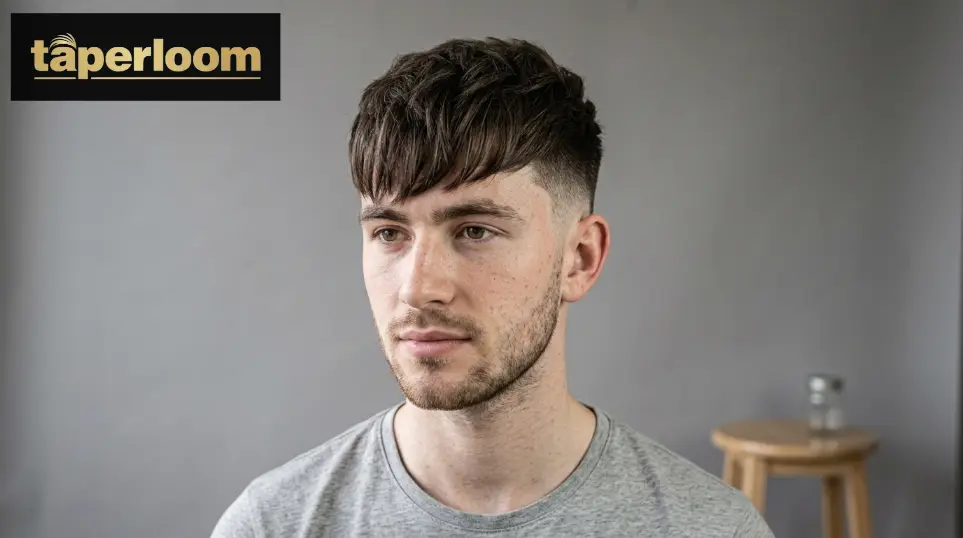
This cut flatters most face shapes because small tweaks to fringe length, top volume, and taper height change the whole look.
| Face Shape | What to Ask For | Why It Works |
| Oval | Any length, short to long and messy | Balanced proportions give you the most flexibility |
| Round | Longer fringe with root volume | Adds vertical lift and slims the sides visually |
| Square | Soft, relaxed fringe over a blunt one | Balances a strong jawline without adding harsh angles |
| Long / Oblong | Medium fringe worn horizontally | Adds width instead of extra height |
| Heart | Fringe worn forward, low taper | Draws attention down and balances a narrower chin |
| Diamond | Fringe with slight forward volume | Softens sharp cheekbones and widens the forehead area |
If you’re not sure which category you fall into, look at your jawline and forehead width side by side. A wider forehead than jaw usually points to heart or diamond. Roughly equal width top to bottom usually means square or round, depending on how angular your jaw is.
Best Hair Types
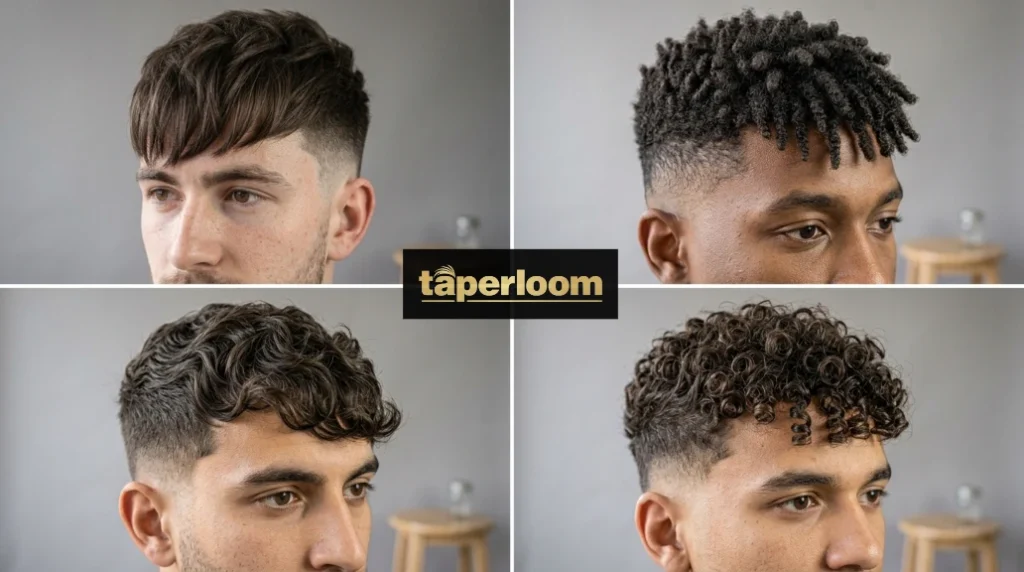
Grid comparison of straight, wavy, thick, curly, and coily hair types styled as textured fringe
This cut works across nearly every hair type. The technique your barber uses just needs to change with each one.
Straight hair. Takes texturizing cleanly. Point cutting and light razor work remove weight, and the fringe falls in a natural, slightly uneven way without extra effort.
Wavy hair. One of the easiest matches. The wave adds movement on its own, so your barber mainly manages length and removes bulk. It tends to hold its shape all day with barely any product.
Thick hair. Looks especially full with this cut. The main job is thinning the bulk so the fringe doesn’t sit heavy or stiff. Texturizing shears through the top handle most of the work.
Fine or thin hair. Needs a lighter hand. Over-texturizing makes it look flatter, not fuller. A good barber keeps the fringe at a length that fakes volume instead of cutting it too short. A light sea salt spray or mousse at the roots before drying helps lift it further.
Curly hair. Carries the fringe well, but curls shrink as they dry. Your barber should cut slightly longer than the target length to compensate. Ask for a dry cut, or at least a dry check before the final trim.
Coily hair. Behaves differently from loose curls. The fringe may need a modified, slightly shorter version so it doesn’t lose shape as quickly. Talk to your barber about a version built around your natural curl pattern rather than forcing a standard fringe onto it.
20 Textured Fringe Low Taper Fade Variations
Every barber shorthand for this cut hides a slightly different look. Here are the first 10, each one you can name directly at your next appointment.
1. Classic Textured Fringe Low Taper Fade
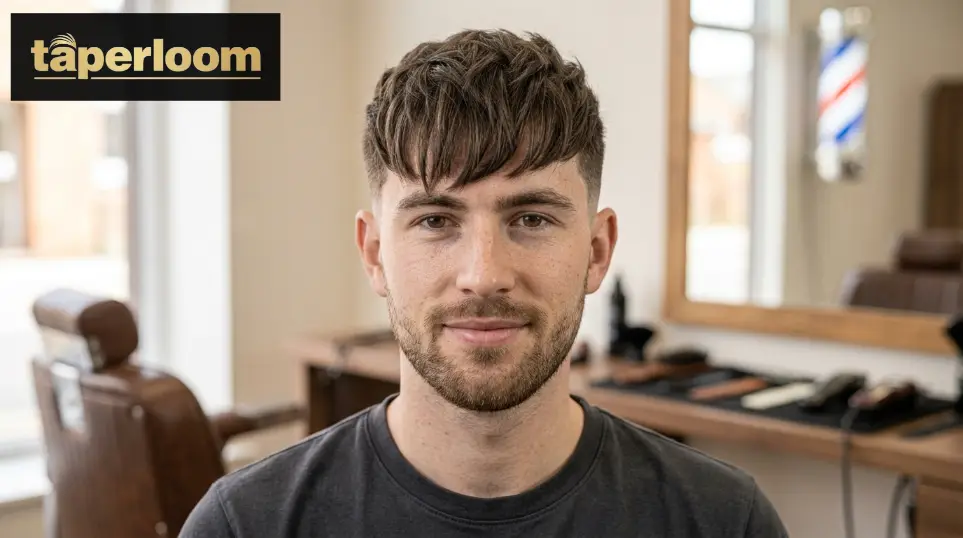
Moderate length on top, fringe pushed forward with texture, clean low fade on the sides. The default version and the safest starting point for a first try.
2. Messy Textured Fringe
The same cut worn longer and more deliberately undone. Falls unevenly across the forehead. Needs only a light touch of clay worked through with your fingers.
3. Blunt Textured Fringe
Cut with a straighter front edge, then texturized through the top for movement. More structured than the classic version. Sits cleanest on straight hair.
4. Side-Swept Textured Fringe
The fringe angles to one side instead of falling straight forward. Elongates the face and softens strong jawlines. Works well with a natural part.
5. Short Textured Fringe
Fringe kept close, around 1.5 to 2.5 cm, with subtle texture. The lowest-maintenance version, good for warm climates or an active routine.
6. Long Textured Fringe
Fringe extends past the eyebrows. The low taper stays tight underneath, creating contrast between the length on top and the clean sides.
7. Curly Low Taper Fade
Built around natural curl pattern instead of fighting it. The fade stays low and clean while the curls do the work up top with barely any styling needed.
8. Wavy Textured Fringe
Natural wave is enhanced, not controlled. A little sea salt spray brings out the texture without weighing the wave down.
9. Skin Low Taper Fade
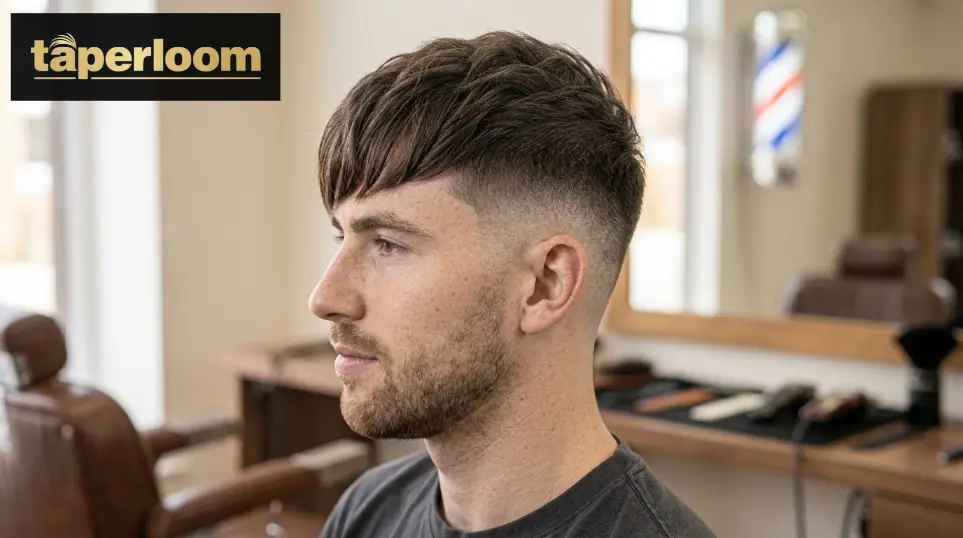
Man with a skin low taper fade and textured fringe, fade blended to the skin
The fade goes all the way down to the skin at the neckline and ear, instead of leaving a bit of hair. Sharper contrast while the top stays relaxed and textured.
10. Drop Taper Fade with Fringe
The fade line curves downward behind the ear instead of running straight across. Pairs well with a textured top for a more detailed, custom finish.
11. Burst Fade with Textured Fringe
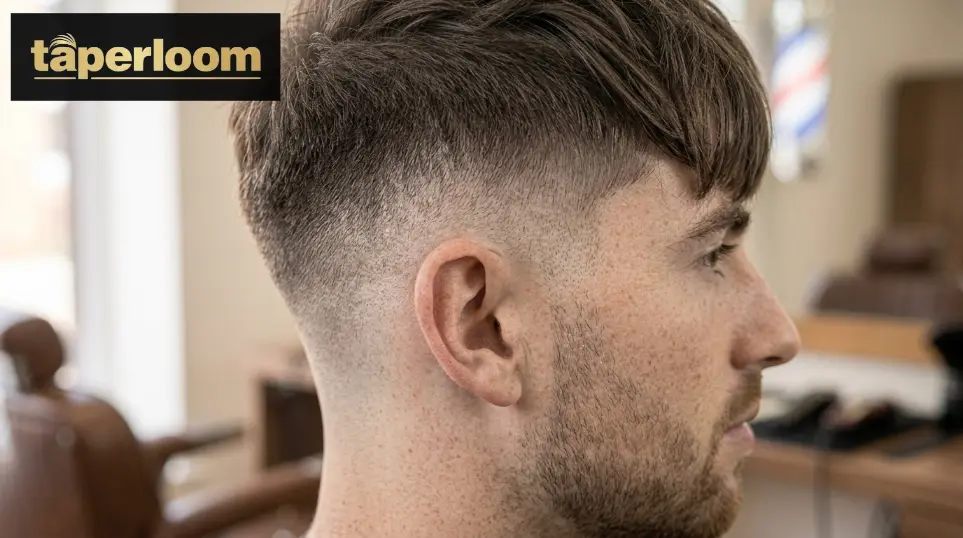
The fade curves around the ear in a semi-circle instead of a straight line. Frames the ear and blends upward toward the temple. Works well if you want something more detailed than a standard taper.
12. Spiky Textured Fringe
More product than usual, pushed up and forward in small sections to create defined points. A throwback shape updated by the low fade underneath.
13. Caesar-Inspired Textured Fringe
Fringe kept horizontal and short, close to the brow, with texture added through cutting rather than length. A cleaner, more structured take on the style.
14. French Crop Low Taper Fade
A shorter, blunter version of the fringe sitting higher on the forehead, paired with the same low fade. The closest cousin to a classic crop.
15. Choppy Textured Fringe
Point cutting creates irregular, broken ends at the front. More edge than the classic version. Works best on thicker hair that can hold the shape.
16. Textured Fringe with Design Line
A single shaved line or small pattern added into the fade near the temple. Turns a standard cut into something more personal.
17. Low Taper Fade with Perm Fringe
For straight hair that wants the look of natural curl. A light perm builds texture into the fringe before it’s cut and shaped.
18. Hispanic Crop Low Taper Fade
A blunt, forward fringe with a sharp low taper, popular in Latino barbershops. Often paired with a clean, defined hairline.
19. Textured Fringe Low Taper Fade for Boys
Same shape, kept a touch shorter and lower-maintenance. Easy for parents to keep up with between trims, and forgiving if a child’s hair grows unevenly.
20. Textured Fringe Low Taper Fade for Black Men
Built around coilier hair patterns. The fringe often sits with more natural volume, and the low taper blends into a rounder shape at the sides for balance.
How to Ask Your Barber
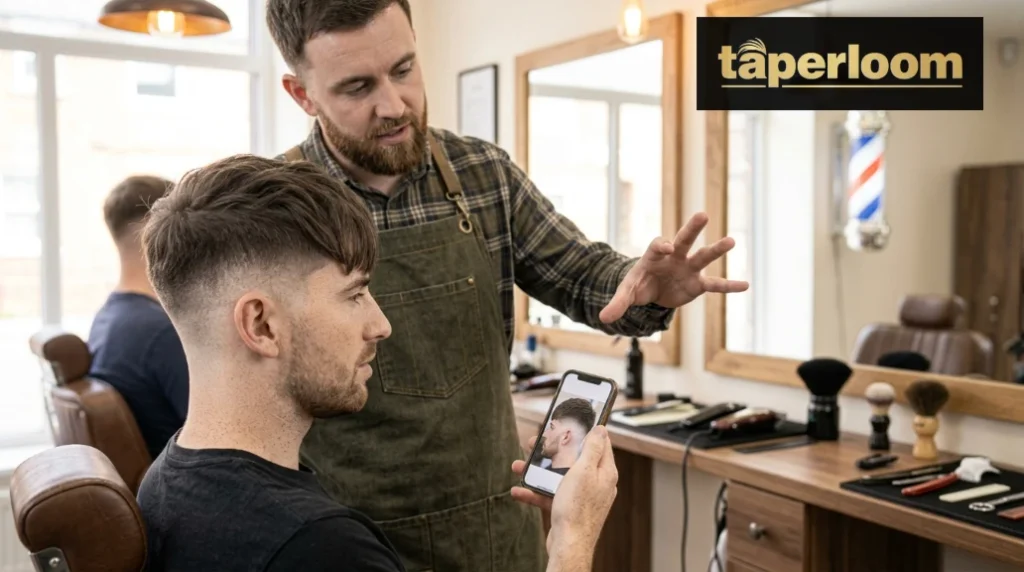
A clear brief gets you a better result than a vague one. Here’s exactly what to say.
Start with the top. Tell your barber the fringe length you want, and be specific. “Enough length to fall forward naturally” gives more direction than “medium.” If you have a reference photo, use it, but also explain what you like about it: the length, how it falls, how heavy the texture looks.
Move to the sides. Ask for a low taper, meaning the fade starts close to the ear and neckline, not higher up. If you want skin at the neckline, say so. If you’d rather keep some hair there, ask for a taper without a full fade to skin.
Name the technique. A lot of men ask for a “textured cut” and walk out with hair that’s thinned, not textured. Thinning removes bulk evenly and can leave hair looking sparse. Texturizing through point cutting removes weight while keeping movement and shape. Use the word “texture,” not “thin.”
Hand them this line, word for word:
“Textured fringe on top with a low taper fade around the ears and neckline. Keep the fringe natural, not too blunt, with enough length to fall forward. Point cut the top to remove weight rather than thinning it.”
If you want the skin fade version instead, use this:
“Same textured fringe on top, but take the low taper down to skin at the neckline and around the ears. Keep the blend gradual, not a hard line. Point cut the top for movement, don’t thin it.”
Skip vague phrases like “a bit shorter on the sides” or “keep it natural on top.” They leave too much open to interpretation. A specific script protects you from a rushed or inconsistent cut, especially at a new barbershop.
Cost: How Much Does This Cut Cost?
Pricing depends on where you get it done and how detailed the fade is, but here’s a realistic breakdown.
| Barbershop Type | Typical Price Range | What You Get |
| Chain / Budget Barbershop | $15 to $25 | Basic taper and fringe trim, quick service |
| Standard Local Barbershop | $25 to $45 | More precise blending, consultation, styling included |
| Premium / Specialty Barbershop | $45 to $80+ | Detailed point cutting, custom fringe shaping, senior barber |
| Salon (Men’s Section) | $35 to $60 | Wash included, styling advice, sometimes product application |
A few things push the price up. A skin fade takes more time than a standard taper, so it often costs a few dollars more. Design details, like a shaved line near the temple, usually add $5 to $15. First-time visits at a new shop sometimes run slightly higher while the barber gets a feel for your hair.
Tipping is standard in most places, typically 15 to 20 percent of the service cost if you’re happy with the result. Budget for it separately from the listed price.
If you’re keeping this cut long term, factor in the trim frequency too. At every 2 to 4 weeks for the fade, you’re looking at roughly $25 to $50 a month depending on your barbershop tier.
Styling at Home: Step-by-Step
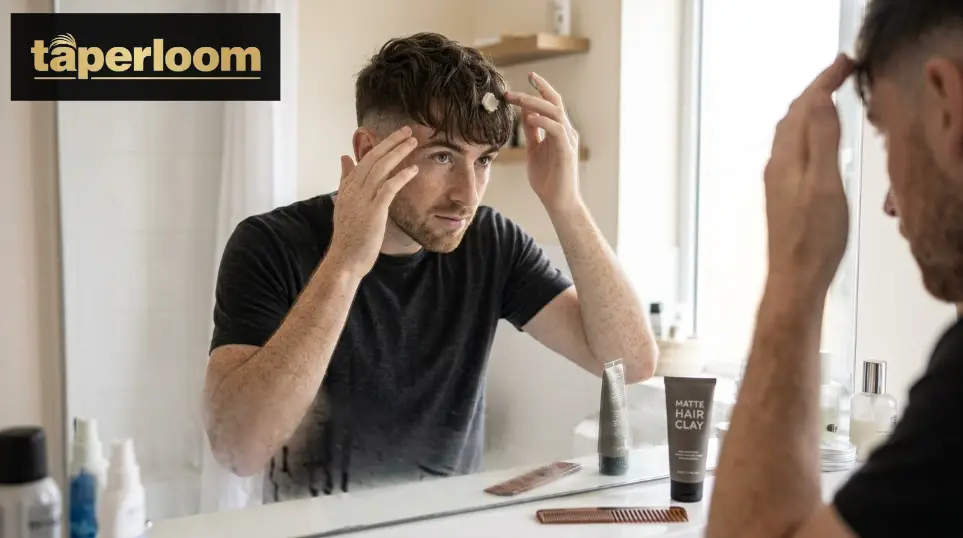
This cut is built to be easy. You’re encouraging the hair, not forcing it. Follow these steps in order.
1. Start with damp hair. Bone-dry hair goes stiff or frizzy when you add product. Towel-dry until damp, or mist it with a spray bottle. You want moisture, not dripping wet hair.
2. Use less product than you think. Start with a pea-sized amount of matte clay or cream. Warm it between your palms first. You can always add more, but too much too early creates a stiff, clumped look.
3. Apply with your fingers, not a comb. A comb flattens the texture you’re trying to keep. Work the product through with your fingers instead.
4. Push the fringe into shape. Direct it forward and slightly to one side, or straight down, whichever way it naturally falls. Scrunch lightly through the top to keep the movement.
5. Lift the roots if needed. If your hair sits flat, lift the roots before the product fully sets. This matters most on fine hair, where a small lift makes the fringe read fuller all day.
6. Choose air dry or blow dry based on hair type. Wavy and thick hair usually hold shape well with air drying alone. Straight or fine hair benefits from 60 seconds with a low-heat dryer, pushing the fringe forward as you go.
7. Check the finish. You’re aiming for matte, light, and slightly undone. If it looks shiny or overly sculpted, use less product next time.
Pro tip: keep a small travel-size clay or cream in your bag. A 30-second touch-up after a workout or a long day keeps the fringe looking fresh without a full restyle.
Best Products
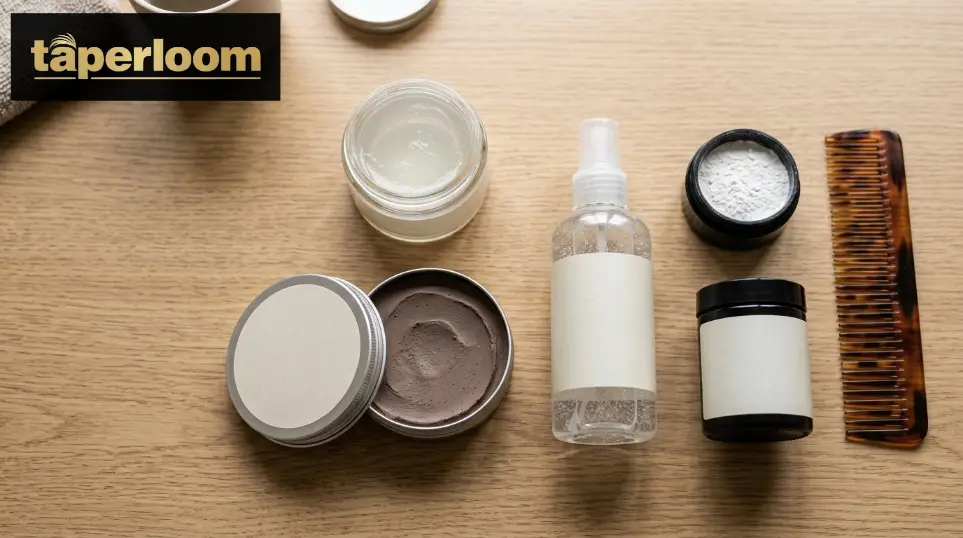
You don’t need a shelf full of products. One or two, matched to your hair type, will do the job.
| Product | Hold Level | Finish | Best For |
| Matte Clay | Light to medium | No shine | Most versatile, works on nearly every hair type |
| Sea Salt Spray | Light | Rough, natural texture | Wavy and straight hair, applied to damp hair before styling |
| Texture Powder | Light | Matte, adds grip | Fine or thin hair that falls flat |
| Lightweight Cream | Light | Soft, flexible | Natural movement with minimal definition, works well on wavy hair |
| Light Pomade | Medium | Slight sheen | A more polished, work-ready version of the look |
Matte clay is the one product worth buying if you only get one. It gives enough hold to keep the fringe in place without any shine, which is exactly what this cut needs.
Sea salt spray works best as a pre-styling step, not a final product. Mist it on damp hair, let it dry partway, then follow with clay if you want more hold.
Texture powder is worth knowing about even if you don’t use it daily. A small pinch at the roots on a flat day adds lift without weighing the hair down.
Skip heavy gel, wet-look pomade, and anything with high shine. They weigh the fringe down, clump the texture together instead of separating it, and read as dated rather than modern.
Maintenance & Trim Schedule
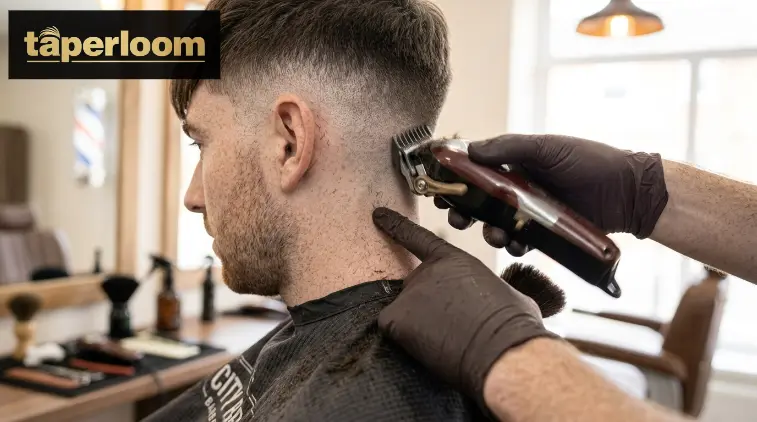
How long this cut holds depends on your growth rate, but the top and sides run on different clocks.
The low taper needs attention every 2 to 4 weeks. The faded area near the ear and neckline grows out fastest. Most people notice the neckline softening and the blend losing its edge around the three-week mark. A trim at that point keeps the sides looking intentional instead of grown out.
The fringe and top can usually stretch 4 to 6 weeks between full trims. The textured top is more forgiving than the fade. A little extra length adds to the relaxed look rather than ruining it. Once the fringe hangs into your eyes or loses its shape completely, it’s time for a proper cut rather than just a sides cleanup.
Between barbershop visits, a home trimmer helps. Clean up the neckline and sideburns yourself if you’re comfortable with a trimmer. This stretches how long the whole cut looks sharp without needing a full appointment.
If the fringe starts feeling heavy or sitting flat, the bulk is building back. Ask your barber to point cut through the top and remove weight without cutting length. This keeps the texture from disappearing between visits.
If you’re growing the cut out, say so at your next appointment. Ask your barber to raise the blend point gradually each visit instead of keeping it low. This lets the sides fill in evenly without a hard, visible line partway through the grow-out.
Common Mistakes
Asking for the fade too high.
This is the most common mix-up. A lot of men confuse “low taper” with a mid or high fade and end up with something sharper than they wanted. Say “low” clearly and point to where your ear meets your head to show your barber exactly where you want the fade to start.
Cutting the fringe too short.
It needs at least 3 cm to fall forward and move naturally. Shorter than that, and it loses the effect entirely. When in doubt, keep more length. You can always trim it down next visit, but you can’t add length back.
Using too much product.
This turns a natural, loose fringe stiff and clumped. Start small and build up if you need more hold.
Flattening the top against your forehead.
This makes the cut read as a flat cap instead of a fringe. The whole point of the style is the forward movement and lift, not a flat layer of hair.
Picking the wrong variation for your hair type.
A blunt fringe on very curly hair, or a long messy fringe on very fine hair, usually doesn’t work the way it does in the reference photo. Match the variation to your actual hair texture, not just the look you want.
Skipping the reference photo.
Bring one, ideally a front and side view. It removes guesswork and gets you closer to what you actually want on the first try.
Waiting too long between trims.
Pushing past 5 to 6 weeks without at least a sides cleanup lets the fade blur and the fringe overgrow at the same time, which makes the whole cut look unintentional rather than styled.
Textured Fringe Low Taper Fade for Boys/Kids
This cut works well on kids for the same reason it works on adults: low daily effort and a long stretch between trims. A few things change for a younger age group.
Keep the fringe shorter than the adult version.
Around 2 to 3 cm works best for boys. It’s easier to manage, doesn’t get in their eyes during the day, and needs less product to control.
Skip heavy product entirely, if you can.
A light water-based cream or a small amount of clay is usually enough. Kids’ hair often has natural volume that adults lose over time, so it needs less help holding shape.
Ask for a slightly higher blend point than you would for an adult.
A true low taper can look uneven on a child’s smaller head shape. Many barbers suggest starting the blend just a touch higher, closer to a low-to-mid taper, so the proportions read better.
Stretch the trim schedule a little.
Kids’ hair often grows faster than adults’, so checking in every 3 weeks for the sides keeps things looking neat without constant barbershop trips.
Bring the child into the conversation, age permitting.
Letting them see a reference photo and confirm they like it reduces mid-haircut fidgeting and gets a better result overall.
This version holds up well for school, since it stays tidy without any daily styling routine required, and it grows out evenly instead of looking patchy after a few weeks.
FAQs
Is a textured fringe with low taper fade good for straight hair?
Yes. Straight hair takes point cutting cleanly, which gives the fringe its movement. A small amount of matte clay or sea salt spray keeps the finish natural rather than flat.
How long should the fringe be?
Most people land between 3 and 5 cm on top. Round faces benefit from slightly more length for added height.
How often should I trim a low taper fade?
The sides and neckline need a trim every 2 to 4 weeks. The top can usually stretch 4 to 6 weeks between full cuts.
Is it hard to style every day?
No. A small amount of product worked through damp hair with your fingers takes under two minutes on most hair types.
What’s the difference between a low taper and a mid taper fade?
A low taper starts fading near the ear and neckline. A mid taper starts higher, around the temple, creating more contrast.
Does this cut work for thin or fine hair?
Yes, with a lighter hand. Over-texturizing makes fine hair look flatter, so ask your barber to keep the layering light.
Can I get this cut with curly hair?
Yes. Ask your barber to cut slightly longer than the target length, since curls shrink as they dry.
How much does this haircut usually cost?
Prices typically range from $15 at a budget barbershop to $80+ at a premium shop, depending on detail and location.
Is a skin fade the same as a low taper fade?
No. A skin fade goes down to bare skin. A low taper fade can stop at a small amount of hair instead of going fully to skin.
What should I say to my barber for this haircut?
Ask for a textured fringe on top with a low taper fade at the ears and neckline, and request point cutting rather than thinning.
Conclusion
The textured fringe with low taper fade earns its popularity honestly. It balances relaxed and groomed in a way few cuts manage, works across nearly every face shape and hair type with small adjustments, and doesn’t demand a strict daily routine to look good.
Get three things right and you’re set: match the fringe length to your face shape, match your product to your hair type, and stay on top of the taper every few weeks. That’s really it.
Bring a reference photo, use the barber script from this guide, and you’ll walk out with the version that actually suits you, not just the one that looked good on someone else’s Instagram feed.
Read Next : 25 Low Taper Fade Mullet Haircuts for Men in 2026 (Barber Approved Styles)

Muhammad Kaleem is a content creator who writes about hair care, hairstyles, grooming, and everyday hair trends. He enjoys turning hair-related topics into simple, practical, and easy-to-understand content that helps readers make informed choices about their hair and personal style.