
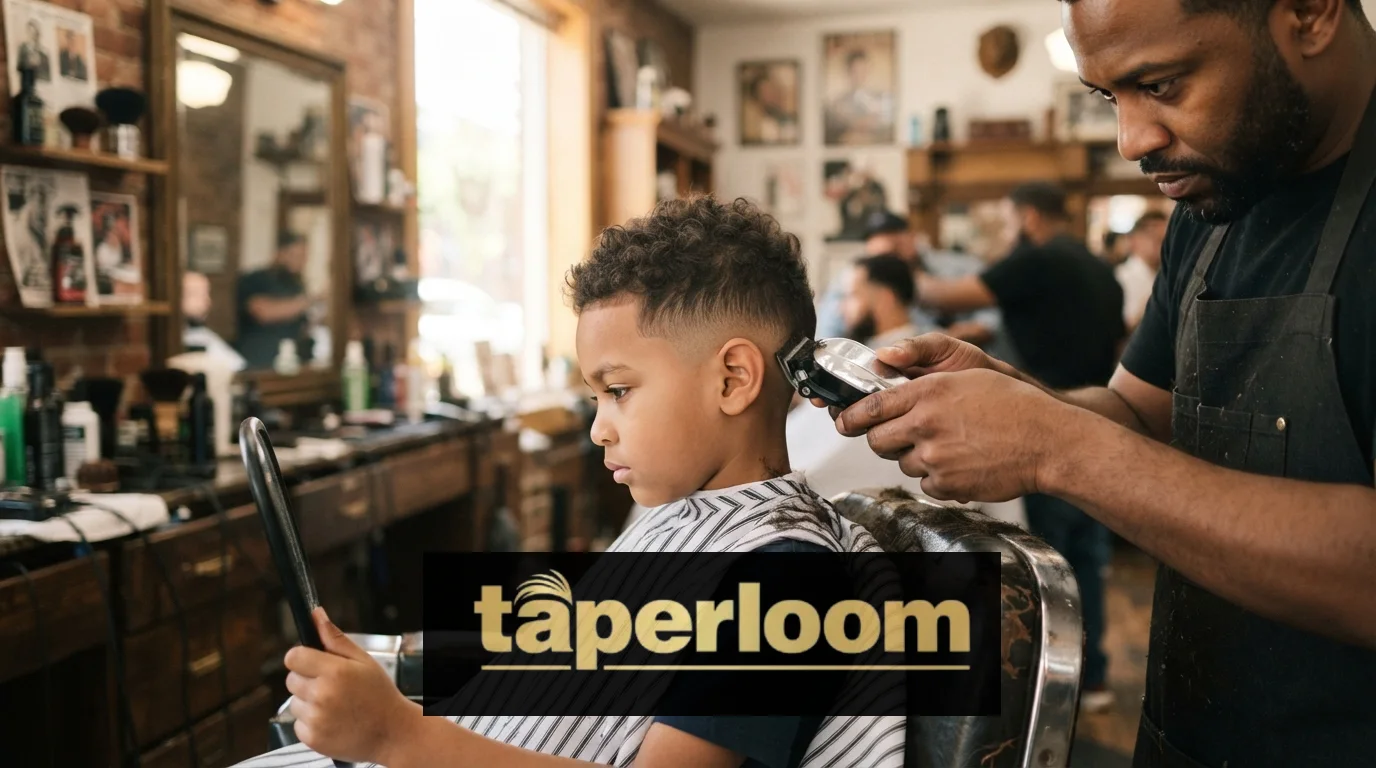
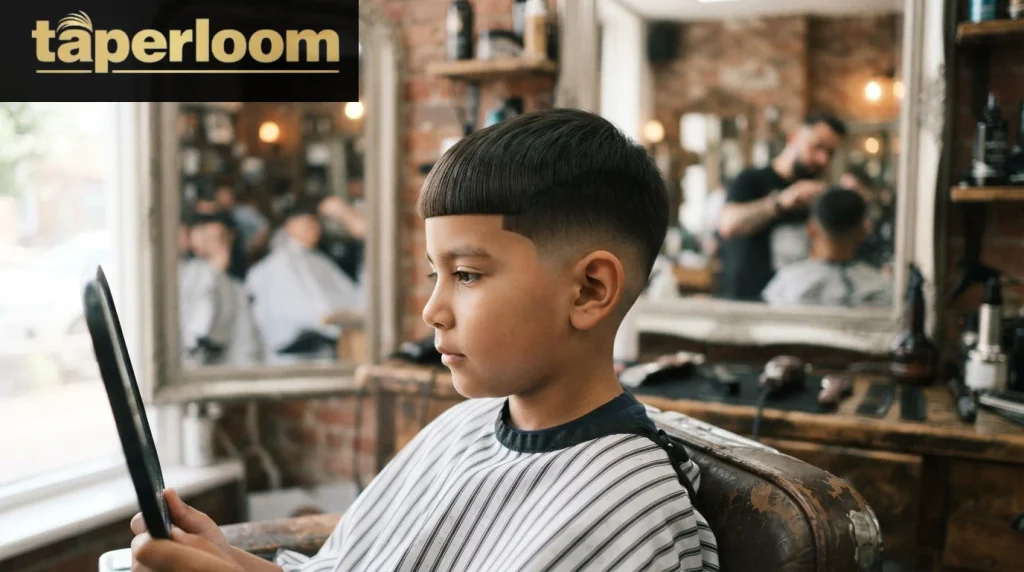
A low taper fade for kids is a haircut where the hair gradually shortens near the ears and neckline while the top stays fuller, creating a smooth, natural-looking transition instead of a hard line. It works on straight, wavy, curly, coily, and 4C hair, and it’s become the most requested boys’ fade haircut at barbershops across the country.
This guide covers all of it: 20+ styles broken down by hair type, age, and face shape, exact barber scripts you can read straight off your phone, real cost ranges, school-dress-code guidance, and a troubleshooting section for when the cut doesn’t go as planned, something most guides skip entirely. Everything here is written to be practical first, not padded for length.
Quick Answer
- A low taper fade starts just above the ear and blends gradually down to the neckline, without exposing bare skin.
- Most kids can get their first low taper fade around age 3 to 5, once they can sit through a haircut comfortably.
- It suits every hair type, straight, wavy, curly, coily, and 4C, with the barber adjusting guard size and blending technique.
- It typically lasts 3 to 5 weeks between trims, longer for toddlers and younger kids with slower hair growth.
- Most schools accept it, since there’s no bare skin showing and no shaved designs. Check your school’s dress code to confirm.
What Is a Low Taper Fade for Kids? (Definition + How It Works)
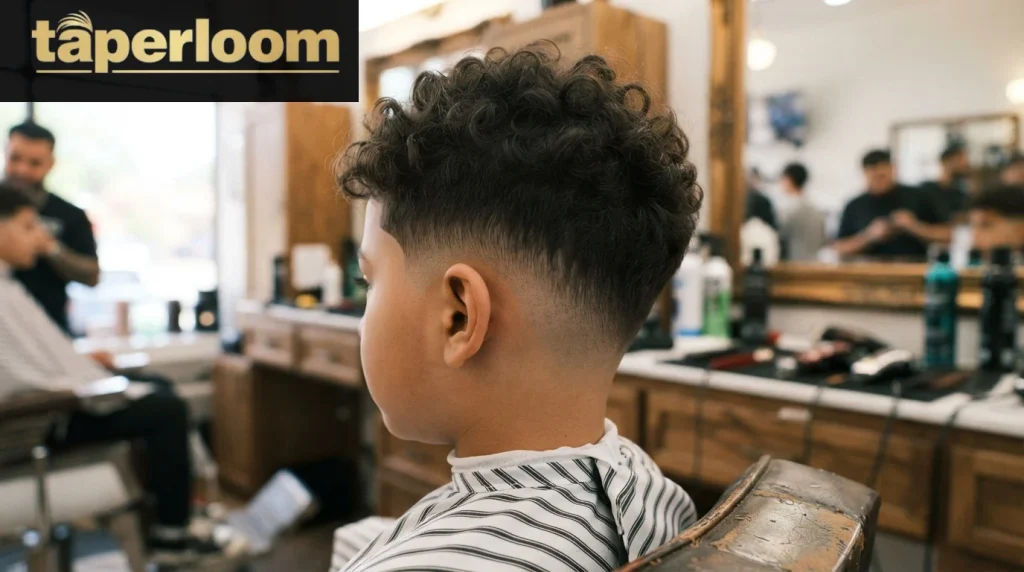
A low taper fade for kids is a haircut in which the hair gradually shortens near the ears and neckline, starting just above the ear, while the top stays fuller and the sides blend into a smooth gradient. It’s the most school-friendly, low-maintenance fade option for boys of any age.
Picture your child’s hair from the crown down to the neck. At the top, the hair stays long enough to style however they like.
Moving down the sides toward the ears and along the back toward the neckline, the hair gets shorter, not in a harsh line, but in a gentle, gradual slope. Because that shortest point sits low on the head, just above the ear, it’s called a “low” taper fade.
How a Low Taper Fade Actually Works: The Three Zones
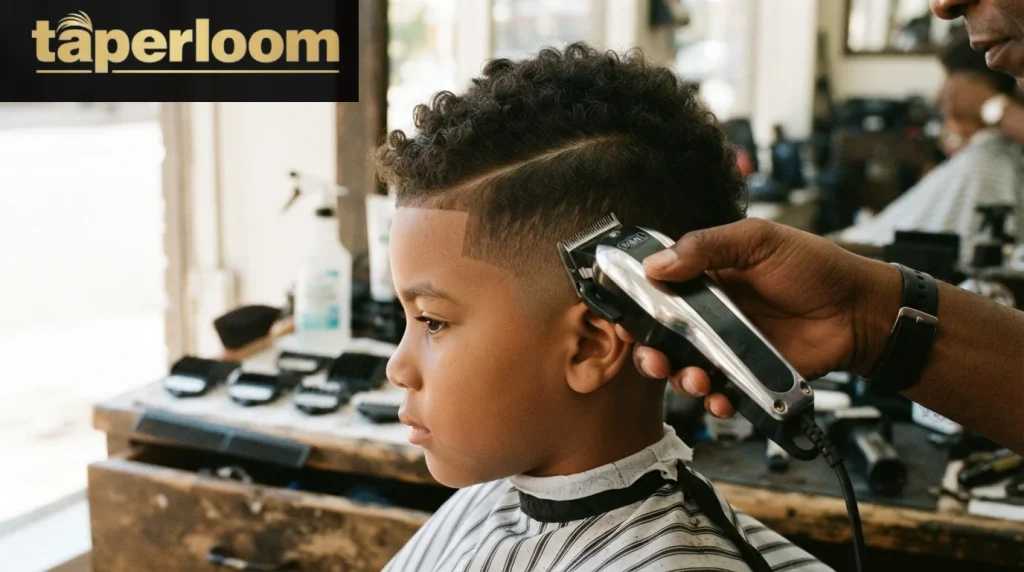
A barber builds a low taper fade across three distinct zones.
The top zone holds the most length. This is where your child’s actual style lives, whether that’s a textured crop, a curly top, a comb over, or a simple buzz.
The transition zone sits between the top and the sides. This is where a barber’s skill really shows. Using clippers with different guard sizes plus a fade comb, they blend the longer top hair into the shorter side hair so there’s no visible line and no patchy spots.
The faded base is the lowest section, running around the ears, temples, and down to the nape of the neck. On a low taper fade, this zone starts just above the ear and follows the natural curve of the head at the back.
The result is a clean, intentional silhouette that still looks like a kid’s haircut, not an adult style shrunk down.
Low vs. Mid vs. High Fade: Where the Blend Starts
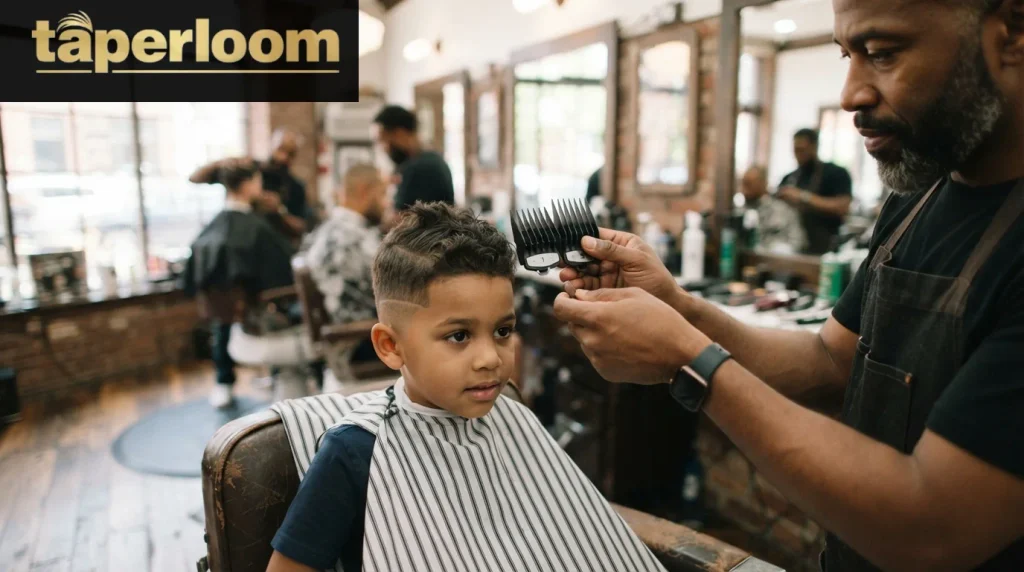
| Fade Type | Where It Starts | Contrast Level | Best For |
| Low fade | Just above the ear | Subtle, gentle | Toddlers and school-age boys, strict dress codes |
| Mid fade | Around the temple | Moderate | Boys 8 and up who want a sharper look |
| High fade | Near the parietal ridge (where the side meets the top) | Bold, dramatic | Teens 13+ |
For boys under 10, a low fade is almost always the safer starting point. It’s the easiest to maintain, the most forgiving as it grows out, and the least likely to run into school dress code issues.
Taper vs. Fade: What’s the Actual Difference?
Parents mix these two terms up constantly, so here’s the plain-language version.
| Feature | Taper | Fade |
| Hair length | Shortens gradually toward the neckline, never bare | Can blend all the way down to skin |
| Finish | Soft, natural transition | Sharp, high-contrast gradient |
| Best for | Toddlers, younger kids, strict school dress codes | Older boys and teens who want a bolder look |
| Typical maintenance | Every 4 to 6 weeks | Every 2 to 3 weeks |
A low taper fade sits right in the middle of these two. It tapers the hair down gradually while still adding a clean, faded finish near the neckline and ears, giving you the polish of a fade without the upkeep or boldness of a full skin fade.
Why This Haircut Is Trending (Origin Story)

The low taper fade became a viral cultural phrase before it became a mainstream kids’ haircut request.
The audio comes from a freestyle Twitch livestream by musician ericdoa that took place in January 2024, and it went viral on TikTok that same month after being reposted to the ericdoaclips account.
During the livestream, ericdoa sang the line “imagine if Ninja got a low taper fade,” referencing streamer Tyler “Ninja” Blevins.
Days later, on January 13th, Ninja actually got a low taper fade and posted the results to TikTok using ericdoa’s original audio, and the clip picked up millions of views within days.
That’s when the phrase stopped being an inside joke and turned into a genuine style request. Kids and teens who’d never cared much about their hair suddenly had a specific, name-brand cut in mind.
That’s the internet side of the story. The reason it stuck as an actual haircut, rather than fading with the meme, is simpler:
it’s genuinely a good cut for kids. It’s easy to maintain, it grows out evenly, and it clears most school dress codes without issue, which is exactly what the rest of this guide covers in detail.
20+ Best Low Taper Fade Styles for Boys (2026)
Jump to the styles that fit your son fastest:
By hair type: Straight · Curly · Wavy · Coily/4C By age: Toddler (2–5) · School-age (6–12) · Teen (13+)
Each style below includes the age range it suits best, how often it needs a trim, and the exact line to say to your barber.
1. Textured Crop — Best for: straight/wavy hair · Age 6–12 · Trim every 3–4 weeks. Short, choppy layers on top with a matte finish. Low effort, always looks intentional. Say: “Low taper fade, textured crop on top, point-cut for texture, keep it school-safe.”
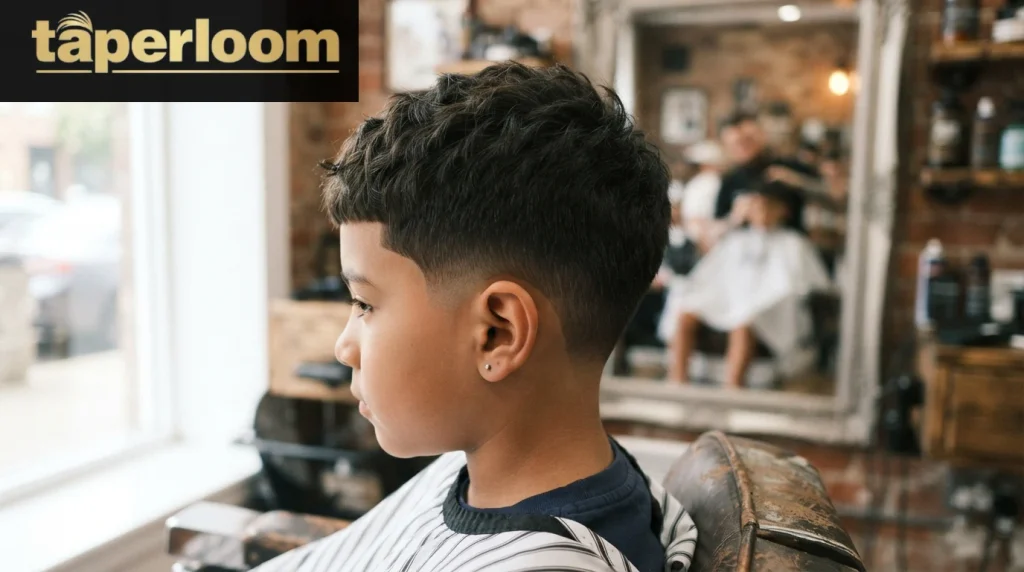
2. Curly Top — Best for: curly/wavy hair · Age 4–16 · Trim every 4–5 weeks. Natural curls left full on top, clean taper underneath. Say: “Low taper fade, leave the top natural, just shape the curl pattern, freehand blend on the sides.”

3. Comb Over — Best for: straight/fine hair · Age 7–16 · Trim every 3 weeks. A side part with the top combed neatly across. Photographs well for school pictures. Say: “Low taper fade, hard part on the left, comb the top over to the right.”
4. Pompadour — Best for: thick/straight hair · Age 10+ · Trim every 3 weeks. Volume and height on top, more of an event look than an everyday one. Say: “Low taper fade, leave 3–4 inches on top for a pompadour.”
5. Buzz Cut — Best for: any hair type · Age 3–16 · Trim every 4–5 weeks. Zero styling required. The easiest low taper fade there is. Say: “Low taper fade with a number 3 or 4 buzz on top.”

6. French Crop — Best for: straight/wavy hair · Age 7–13 · Trim every 3–4 weeks. A blunt fringe up front with textured length on top. Say: “Low taper fade, blunt crop fringe in front, point-cut the top.”
7. Faux Hawk / Mohawk — Best for: any hair type · Age 6–14 · Trim every 2–3 weeks. A kid-friendly strip of height down the center, without a full shaved mohawk. Say: “Low taper fade, leave a mohawk strip on top, keep it kid-friendly.”
8. Side Part — Best for: straight/fine hair · Age 7–16 · Trim every 3 weeks. A razor-thin hard part for a crisp, classic look. Say: “Low taper fade with a razor-shaved hard part on the left.”
9. Afro Top — Best for: 4C/coily hair · Age 4–16 · Trim every 4–5 weeks. Celebrates natural texture with a clean shape-up on the hairline. Say: “Low taper fade, shape the afro on top, clean shape-up on the hairline.”
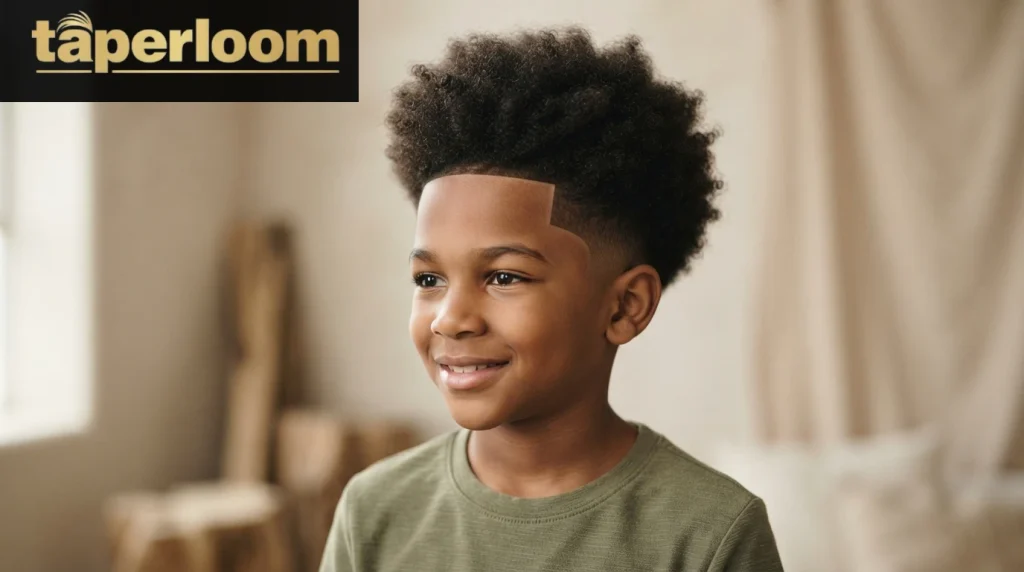
10. Broccoli Cut — Best for: curly/wavy hair · Age 4–10 · Trim every 5–6 weeks. Rounded, voluminous curls on top. A younger-kid favorite. Say: “Low taper fade, round the curls into a broccoli shape, keep volume on the crown.”
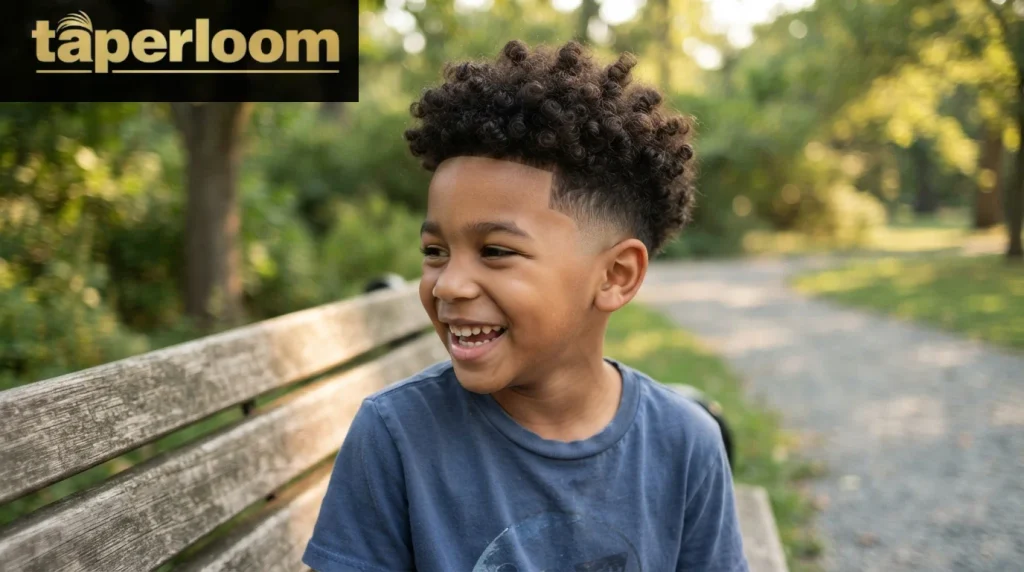
11. Crew Cut — Best for: any hair type, active kids · Age 6–12 · Trim every 3–4 weeks. Short and fuss-free, holds up through sports and recess. Say: “Low taper fade with a crew cut on top, number 3, blending into the taper.”
12. Slicked-Back Top — Best for: straight/thick hair · Age 10–16 · Trim every 3 weeks. Polished and formal, best saved for events. Say: “Low taper fade, leave at least 3 inches on top to brush back smoothly.”
13. Spiky Top — Best for: straight/wavy hair · Age 5–12 · Trim every 3–4 weeks. Playful and easy with a bit of gel. Say: “Low taper fade, leave about 2 inches on top for spikes.”
14. Modern Mullet — Best for: trend-forward kids · Age 8–16 · Trim every 3 weeks. Longer at the back, textured up front. Check school rules first. Say: “Low taper on the sides, leave the back longer for a modern mullet.”
15. 360 Waves — Best for: 4C/coily hair, committed to wave training · Age 10–16 · Trim every 2–3 weeks. Needs daily brushing and a durag, but the payoff is real. Say: “Low taper fade, shape up the hairline, keep the top flat for wave training.”
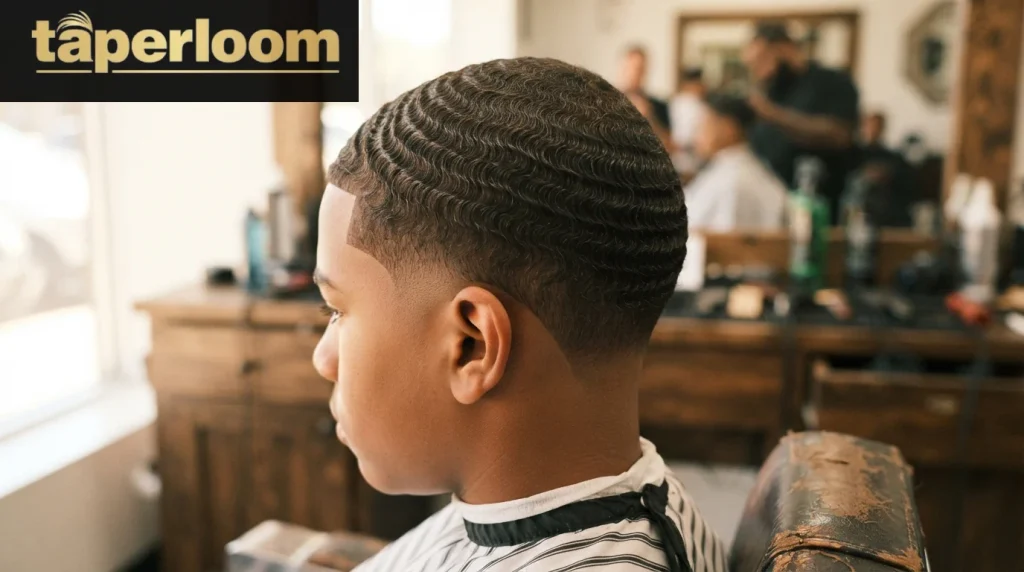
16. Line-Up Only — Best for: any hair type wanting a subtle refresh · Age 8–16 · Trim every 2 weeks. No new fade, just a sharp, straight hairline edge on an existing taper. Say: “Just clean up my line-up, keep the taper as is.”
17. Undercut Variation — Best for: thick/straight hair · Age 9–16 · Trim every 4 weeks. A disconnected look with more length retained on top than a standard taper. Say: “Low taper on the back and sides, leave the top disconnected and long.”
18. Edgar Cut — Best for: straight/thick hair · Age 8–15 · Trim every 3 weeks. A blunt, straight-across fringe paired with a low taper underneath. Say: “Low taper fade with a blunt Edgar fringe, keep the line straight across.”
Best Style by Hair Type
Straight hair shows off the clean lines of a taper better than any other type, but it also grows out faster. Best styles: comb over, textured crop, side part, slicked back. Use light pomade or water-based gel. Trim every 3–4 weeks.
Curly hair balances volume on top with structure on the sides. Best styles: curly top, broccoli cut, afro top. Use curl cream or leave-in conditioner. Ask your barber for freehand blending to protect the curl pattern. Trim every 4–5 weeks.
Wavy hair is the most flexible type for a taper, sitting between straight and curly. Best styles: textured crop, French crop, crew cut. Use sea salt spray or a light mousse. Trim every 4 weeks.
Thick hair needs bulk removed so the sides don’t look puffy. Best styles: crew cut, pompadour, buzz cut. Ask for point cutting on top. Trim every 3 weeks.
Fine hair looks best with a slightly higher guard on the sides to avoid looking sparse. Best styles: textured crop, French crop, broccoli cut. Use texturizing spray for volume. Trim every 5–6 weeks.
Coily and 4C hair is one of the most versatile pairings with a low taper fade. Best styles: afro top, 360 waves, broccoli cut. Use curl-defining cream and a curl sponge. Find a barber experienced in freehand blending on tighter curl patterns. Trim every 3–4 weeks for shape-ups.
Best Style by Age Group
Toddlers (2–5) are just starting out with clippers, so comfort matters more than style. Use a number 3 or 4 guard minimum on the sides, and keep the top scissor-only. Best styles: buzz cut, textured crop, broccoli cut. Trim every 5–6 weeks.
Little boys (5–7) can usually sit through a full cut without much fuss and are old enough to start having opinions. Best styles: textured crop, French crop, comb over, spiky top. Trim every 4–5 weeks.
School-age boys (8–12) are the biggest group asking for this cut, and any of the 20 styles above works here. Let hair type, face shape, and personal taste decide. Trim every 3–4 weeks.
Teens (13+) can handle any fade height and start experimenting with bolder styling. Best styles: pompadour, mullet, mohawk, 360 waves, slicked back. Trim every 2–3 weeks.
Quick Age Reference
| Age Group | Guard Minimum | Top Style | Trim Frequency |
| Toddler (2–5) | #3 or #4 | Buzz, natural, broccoli cut | 5–6 weeks |
| Little Boy (5–7) | #2 | Crop, comb over, spiky | 4–5 weeks |
| School-Age (8–12) | #1 | Any style | 3–4 weeks |
| Teen (13+) | Any | Any style | 2–3 weeks |
Best Style by Face Shape
Round faces look best with added height on top, like a pompadour or textured crop with volume, which draws the eye upward. Avoid flat buzz cuts, they emphasize roundness.
Oval faces are the easiest to style for. Almost any low taper fade works here, so let hair type and personal taste lead the decision.
Square faces do best with a soft, gradual blend. Skip hard parts and sharp lineups, they can make a strong jawline look even more angular. A textured crop or comb over softens things nicely.
Heart-shaped faces (wider forehead, narrower chin) benefit from volume on top to balance the proportions. Avoid high fades, since they remove hair on the sides and can make the forehead look wider. A French crop or broccoli cut works well.
| Face Shape | Best Pairing | Avoid |
| Round | Pompadour, textured crop with height | Buzz cuts, flat tops |
| Oval | Any style works | Nothing specific |
| Square | Textured crop, comb over | Hard parts, sharp lineups |
| Heart | French crop, broccoli cut | High fades, skin fades |
How Do You Talk to the Barber?
Most bad haircuts come from vague instructions, not bad barbers. Say “low taper fade starting just above the ear, blending gradually to the neckline, number 2 guard minimum, keep it school-safe,” then show a photo. That one sentence removes almost all the guesswork.
Copy-and-Paste Barber Scripts
Classic low taper (toddler or young boy): “I’d like a low taper fade, start it just above his ear, and keep it very gradual, blending down to the neckline. Use a number 3 guard minimum. Leave the top natural, just trim for shape. Nothing too short, it needs to be school-safe.”
Textured crop: “Can we do a low taper fade with a textured crop on top? Start the fade just above the ear and blend it smoothly down. On top, leave about 2 inches with a point cut for texture.”
Curly hair: “He has curly hair. I’d like a low taper fade starting just above the ear. Keep the curls natural on top, just shape them. Please use freehand blending so you don’t disrupt the curl pattern.”
Black kids or natural hair: “I’d like a low taper fade with a clean shape-up on the hairline. Keep the top natural, just define the curl or afro shape. Use a number 2 guard minimum on the fade and keep the transition very gradual.”
Questions to Ask Before the Clippers Start
- Are you experienced cutting kids’ hair?
- What guard size will you use for the fade?
- Can I see photos of similar cuts you’ve done on kids?
- How long will the appointment take?
- Do you have vibration-reduced clippers for sensitive kids?
What NOT to Say
- “Just a fade” — too vague, doesn’t specify height
- “Make it look cool” — no barber can act on this
- “Same as last time” — they may not remember
- “Just a little off the sides” — this isn’t a fade request at all
Always bring a photo. It’s still the single best tool for avoiding a haircut you didn’t ask for.
Copy-ready version: Save this to your notes app or screenshot it before your next appointment.
“I’d like a low taper fade for my son. Start the fade just above the ear and blend it gradually down to the neckline, no bare skin. Use a [number] guard minimum. On top, [describe style/length]. Keep it school-safe.”
How Much Does a Kid’s Low Taper Fade Cost?
Honest answer: kids’ haircut pricing varies a lot by shop type more than by strict geography, and there isn’t one clean, universally agreed regional dataset for this specific cut. Here’s what’s actually verifiable.
Budget chain salons like Great Clips and Supercuts typically advertise kids’ cuts in the $15 to $22 range, while independent salons and barbershops typically charge $25 to $45 for the same service. Across the US in 2026, kids’ cuts generally run $15 to $40, with a low taper fade often landing toward the higher end of that range since fades take more barber time than a basic trim.
Location does matter, just not as a clean four-region split. Coastal and major metro markets tend to run about 10 to 25% higher than national midpoints, and in one study, the average price for boys’ haircuts under age 12 came out to $29.43, roughly $9 less than the average men’s cut.
What Drives the Price
| Factor | Effect on Price |
| Shop type | Chain salons cheapest, independent barbershops mid-range, premium/urban shops highest |
| Location | Coastal and major metro shops run higher than suburban or rural shops |
| Barber experience | Senior barbers and detailed fades cost more than a junior barber’s basic cut |
| Add-ons | Line-ups, hot towels, or styling add to the base price |
Realistic Price Ranges by Shop Type
| Shop Type | Typical Range |
| Budget chain (Great Clips, Supercuts) | 15–25 |
| Independent barbershop | 25–45 |
| Premium/urban barbershop | 40–60+ |
Ways to Save
- Ask about sibling discounts, most shops offer them if you ask
- Book weekday mornings, some barbers price lower during slow hours
- Stretch time between trims with good home maintenance
- Ask about loyalty punch cards for a free cut after several visits
We’re not going to hand you a fake city-by-city table just to look thorough. If exact local pricing matters to you, calling two or three shops near you will give you a more accurate number than any national guide can.
Home Maintenance Routine
Good maintenance stretches the time between barber visits and keeps the fade looking sharp, not grown-out and messy.
Weekly Routine
| Step | Action | Product |
| 1 | Brush daily to train hair direction | Soft-bristle or boar bristle brush |
| 2 | Wash 2–3 times a week | Sulfate-free, kid-safe shampoo |
| 3 | Apply product on damp hair | Curl cream, matte clay, or light pomade based on hair type |
| 4 | Sleep on silk or satin | Silk/satin pillowcase, reduces friction and frizz |
| 5 | Detangle curly or wavy hair | Wide-tooth comb |
| 6 | Book the next trim | Use the age table above |
At-Home Touch-Ups Between Visits
You can safely clean up the neckline yourself with a trimmer and a number 2 guard on just the lowest section, below the ear and along the neck. Do not touch the blending zone. That part takes a trained hand, and a mistake there creates a visible line that’s hard to fix without going shorter than planned.
Keeping Curly Hair Fresh
- Refresh curls daily with a leave-in conditioner spray
- Use a curl sponge to redefine the pattern
- Sleep with a satin pillowcase or durag to hold shape overnight
- Skip alcohol-based products, they dry curls out and cause frizz
Signs It’s Time for a Trim
- The fade line has grown out and disappeared
- The neckline looks shaggy instead of clean
- The top style won’t hold with product anymore
- Picture day or an event is coming up
Is a Low Taper Fade School-Appropriate for Boys?
Yes, in most US schools. A low taper fade without bold designs or bare-skin sections is widely accepted under standard school dress codes. It’s the shaved patterns, skin fades, and extreme high contrast that occasionally run into trouble, not the taper itself.
What Most Dress Codes Actually Say
- Generally fine: low taper fade, mid taper fade, scissor fade
- Sometimes restricted: skin fades, extreme high fades, shaved designs or patterns
- The core rule: if there’s no bare skin showing and no carved-in design, most schools won’t blink
Safest Choices for Strict Schools
- Low taper fade with textured crop
- Low taper fade with comb over
- Low taper fade with French crop
- Low taper fade with crew cut
Quick Checklist Before You Book
- Choose low, not high or skin
- Skip bold patterns or shaved designs
- Keep the top at least 2 inches
- Ask for a gradual blend, no harsh contrast
- Request a rounded or squared neckline, not a sharp razor line
- Check your school’s actual handbook, policies vary by district
If you’re genuinely unsure, call the school office and describe it plainly: “It’s a gradual taper that blends shorter near the ears, no skin showing, no designs.” That description clears nearly every dress code in the country.
First Haircut Prep
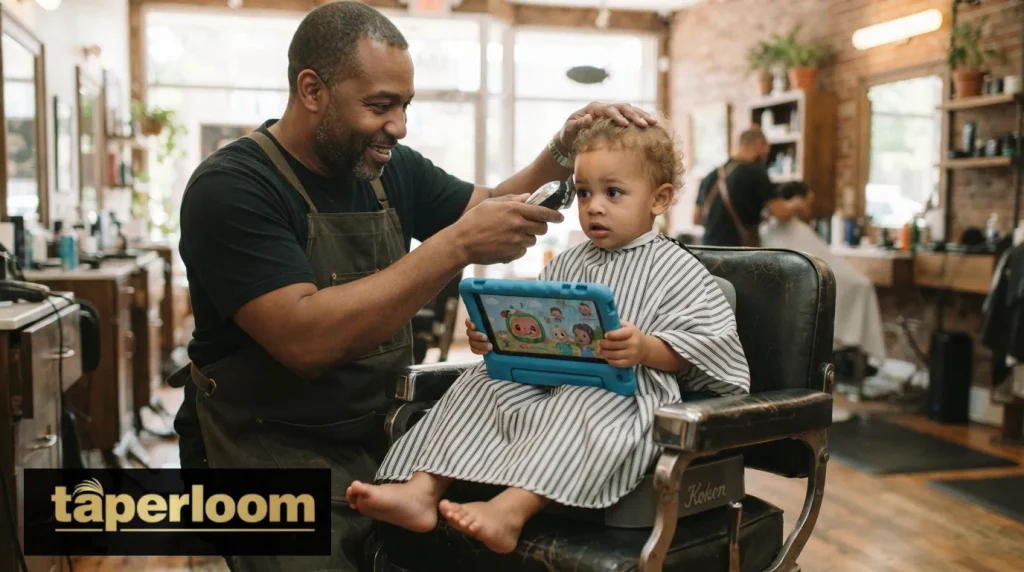
Preparing your child for a taper fade the right way removes most of the stress from that first appointment.
Step-by-Step
1. Watch barber videos together a few days before. Pull up short clips of kids getting fades on YouTube or TikTok, and narrate what’s happening: “See, he’s using clippers on the sides, it buzzes a little but doesn’t hurt.” Familiarity takes the edge off.
2. Pick a barber who’s actually good with kids. Look for shops that specifically mention kids’ cuts, and check reviews for phrases like “patient with kids” or “great with toddlers.”
3. Book a quiet time slot. Weekday mornings tend to be calmer than Saturday afternoons, when shops are loud and crowded.
4. Bring a comfort item. A tablet with a favorite show, a small toy, or a snack goes a long way during those first few minutes in the chair.
5. Practice at home. Sit your child in a tall chair and mimic the clipper buzz with an electric toothbrush or a hairdryer on low, so the sensation isn’t a total surprise.
6. Let your child pick. Show them two or three photo options and let them choose. Kids sit calmer when it feels like their decision, not something happening to them.
Low Taper Fades for Kids with Sensory Sensitivity
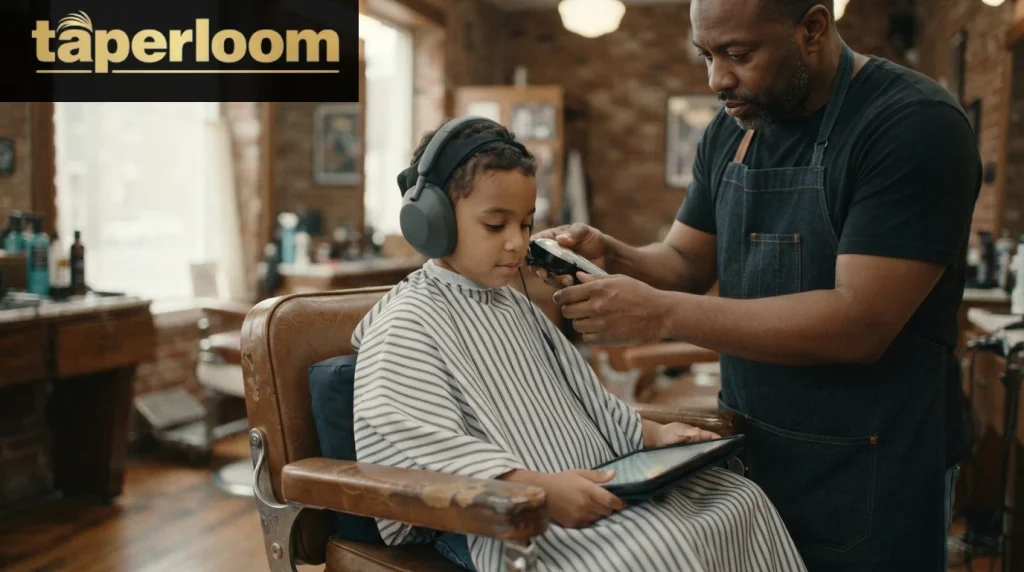
This part rarely gets covered anywhere, but it matters to a lot of families. Kids with sensory processing sensitivity, autism, ADHD, or general clipper anxiety can absolutely get a taper fade, they just need the right setup.
- Mention sensory sensitivity when booking and ask for vibration-reduced clippers
- Request short breaks during the cut, a few 30-second pauses
- On the first visit, ask for scissors only, and introduce clippers gradually at future appointments
- Book the quietest available time slot
- Bring noise-canceling headphones or ear defenders
- Search “sensory-friendly haircuts near me” if you want a barber who specializes in this
Research on sensory processing differences in children estimates prevalence at roughly 1 in 6 to 1 in 20 in the general population, which is exactly why sensory-aware preparation is worth taking seriously rather than treating as a rare exception.
Troubleshooting
This is the part almost no guide covers, but it’s usually the part parents actually search for at 9pm after a bad haircut.
“My kid hates the haircut. What now?”
First, separate the two possibilities. Sometimes the cut is technically fine but your child just isn’t used to seeing themselves with shorter hair, that adjustment period is normal and usually passes in a few days. If it’s a genuine mistake (uneven lines, too short, wrong style), go back to the same shop and calmly explain what’s wrong.
Most barbers will fix a real error at no charge if you raise it soon after the cut. If your child is upset about the change itself rather than a mistake, a hat for a few days and a reminder that hair grows back usually helps more than trying to “fix” a haircut that isn’t actually broken.
“The barber cut it too short or uneven. Can it be fixed?”
Depends on where the problem is. If it’s in the top style, a skilled barber can often reshape it with scissors on the next visit. If it’s in the fade itself, an uneven blend can sometimes be smoothed out by taking the whole fade slightly shorter and re-blending, but that only works if there’s enough length left to work with.
What can’t be fixed quickly is hair that’s simply too short, that just needs time to grow back out. Don’t attempt to fix a bad fade at home with clippers, it usually makes the unevenness worse, not better.
“How do I get through the awkward grow-out stage?”
- Keep the neckline and edges trimmed at home even while the top grows out, it keeps things looking intentional
- Add a light styling product to give the top some shape while it’s in between lengths
- Book a “maintenance only” appointment with your barber, ask them to clean up just the fade line without touching the top
- If the grow-out phase is really bothering your child, a slightly shorter buzz cut on top can reset the whole look faster than waiting it out
Best Products by Hair Type
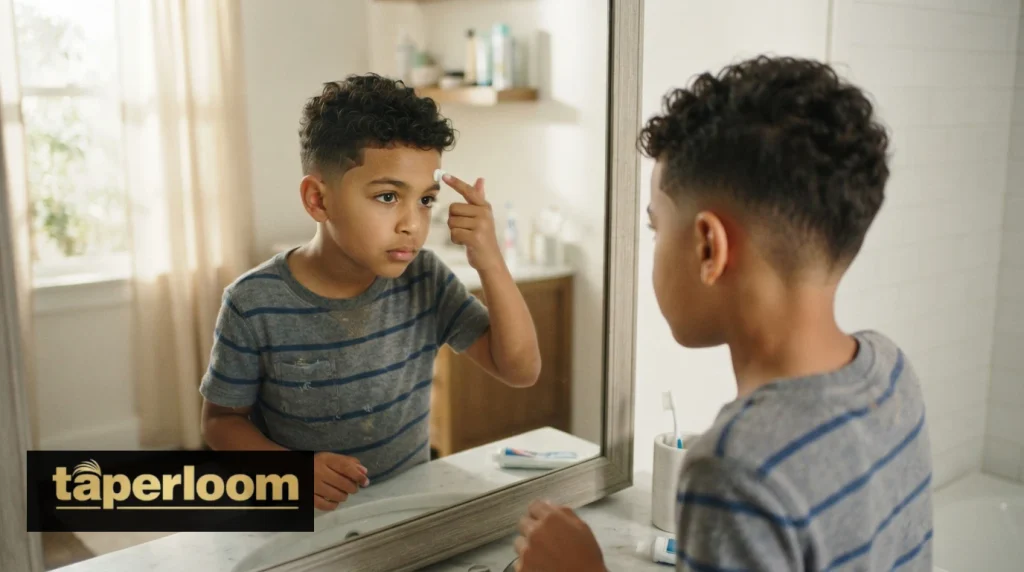
Stick to water-based, alcohol-free products for kids. Their scalps are more sensitive than adults’, and heavy or fragranced products are more likely to cause irritation.
| Hair Type | Best Product | Look For | Avoid |
| Straight or fine | Texturizing spray, light pomade | Water-based, lightweight | Heavy wax, oil-based products |
| Curly or wavy | Curl cream, leave-in conditioner | Alcohol-free, hydrating | Products with alcohol |
| Thick or coarse | Matte clay, texture powder | Medium hold, matte finish | Heavy gels that cause buildup |
| Coily or 4C | Curl sponge, defining cream | Moisturizing, natural ingredients | Sulfates, parabens |
| All types | Sulfate-free shampoo | Gentle, child-safe formula | Harsh chemicals, strong fragrances |
What to Avoid Across the Board
- Alcohol-based products, they dry out hair and irritate young scalps
- Chemical relaxers on young kids, too harsh for a developing scalp
- Heavy petroleum-based products, they build up and clog pores
- Adult-strength waxes, too heavy for fine kids’ hair
- Products with strong artificial fragrances, more likely to trigger irritation or allergic reactions
A quick habit that helps more than any specific product: check the ingredient list before buying anything for a child under 10, and when in doubt, go lighter and less fragranced rather than more.
Father-Son Matching Ideas
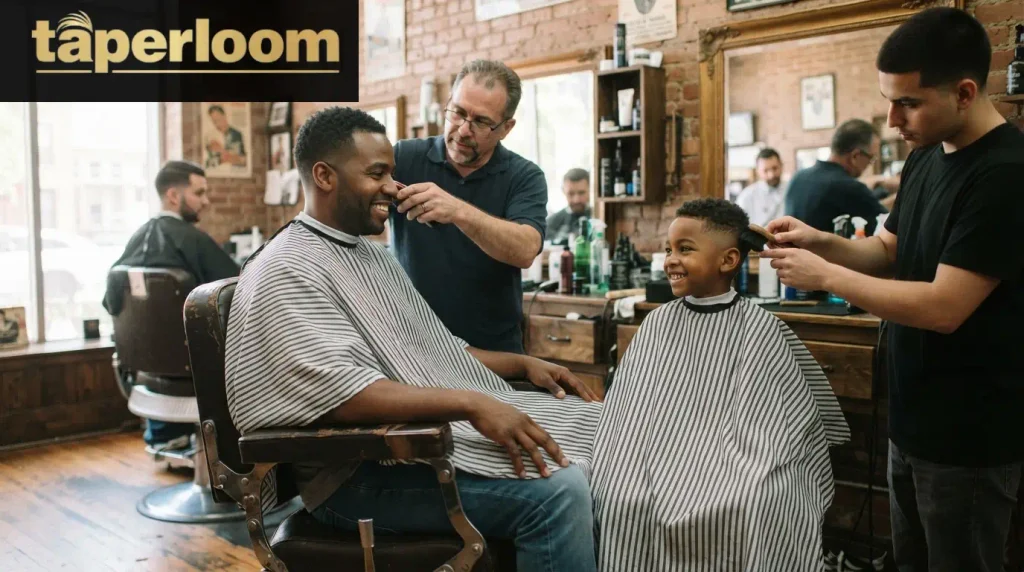
Matching cuts are a genuine trend for family photos, holidays, and everyday bonding, and they’re easier to pull off than most parents expect since both cuts can share the same fade height with different top styles.
| Dad’s Style | Son’s Matching Style | Best For |
| Low taper + textured crop | Low taper + French crop | Everyday, casual |
| Mid taper + comb over | Low taper + comb over | Formal events, photos |
| Low taper + pompadour | Low taper + textured crop | Family photos |
| Low taper + 360 waves | Low taper + afro top | Black families, everyday |
| Low taper + slicked back | Low taper + side part | Weddings, holidays |
The easiest way to book this: mention to the barber upfront that you’re both getting cuts and want them to coordinate. Most shops can either seat you back-to-back or have two barbers work at the same time.
Seasonal Guide

| Season | Recommended Style | Why It Works |
| Summer | Low taper + buzz cut or short crop | Keeps the head cool during outdoor play and sports |
| Back to school | Low taper + comb over or textured crop | School-safe, photo-ready for the new year |
| Winter | Low taper + longer textured top | More warmth, works well under hats and beanies |
| Holidays | Low taper + comb over or side part | Sharp and photo-ready for family gatherings |
| Birthdays/events | Low taper + any style with a design element | Room for a bit of personal expression |
One practical tip: barbershops get noticeably busier in August and around the holidays, so if you want a specific appointment time, book a week or two ahead rather than the day before.
Frequently Asked Questions
What age is appropriate for a kid’s low taper fade?
Most kids are ready around age 3 to 5, once they can sit through a haircut. Babies and toddlers under 18 months usually do better with a scissor-only trim.
How long does a kid’s taper fade last before needing a trim?
About 3 to 5 weeks for most kids. Toddlers can often stretch to 5 to 6 weeks, while teens who want a sharp look usually go every 2 to 3 weeks.
Does a low taper fade work for all hair types?
Yes. Straight, wavy, curly, coily, and 4C hair all work, the barber just adjusts the guard size and blending technique for each texture.
Is a low taper fade allowed in schools?
In most US schools, yes. It’s the skin fades, shaved designs, and extreme high contrast that occasionally run into dress code trouble, not the low taper itself.
What’s the difference between a low taper fade and a skin fade for kids?
A low taper fade blends gradually and never shows bare skin. A skin fade blends all the way down to the scalp. For most kids under 12, the taper is the safer, lower-maintenance choice.
How do I ask the barber for a low taper fade?
Say: “Low taper fade starting just above the ear, blending gradually to the neckline, number 2 guard minimum.” Bring a photo, it removes almost all the guesswork.
Can I do a low taper fade at home?
Basic neckline touch-ups, yes. The actual blend should stay with a professional, a mistake in the transition zone is hard to fix without cutting shorter than planned.
What styling products should I use?
Water-based, alcohol-free, kid-safe products, matched to hair type. See the product table above for specifics.
How much does a kids’ taper fade cost?
Roughly $15 to $45 depending on shop type, with premium urban barbershops running higher. Full breakdown above.
Can girls get a low taper fade?
Yes. The cut itself isn’t gender-specific, plenty of barbers do this exact fade on girls who want a similar clean, short-sided look.
How do I find a barber who’s good with kids near me?
Search for shops that specifically advertise kids’ cuts, then check reviews for mentions of patience with toddlers or young kids before booking.
What if my son’s school bans fades entirely?
Ask for a soft taper with no visible fade line at all, just a gradual length change with a higher guard throughout. It gives a neat, short look without technically being a “fade.”
Wrapping Up
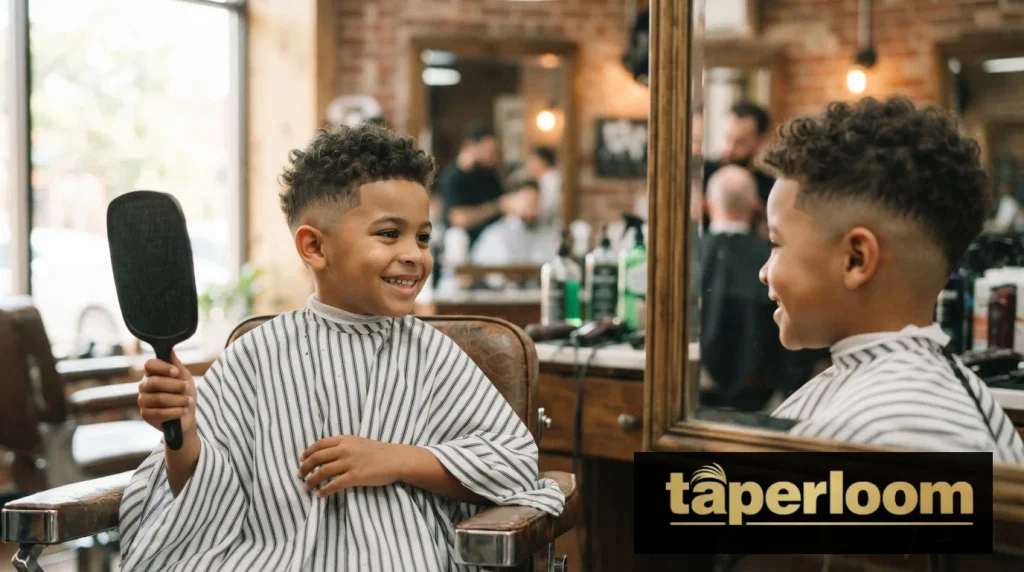
A low taper fade works for almost any kid, any hair type, and any age from toddler to teen, and it’s popular for a good reason: it’s genuinely low-maintenance and clears most school dress codes without a second look.
The real difference between a great haircut and a disappointing one usually comes down to two things: picking the right style for your child’s hair and face shape, and communicating it clearly with a script and a photo.
Save the barber script above to your phone before your next appointment, and you’re set.
more guides
low taper fade vs mid taper fade

Muhammad Kaleem is a content creator who writes about hair care, hairstyles, grooming, and everyday hair trends. He enjoys turning hair-related topics into simple, practical, and easy-to-understand content that helps readers make informed choices about their hair and personal style.