
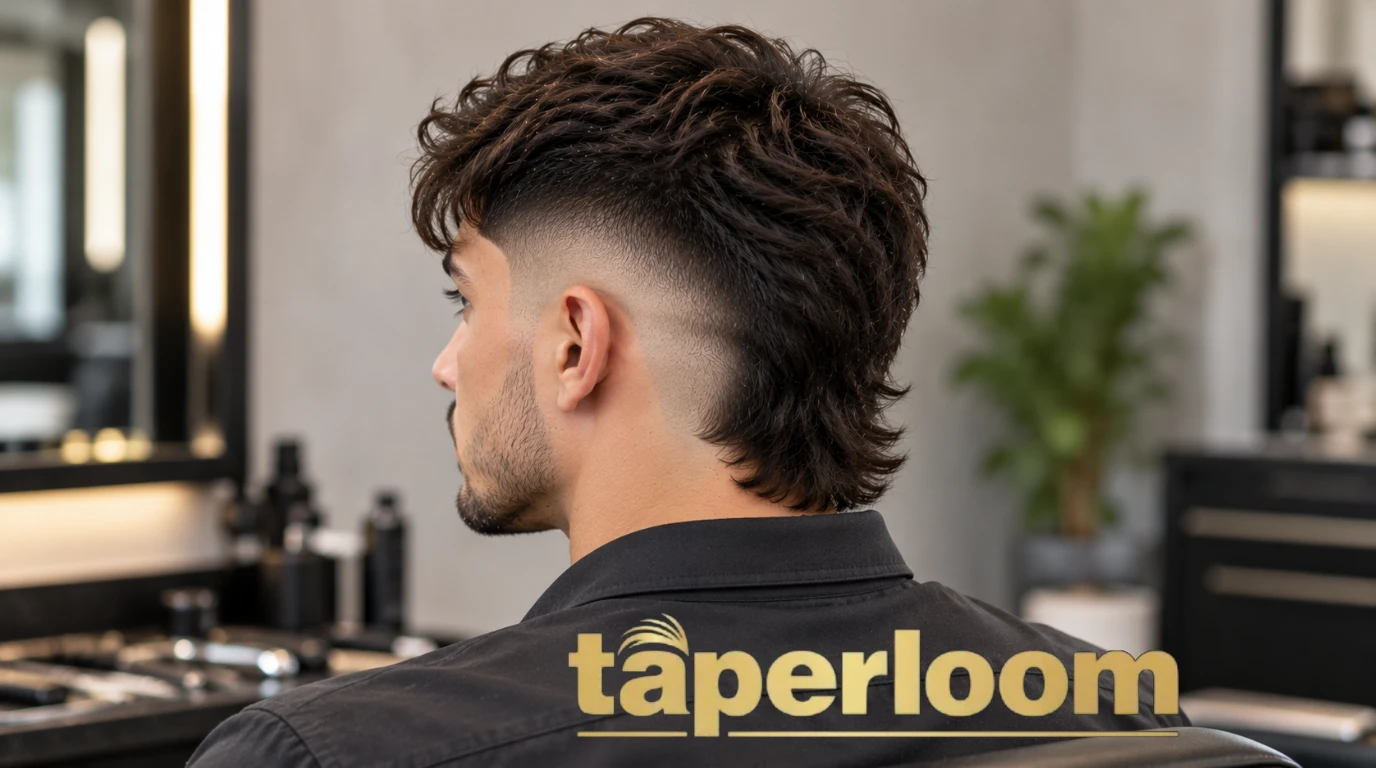
Quick answer: A modern mullet with a burst fade keeps the hair longer on top and at the back, while a rounded fade curves around each ear. The result is clean sides, a soft transition, and a visible but controlled length at the nape.
The old mullet was blunt and uneven. This version is blended, textured, and far easier to wear. Below you’ll find more than 40 variations, advice on matching the cut to your hair and face, a barber script you can copy, and a full styling and care routine.
What Is a Modern Mullet with Burst Fade?
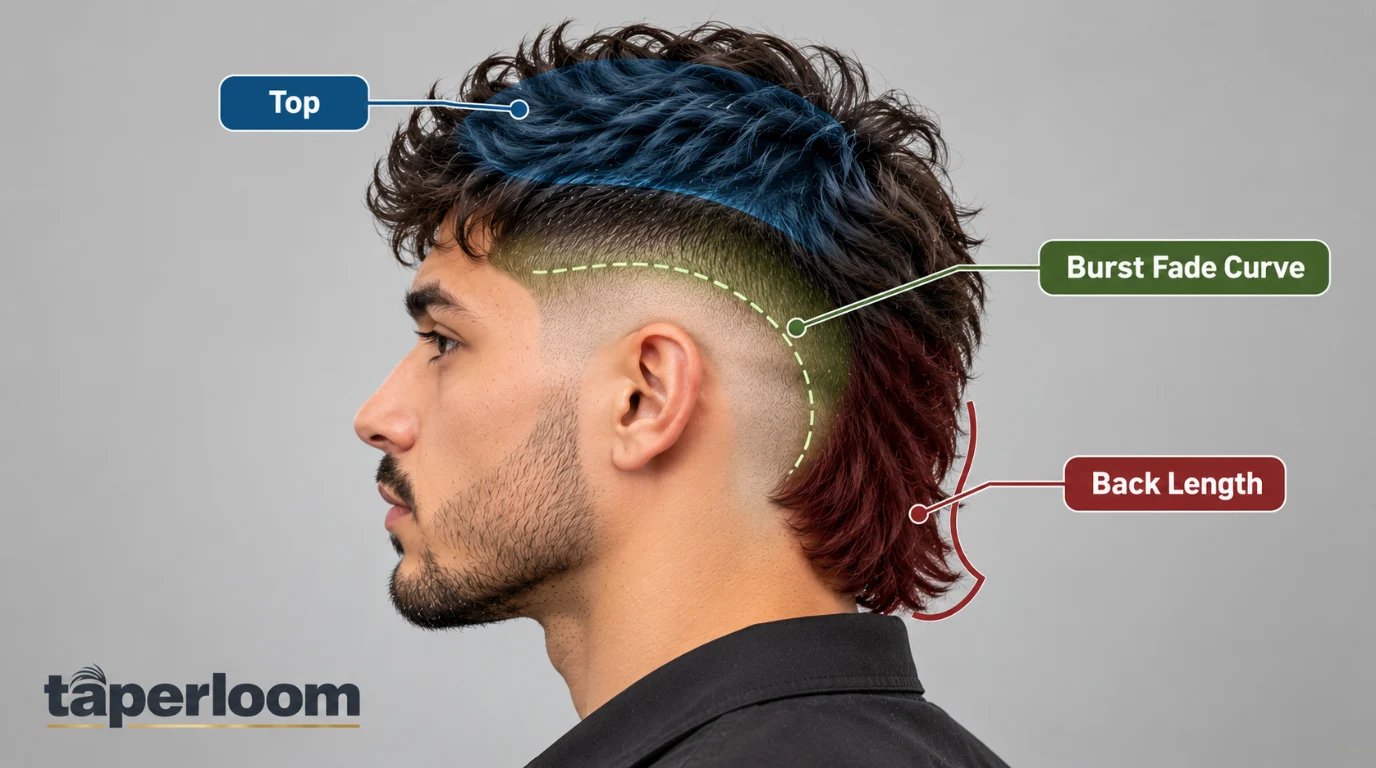
A modern mullet with a burst fade pairs the classic “shorter in front, longer in back” structure with a semicircular fade that wraps around the ear.
The fade then blends upward into the top, and the back length stays intact. The name comes from the fade’s shape, which radiates out from the ear like a burst.
Anatomy of the cut
- Top: Layered or textured, usually medium length
- Sides: Faded in a curve around the ear, from skin or a short guard to a longer blend
- Back: Left longer, often 3–5 inches depending on hair type
- Weight line: The point where short meets long; blended in a modern cut, never a hard step
Burst fade vs. taper vs. drop vs. regular fade
| Fade | Shape | Contrast | Best for |
| Burst fade | Curved around the ear | High, rounded | Bold but polished looks |
| Taper fade | Follows sideburn and neckline | Low–moderate | Subtle, office-friendly |
| Drop fade | Arcs down behind the ear | Moderate–high | Adding shape to the nape |
| Standard fade | Straight horizontal line | Varies | Classic, uniform sides |
Modern mullet vs. wolf cut vs. shag
A modern mullet is defined by the length contrast between the sides and the back. A wolf cut adds heavy shaggy layers all through the top. A shag is layered everywhere, with softer length contrast. A burst fade mullet can borrow from either, but the faded sides are what define it.
Is a Burst Fade Mullet Right for You?
Best hair types
| Hair type | How it looks | Tip |
| Thick/coarse | Holds the shape longest between cuts | Ask for thinning layers on top |
| Wavy | Natural movement through the back | Light salt spray, minimal product |
| Curly/coily | Volume and defined shape | Keep the back moisturized; diffuse dry |
| Straight | Sharp, clean lines | Needs texturizing so it doesn’t look flat |
| Fine/thin | Works with shorter back length (about 3 in) | Add layers and a matte powder for lift |
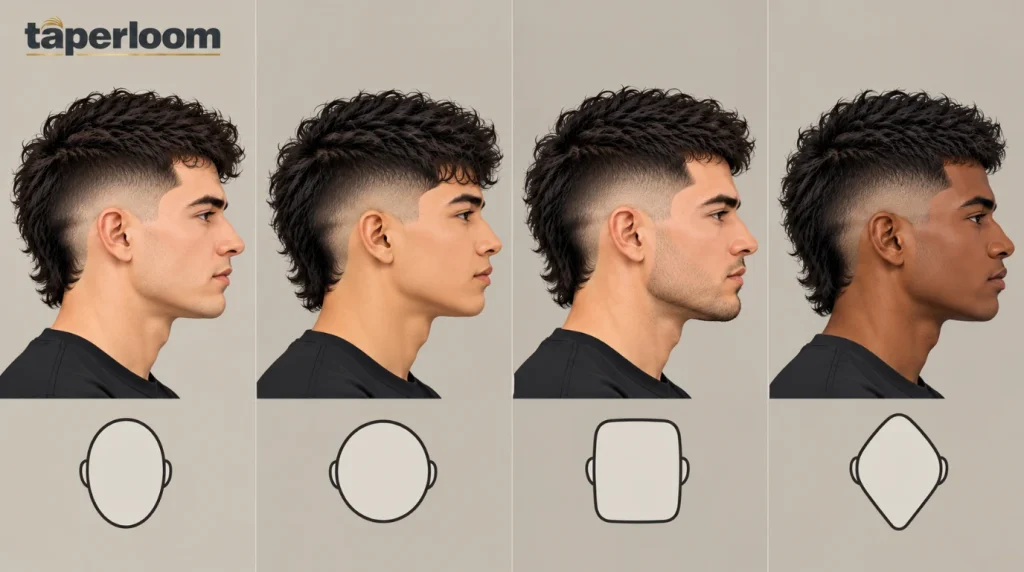
Best face shapes
- Oval: Almost any length works
- Square: Add height at the crown to soften the jaw
- Round: Extend the back slightly and keep sides tight to lengthen the face
- Diamond: Keep the top medium and the fade controlled
- Heart: Keep sides lighter and volume centered at the crown
Work, school and daily life
For formal environments, ask for a low or taper-style burst, a shorter back, and a side-swept or softly textured top.
For casual use or creative workplaces, go higher on the fade and longer on the back. If you wear a helmet, cap or headscarf-style covering regularly, keep the back moderate so it doesn’t tangle or flatten.
Read Also: Modern Mullet with Wavy Hair: 12 Best Styles, Barber Tips & Easy Styling (2026)
Burst Fade Mullet Styles by Length
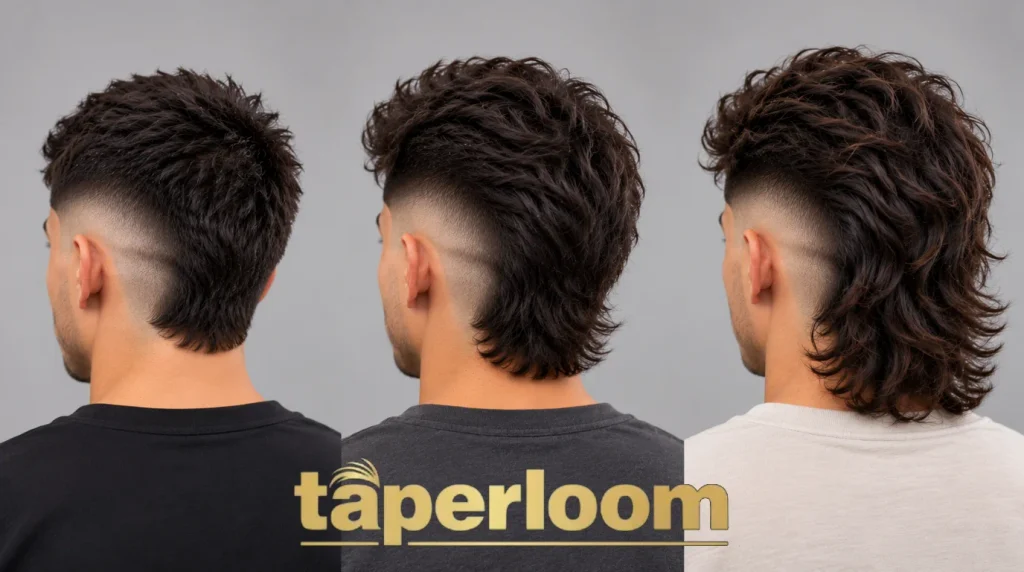
1. Classic Modern Mullet with Burst Fade
The traditional shape with a clean curve around each ear. The back keeps its signature length and the top stays slightly shorter. A safe first step for anyone new to the cut.
2. Short Burst Fade Mullet
A cropped top and just-past-the-collar back. It reads neat and professional while keeping the mullet outline. This is the lowest-maintenance version.
3. Medium Burst Fade Mullet
The most flexible choice. Enough top length to push back, part or sweep forward, with a back long enough to show contrast.
4. Long Burst Fade Mullet
Length that reaches the shoulders or neckline. It makes the biggest statement and needs more frequent shaping so the back doesn’t turn stringy.
Burst Fade Mullet Styles by Fade Height
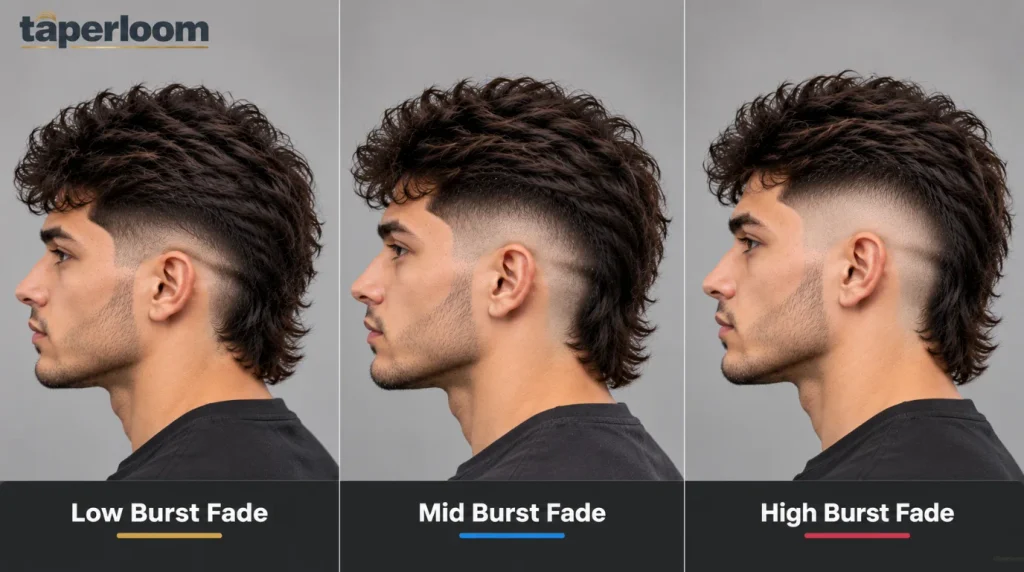
5. Low Burst Fade Mullet
The fade starts near the ear base and neckline. Subtle, with soft contrast, and it grows out gracefully.
6. Mid Burst Fade Mullet
Sits halfway up the side of the head. The balanced all-rounder, with visible contrast but nothing extreme.
7. High Burst Fade Mullet
The fade climbs closer to the top. It makes the mullet shape pop, and it shows regrowth faster.
8. Skin Burst Fade Mullet
Down to bare skin at the ear. Crisp and clean, but it needs the most upkeep and the most skin care.
9. Taper Burst Fade Mullet
A gradual blend with less dramatic shaping. Choose it for a softer, workplace-friendly outline.
10. Drop Burst Fade Mullet
The fade curves down behind the ear instead of staying level. It adds shape and flatters the nape.
Burst Fade Mullet Styles by Hair Type
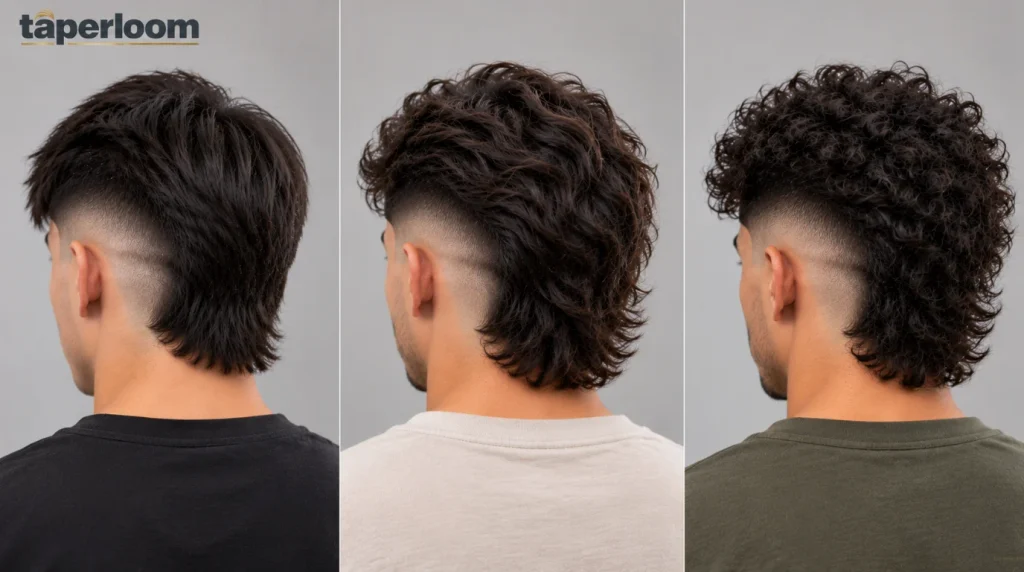
11. Straight Hair
Straight hair shows the sharpest outline. Ask for point-cutting through the top so it doesn’t lie flat.
12. Wavy Hair
Waves add built-in texture to the back, so you can use less product.
13. Curly Hair
Curls give the shape natural volume. Keep the fade tidy so the curls stay the focus.
14. Thick Hair
The fade removes bulk from the sides, which makes thick hair easier to manage. Keep top layers thinned.
15. Fine Hair
Keep the back shorter and add layering. A matte texture powder helps it look fuller.
16. Coily Hair with Twists or Braids
Twists or neat braids on top give coily textures definition. The burst fade keeps the sides clean around them.
Texture and Mood Variations
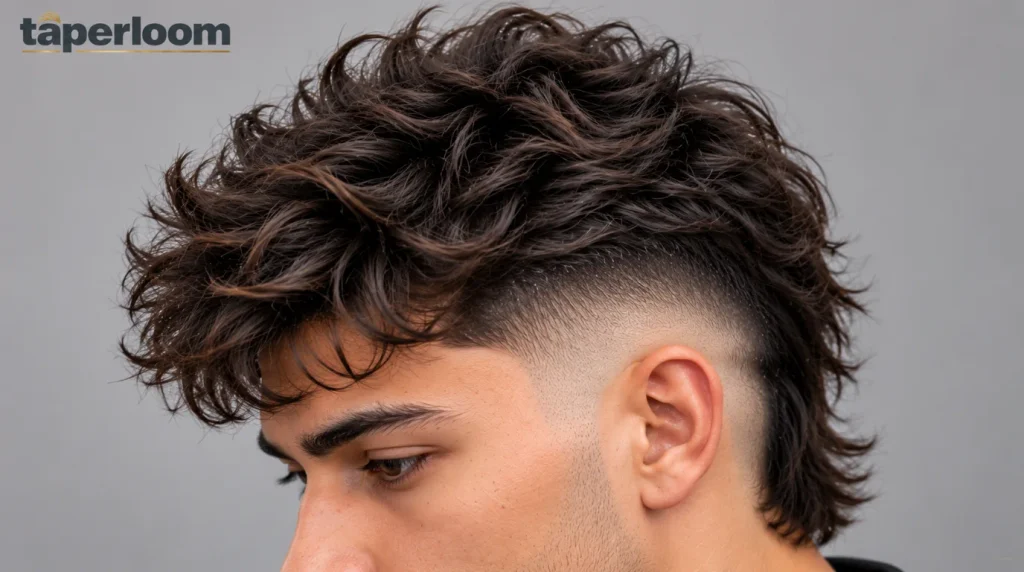
17. Textured Burst Fade Mullet
Choppy layers on top add movement. Great with a little clay.
18. Messy Burst Fade Mullet
A loose, undone finish. It works well for casual days and needs very little styling.
19. Shaggy Burst Fade Mullet
More layers throughout, a slightly tousled outline, and an easy retro flavor.
20. Layered, Choppy and Tousled Versions
Each takes the same idea, a lifted, movement-rich top, and adjusts how sharp the layers are. Choppy is the most defined; tousled is the softest.
21. Soft Burst Fade Mullet
Subtle layers and a gentle blend. The most conservative version of the cut.
22. Modern Wolf Burst Fade Mullet
Wolf-cut layering with a burst fade. It’s bold, voluminous, and best on thick or wavy hair.
Front Styling Variations
23. Fringe
A forward-combed fringe frames the face. Works especially well with square and round shapes.
24. Textured Fringe
Piecey, separated ends give a modern finish. Style with a matte clay.
25. Curtain Style
A center or slightly off-center part falls to each side. Suits wavy hair and medium lengths.
26. Side-Swept Fringe
Swept to one side for a polished, versatile finish, from casual to formal.
27. Bangs and French Crop Style
A short, blunt front with a longer back. Very neat and surprisingly easy to maintain.
28. Quiff
Lifted at the front for height. Elongates round faces and balances the length at the back.
29. Pompadour-Inspired
A taller, swept-back front. It takes more time with a dryer, but it’s a strong, tidy look.
30. Spiky Top or Faux Hawk
Pushed up with paste for an energetic shape. Choose a matte product to avoid a stiff look.
31. Mohawk-Inspired
Length through the center and tight sides. The most dramatic option, so confirm the exact width with your barber before the clippers start.
32. Hard Part
A shaved or clipper-defined part line gives a sharp, sleek structure.
Detail and Add-On Variations
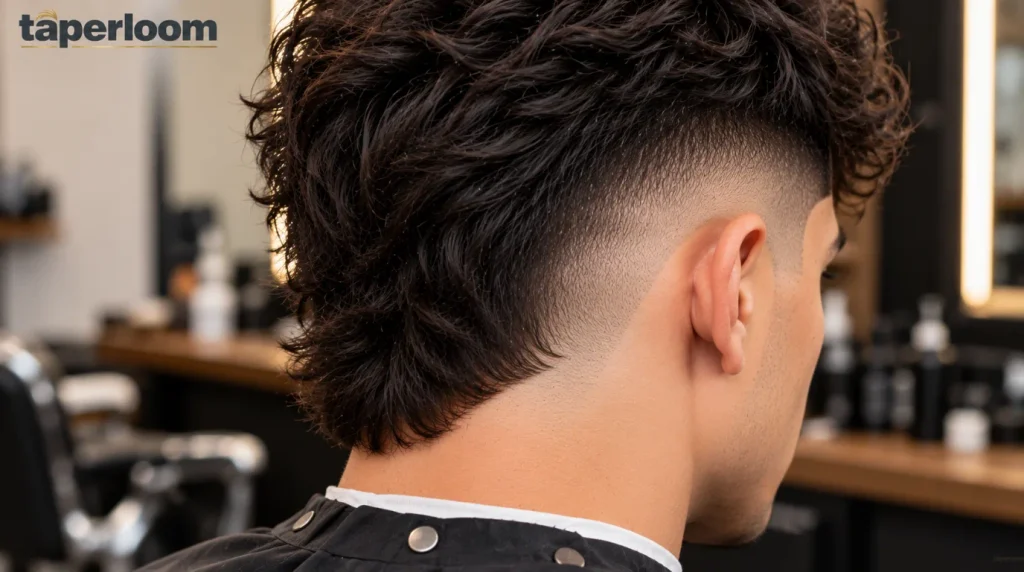
33. Undercut Burst Fade Mullet
Sides kept very short, with the burst fade softening the transition into the length.
34. Line-Up
Crisp edges along the hairline. It looks sharp but needs regular refreshing.
35. Neck Taper
A cleanly shaped nape that keeps the back length looking intentional.
36. Front-Side Fade
A fade that blends hair in the area where the forehead meets the sideburn. It gives a smoother transition into the top.
37. Razor Line Detail
Simple, clean lines in the faded area. Keep it minimal and discuss it fully beforehand.
38. Burst Fade Mullet with a Beard Fade
If you keep a beard, ask your barber to blend the beard into the burst fade so the two look connected. Keep the beard trimmed and tidy.
Regional and Trend Variations
39. Korean-Style
Soft layers, natural volume, and a smoother top. Light and youthful.
40. Asian-Inspired
Straight, dense hair benefits from clean lines and textured layers. Works well with point-cutting.
41. K-Pop Style
Layered and light, with a soft fringe and a longer back. Style with a little texture powder.
42. Euro Mullet
Tighter sides with a textured top. Sporty and neat.
43. Edgar-Style
A straight fringe over tight sides. Popular among younger wearers; keep the fringe clean.
44. V-Shaped Back
The back is cut into a V. It’s a standout detail that needs a barber with good cutting skills.
45. Permed Burst Fade Mullet
A perm adds curl and volume to straight hair. Plan on extra moisture and gentle care.
46. Teen-Friendly Version
A shorter, lower-fade version with a controlled back length. Easier for school and everyday wear.
Natural Color and Highlights
Natural-looking tones keep the look refined. Subtle brown or warm highlights add depth to the layers, while very light bleaching increases dryness and needs more conditioning. If you color your hair, use a professional and a gentle routine.
How to Ask Your Barber for a Burst Fade Mullet
- Bring photos from the front, side and back.
- Say “burst fade” and state where it should start: low, mid or high.
- Give the guard number at the ear: for example, skin to #2, or #1 to #3 for a softer look.
- Set the back length in inches, not just “long.” Three to five inches is common.
- Describe the top: textured, fringe, side part, or lifted.
- Mention the neckline: tapered or natural.
- Share your routine (minutes per day, products) and your work or school dress code.
Script: “I’d like a modern mullet with a mid burst fade, skin to a #2 around the ear, about four inches left at the back, textured layers on top, and a natural neckline.”
How to Style It (Step by Step)
- Wash with a gentle shampoo; use a clarifying one occasionally to remove buildup.
- Condition the ends, especially on the back length.
- Towel-dry gently. Dermatologists advise wrapping the hair rather than rubbing it. Rough drying can damage hair.
- Apply sea salt spray or a light cream to damp hair for grip and texture.
- Blow-dry with fingers or a diffuser, lifting at the roots.
- Finish with a small amount of clay, paste or powder.
Products by hair type
| Hair type | Prep | Finish |
| Straight | Sea salt spray | Texture powder |
| Wavy | Light cream | Matte clay |
| Curly/coily | Leave-in conditioner | Curl cream, diffuse |
| Thick | Smoothing serum | Light paste |
| Fine | Volumizing mousse | Matte powder |
Heat safety
Excessive heat damages hair. Dermatologists suggest limiting blow-drying, using low or medium heat, and applying a heat-protecting product. Since the longer back is the oldest hair on your head, it benefits most from this care.
Maintenance Schedule and Skin Care
Trim calendar
| Area | How often |
| Burst fade, edges, neckline | Every 2–3 weeks for a sharp look (up to 4 weeks for a soft fade) |
| Full reshape and layering | Every 4–6 weeks |
| Back length | Every 6–8 weeks, mainly to remove split ends |
Razor bumps and scalp care
Skin fades and tight necklines can cause irritation. Dermatologists say razor bumps develop when cut hairs curl back into the skin, and that shaving against the grain and a dull blade increase the problem.
If you are prone to bumps, ask your barber to leave the neckline slightly softer, keep skin clean, moisturize afterward, and avoid picking at bumps. If irritation persists, see a board-certified dermatologist.
How Long Does It Take to Grow One?
Scalp hair grows about half an inch per month, or around six inches a year, according to dermatology sources. As a rough estimate:
| Starting point | Estimated time to a usable mullet length |
| Medium-length hair | 2–3 months |
| Short, cropped hair | 4–6 months |
| Very short/buzzed | 6–8 months |
Meanwhile, keep the sides faded so the shape looks intentional. Trimming does not speed growth, but it removes damaged ends so the length stays healthy.
Common Mistakes and Fixes
| Mistake | Fix |
| Saying only “long at the back” | Give a number in inches |
| Cutting the back too short at the first visit | Start longer; you can always trim more |
| Letting the fade grow out past 3–4 weeks | Book a short fade refresh |
| Heavy, shiny pomade on fine hair | Use matte powder or clay |
| Ignoring your hair texture | Choose a version for your hair type |
| Skipping heat protection | Use a protectant and low-to-medium heat |
| Choosing a high skin fade for sensitive skin | Go low or taper, and discuss it with your barber |
FAQs
What is a burst fade mullet?
A mullet with longer hair on top and back, and a curved fade around each ear.
Is the burst fade mullet still popular in 2026?
Yes. It remains a common request thanks to its blend of retro shape and clean modern detail.
What is the difference between a burst fade and a taper fade?
A burst fade curves around the ear for higher contrast; a taper follows the sideburn and neckline for a subtler look.
Who suits a burst fade mullet?
Men with thick, wavy or curly hair, and anyone with medium-to-oval face shapes. Other types can still wear it with the right adjustments.
Can it work for professional settings?
Yes. Choose a low or taper burst, a shorter back, and a neat side-swept or softly textured top.
How often should I trim it?
Fade edges every 2–3 weeks, a full reshape every 4–6 weeks.
How long does it take to grow?
Roughly 2–8 months, depending on your starting length.
Does it work on curly hair?
Yes. Curls add volume, and the fade keeps the sides controlled.
Does it work on fine or straight hair?
Yes, with layering, a shorter back (around three inches for fine hair) and a matte texture product.
What products do I need?
Sea salt spray, a light cream or clay, and optionally a texture powder. Add a heat protectant if you blow-dry.
How do I style it each morning?
Spray damp hair, rough-dry with your fingers, then finish with a little clay. It takes about five minutes.
What face shape suits it best?
Oval is the easiest, but a good barber can adapt the fade and layers to round, square, diamond and heart shapes.
What is the difference between a mullet and a wolf cut?
A mullet is defined by length contrast; a wolf cut adds heavy layering throughout.
Can I do it at home?
The burst fade needs clipper skill and good blending. Most people get a better result from a barber.
Conclusion
A modern mullet with a burst fade works because it is adjustable. You choose the fade height, the back length, and the top, then match them to your hair type and daily life.
Start with a clear barber script, learn a simple styling routine, and keep up with fade refreshes. The cut will look deliberate at every stage.
Read Next : Burst Fade Buzz Cut: 33 Sharp Styles, Guard Numbers & Barber Tips (2026)

Muhammad Kaleem is a content creator who writes about hair care, hairstyles, grooming, and everyday hair trends. He enjoys turning hair-related topics into simple, practical, and easy-to-understand content that helps readers make informed choices about their hair and personal style.
1 thought on “Modern Mullet with Burst Fade: 40+ Styles, Barber Tips and Styling Guide (2026)”