
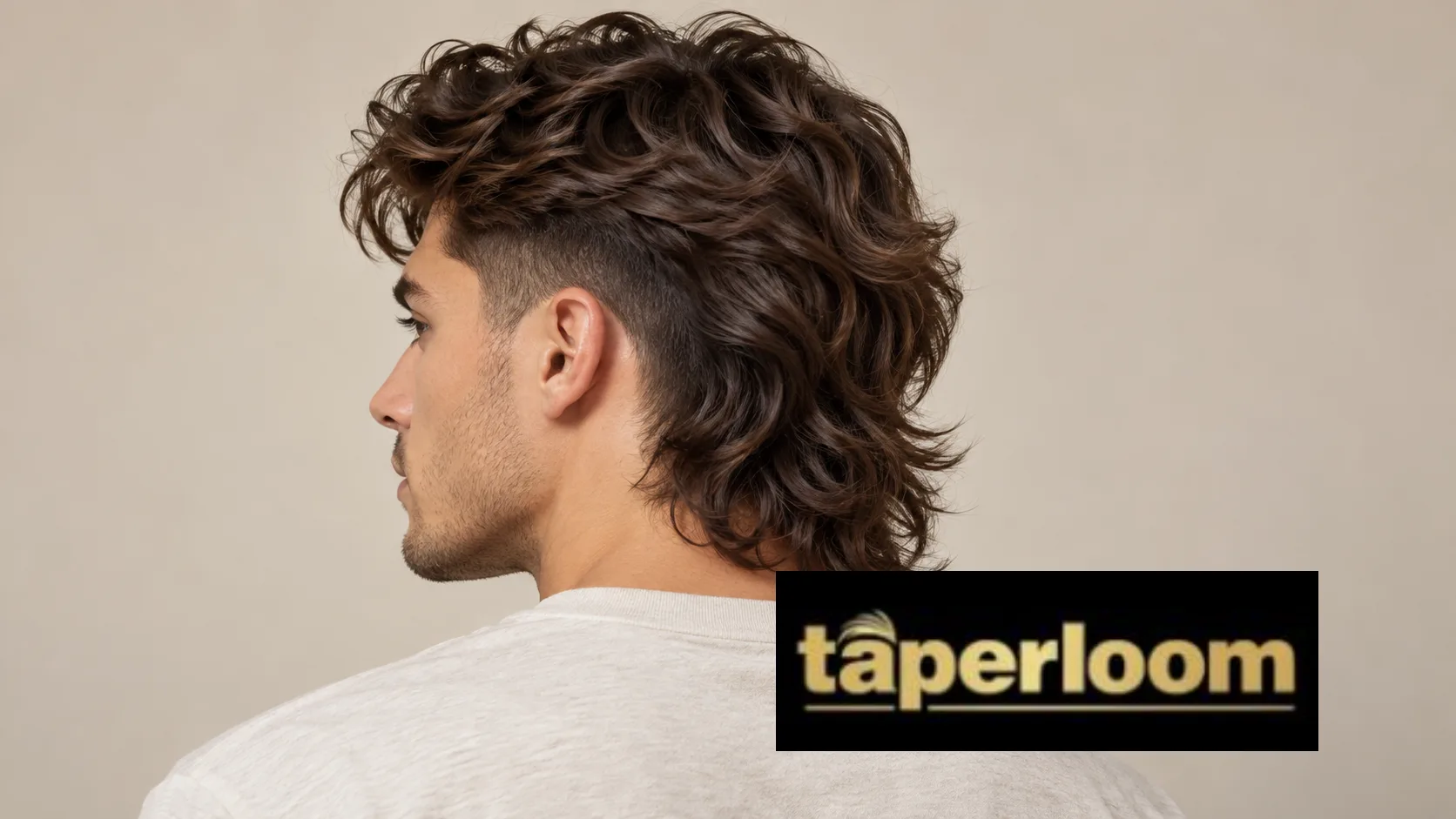
A modern mullet with wavy hair is a layered cut with shorter, tidy sides and a longer back, shaped to work with your natural wave pattern. It looks relaxed, takes a few minutes to style, and suits far more people than the old-school mullet ever did.
If you’ve wondered whether your waves can handle this cut, the short answer is yes. Waves already have movement and volume, so the layers fall into place with very little effort.
This guide covers the best styles, who suits each one, how to explain it to your barber, how to style it, and how to keep it healthy.
Quick answer: A modern wavy mullet means short, neat sides, layered length on top, and a longer back that follows your waves. Ask for textured layers, point-cut ends, and a taper or fade. Style it with sea salt spray or light cream on damp hair, scrunch, then air-dry. Trim it every 4–6 weeks (every 2–4 for fades).
In this guide: What it is · Styles · Who suits it · Length and fringe · Barber tips · Styling · Occasions · Care · Growing out · Mistakes · FAQs
What Is a Modern Mullet with Wavy Hair?
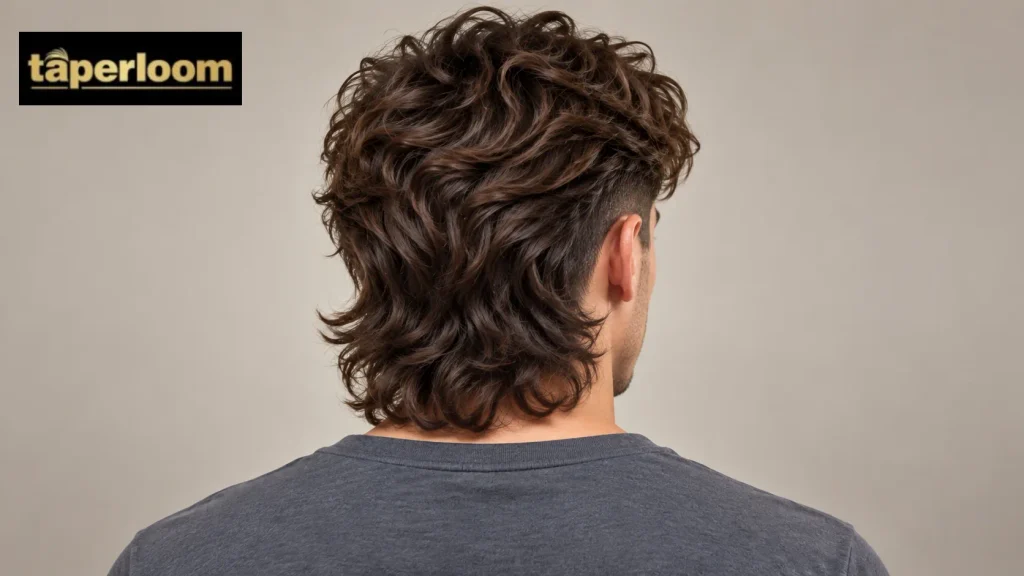
It is a short-sides, longer-back cut where the layers are cut to suit wavy hair instead of fighting it. Barbers remove bulk, shape the crown, and leave enough length at the nape for the waves to move.
How It Differs from the Classic Mullet
The classic mullet had a sharp split between front and back and very little layering. The modern version blends the two with soft layers, tapered sides, and a natural finish.
Waves do the visual work, so the cut looks intentional, not stiff.
Mullet vs Wolf Cut vs Shag vs Taper
These terms overlap, which confuses people at the barbershop.
| Cut | Main feature | Best for |
| Modern wavy mullet | Short sides, longer back, soft layers | Waves with a clear front-to-back shape |
| Wolf cut | Heavy layering throughout, shaggy volume | Thick hair, maximum texture |
| Shag | Choppy layers all over, less length contrast | Casual, messy texture |
| Taper mullet | Sides gradually shortened, mullet length behind | Clean, workplace-friendly looks |
Why Waves Make the Cut Easier
Waves form an S-shape, and they come in three common types: 2A (fine, soft S-shape, almost straight), 2B (medium, more defined S-shape), and 2C (coarse, voluminous, starting to form loose curls).
The tighter the wave, the more layering you need to prevent bulk. Layered cuts are also a standard way to add movement to wavy hair.
- 2A: Keep the back moderate and ask for more texture on top.
- 2B: The easiest match. Most styles in this guide work.
- 2C: Ask for weight removal in the back so it doesn’t triangle outward.
Why the Wavy Mullet Is Still Trending in 2026
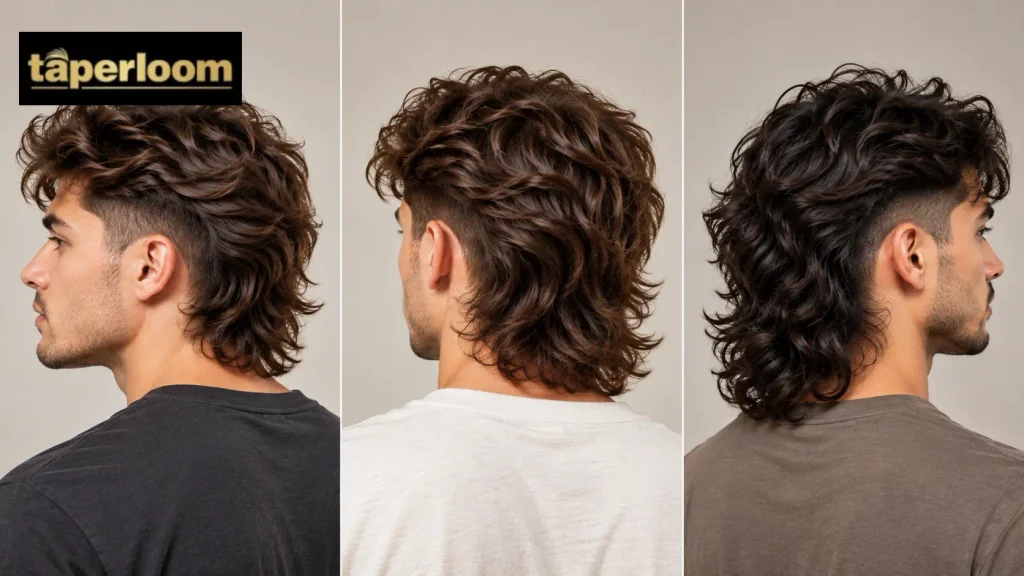
Three reasons keep it popular:
- It’s low effort. Natural texture does most of the work.
- It’s flexible. You can go subtle (a baby mullet) or bold (a burst fade).
- It looks current. Soft, lived-in cuts are favored over rigid, over-styled ones.
12 Best Modern Wavy Mullet Styles
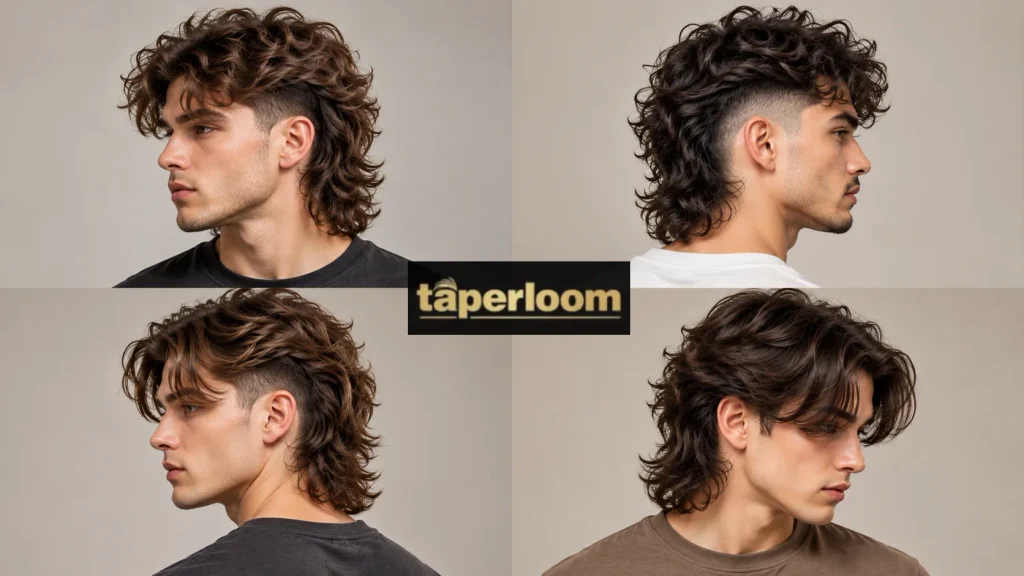
1. Textured Wavy Mullet
Point-cut layers break up the ends so each wave separates cleanly.
Best for: medium waves (2B).
Ask for: “point-cut layers, no blunt ends.” It needs only light cream or salt spray.
2. Soft Blended Natural Flow
Everything blends smoothly with no harsh lines.
Best for: beginners and conservative workplaces.
Ask for: “seamless blend, minimal contrast.” It is one of the lowest-maintenance versions.
3. Short (Baby) Wavy Mullet
The back sits only an inch or two longer than the top.
Best for: fine to medium waves and first-timers.
Ask for: “a subtle mullet shape.” It’s an easy way to try the trend before growing length.
4. Medium-Length Wavy Mullet
A balanced length that shows movement without being dramatic.
Best for: nearly everyone.
Ask for: “back length to the collar, layered crown.” It suits both casual and smart-casual outfits.
5. Long Wavy Mullet
The back extends past the collar while the top stays layered.
Best for: thick 2B–2C waves.
Ask for: “long back with weight removed inside.” Expect extra conditioning needs, since longer ends dry out faster.
6. Low or Mid Fade Wavy Mullet
A fade tightens the sides while waves stay full on top and back.
Best for: oval and round faces.
Ask for: “low (or mid) fade with natural waves left long.” A low fade is subtle, and a mid fade gives more contrast. Fades need more frequent trims.
7. Tapered Clean Wavy Mullet
Neatly tapered sides with controlled waves.
Best for: office settings and formal events.
Ask for: “natural taper, tidy neckline.” It is the most polished version.
8. Burst Fade Wavy Mullet
The fade curves around the ear for a rounded, high-contrast shape.
Best for: round and square faces, and people who want a bold look.
Ask for: “burst fade around the ear with long waves on top and back.” It needs the most upkeep, since the fade grows out quickly.
9. Undercut / Disconnected Wavy Mullet
A clear separation between short sides and longer top creates two-in-one contrast.
Best for: thicker waves with defined texture.
Ask for: “disconnected undercut, longer waves on top.” Waves soften the sharp edges.
10. Layered Volume (Wolf-Mullet Hybrid)
Heavy crown layers give lift and a shaggy outline.
Best for: thick or medium-thick hair.
Ask for: “layers through the crown, lighter nape.” Keep it from looking top-heavy by thinning only with the barber’s guidance.
11. Curtain Fringe / Korean-Inspired Wavy Mullet
A soft fringe splits at the center and blends into wavy layers, often with a shorter back than the Western versions.
Best for: oval and heart-shaped faces, fine to medium waves.
Ask for: “face-framing pieces and a light hand through the crown.”
12. Loose Curl Wavy Mullet
Waves blending into soft curls for more depth.
Best for: 2C waves and naturally curly hair.
Ask for: “layers that follow my curl pattern, no razor.” Cutting dry (with your barber’s skill) helps the shape.
Other variations worth asking about: razor-cut texture (more edge, but best on healthy hair), side-swept styling (polished), and modern retro (nostalgic with softer layers).
Quick Comparison Table
| Style | Best hair | Best face shape | Maintenance | Boldness |
| Textured | Medium waves | Oval, square | Low | Medium |
| Soft blended | Any waves | Any | Low | Low |
| Baby mullet | Fine–medium | Round, square | Low | Low |
| Medium length | Medium | Any | Low–medium | Medium |
| Long | Thick | Oval, rectangular | Medium | High |
| Low/mid fade | Medium | Oval, round | Medium | Medium |
| Tapered clean | Fine–medium | Oval, square | Medium | Low |
| Burst fade | Medium–thick | Round, square | High | High |
| Undercut | Thick | Oval, square | Medium–high | High |
| Layered volume | Thick | Oval, heart | Medium | High |
| Curtain fringe | Fine–medium | Oval, heart | Medium | Medium |
| Loose curl | 2C / curly | Oval, round | Medium | Medium |
Who Suits a Modern Wavy Mullet?
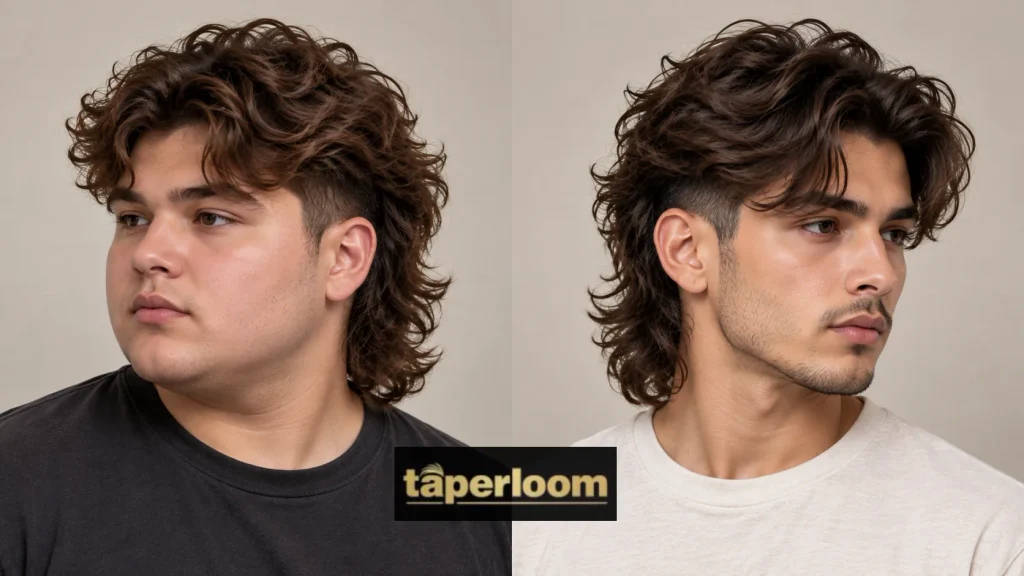
Most people can wear it, as long as the barber adjusts layers and length to their features.
By Face Shape
- Round: Longer layers add vertical length. Avoid heavy fringe on both sides.
- Oval: Almost everything works, which makes it the easiest shape.
- Square: A soft fringe and wavy top soften the jawline.
- Heart: A curtain fringe balances a wider forehead.
- Rectangular: Keep the top fuller and the fringe shorter to avoid adding length.
By Hair Type and Thickness
- Fine hair: Layers create body and prevent flatness. Choose lighter layering and shorter back length.
- Medium hair: The most forgiving. Any style works.
- Thick hair: Layers remove bulk. Ask for weight removal, not just length.
- Curly hair: Go with the loose curl style and avoid razor cutting.
Can Straight Hair Pull It Off?
Partly. Straight hair can hold the shape with layers and texture products, but it won’t have natural movement. Expect more styling time (salt spray, a diffuser, or light waves from damp scrunching).
Read also : Low Taper Fade Straight Hair: Complete Guide, Styles & Barber Tips
Length and Fringe: Getting the Proportions Right
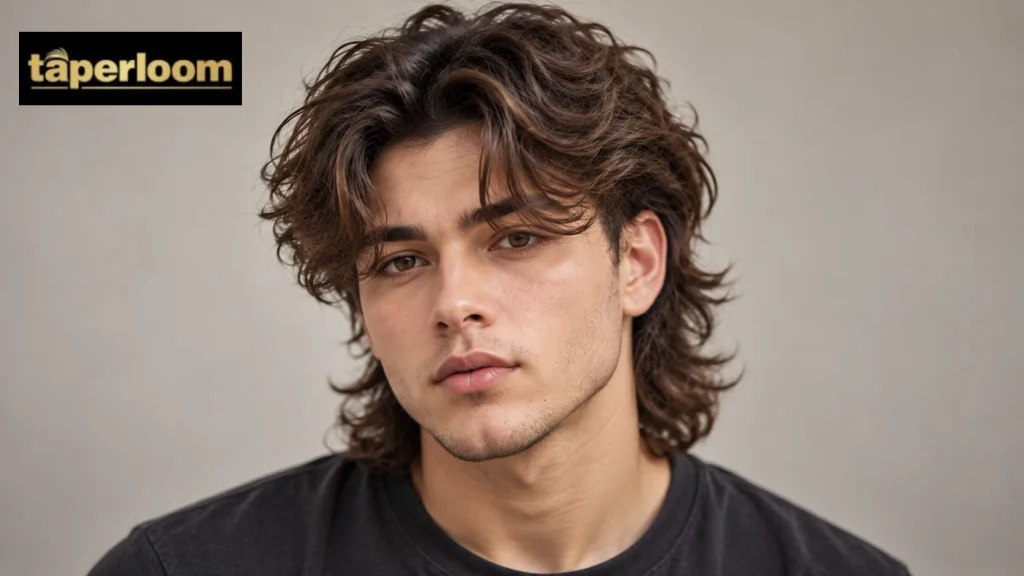
The back-to-top ratio decides whether the cut reads subtle or loud. As a rough guide, many barbers keep the back clearly longer than the top, sometimes around three times as long for a bold look. A smaller ratio gives a subtler, workplace-friendly mullet.
Fringe matters as much as length:
- Soft, wavy fringe skimming the brow suits round or square faces.
- Shorter textured fringe suits oval or rectangular faces.
- If you’re unsure, ask for a shorter fringe first. It’s easier to grow out than to fix.
Check your growth patterns: a cowlick at the crown or nape can push waves in odd directions. Tell your barber so the layers can work with it.
How to Ask Your Barber for a Wavy Mullet
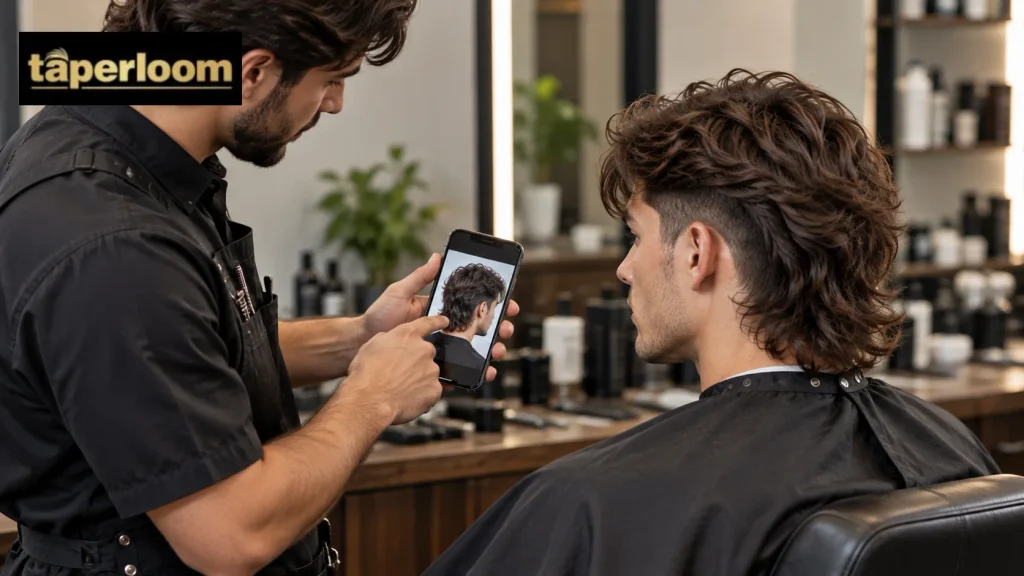
Don’t just say “give me a mullet.” Be specific about the sides, length, layers, and texture.
Phrases That Work
- “Short, tapered sides with natural waves left long at the back.”
- “Point-cut the ends so the waves separate naturally.”
- “Leave weight in the crown so it doesn’t lie flat.”
- “I want a low (or mid) fade, not a skin fade.”
- “Keep the fringe short for now.”
Photo and Feedback Tips
- Bring two or three photos, ideally of hair similar to yours.
- Tell the barber how long you take to style it each morning.
- Speak up mid-cut if it’s getting shorter or heavier than you wanted.
- Ask for a quick styling demo and the product names they used.
How to Style a Wavy Mullet in 3 Steps
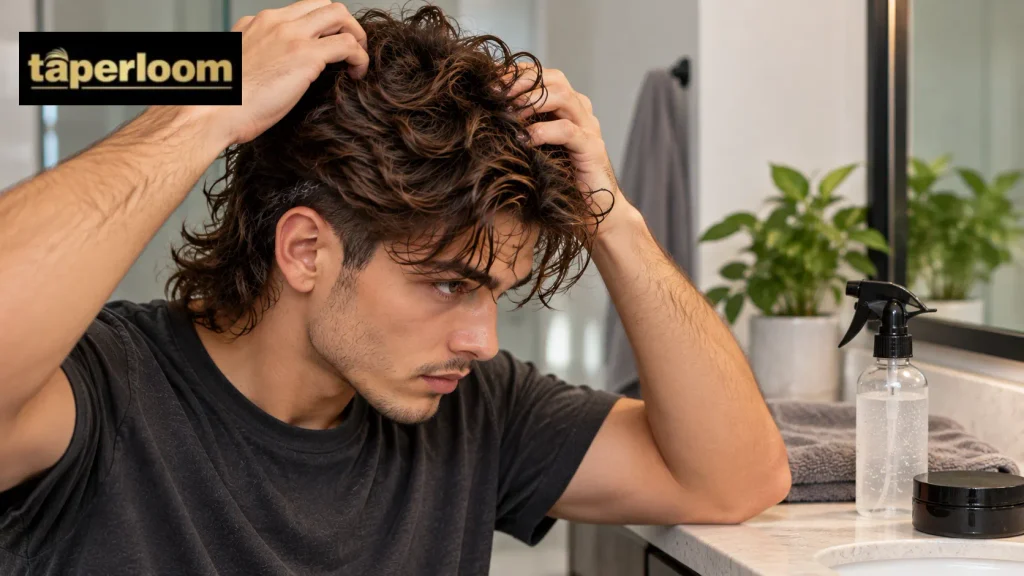
- Apply product to damp hair. Work a small amount of sea salt spray or lightweight cream through towel-dried hair.
- Scrunch, don’t brush. Cup sections and scrunch upward. Brushing dry waves breaks the pattern and causes frizz. Dermatologists also advise avoiding brushing hair while it is dry to prevent breaking and frizzing.
- Air-dry or diffuse. Air-drying gives the most natural result. A diffuser on low heat saves time. Add a touch of matte pomade at the ends for hold.
Best Products
- Sea salt spray: adds grip and texture. Use lightly, since salt can dry hair.
- Lightweight styling cream: defines waves without crunch.
- Mousse: a small amount at the roots for volume.
- Matte pomade: for hold on the ends of longer sections.
- Leave-in conditioner or light oil: keeps longer back sections soft.
What to Avoid
- Heavy wax or strong gel that weighs waves down
- Daily brushing while dry
- Too much heat styling
- Layering several products at once
Style It for Work, Weekends and Special Occasions
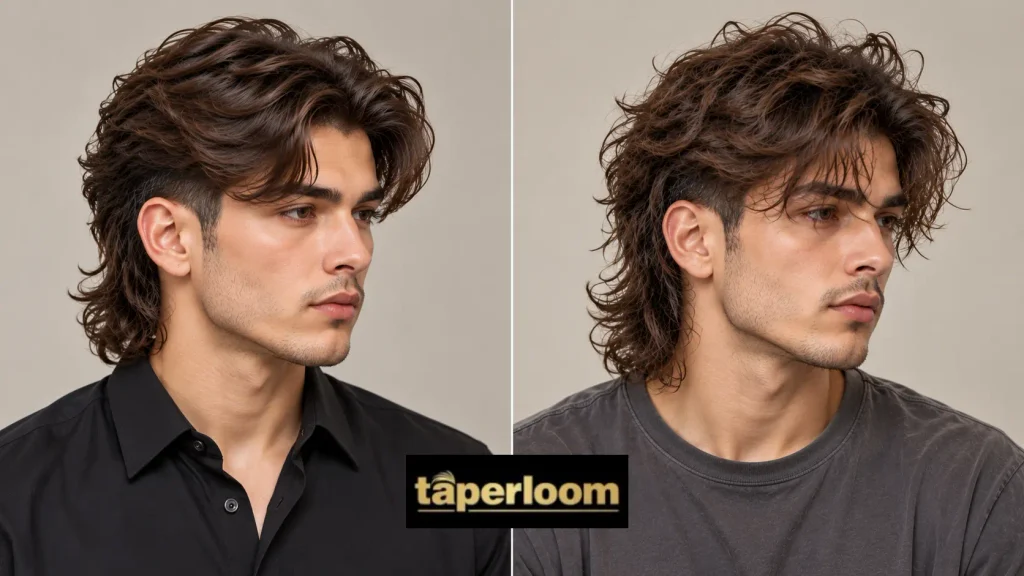
- Work: Smooth the top slightly with a little cream, keep the sides neat, and tame the back with a light oil.
- Weekends: Let it air-dry with salt spray for a relaxed, tousled finish.
- Formal or family events: Use a deep side part or slick the top back lightly for a polished look.
- Everyday: A center part keeps things casual and easy.
Small tweaks make one haircut feel like several different looks.
Care and Maintenance Schedule
| Task | How often |
| Trim, non-faded styles | Every 4–6 weeks |
| Trim, fades and burst fades | Every 2–4 weeks |
| Wash | Only when needed, often a few times a week |
| Deep condition | Weekly if ends feel dry |
| Leave-in or oil on the back | After washing or as needed |
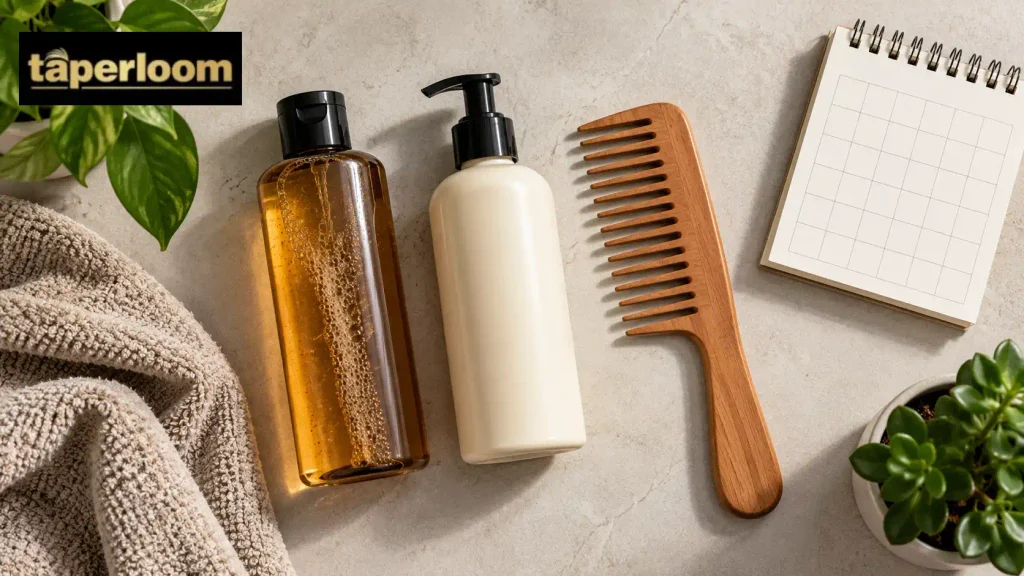
Care basics:
- Don’t over-wash. Dermatologists advise washing curly hair only when needed, since overwashing can leave it dry, frizzy and hard to manage. Wavy hair has the same tendency, so adjust to how oily your scalp gets.
- Use a moisturizing shampoo. Sulfate-free formulas are a popular, gentler choice for wavy hair.
- Protect from heat and sun. Heat and ultraviolet rays dry out wavy and curly hair, so a hat or lower heat setting helps.
- Detangle gently. Use a wide-toothed comb on damp hair with leave-in conditioner.
- Watch the ends. Longer back sections are the oldest hair, so they split first.
How to Grow Out a Wavy Mullet
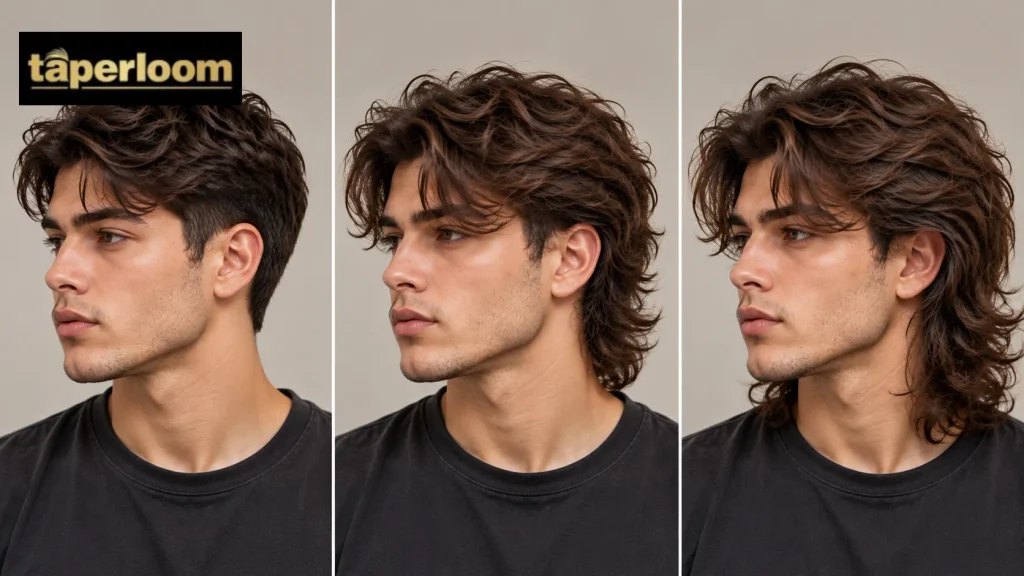
- Months 1–2: Keep trimming the sides and top, and leave the back alone.
- Months 3–4: The awkward stage. Use salt spray and a clip or headwear if needed, and ask your barber to shape it, not cut it back.
- Months 5+: The back reaches the collar and the shape appears. Ask for layering to remove weight.
Book a shaping appointment every 6–8 weeks so it grows out evenly instead of looking shapeless.
Common Mistakes and Quick Fixes
| Problem | Likely cause | Fix |
| Frizz | Brushing dry or over-washing | Scrunch with cream, wash less |
| Flat top | Heavy products, no layers | Mousse at the roots, ask for crown layers |
| Puffy triangle shape | Too little weight removal | Ask for interior layering |
| Stringy back | Too much thinning | Add moisture, grow out evenly |
| Fade looks messy | Waiting too long | Trim every 2–4 weeks |
| Dry ends | Heat, sun, sulfates | Leave-in, oil, weekly deep condition |
Pop Culture and Why the Style Keeps Spreading
The mullet has moved through music, sport, and social media for decades, and its modern revival leans on softer, more natural texture. The appeal is mainly confidence: people who wear it well tend to own it. Because it adapts to different faces and textures, it keeps spreading well beyond any single group.
Pros and Cons: Is It Right for You?
Pros
- Natural texture does the styling
- Works across face shapes and hair types
- Many versions, from subtle to bold
- Quick daily routine
Cons
- Awkward growing-out phase
- Fades need frequent trims
- May feel too bold for strict dress codes (choose the baby or tapered version)
- Needs a barber who understands layering
Quick checklist: Do you have natural waves? Can you spare a few minutes daily? Comfortable with trims every few weeks? If yes to all, it’s likely a good fit.
FAQs
Is a modern mullet with wavy hair low maintenance?
Yes. Natural waves handle most of the styling, so daily care is a quick product application. Faded versions need more frequent trims.
How do I style it without heat?
Apply sea salt spray or mousse on damp hair, scrunch, and air-dry. This keeps texture and avoids heat damage.
What face shapes suit it?
Oval is the easiest, and round, square, heart, and rectangular faces work with the right fringe and layers.
What’s the difference between a wavy mullet and a wolf cut?
A wolf cut is heavily layered all over, while a mullet keeps a clearer short-sides, long-back shape.
How often should I trim it?
Every 4–6 weeks for non-faded styles and every 2–4 weeks for fades or burst fades.
Which products work best?
Sea salt spray, a lightweight cream, mousse for volume, and a little matte pomade for hold..
Can it look professional?
Yes. Choose a tapered or soft-blended version, keep the sides neat, and smooth the top.
Can fine hair wear it?
Yes. Light layering adds body and avoids a flat, stringy look.
How long does it take to grow out?
Roughly five months or more, depending on your starting length. Regular shaping trims help.
Final Thoughts
A modern mullet with wavy hair works with your texture instead of against it. Pick a version that matches your hair type and comfort level, bring photos and clear instructions to your barber, and keep up a simple trim and moisture routine.
The result is a cut that looks intentional with very little daily effort.
Read Next : Hairstyles for Men: Haircut Names, Styles and How to Pick Yours

Muhammad Kaleem is a content creator who writes about hair care, hairstyles, grooming, and everyday hair trends. He enjoys turning hair-related topics into simple, practical, and easy-to-understand content that helps readers make informed choices about their hair and personal style.