
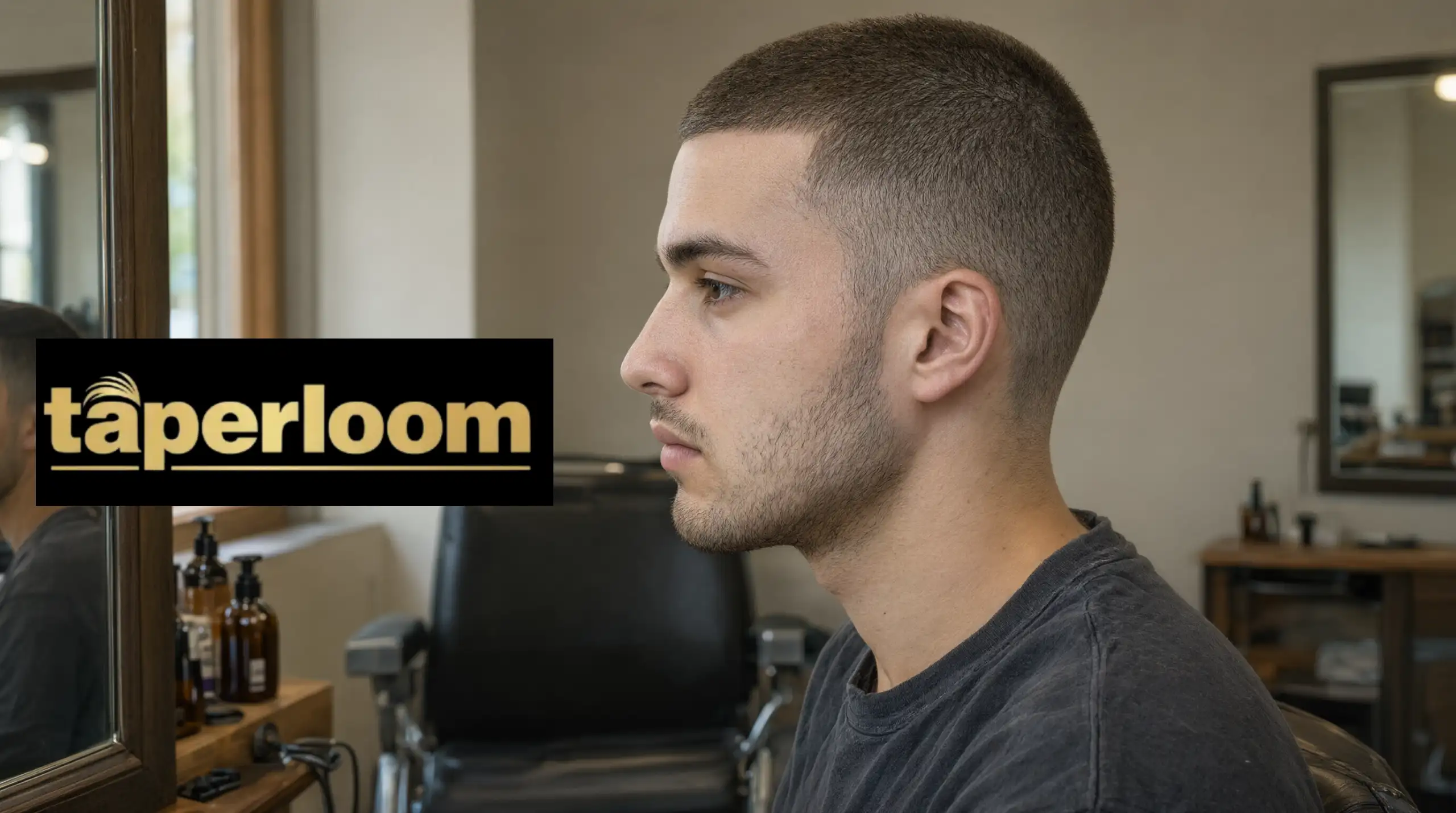
A 4 guard buzz cut leaves your hair at a clean, uniform ½ inch (13mm), short enough to skip daily styling, long enough to still show natural texture and fuller coverage on top.
It’s the guard size most barbers reach for when you want a low maintenance cut that doesn’t look like you shaved your head.
If you’ve never buzzed your hair before, the “guard number” system can feel confusing. Ask for the wrong one, and you either walk out looking like a recruit on day one or barely notice a difference. That’s where this guide comes in.
Below, you’ll find exactly what a 4 guard buzz cut looks like, how it compares to other clipper guards, who it suits, and how to get it, whether you’re sitting in a barber’s chair or running the clippers yourself at home.
What Is a 4 Guard Buzz Cut? (Length Explained)
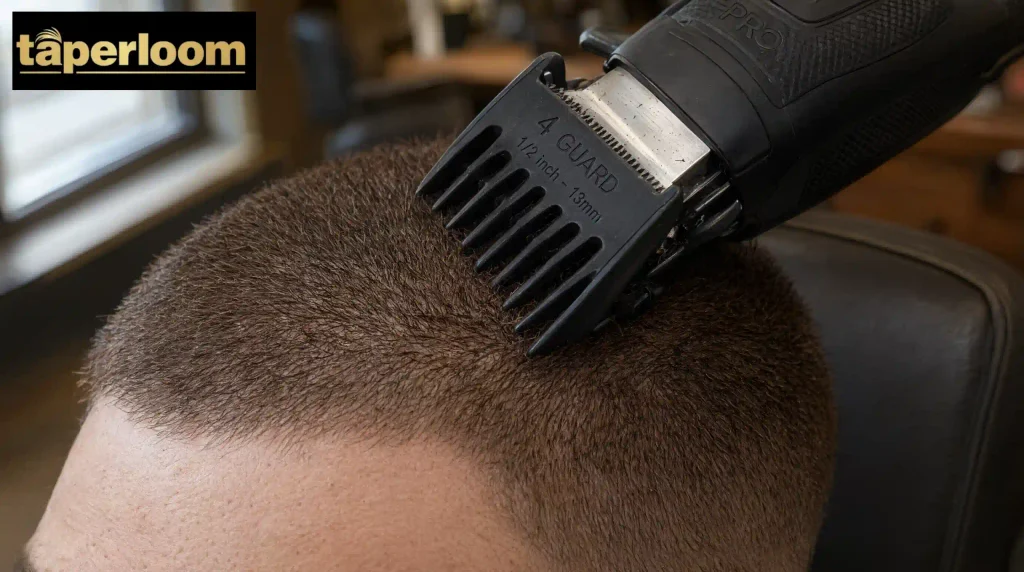
A 4 guard buzz cut is a haircut where clippers fitted with a number 4 guard trim your hair to a uniform ½ inch, or about 13mm, all over the head.
The guard is a small plastic attachment that snaps onto the clipper blade. It controls exactly how much hair the blade leaves behind.
Here’s the simple rule: the higher the guard number, the more hair stays on your head. A number 4 buzz cut sits right in the middle of the standard range.
It’s shorter than a crew cut but noticeably longer than a number 1 or number 2 buzz, which leave almost nothing behind.
People also call this the #4 buzz cut, the #4 buzzcut, or just the 4 buzz cut. Some people also search for it as a guard 4 buzz cut, a buzz cut 4 guard, or simply a number 4 guard buzz cut. They all point to the same ½ inch, medium-short length.
What makes it work so well is balance. You get enough hair on top to run your fingers through and add a bit of texture, but not so much that you need a comb or product every morning.
Your scalp won’t show through the way it does with shorter guards, which makes this length forgiving for first timers and easy to maintain long term.
Quick facts:
| Detail | Measurement |
| Guard number | #4 |
| Length | ½ inch |
| Metric length | 13mm |
| Scalp visibility | Minimal |
| Maintenance | Low |
Guard Number Comparison Chart (#1 to #8)
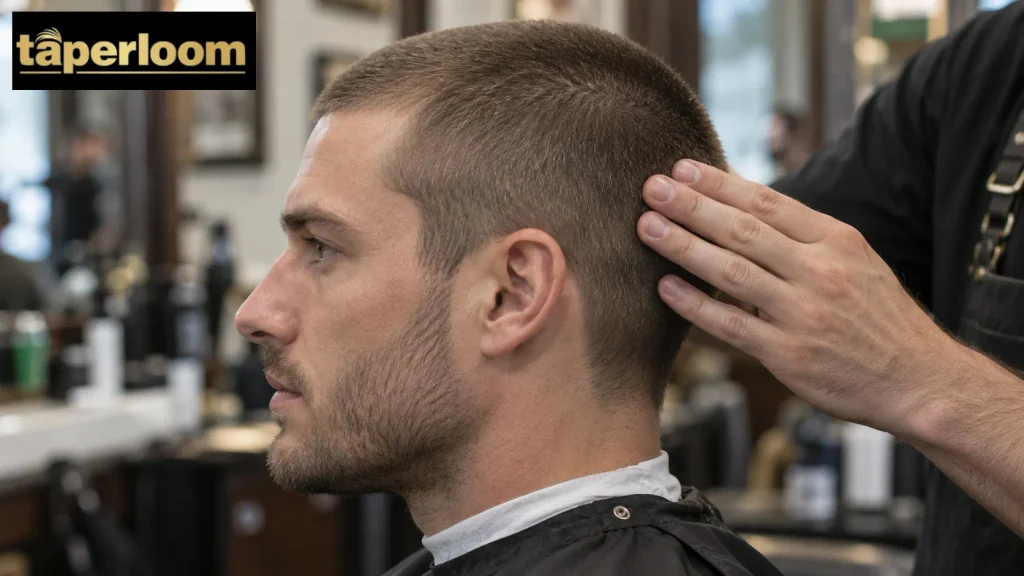
Clipper guards follow a simple numbering system, and once you understand it, ordering any buzz cut becomes easy. Each number adds roughly ⅛ inch of length compared to the one before it.
| Guard Number | Length (Inches) | Length (MM) | What It Looks Like |
| #1 | ⅛ inch | 3mm | Scalp clearly visible, closest to bald |
| #2 | ¼ inch | 6mm | Slight shadow of hair, minimal coverage |
| #3 | ⅜ inch | 10mm | Short stubble look, some texture |
| #4 | ½ inch | 13mm | Balanced, low maintenance, visible texture |
| #5 | ⅝ inch | 16mm | Fuller top, still easy to manage |
| #6 | ¾ inch | 19mm | Noticeable length, starts to lie flat |
| #7 | ⅞ inch | 22mm | Close to a crew cut, styleable with product |
| #8 | 1 inch | 25mm | Longest standard guard, needs regular styling |
A number 4 buzz cut sits at the halfway point of this chart, which is exactly why it’s such a popular pick.
Guards 1 through 3 lean toward a grade cut or shaved look, with your scalp showing clearly underneath. Guards 5 and up start behaving more like a long buzz cut, needing a bit of product to hold shape.
If you’ve ever heard someone ask for a “grade 4 buzz cut” or a “level 4 buzz cut,” they’re talking about this same ½ inch length.
The naming just changes depending on the barber or the country. This chart also answers a common question people have: what makes one of the different guard buzz cuts longer or shorter than another. The guard number alone tells you the answer.
One thing worth knowing: not every clipper brand cuts to the exact same length. A #4 guard from one manufacturer might leave hair a millimeter shorter or longer than another. If precision matters to you, ask your barber which brand they use, or check the packaging if you’re buzzing your own hair at home.
Who Should Get a 4 Guard Buzz Cut?

Not every short haircut suits every head, but the 4 guard buzz cut is one of the more forgiving options out there.
It adapts well across different hair textures and face shapes, which is a big reason it stays popular year after year.
It works well in both casual and professional settings, and it’s a strong pick for first-time buzz cut wearers who want more coverage than the shorter guards give.
Hair Type
Straight hair takes to this length beautifully. Because straight strands lie flat, a ½ inch cut looks clean and uniform from every angle, with no flyaways to manage.
Thick hair benefits from the extra length a #4 guard provides compared to shorter guards. It gives thick strands just enough room to show natural texture instead of looking pressed down or overly severe.
Wavy and curly hair can work with a 4 guard buzz cut too, though the result will look a bit different. At ½ inch, waves and curls have just enough length to spring up slightly, creating a soft, textured look rather than a completely flat finish. If you want tighter, more uniform curls, you may need a touch of curl cream after washing.
Coily hair holds its natural pattern well at this length, giving a fuller, rounded look on top while still staying easy to manage day to day.
Thinning hair is actually where this guard size shines. It’s long enough to add the illusion of density on top, unlike a #1 or #2 buzz cut, which can make thinning areas more obvious.
Face Shape
Oval faces can wear almost any buzz length comfortably, and a 4 guard buzz cut is no exception. The balanced proportions of an oval face don’t need much correction.
Round faces tend to look sharper with a bit of added height on top and a tighter cut along the sides of the head. Pairing your 4 guard with a fade helps create contrast and elongates the face.
Square faces already have strong, defined angles, so a 4 guard buzz cut works well as is. It highlights the jawline without adding bulk anywhere else.
Heart shaped faces (wider forehead, narrower chin) usually look best when the top isn’t left too full, since extra volume up top can throw off the balance. A 4 guard keeps things even and clean around the sides of the head, which helps offset a wider forehead.
If you’ve searched for a number 4 buzz cut woman, the same guidance applies. Face shape matters more than gender here.
How to Ask Your Barber for a 4 Guard Buzz Cut
Walking into a barbershop without the right words can turn a five minute cut into a ten minute back and forth. Here’s exactly what to say, and how to adjust it based on the look you want.
For the most basic version, just say: “I’d like a number 4 buzz cut all over, please.” That tells your barber to run a #4 guard across your entire head for a uniform length, no fading, no blending.
If you want more style built into the cut, you’ll need to specify guard combinations for different areas. A few common requests:
- “#4 on top, #2 on the sides.” This creates a soft contrast without a dramatic fade, good for a subtle, everyday look.
- “#4 buzz cut with a fade.” This tells your barber to blend the sides down to skin or a #1, gradually stepping up to the #4 on top.
- “#4 all over, no fade.” Useful if you want the uniform look described above, since some barbers assume you want a fade unless told otherwise.
- “Buzz cut guard 4, no fade please.” This phrasing works just as well as “number 4 buzz cut all over” if your barber prefers hearing the guard number first.
It also helps to mention your hairline and neckline preferences. Saying “keep the neckline natural” or “clean up the neckline” changes how sharp the back looks.
Ask for a clean line-up along the front hairline if you want sharper edges. If you have a cowlick or a section that grows differently, point it out before the barber starts. It saves you from an uneven result.
One more tip: bring a photo if you can. Guard numbers can vary slightly between clipper brands, so a reference photo removes any guesswork about the exact finish you’re after.
Popular 4 Guard Buzz Cut Variations
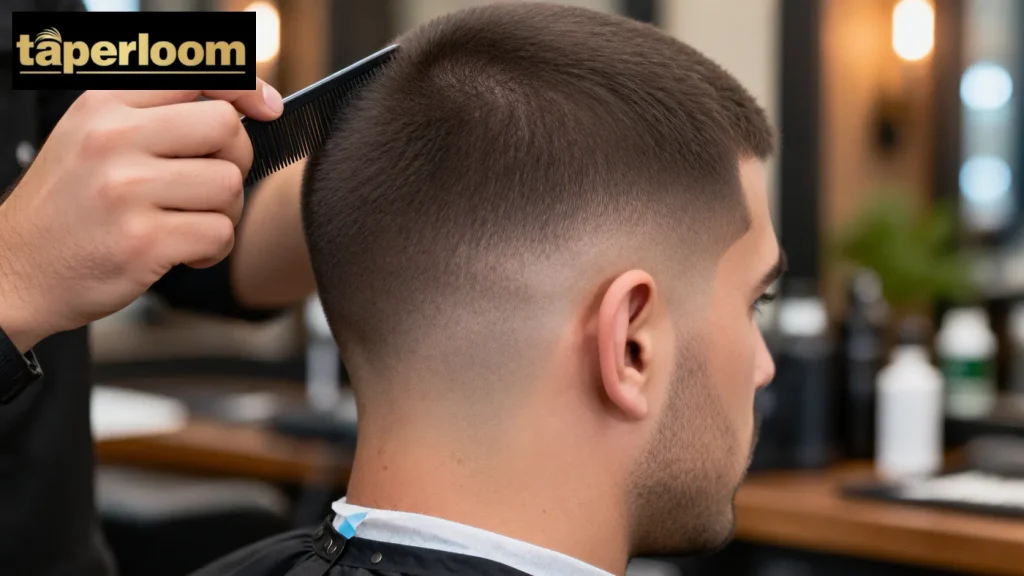
A 4 guard buzz cut doesn’t have to look the same on everyone. Small changes to the sides, back, or top can shift the whole vibe, from sharp and modern to relaxed and low key.
4 Guard with Fade (High, Mid, Low)
A fade blends the sides and back from skin up to your #4 guard on top, instead of keeping one length all over.
A high fade starts the blend near the top of the head, creating the boldest contrast.
A mid fade starts around the middle of the sides, offering a balanced look that suits most face shapes.
A low fade starts just above the ears, keeping things subtle and closer to a traditional buzz cut. If you want your 4 guard buzz cut to look sharper without going too flashy, a low or mid fade is usually the safer starting point.
This version is sometimes called a 4 buzz cut fade, since the fade is the main feature and the #4 length on top is just the base.
4 Guard Taper
A taper is similar to a fade but more gradual, without dropping all the way down to skin. The hair gradually shortens around the sides of the head and neckline while staying longer on top at the #4 length.
This version tends to look more natural and works well for office settings, since it’s polished without appearing overly styled.
4 Guard All Over (No Fade)
This is the classic, no frills 4 all over buzz cut, also known as buzz cut 4 or a full guard 4 haircut. The same #4 guard runs across the entire head, top, sides, and back, with no blending or contrast.
It’s the fastest cut to get, the easiest to maintain, and a solid choice if you’re new to buzz cuts and want to see how the length suits you before trying fades or tapers.
4 Guard with Beard Pairing
Pairing a 4 guard buzz cut with a beard adds balance, especially if you have a round or square face.
A full, well groomed beard contrasts nicely with the short length on top, while a shorter stubble beard keeps the entire look clean and uniform.
If you’re growing a beard alongside a fresh buzz cut, keep the beard’s edges sharp with regular trims so the two don’t compete for attention.
How to Do a 4 Guard Buzz Cut at Home (DIY Steps)
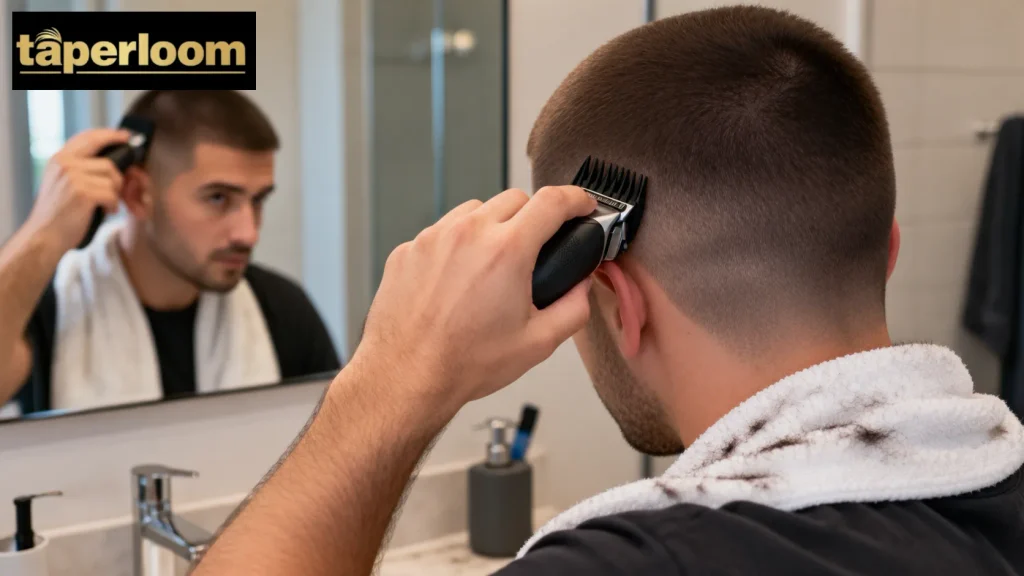
Cutting your own 4 guard buzz cut is easier than most people expect, as long as you have the right tools and follow a steady process. Here’s everything you need.
Tools you’ll need:
- Hair clippers with a #4 guard attachment
- A mirror, plus a handheld mirror for the back of your head
- A spray bottle with water (for damp, not wet, hair)
- A comb
- A small brush or towel to wipe away loose hair
- Good lighting, ideally natural light or a bright bathroom setup
Steps:
- Wash and dry your hair first. Clippers glide better and cut more evenly through clean, fully dry hair. Damp or product filled hair can pull unevenly and clog the blade.
- Attach the #4 guard securely. Snap it onto your clippers and give it a light tug to make sure it won’t pop off mid cut.
- Start at the top of your head. Move the clippers against the direction of hair growth, usually from front to back, using slow, even passes. Let the guard rest flat against your scalp instead of pressing it in.
- Work section by section. Divide your head into sections, top, sides, and back, so you don’t miss a spot. Overlap each pass slightly with the one before it for an even finish.
- Use the handheld mirror for the back. Angle it against the wall mirror so you can see what you’re doing. Go slowly here, since this is the easiest spot to miss.
- Check your sides of head carefully. Run your hand over the area near your ears to feel for any longer patches the clippers might have skipped.
- Clean up the edges. Switch to a shorter guard or a trimmer without a guard to define your neckline and hairline, if you want a sharper finish.
- Brush off loose hair and inspect in good light. Look from multiple angles, front, both sides, and the back using your mirrors, before calling it done.
If this is your first time buzzing your own hair, consider doing a test pass with a #5 guard first. You can always go shorter afterward, but you can’t add length back once it’s cut.
Maintenance & Regrowth Timeline
A 4 guard buzz cut is low maintenance, but “low” doesn’t mean “none.” Hair grows roughly half an inch per month on average, so your cut will start losing its sharp shape within two to three weeks.
Weeks 1 to 2: Your cut looks its freshest during this window. The length stays close to the original ½ inch, and any fade or taper still shows clear contrast.
Weeks 3 to 4: You’ll notice the top softening slightly and any fade lines starting to blur. This is the point where most people decide whether to touch it up or let it grow a bit longer.
Week 4 and beyond: If you had a fade or taper, the blend will look less defined as the sides catch up in length to the top. A no fade, all over 4 guard buzz cut holds its shape a bit longer since there’s no sharp line to maintain, just gradual overall growth.
How often to re buzz: Most people return to the barber, or pick up their own clippers, every two to three weeks to keep the cut looking sharp.
Waiting too long before your next buzz cut 4 guard touch up, or trying a no 4 buzz cut stretch past four weeks, usually means visible unevenness between the top and sides.
Scalp and hair care tips:
- Wash your scalp regularly with a gentle shampoo. Short hair exposes more scalp, so buildup and dryness show more easily than with longer styles.
- Apply a light moisturizer or scalp oil if you notice dryness or flaking, especially in colder months.
- Use sunscreen on your scalp if you’re out for long periods, since short hair offers little natural protection from the sun.
- If you’re maintaining your own cut at home, clean your clipper blades after every use to keep them cutting evenly and to avoid irritation on your next trim.
4 Guard Buzz Cut: Pros & Cons
Every haircut comes with trade offs, and the 4 guard buzz cut is no different. Here’s an honest look at both sides before you commit.
Pros:
- Very low daily maintenance, no styling products or blow drying needed
- Works well across straight, wavy, curly, coily, and thinning hair types
- Budget friendly, since fewer barber visits and less product spend are needed over time
- Easy to customize with fades, tapers, line-ups, or a clean all over look
- Forgiving for first timers, since it’s not as extreme as shorter guards
- Quick to maintain at home once you’re comfortable with clippers
Cons:
- Needs a touch up every two to three weeks to keep its shape
- Less versatile for styling compared to longer haircuts, since there’s not enough length to comb or shape
- Not ideal in very cold climates without a hat, since shorter hair offers less natural warmth
- Can expose scalp irregularities, scars, or uneven hair growth patterns more than longer styles would
- Requires steady hands and practice if you’re cutting it yourself, especially around the back of your head
For most people, the pros outweigh the cons, especially if convenience and low upkeep are high on your list. But if you enjoy styling your hair daily or prefer more length to work with, this might not be the right fit.
Frequently Asked Questions
How many mm is a 4 guard?
A #4 guard leaves your hair at ½ inch, which equals 13mm. It’s the same measurement whether your barber calls it a number 4 buzz cut or a #4 buzz cut.
What’s the difference between a number 4 and number 3 buzz cut?
A number 3 buzz cut leaves hair at ⅜ inch (10mm), noticeably shorter than the ½ inch left by a number 4. The difference is small but visible, mainly in how much scalp shows through.
Does a 4 guard buzz cut work on thinning hair?
Yes, it’s actually a solid choice for thinning hair. The added length compared to shorter guards helps create the appearance of fuller coverage on top.
How does a number 4 buzz cut look on women?
A number 4 buzz cut on a woman looks clean, textured, and low maintenance, similar to how it looks on men. It works especially well for those who want a bold, wash and go style.
How long does a 4 guard haircut last before it needs a trim?
Most people re buzz every two to three weeks to keep the shape sharp. If you don’t mind a softer look, you can stretch it to about four weeks.
What does “number 4 all around” mean?
It means the same #4 guard is used across the entire head, top, sides, and back, with no fading or blending between lengths. It’s also sometimes called a number 4 all around haircut.
What’s another name for a number 4 buzzcut?
It’s also called a #4 buzzcut, a number 4 guard buzz cut, or a number 4 all around haircut. All these terms describe the same ½ inch, 13mm length.
Final Thoughts: Which Guard Should You Choose?

If you want a haircut that looks sharp without demanding much from your morning routine, the 4 guard buzz cut is hard to beat.
It sits right in that sweet spot: short enough to feel low maintenance, long enough to keep natural texture and fuller coverage on top.
It’s a practical option for students, athletes, and working professionals alike, and it stays comfortable to wear across a wide range of ages and lifestyles.
Go with a #4 if you’re after balance. Drop to a #2 or #3 if you want something closer to a traditional close buzz. Step up to a #5 or #6 if you’d rather have a bit more length and don’t mind occasional styling, more like a long buzz cut.
Whatever you choose, the guard number system makes it easy to communicate exactly what you want, whether you’re sitting in a barber’s chair or running the clippers yourself at home.
If you’re ready to explore other short styles, check out our guides on the buzz cut taper or the buzz cut mullet for a bolder, more distinctive spin on the classic buzz.
Read Next : 8 Guard Buzz Cut: Length, Best Styles & Barber Guide (2026)

Muhammad Kaleem is a content creator who writes about hair care, hairstyles, grooming, and everyday hair trends. He enjoys turning hair-related topics into simple, practical, and easy-to-understand content that helps readers make informed choices about their hair and personal style.