
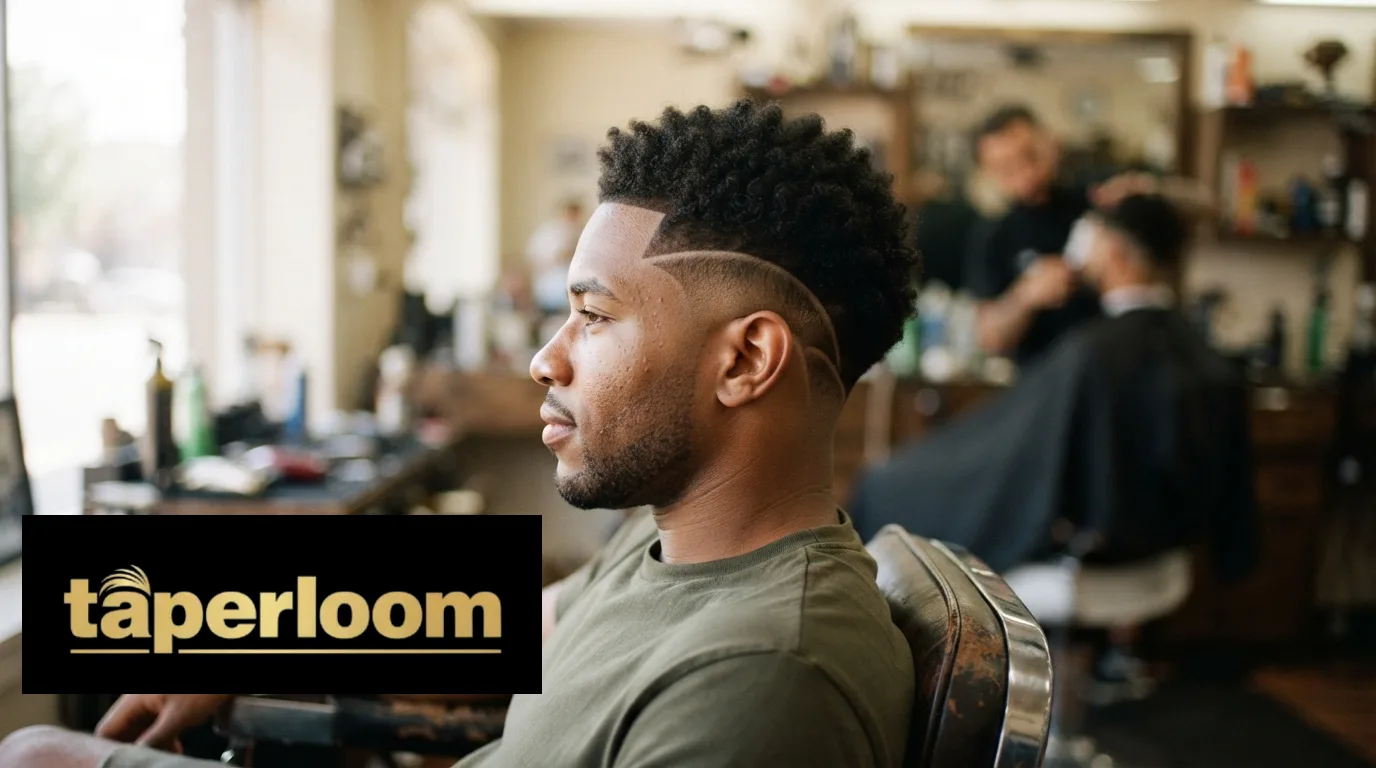
A burst fade design is a burst fade a fade that curves in a rounded shape around the ear paired with a shaved pattern cut into that curved area.
The pattern can be as simple as one straight line or as bold as a lightning bolt, a star, or a geometric shape. You’re not just picking a haircut here; you’re picking a haircut plus a detail that says something about your style.
This guide covers where to place the design, which patterns work with your hair type and face shape, how much it costs, and exactly what to tell your barber so you walk out with what you actually asked for, not a rough guess.
Key Takeaways
- A burst fade design combines a curved burst fade with a shaved pattern line, zigzag, lightning bolt, star, heart, or geometric shape
- Above the ear is the most requested placement; it’s visible, easy to maintain, and works for first-timers
- Low burst suits school and work, mid burst is the everyday sweet spot, high burst is the boldest and needs the most upkeep
- Straight hair shows fine lines best; curly hair needs bolder, thicker patterns to stay visible
- Most designs stay sharp for 7-14 days before they need a quick touch-up
- A design typically adds $5-20 on top of a standard fade, depending on complexity
- Round and square face shapes usually handle bolder designs better than long or heart-shaped faces
- Always bring a photo, the same words can mean different things to different barbers
What Is a Burst Fade Design
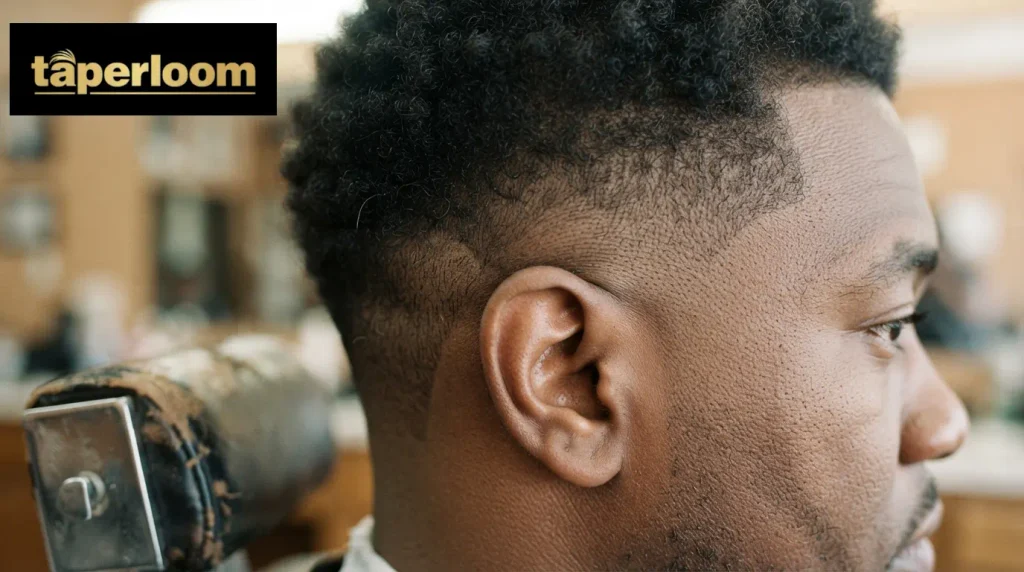
A burst fade design starts with the burst fade itself. Instead of fading straight down the side of your head like a normal taper, a burst fade curves in a semicircle around the ear.
It looks like a small sunburst radiating out from behind the ear, which is exactly where the name comes from.
Once that curved shape is blended clean, a barber adds the “design” part: a shaved pattern cut right into the fade using a trimmer or a razor.
People often confuse burst fade with drop fade and taper fade, so here’s the actual difference.
| Fade Type | Path | Best For |
| Taper Fade | Fades straight down the side, no curve | Classic, low maintenance looks |
| Drop Fade | Curves downward following the hairline toward the neckline | Softer, natural blend into the neck |
| Burst Fade | Curves in a full semicircle around the ear | Mohawks, mullets, and designs |
A taper fade is the most basic option. It runs in a straight, even line from short to long. A drop fade adds a slight curve, but it follows your natural hairline down toward your neck rather than circling the ear. A burst fade goes further.
It radiates fully around the ear in a rounded arc, which gives it more surface area and a more dramatic shape, and that extra shape is exactly why it works so well for shaved designs. You get a bigger, cleaner canvas to work with compared to a straight taper.
Once you understand this difference, choosing a design gets a lot easier, because the burst shape itself already dictates where a pattern will look best.
Burst Fade Design by Face Shape
Your face shape changes how bold a design should be and where it reads best. This is one detail most guides skip, but it makes a real difference in how finished the haircut looks.
Round Face
A round face benefits from designs that add height and angles rather than more curve. A geometric shape or a sharp lightning bolt above the ear breaks up the roundness and adds definition. Avoid soft, rounded patterns like hearts since they echo the face shape instead of contrasting it.
Square Face
A square jawline can handle bold, structured designs without looking overdone. Zigzags, V designs, and clean geometric lines all pair well here because your features already have strong angles to match. This is the face shape that can go boldest with placement and size.
Oval Face
An oval face is the most flexible shape for burst fade designs. Almost any pattern works, from a simple line to a full geometric piece, so this comes down to personal preference more than fit. If you’re unsure what to pick, an oval face gives you room to experiment.
Heart Shape Face
A heart shaped face looks best with simpler, smaller designs placed lower, closer to the ear rather than high up. A single line or a small star keeps the balance right without adding extra width near the top of the head where a heart face is already fuller.
Long Face
A long face benefits from designs placed horizontally rather than vertically, since horizontal lines visually shorten the face. A simple line design or a wide zigzag above the ear works better here than a tall geometric shape that stretches the face further.
Placement Guide
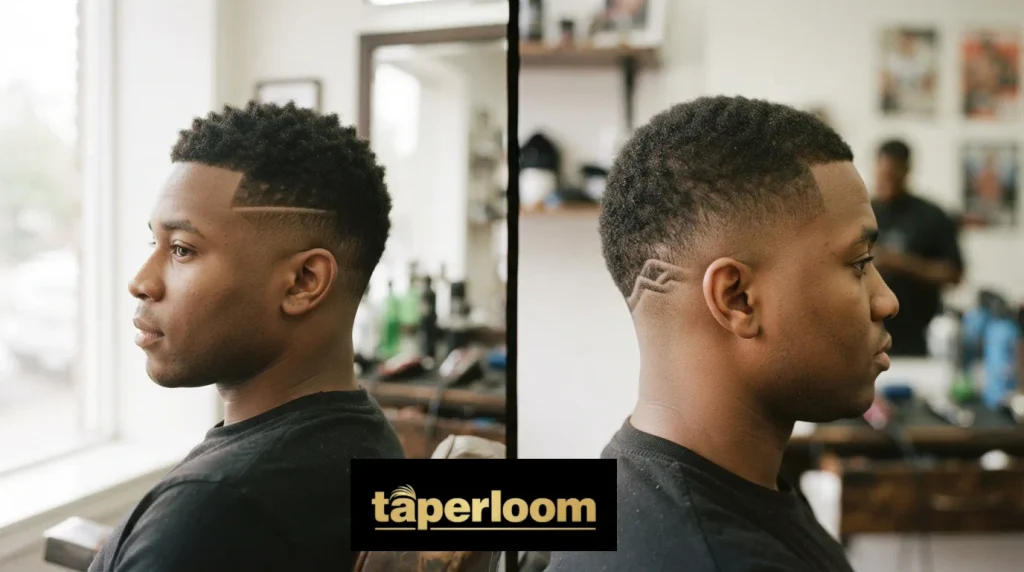
Where the design sits changes how visible it is, how long it lasts, and how formal or bold it reads.
| Placement | Visibility | Longevity | Best For |
| Above the Ear | Highest, visible from the side instantly | Grows out in 10 to 14 days | First timers, everyday wear |
| Behind the Ear | Moderate, easy to hide when needed | Grows out in 10 to 14 days | Work or school with dress codes |
| Nape or Back Area | High impact but grows out fastest | Grows out in 5 to 10 days | Bold statement looks, photos |
Above the ear is the most requested spot for a reason. It sits right where the eye naturally lands, it’s easy for a barber to line up cleanly, and it works with nearly every top style. If this is your first design, start here.
Behind the ear gives you a design that’s stylish but more discreet. It’s a solid pick if you want something personal that isn’t the first thing people notice, and it pairs especially well with longer styles like a mullet where the design sits between the curve of the ear and the flow of the back.
Nape and back placements look sharp but grow out fastest since hair there tends to grow quicker and thicker. These spots work best for special occasions or photos rather than a design you want to last two full weeks.
Design Ideas
Burst Fade Line Design
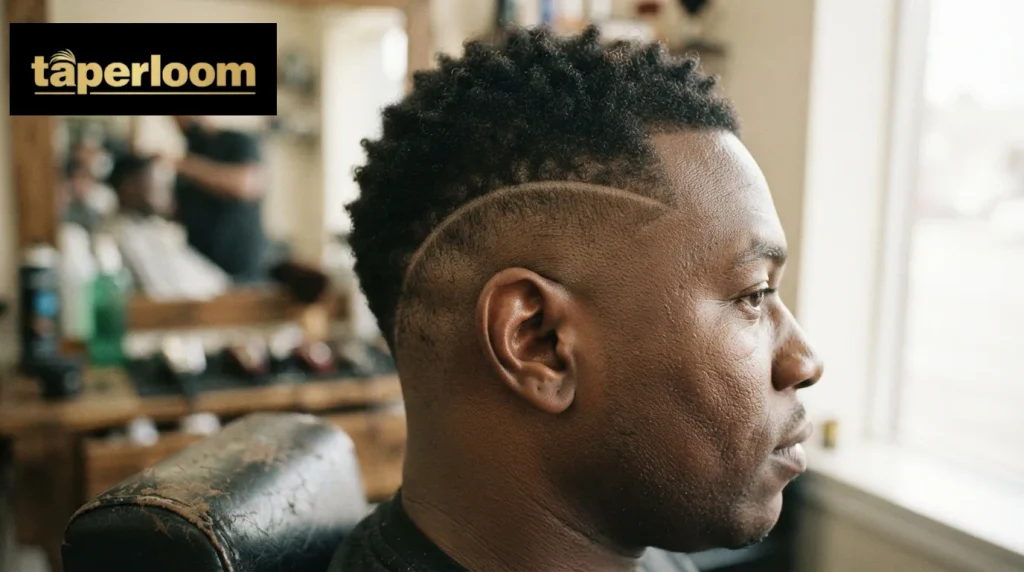
A line design is the safest choice and the easiest for a barber to execute cleanly. One line reads simple and professional, two lines feel a bit more sporty, and three lines start to look bold.
This is the design most barbers recommend for a first try because it grows out evenly and doesn’t clash with school or work dress codes.
Burst Fade Zigzag Design
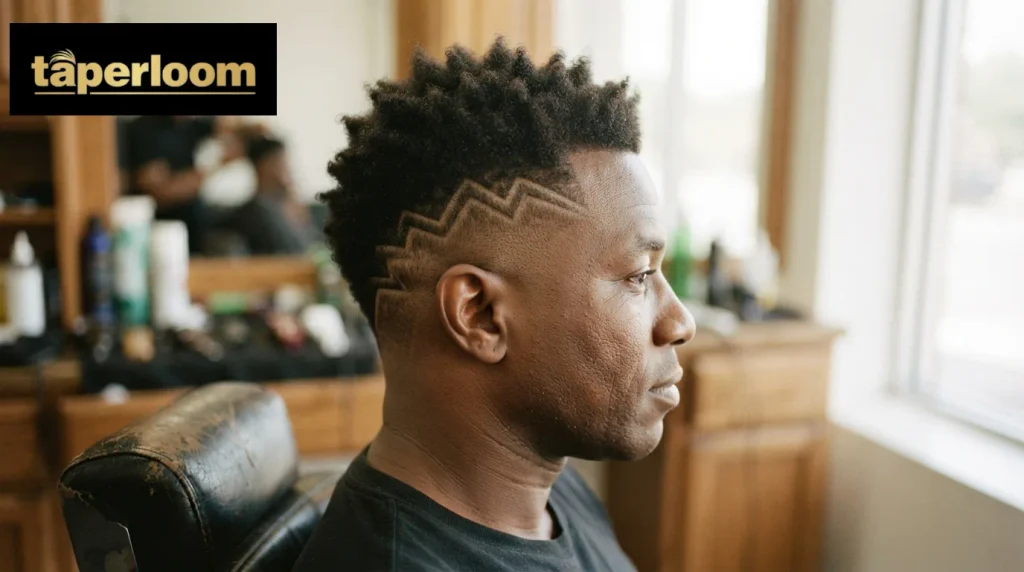
A zigzag adds energy without going overboard, and it’s one of the more requested patterns for guys who want something trendier than a plain line.
Ask for thick, well spaced points since a tight zigzag blurs fast as hair grows back in. It looks sharpest above the ear where there’s more room for each point to stay defined.
Burst Fade Lightning Bolt Design
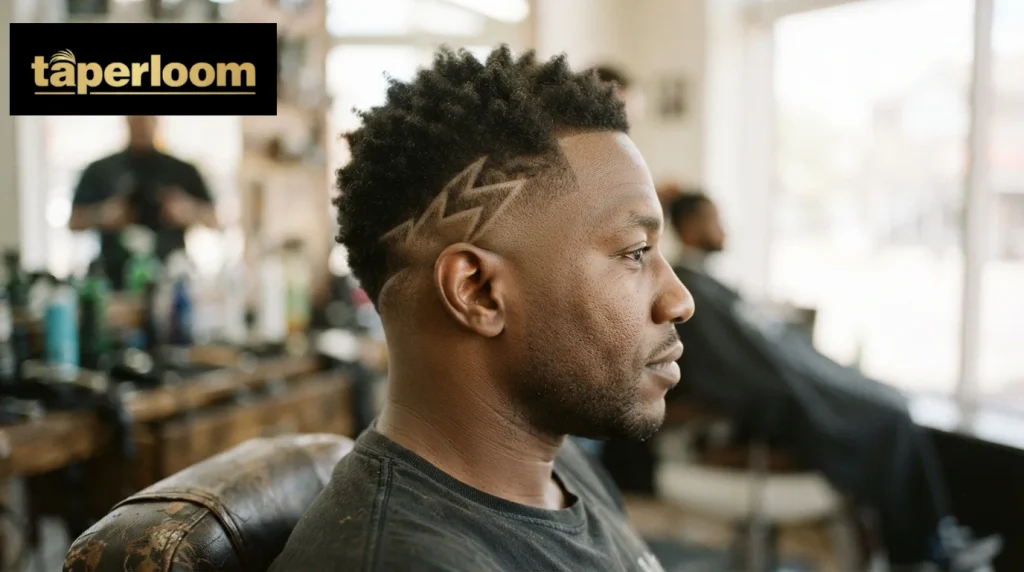
The lightning bolt is one of the most popular shaved patterns right now, known for pairing well with bold top styles like a mohawk or a heavily textured crop.
Bold shaved fade patterns have been a barbershop trend for decades, and the lightning bolt carries that same energetic, statement making look. Keep the bolt narrow enough to stay sharp but wide enough that it doesn’t disappear within a week.
Burst Fade Star Design
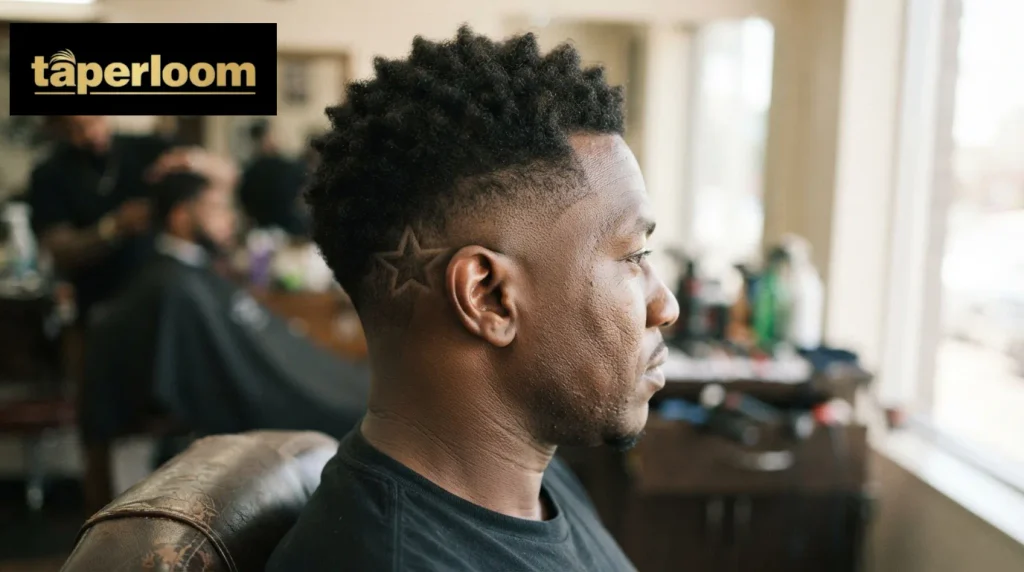
A star design is compact, playful, and reads as intentional rather than random. A single small star looks cleaner than a large one on most head shapes, and it holds up well behind the ear where it has a bit more protection from daily wear.
Ask your barber for sharp, defined points since a soft or rounded star tends to blur into a blob fast.
Burst Fade Heart Design
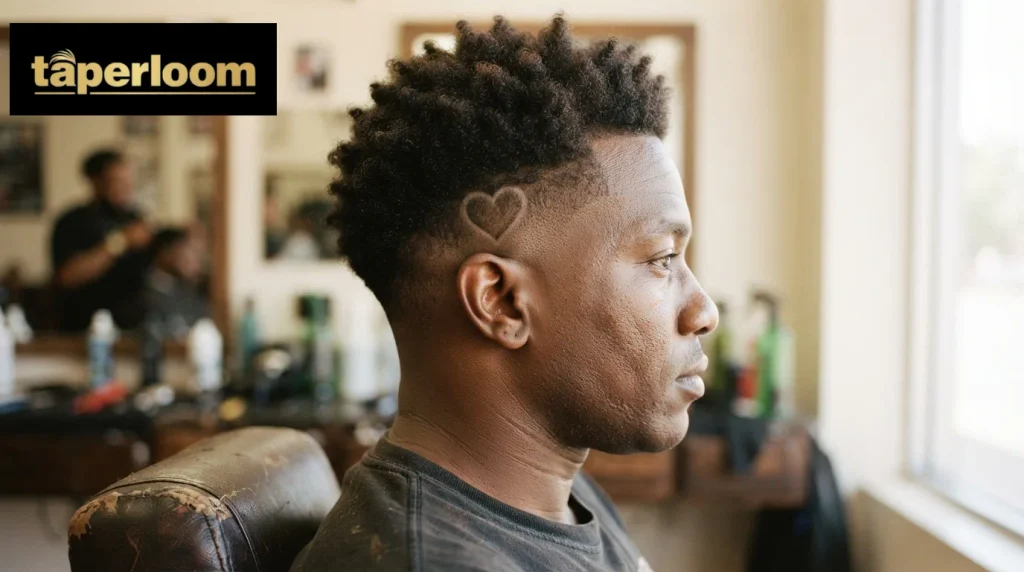
The heart design leans playful and works especially well as a smaller detail rather than a large centerpiece.
Keep the curves simple, since too much detail in a small space is the first thing to blur as regrowth starts. It pairs nicely with shorter, softer top styles like a crop or a light fringe.
Burst Fade Geometric Design
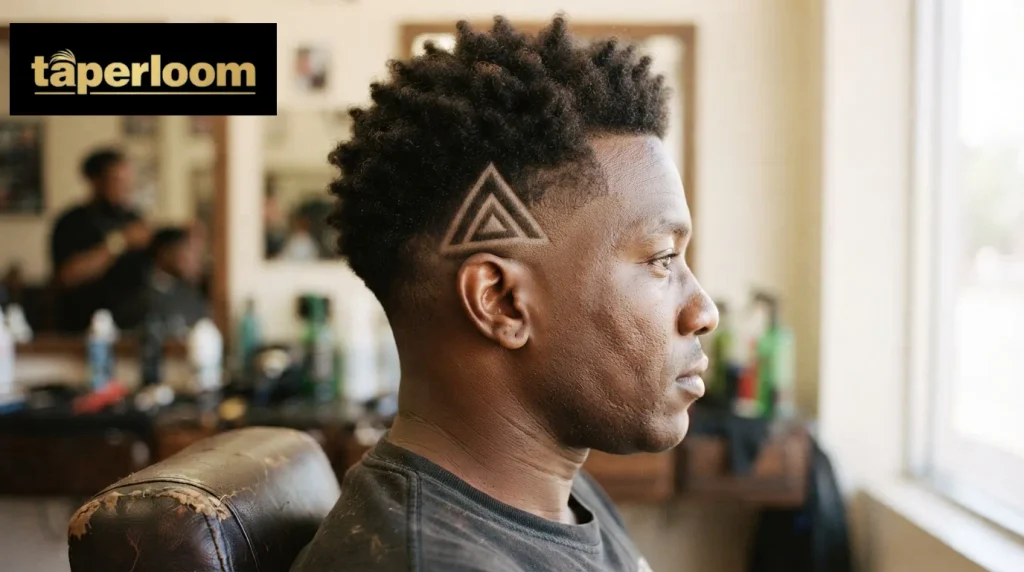
Geometric patterns, think triangles, squares, or clean angular shapes, give the most modern and structured look on this list.
Negative space matters here: your barber should leave open shaved areas around the shape so every edge reads crisp instead of cluttered. One clean shape always outperforms multiple shapes crammed into the same spot.
Burst Fade V Design
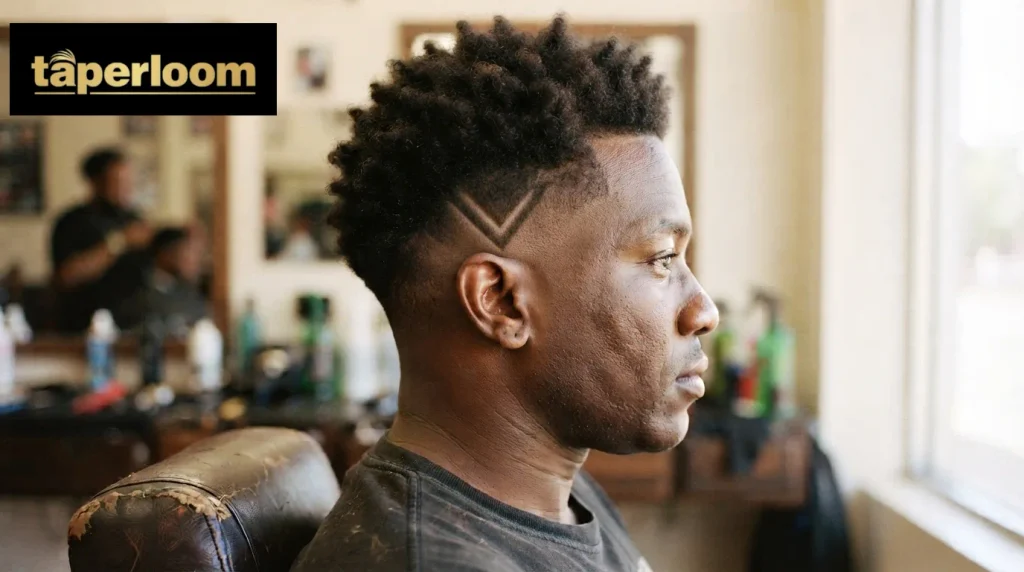
A V design is a shaved V shape cut into the fade itself, creating a clean burst fade with design. It’s easy to confuse with a V cut neckline, which is a completely different thing at the back of the head.
Say “V design” specifically and show a photo so your barber knows you mean the shaved detail, not the neckline shape.
Low, Mid & High Burst Fade Design
| Burst Height | Boldness | Best For | Touch Up Frequency |
| Low Burst | Subtle | Work, school, everyday wear | Every 3 to 4 weeks |
| Mid Burst | Balanced | Most people, most occasions | Every 2 to 3 weeks |
| High Burst | Bold | Statement looks, photos, events | Every 1 to 2 weeks |
Low Burst Fade Design
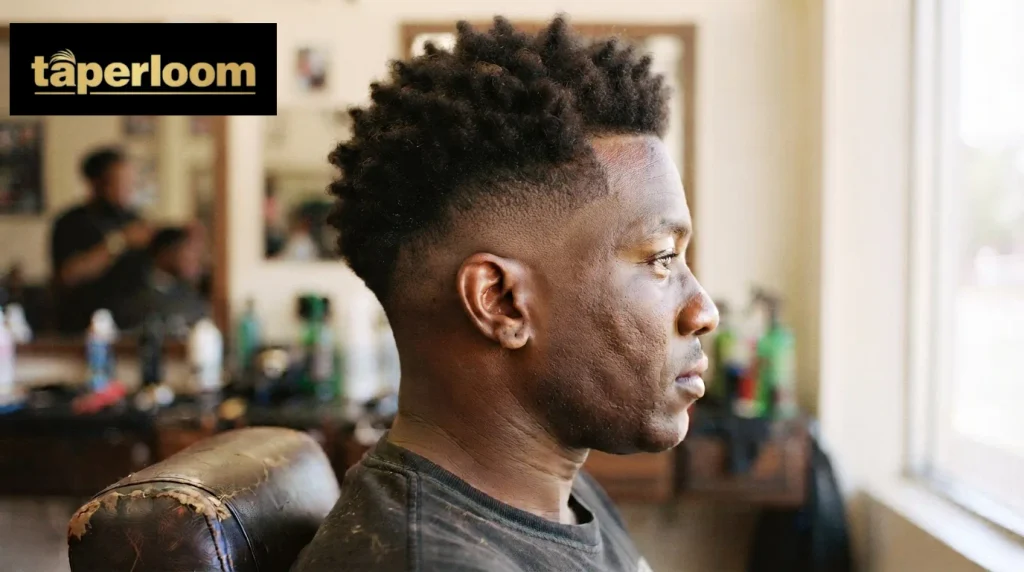
Low burst keeps the curve close to the ear, which makes it the most wearable option for professional or school settings.
The design still shows clearly, but the overall contrast is softer, so it grows out without looking messy halfway through the week. This is the safest starting point if you’re new to getting a design at all.
Mid Burst Fade Design
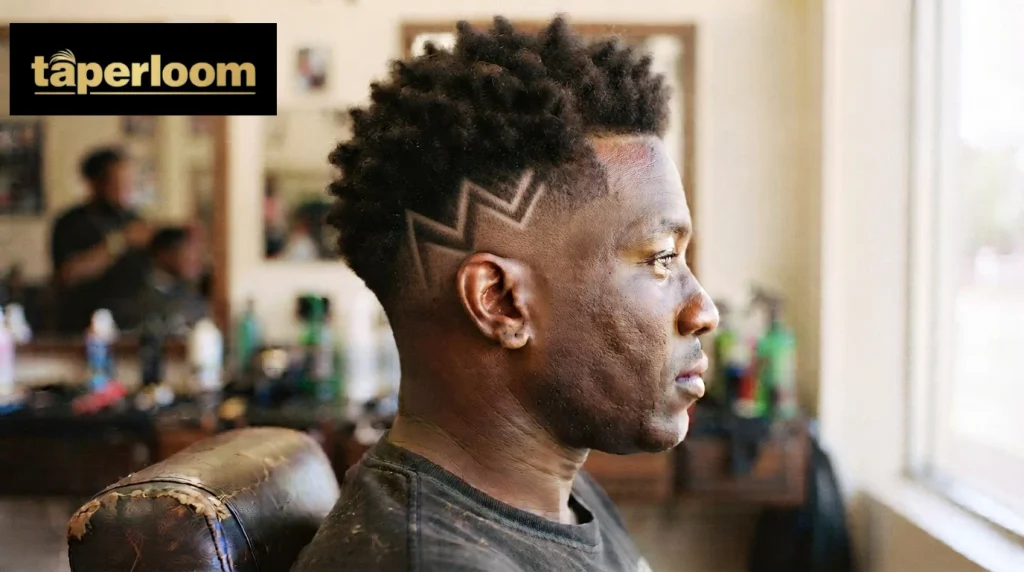
Mid burst is the sweet spot most guys end up choosing. The curve gets more room, which means your design gets more space and more contrast to stand out, without needing constant touch ups like a high burst would. It works well with almost every design type on this list and pairs naturally with textured tops.
High Burst Fade Design
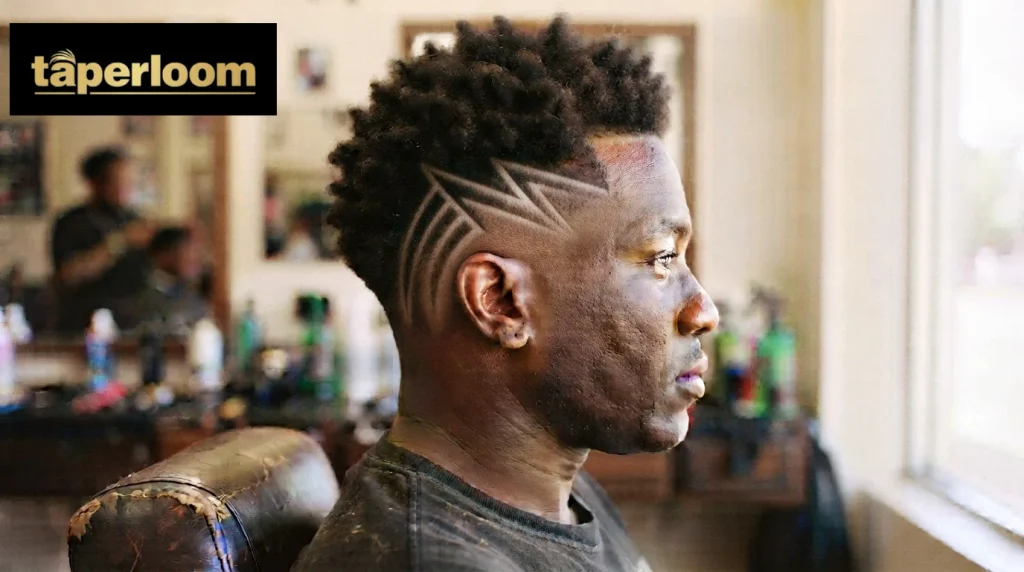
High burst climbs well above the ear, and at that point the design becomes the main feature of the whole haircut rather than a detail. It photographs incredibly well but shows growth fast, sometimes within two or three days, so this option only makes sense if you’re comfortable with frequent barber visits.
Hair Type Breakdown
Straight Hair
Straight hair shows fine lines and small details with almost no effort, which makes it the easiest texture to work with for any design. Thin line work, small stars, and detailed geometric shapes all stay crisp here longer than on other textures.
Curly Hair
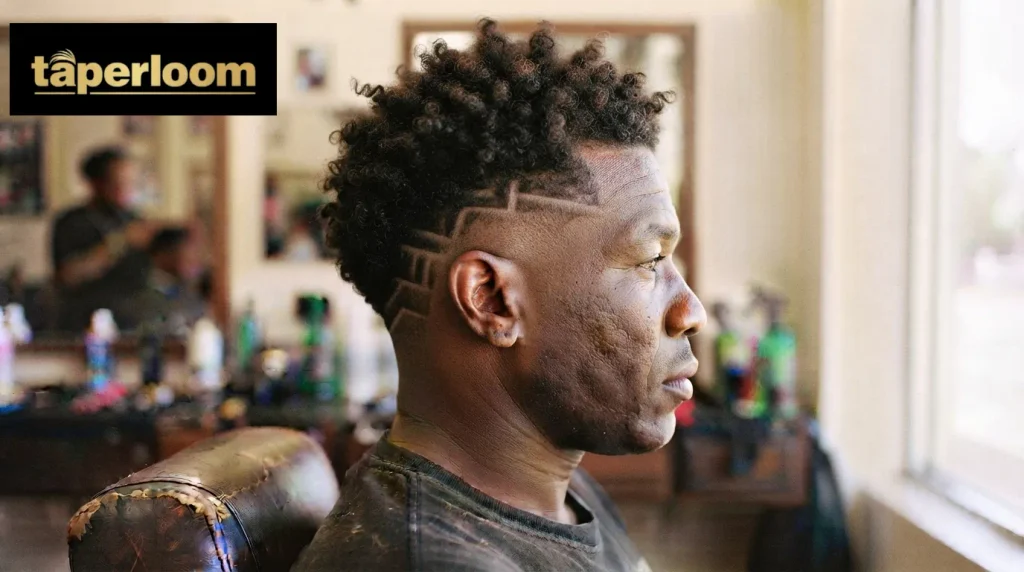
Curly hair needs bolder, thicker patterns, since curl volume can bury a small or thin design within a couple of days. Zigzags, lightning bolts, and wide line designs hold up far better than delicate shapes on curly textures.
Wavy Hair
Wavy hair sits between straight and curly in terms of how much detail it can hold. Medium thickness designs, like a standard zigzag or a mid sized star, usually strike the right balance without disappearing too fast.
Thick Hair
Thick hair creates strong contrast between the shaved skin and the surrounding density, so bold patterns and multi element geometric designs genuinely pop here.
Thin Hair
Thin hair looks better with simpler choices like a single line or a small star. Heavy, multi line patterns can look patchy on thin hair rather than sharp, so less really is more.
Top Style Pairings
Burst Fade Mohawk Design
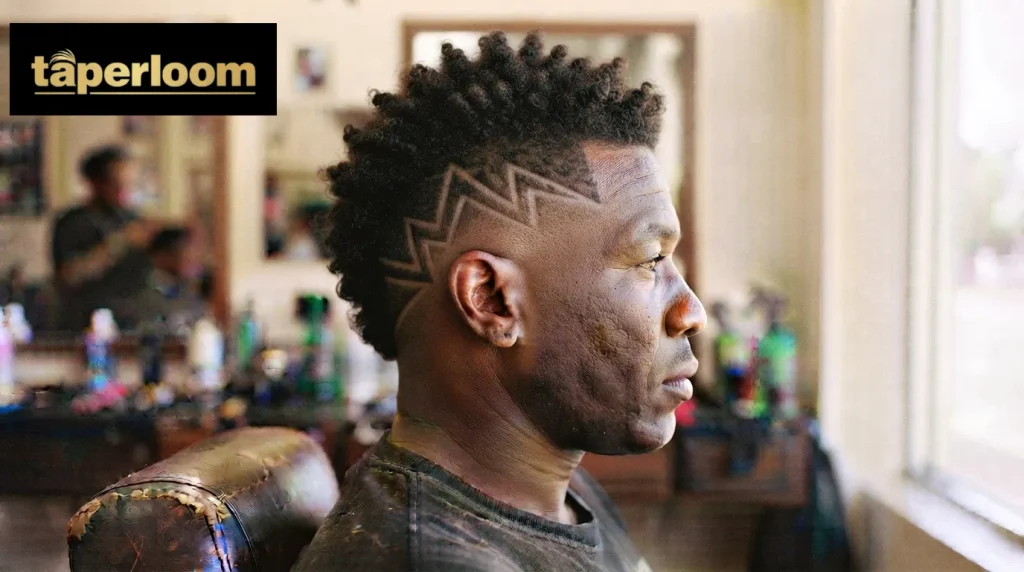
The mohawk and burst fade combination is one of the most classic pairings in this space. The height down the middle gives the sides room to carry a bolder design, so lightning bolts, zigzags, and geometric shapes all match the energy well. Keeping the design on one side only often looks cleaner than mirroring it on both.
Burst Fade Mullet Design
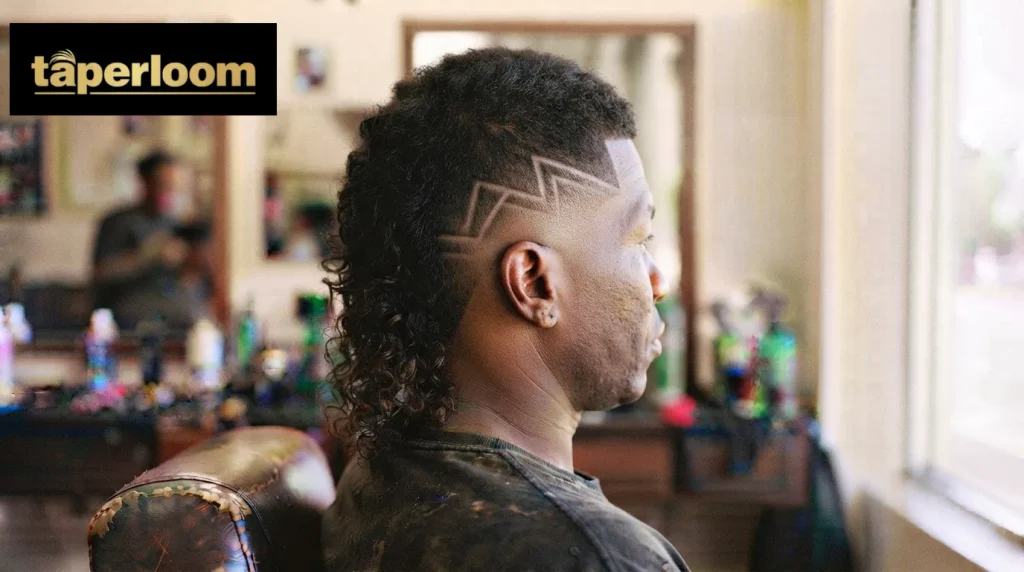
A mullet keeps length at the back while the sides stay short, and a design placed above or behind the ear complements that flow without competing with it. A simple line or a small zigzag tends to work best here since the mullet itself already carries most of the visual interest.
Burst Fade Textured Crop or Fringe
A textured crop or fringe already has movement on top, so it doesn’t need a busy design to feel finished. One clean line or a small geometric shape is usually enough, and this combination tends to work in the widest range of settings, from casual to professional.
Cost & Pricing
A standard burst fade typically costs the same as any other fade at your barbershop. The design itself is what adds to the price, and how much depends on complexity.
| Design Complexity | Typical Extra Cost |
| Simple line design | $5 to $10 |
| Zigzag, star, or heart | $10 to $15 |
| Lightning bolt or geometric | $15 to $20 |
| Multi element or custom pattern | $20 and up |
Most barbershops charge a flat add on fee rather than pricing by the minute, though highly detailed custom work at a specialty shop can run higher. It’s worth asking your barber for their design pricing before you sit down, since this varies a lot by shop and by region.
Product Recommendations
Keeping a burst fade design sharp between visits comes down to a few basics.
Molding paste helps hold shape on top without weighing curls or texture down, which keeps the top style from overshadowing the design below it.
Texture powder adds lift at the roots for straight or fine hair, giving the top more presence so it balances against a bold shaved pattern.
A light, alcohol free moisturizer for the scalp helps if the shaved area feels dry or tight in the first day or two after a fresh cut.
A travel size trimmer is worth having at home if you want to touch up small regrowth around the design lines yourself between barber visits, though full re-shaving is best left to a professional.
What to Tell Your Barber
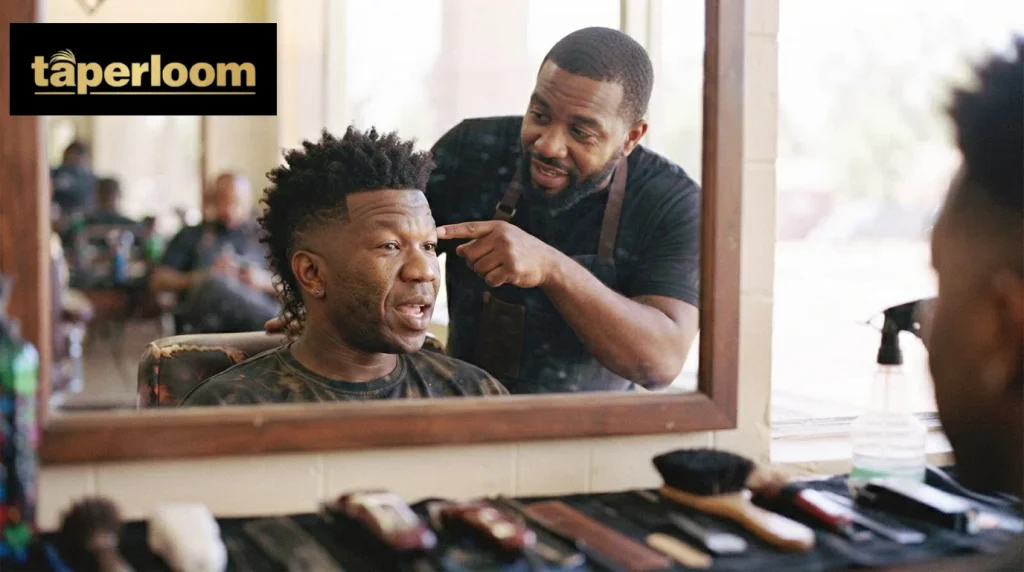
Use this as a quick script for your next appointment.
- State the burst height. “I want a low burst fade” or “mid burst” or “high burst.”
- State the finish. “Skin fade” for a fully shaved finish, or “shadow fade” for a softer, less stark look.
- Name the design. “One line,” “a zigzag,” “a lightning bolt,” “a star,” “a heart,” “a geometric shape,” or “a V design.”
- Name the placement. “Above the ear” or “behind the ear.”
- Show a photo. Words mean different things to different barbers, so a reference photo removes the guesswork entirely.
- Ask for a mirror check. Have your barber confirm placement before anything gets shaved in, since a design in the wrong spot is hard to fix.
Maintenance & Aftercare
Most burst fade designs stay sharp for 7 to 14 days before the lines start to soften as hair grows back in. The fade underneath usually still looks fine at that point, but the design itself is what needs the earliest attention.
Keep the shaved area clean and dry for the first 24 hours after your cut. Heavy gel or wax applied directly on the lines can make them look filled in and blurry before regrowth even starts.
When washing your hair, be gentle around the shaved area rather than scrubbing, since irritation there can slow healing and make the skin more sensitive.
If you want the design to stay crisp continuously, book a quick design touch up every one to two weeks, separate from your full haircut, which most shops will do for a lower price than a complete cut.
Mistakes to Avoid
Starting with a design that’s too complex is the most common mistake for first timers. A simple line or small shape almost always looks better after a week than an intricate pattern that’s already blurring.
Placing the design too high up can also cause problems if your school or workplace has a strict appearance policy, so it’s worth checking that before your appointment rather than after.
Skipping the mirror check is another one. Always confirm placement before your barber shaves anything in, since fixing a design in the wrong spot usually means starting over completely. And don’t compromise on the fade blend underneath.
A patchy or uneven fade makes even a well executed design look messy, so the blend has to be right first for the design to actually land.
FAQ Section
How long does a burst fade design last?
Most burst fade designs stay sharp for 7 to 14 days before the lines start to blur as hair grows back in. A quick touch up every one to two weeks keeps it looking fresh continuously.
Does a burst fade design work on all hair types?
Yes, though curly and thick hair need bolder, thicker patterns to stay visible, while straight and fine hair can carry smaller, more detailed designs without them disappearing.
How much does a burst fade with design cost?
A design typically adds $5 to $20 on top of a standard fade, depending on complexity. Simple line designs cost the least, while detailed geometric or custom patterns cost the most.
Can I get a burst fade design at home?
The burst fade itself is difficult to blend at home without barber tools and experience. Small touch ups on an existing design are more manageable, but the initial cut is best left to a professional.
What’s the difference between a burst fade and a drop fade?
A burst fade curves fully around the ear in a semicircle, while a drop fade curves downward following the natural hairline toward the neckline. A burst fade gives more surface area for shaved designs.
Is a burst fade design appropriate for school or work?
A low burst with a simple, small design like one line is usually fine for most school or work settings. It’s worth checking your specific dress code before committing to a bolder placement or pattern.
Which burst fade design lasts the longest?
A simple line design placed above the ear on a low burst tends to last the longest, since it has the least detail to blur and the softest overall contrast as hair grows.
What should I bring to my barber appointment?
Bring a clear reference photo of the design and placement you want. Words alone can be interpreted differently by different barbers, so a photo removes almost all the ambiguity.
Conclusion
A burst fade design is a simple way to turn a regular haircut into something that actually gets noticed, and the details covered here, placement, face shape, hair type, and cost, all shape how good the final result looks.
Start with a low or mid burst and a simple line or small shape if this is your first time, place it above or behind the ear, and always bring a reference photo so your barber knows exactly what you want.
Once you know what works for your hair and face shape, moving up to bolder patterns like a zigzag or a geometric design becomes a much easier decision. These burst fade design ideas can help you choose a pattern that fits your style without making the haircut feel overdone.
Read Next : Buzz Cut Taper: 20 Styles + Exact Barber Script (2026)

Muhammad Kaleem is a content creator who writes about hair care, hairstyles, grooming, and everyday hair trends. He enjoys turning hair-related topics into simple, practical, and easy-to-understand content that helps readers make informed choices about their hair and personal style.