
A low taper fade is the most requested haircut in Black barbershops right now, and for good reason. It doesn’t fight your natural texture. It works with it. Whether you’ve got 360 waves, a full afro, tight coils, braids, or locs, this cut cleans up your edges without touching what makes your hair yours.
This guide covers everything you need to know about low taper fade Black male haircuts: 40+ styles broken down by hair type and face shape, a full price breakdown, an exact barber script you can read word-for-word, a texture guide for 3C through 4C hair, and a maintenance routine that actually keeps your cut looking fresh between visits. No fluff, no vague advice, just what you need before you sit in the chair.
A low taper fade is a haircut where the hair gradually shortens starting just above the ears, blending down to the neckline with clipper guards from #3 down to #0.5 or skin. It works especially well on Black hair (Type 3C–4C) because the natural density creates sharp contrast between the full top and the tapered sides. Most men get a touch-up every 2–3 weeks. A full low taper fade typically costs $25–$65, depending on your barbershop tier and city.
What Is a Low Taper Fade for Black Men? (Definition + How It’s Cut)
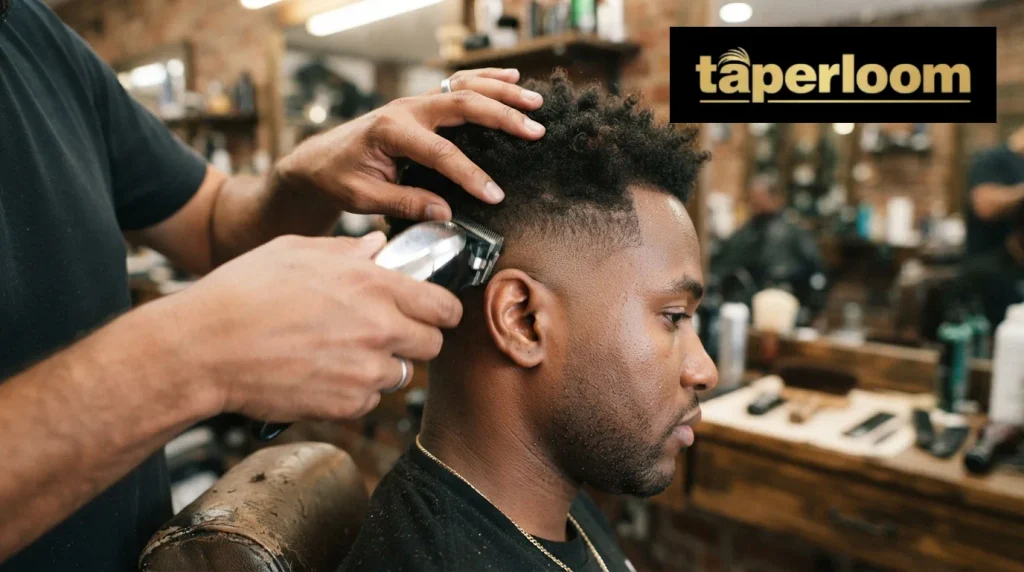
A low taper fade for Black men is a haircut where the hair gradually shortens near the ears and neckline, creating a smooth blend from the full length on top down to the tighter sides. Unlike a high or mid fade, the blending starts low, just above the ears, so most of your natural volume stays untouched.
This cut works especially well on Type 3C through 4C hair. The natural density and coil pattern of Black hair create a sharp, defined line between the full top and the clean sides, something straighter hair types simply can’t replicate as clearly.
How the Cut Is Actually Done
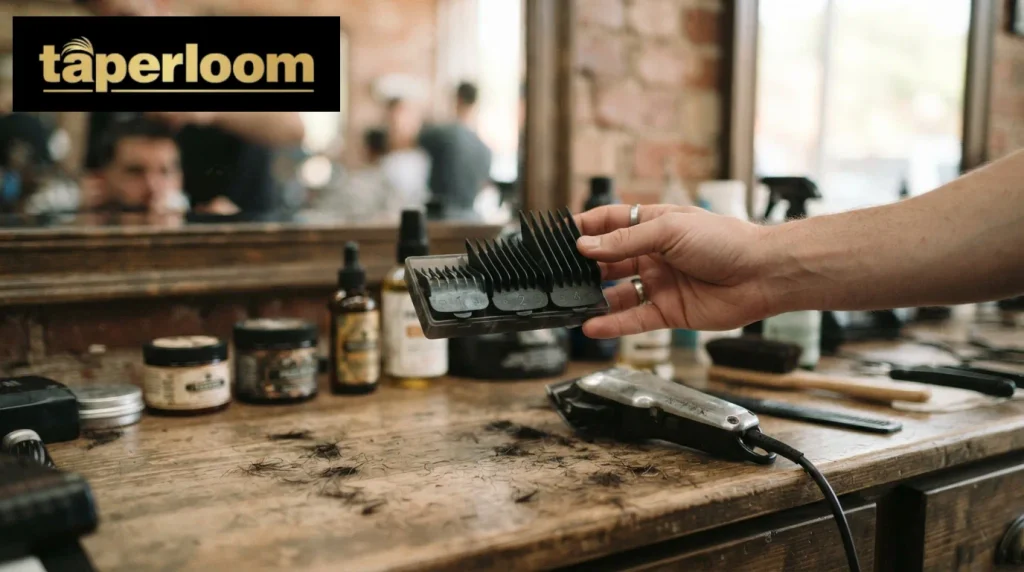
Your barber builds the fade using progressively shorter clipper guards, moving from the top of the taper zone down to the neckline. Here’s the typical breakdown:
| Guard Number | Length | Where It’s Used |
| #3 | 3/8 inch | Start of the taper, just above the ears |
| #2 | 1/4 inch | Mid-blend zone |
| #1 | 1/8 inch | Lower blend, closer to the neckline |
| #0.5 | 1/16 inch | Fine blend near the hairline |
| Skin / 0 | Bare | Only at the very base, for extra contrast |
The barber works these guards in overlapping passes so there’s no visible line between them, just a smooth gradient. That gradual blend is what separates a taper from a straight fade, which drops length much faster and often ends right at the skin.
A Bit of Background
The fade haircut has roots in U.S. military grooming standards from the 1940s and 50s, where short, sharp cuts signaled discipline.
Black barbers took that foundation and turned it into something far more expressive by the 1970s and 80s, adding sharper contrast, custom line work, and variations built specifically around Black hair textures. That’s the version of the fade most people recognize today.
Bottom line: the low taper fade isn’t one fixed look. It’s a technique, and the guard numbers plus starting point are what define it. Everything on top, your waves, curls, afro, or braids, is where you get to make it your own.
Low Taper Fade vs Other Fades: What Every Black Man Needs to Know
The most common problem in the barbershop is asking for “a fade” and getting something you didn’t expect.
There are at least six distinct fade types, and each one changes where the hair gets short and how much skin shows. Here’s a clear breakdown so you know exactly what to ask for.
| Fade Type | Where It Starts | Skin Exposure | Avg. Price Range | Best Hair Length Needed | Best Occasion |
| Low Taper Fade | Just above the ears | Minimal | $25 to $65 | Any length on top | Professional, school, everyday |
| Low Fade | Above ears, slightly higher | Moderate | $25 to $60 | Short to medium | Clean everyday look |
| Mid Taper Fade | Mid-height on the side | Moderate | $30 to $65 | Medium to long | Balanced, versatile |
| High Taper Fade | Near the top of the sides | High | $30 to $70 | Longer top needed for contrast | Bold, dramatic |
| Skin Fade / Bald Fade | Any height, blends to bare skin | Maximum | $30 to $75 | Any length | Edgy, sharp |
| Drop Fade | Curves down behind the ear | Varies | $30 to $70 | Medium to long | Unique curved silhouette |
| Burst Fade | Arcs around the ear | Moderate to high | $30 to $70 | Medium, works with mohawks | Frohawks, statement styles |
Is a Low Taper Fade the Same as a Low Fade?
No, and this is the mix-up that trips up most first-timers. A low taper fade blends gradually, so you’ll still see some hair through the transition zone.
A low fade drops length faster and reads as more abrupt. If you want something that grows out cleanly and stays subtle, ask for the taper. If you want more visible contrast right away, ask for the fade.
Taper vs Fade: The Actual Difference
This confuses a lot of guys, so here’s the simple version:
- A taper is a gradual reduction in length. It never reaches bare skin. There’s always some hair left, even at the shortest point.
- A fade is more aggressive. It can go all the way down to skin.
- A taper fade combines both, the gradual blending technique of a taper with the tight, precise finish of a fade.
Barber tip: if you’re not sure between a low and mid taper, start low. Your barber can always go higher at your next visit, but hair that’s already cut short can’t come back until it grows out. Start conservative.
How Much Does a Low Taper Fade Cost?
Pricing depends heavily on your barbershop tier and city, but here’s a realistic breakdown most guides skip entirely.
| Barbershop Tier | Price Range | What You Get |
| Budget / Walk-in Shops | $15 to $30 | Basic taper, no frills, faster turnaround |
| Mid-Tier / Local Barbershops | $30 to $50 | Consistent quality, regular barber relationship, line-up included |
| Premium / Boutique Barbershops | $50 to $85+ | Detailed blending, beard work, design options, longer appointment |
Prices run higher in major metro areas like New York, LA, and Atlanta, and lower in smaller towns. A first visit to a new barber sometimes costs more since they’re building a fresh template for your hair.
Tipping Norms
Most barbers expect a tip between 15 and 20 percent of the total service. If you’re getting a full taper plus a beard fade or design work, tipping on the higher end is standard, especially once you’ve found a barber you plan to keep going back to.
DIY and At-Home Line-Up Savings
You don’t need to pay for a full cut every time your hairline gets a little fuzzy. Learning to do your own line-up at home with a T-outliner trimmer can save you $15 to $25 per visit between full taper appointments.
Plenty of barbers post tutorial content specifically for Black hair textures, so this is a realistic skill to pick up, not just a shortcut for people who already know what they’re doing.
Bottom line: budget for a full taper every 2 to 3 weeks at $25 to $65, and use at-home touch-ups to stretch your visits further without letting your edges get sloppy.
40+ Best Low Taper Fade Styles for Black Men
Styles below are grouped by category, so you can jump to what fits your hair, your schedule, or your vibe. Each one includes the essentials: best-fit face shape, hair type match, and how often you’ll need a touch-up.
Short & Classic Styles
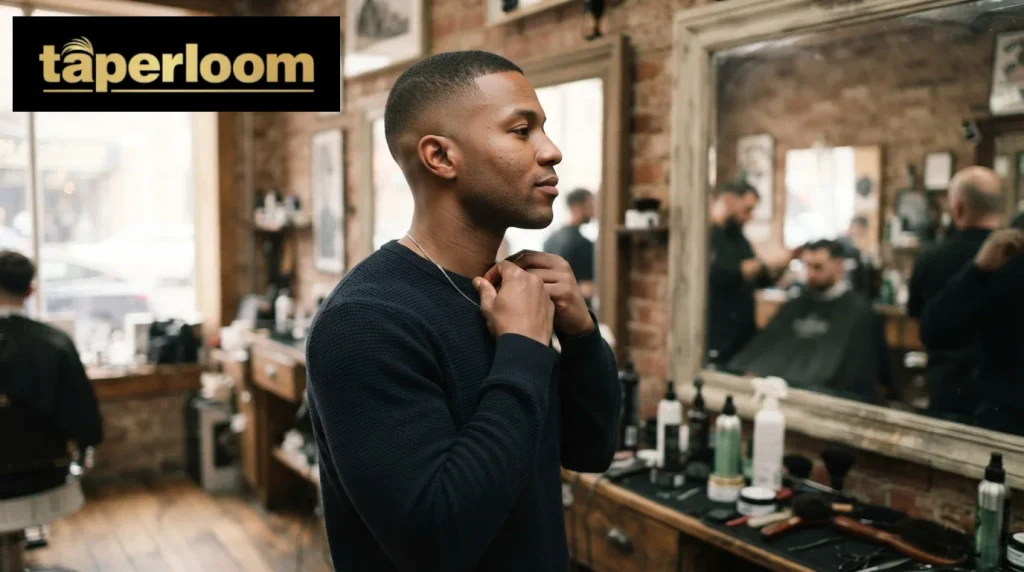
- Low Taper Fade Short Hair — top kept between half an inch and one inch, showing your natural curl without bulk Best for: all face shapes, all hair types | Maintenance: every 2 weeks | Cost tier: budget-mid
- Low Taper Fade Buzz Cut — one uniform guard on top, zero styling time Best for: oval, square, diamond | Maintenance: every 2 weeks | Cost tier: budget
- Low Taper Fade Caesar Cut — short horizontal fringe with a clean line-up up front Best for: oval, round | Maintenance: every 2 to 3 weeks | Cost tier: mid
- Low Taper Fade Crew Cut — slightly longer at the front, tapering back naturally Best for: square, oval | Maintenance: every 2 to 3 weeks | Cost tier: mid
- Low Taper Fade Textured Crop — short choppy layers with forward movement Best for: oval, heart, diamond | Maintenance: every 2 to 3 weeks | Cost tier: mid
- Low Taper Fade Ivy League — slightly longer top styled with a side part, short tapered sides underneath Best for: oval, square | Maintenance: every 2 to 3 weeks | Cost tier: mid
Waves & Curl Styles
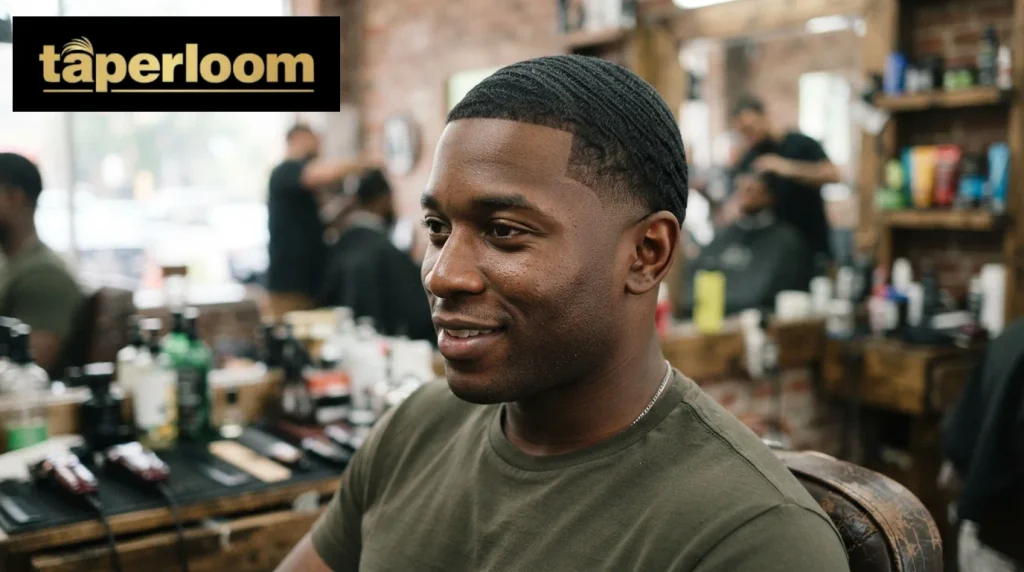
- Low Taper Fade with 360 Waves — the taper stays out of the way so your wave pattern is the focal point Best for: oval, square | Maintenance: touch-up every 2 weeks, daily brushing | Cost tier: mid
- Low Taper Fade Curly Hair — full natural curls left to move, sides kept sharp Best for: oval, round, diamond | Maintenance: every 2 to 3 weeks | Cost tier: mid
- Low Taper Fade with Natural Coils — dense coils on top for maximum contrast against the sides Best for: all face shapes | Maintenance: every 2 to 3 weeks | Cost tier: mid
- Low Taper Fade with Sponge Curls — uniform defined coils created in minutes with a curl sponge Best for: round, oval | Maintenance: taper every 2 to 3 weeks, re-sponge daily | Cost tier: mid
- Low Taper Fade with Curly Fringe — loose curls falling forward across the forehead, sharp tapered sides underneath Best for: round, heart, diamond | Maintenance: every 2 to 3 weeks | Cost tier: mid
Afro Styles

- Low Taper Fade Afro, Short — 1 to 2 inches on top, clean sides, workplace-friendly Best for: all face shapes | Maintenance: every 2 to 3 weeks | Cost tier: mid
- Low Taper Fade Afro, Full — 3 to 5 inches of volume up top for maximum contrast Best for: round, oval | Maintenance: taper every 2 to 3 weeks, shape trim every 4 to 6 weeks | Cost tier: mid-premium
- Low Taper Fade High Top — vertical growth shaped into a structured flat-top Best for: long, oblong | Maintenance: every 1.5 to 2 weeks | Cost tier: premium
- Low Taper Fade Frohawk — full center strip, tapered sides, bolder than a classic afro Best for: oval, square, heart | Maintenance: every 2 to 3 weeks | Cost tier: mid-premium
Protective & Long Styles
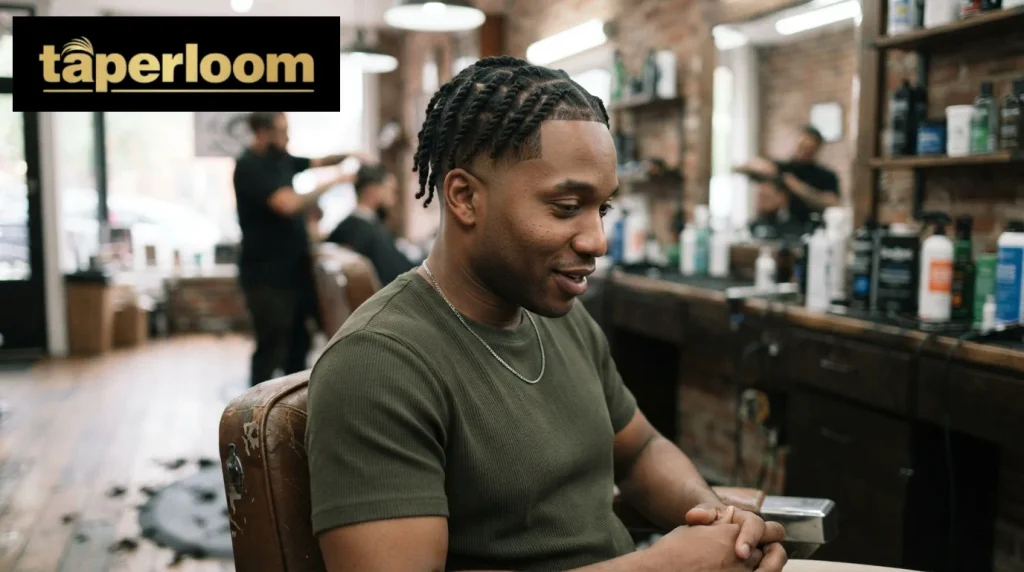
- Low Taper Fade with Two-Strand Twists — protects hair while growing it out, clean sides for structure Best for: all face shapes | Maintenance: taper every 2 to 3 weeks, retwist every 2 to 4 weeks | Cost tier: mid
- Low Taper Fade with Sponge Twists — fast, low-effort twist definition Best for: all face shapes | Maintenance: taper every 2 to 3 weeks, re-sponge daily | Cost tier: mid
- Low Taper Fade with Box Braids — intricate top, clean tapered base Best for: oval, round, diamond | Maintenance: taper every 2 to 3 weeks, braids last 4 to 6 weeks | Cost tier: mid-premium
- Low Taper Fade with Cornrows — flat, structured rows with a sharp taper underneath Best for: oval, square, heart | Maintenance: taper every 2 to 3 weeks, cornrows last 2 to 4 weeks | Cost tier: mid
- Low Taper Fade with Locs — clean sides keep growing locs from looking unkempt Best for: oval, diamond, square | Maintenance: taper every 2 to 3 weeks, retwist every 4 to 6 weeks | Cost tier: mid
- Low Taper Fade with Finger Coils — hand-sculpted, uniform coils, time-intensive but sharp Best for: oval, heart, diamond | Maintenance: taper every 2 to 3 weeks, recoil weekly | Cost tier: premium
- Low Taper Fade with Flat Twist — twists pressed flat against the scalp in rows, lighter than box braids Best for: oval, heart | Maintenance: taper every 2 to 3 weeks, retwist every 2 to 3 weeks | Cost tier: mid
Business & Corporate-Safe Styles

- Low Taper Fade Classic Crop — tight, neutral, zero styling required before a meeting Best for: all face shapes | Maintenance: every 2 weeks | Cost tier: mid
- Low Taper Fade with Clean Line-Up, No Design — sharp edges, no extras, reads as polished in any office Best for: all face shapes | Maintenance: line-up every 1 to 2 weeks | Cost tier: budget-mid
- Low Taper Fade Short Afro, Neat — natural texture kept close and rounded, nothing dramatic Best for: all face shapes | Maintenance: every 2 to 3 weeks | Cost tier: mid
- Low Taper Fade with Short Trimmed Beard — one continuous, groomed line from hair to jaw Best for: square, oval | Maintenance: taper and beard trim every 2 weeks | Cost tier: mid
- Low Taper Fade with Side Part — a defined comb-over part with clean tapered sides for a polished, structured finish Best for: oval, square | Maintenance: every 2 to 3 weeks | Cost tier: mid
Low-Maintenance, Busy-Guy Styles
- Low Taper Fade Buzz Cut — same uniform length every time, no product needed (see above)
- Classic Low Taper Fade, Natural Length — no styling, no product, just clean sides and natural length on top Best for: all face shapes | Maintenance: every 2 to 3 weeks | Cost tier: budget-mid
- Low Taper Fade with Two-Strand Twists — protective and wash-and-go friendly between retwists (see above)
- Low Taper Fade Short Afro — no daily shaping required, holds its look on its own (see above)
- Low Taper Fade with Wash-and-Go Curls — curls left to dry naturally with a light curl cream, no daily styling required Best for: all face shapes | Maintenance: every 2 to 3 weeks | Cost tier: mid
Beard Combination Styles
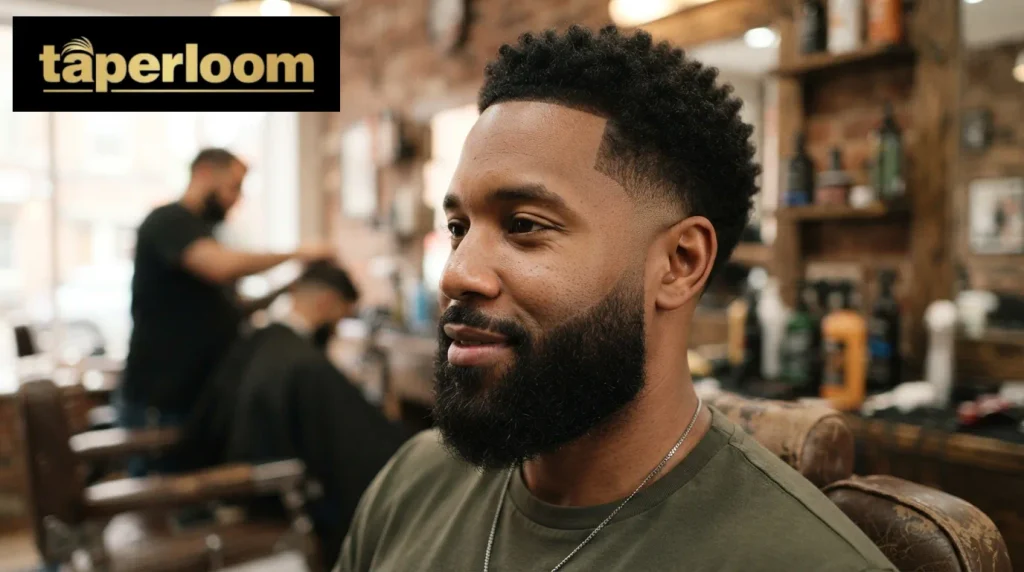
- Low Taper Fade with Full Beard — one continuous gradient from crown to chin, no hard separation line Best for: all shapes, especially oval and square | Maintenance: taper and beard trim every 2 weeks | Cost tier: mid-premium
- Low Taper Fade with Goatee — clean taper plus a focused chin beard, good for balancing wider cheekbones Best for: diamond, triangle, heart | Maintenance: taper every 2 to 3 weeks, goatee edge-up weekly | Cost tier: mid
- Low Taper Fade with Full Beard and Design — beard blended into the taper with a razor line detail through the fade zone Best for: square, oval | Maintenance: taper and beard trim every 2 weeks, design refresh every 1 to 2 weeks | Cost tier: premium
Bold & Creative Styles
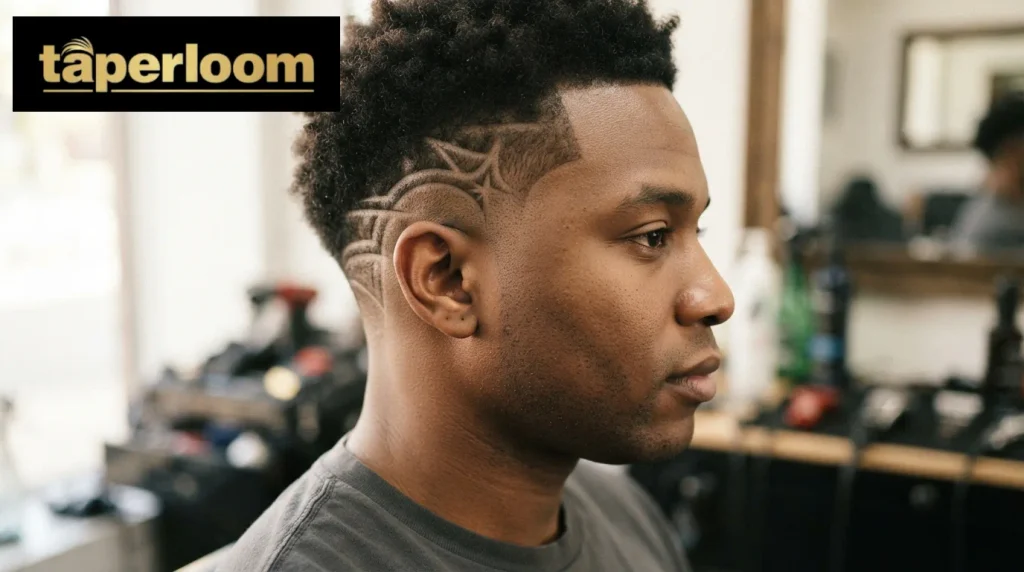
- Low Taper Fade with Hair Design — razor-carved patterns in the taper zone, from simple lines to full geometric work Best for: all face shapes | Maintenance: design refresh every 1 to 2 weeks | Cost tier: premium
- Low Taper Fade with Line-Up — the sharpest, most requested add-on, front hairline and sideburns defined with a T-outliner Best for: all face shapes | Maintenance: every 1 to 2 weeks | Cost tier: budget add-on
- Low Taper Fade Blowout — heat and a comb attachment stretch natural texture for max volume Best for: oval, square, oblong | Maintenance: taper every 2 to 3 weeks | Cost tier: mid-premium
- Low Taper Fade with Hard Part Line — a razor-shaved part for instant structure Best for: oval, square, diamond | Maintenance: touch-up every 1 to 2 weeks | Cost tier: mid
- Low Taper Fade with Colored Tips — natural base color with lighter tips for dimension Best for: all face shapes | Maintenance: taper every 2 to 3 weeks, color touch-up every 6 to 8 weeks | Cost tier: premium
- Low Taper Fade Mohawk with Design — a full mohawk strip paired with tapered sides and a razor detail through the fade Best for: oval, square, heart | Maintenance: taper every 2 to 3 weeks, design refresh every 1 to 2 weeks | Cost tier: premium
Styles for Black Boys and Teens
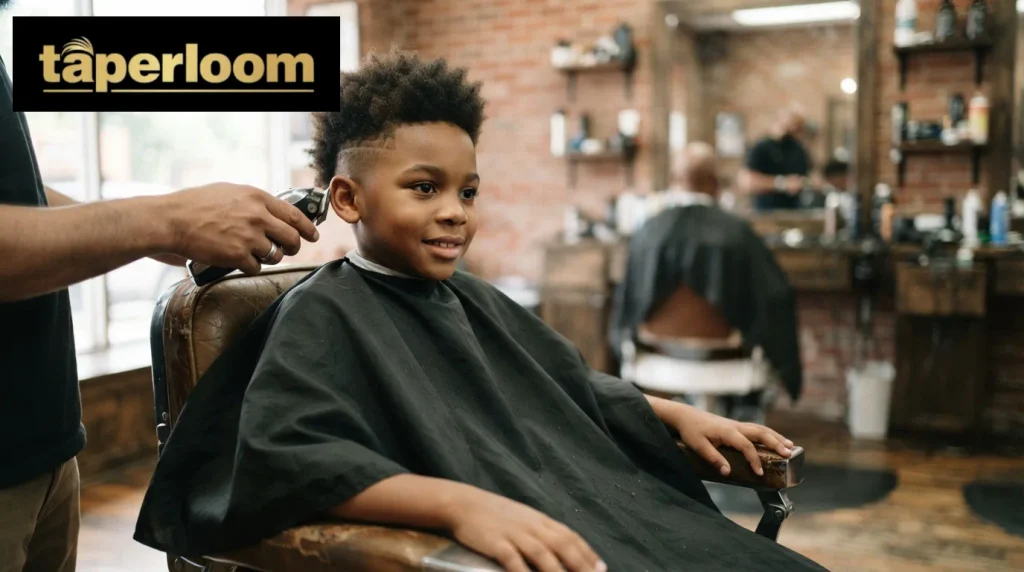
- Low Taper Fade for Black Boys, Ages 8-12 — simple, low-maintenance, school-appropriate Best for: all face shapes | Maintenance: every 3 to 4 weeks | Cost tier: budget
- Low Taper Fade for Black Teens, Ages 13-17 — clean structured base, open top for waves, curls, twists, or a design Best for: all face shapes | Maintenance: every 2 to 3 weeks | Cost tier: budget-mid
Best Low Taper Fade Style for Your Face Shape
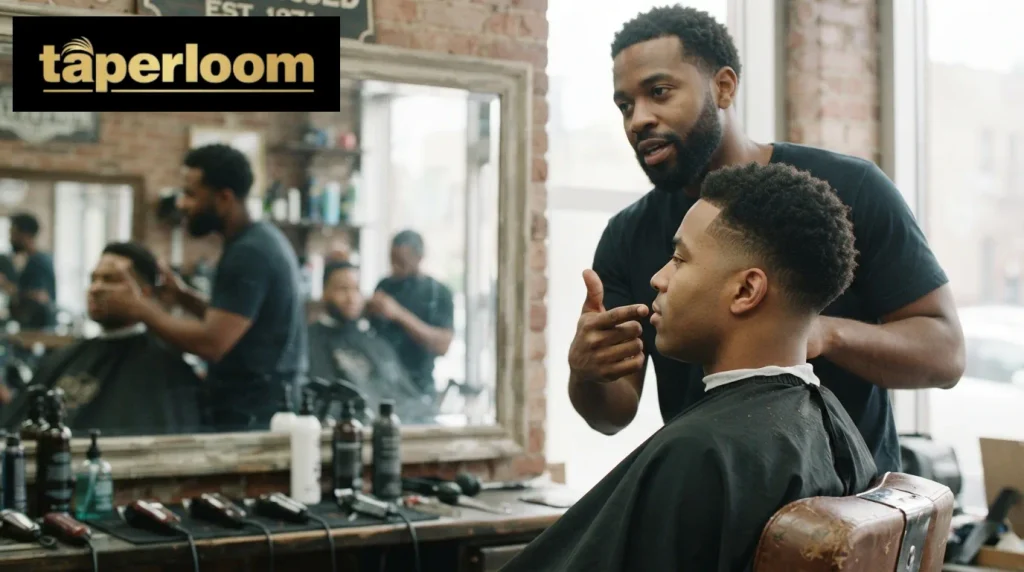
Your hair texture already works with a low taper fade. Your face shape decides which variation actually looks best on you.
| Face Shape | Best Low Taper Style | Why It Works |
| Oval | Any variation | Balanced proportions suit almost everything |
| Round | Afro, high top, blowout | Vertical volume elongates the face |
| Square | Waves, short afro, crew cut | Clean sides let a strong jawline stand out |
| Diamond | Medium curls, textured crop | Softens wide cheekbones |
| Heart / Triangle | Short afro, textured crop | Balances a wider forehead |
| Oblong / Long | Waves, short crew styles | Adds width instead of more length |
Oval Face
You’ve got the most freedom here. Almost every low taper variation looks balanced on an oval face, from a tight buzz cut to a full afro to long locs with a clean tapered base. Pick based on what you actually want, not what you think you’re limited to.
Round Face
Go for height. Anything that adds 2 to 3 inches of vertical volume, a short afro, a high top, or a blowout, elongates the face and softens the roundness. Skip very short, flat styles on top since they tend to widen the look.
Square Face
Your jawline is already strong. A low taper cleans up the sides so it shows clearly. Waves, a short afro, or a crew cut all work without competing with your bone structure. Avoid anything that adds width on the sides.
Diamond Face
A medium curly top or a textured crop softens wide cheekbones by adding dimension instead of contrast. The tapered sides keep the whole look balanced rather than top-heavy.
Heart or Triangle Face
You’ve got a wider forehead and a narrower chin. Keep the crown close to the head, a textured crop or short afro, rather than adding volume up top. Let your natural proportions do the work.
Oblong or Long Face
Skip tall, high-volume styles like a full afro or high top since they stretch the face further. Go for width instead: waves, a short crew cut, or a textured crop that sits close to the sides.
Not sure about your face shape? Pull your hair back, stand close to a mirror, and trace the outline of your face in the air with your finger. Whatever shape you see, round, square, oval, or long, that’s your starting point.
How Black Hair Textures (3C-4C) Work With a Low Taper Fade
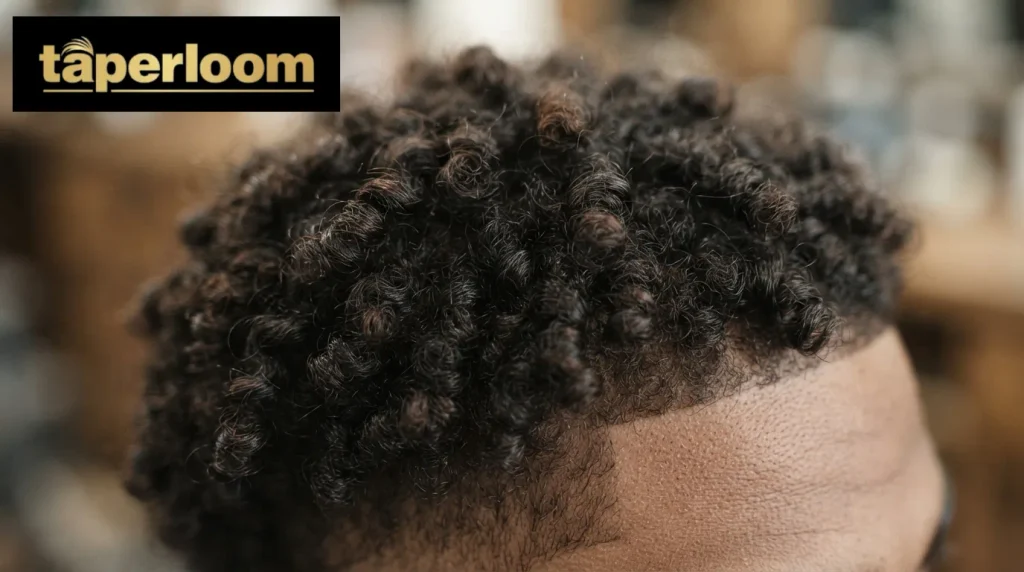
Most guides treat Black hair like one thing. It isn’t. Hair ranges from Type 3C to Type 4C, and each pattern behaves differently, holds moisture differently, and pairs differently with a low taper fade. Knowing your type helps you pick the right style and the right products.
Type 3C Hair
- Tight corkscrew curls, visible and springy
- Pairs best with: curly crop, finger coils, medium curly top
- Styling tip: apply curl cream to wet hair, then air-dry or diffuse
Type 4A Hair
- Soft, densely packed coils in a tight S-shaped pattern
- Good natural moisture retention compared to tighter types
- Pairs best with: sponge curls, a twist-out, rounded short afro
- Styling tip: leave-in conditioner on damp hair before shaping
Type 4B Hair
- Z-shaped coil pattern, less defined and more angular than 4A
- Shrinks noticeably when dry, but the volume underneath is still dense
- Pairs best with: full afro, two-strand twists, 360 waves
- Styling tip: moisturize daily since shrinkage makes dryness harder to spot
Type 4C Hair
- The tightest, most densely packed coil pattern
- Can shrink up to 75 percent of its actual stretched length
- Most fragile type, needs consistent moisture to avoid breakage
- Pairs best with: short afro, buzz cut, high top, locs, blowout
- Styling tip: leave-in conditioner or shea butter every 1 to 2 days
Why Shrinkage Isn’t a Problem
Shrinkage is actually a sign your hair is healthy and holding moisture well. Hair that looks 1 to 2 inches long on your head might stretch to 4 inches when wet or blown out. That’s normal for 4B and 4C textures, not a sign something’s wrong.
Quick Moisture Routine for Any Texture
- Daily or every other day: dampen hair, apply leave-in conditioner or shea butter from roots to tips
- 1 to 2 times a week: wash with a sulfate-free shampoo to avoid stripping natural oils
- Once a week: deep condition for 15 to 20 minutes under a shower cap
- Once a month: clarify with a stronger shampoo to remove product buildup
All four hair types are naturally prone to dryness, since the curl bends in afro-textured hair slow down how oil travels from the scalp to the ends.
Staying ahead of moisture matters more here than it does for straighter hair types, especially right along the taper zone where the hair is shortest.
How to Ask Your Barber : Word-for-Word Script
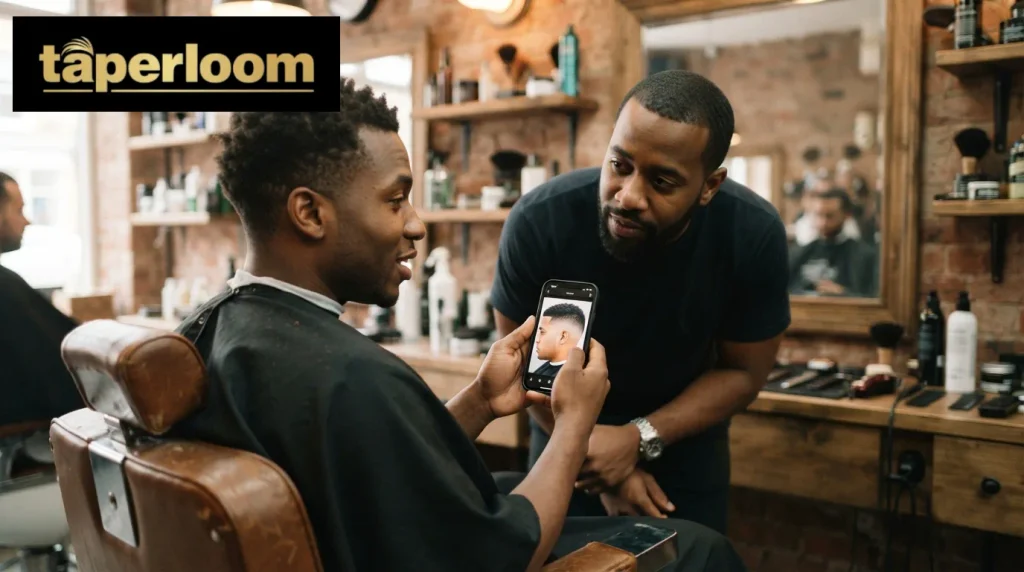
This might be the single most useful section in this guide. Knowing what style you want means nothing if you can’t communicate it clearly. The number one reason guys leave the barbershop unhappy isn’t a bad barber, it’s vague instructions.
Step 1: Bring a Reference Photo
Save 2 to 3 photos before your appointment: a front angle, a side angle, and a back angle if you can find one. Try to find a photo of someone with a similar hair texture to yours, not just the style you like. A low taper on straight hair doesn’t tell your barber anything useful about how it’ll look on 4B or 4C coils.
Step 2: Use This Exact Script
“I want a low taper fade. Start the taper just above my ears and blend down toward the neckline. Keep it [skin / #0.5 / #1] at the base. Leave the top [natural / my waves / my afro / X inches / my curls / my braids / my locs]. I also want [a sharp line-up / a beard fade / a part line / no design]. Keep the neckline [natural / tapered / rounded / squared].”
Step 3: Specify Your Neckline
- Natural or tapered neckline — hair fades gradually with no hard edge, grows out clean, best for most low tapers
- Rounded neckline — soft curved shape, polished look
- Squared neckline — straight horizontal line, sharp right after the cut but grows out unevenly faster
For most guys, a natural or rounded neckline ages better between visits.
Step 4: Call Out Your Add-Ons
Don’t assume your barber will guess these. Say them out loud:
- Line-up / edge-up — do you want a crisp front hairline and sideburns?
- Beard fade — should the taper blend into your beard?
- Design — any razor pattern in the fade zone?
- Part line — a shaved part carved in?
It takes 10 seconds to mention and saves you a cut you didn’t ask for.
Your Barber Card (Screenshot This)
| Detail | Your Answer |
| Fade type | Low taper fade |
| Starting point | Just above the ears |
| Guard at base | Skin / #0.5 / #1 |
| Top length/style | _______________ |
| Neckline | Natural / Rounded / Squared |
| Line-up | Yes / No |
| Beard fade | Yes / No |
| Design | Yes / No |
Fill this in on your phone before your appointment and just show it to your barber. It removes every guessing game in one screenshot.
Questions to Ask Your Barber Too
Communication goes both ways. Before they start cutting, ask:
- “Have you worked with [3C / 4A / 4B / 4C] hair before?”
- “What guard do you recommend starting with for my hair density?”
- “How will this grow out over the next 2 to 3 weeks?”
- “Can you show me examples of your line-up or design work?”
A good barber won’t mind these questions. They usually ask a few of their own too, and that back-and-forth is a solid sign you’re in good hands.
Common Mistakes to Avoid at the Barbershop
Almost every bad haircut story starts the same way: a small miscommunication that could’ve been avoided in ten seconds. Here’s what actually goes wrong, and why.
Saying “Just Give Me a Fade”
This is the single biggest mistake. There are at least six distinct fade types, and every barber interprets “a fade” differently based on their own default style. Without specifying low, mid, or high, you’re leaving the most important decision entirely up to chance.
Not Specifying Fade Height
Low, mid, and high tapers start at completely different points on your head and create completely different amounts of contrast. If you walk in wanting subtle and walk out with dramatic, this is usually why. Always name the height, not just the word “taper.”
Skipping the Reference Photo
Words alone leave too much room for interpretation. What you picture when you say “keep it natural on top” and what your barber pictures can be two different lengths entirely. A photo removes the guesswork before the clippers even come out.
Forgetting to Mention a Beard Fade
If you wear a beard and don’t say anything, most barbers will cut the hair and beard as two separate jobs. That often leaves a visible line where they should connect. If you want one continuous blend from your hair down to your jaw, you have to ask for it directly.
Not Mentioning the Line-Up
A clean taper without a sharp line-up can look unfinished, especially around the front hairline. If you want crisp, defined edges, say so. Some barbers include it automatically, but plenty don’t unless you ask.
Bringing Outdated Photos
Your taste two years ago might not match what you want now, and your hair has probably changed too. Update your reference photos every so often so you’re not walking in with a look that no longer fits your current texture, length, or style.
Not Communicating Your Hair Texture
A good barber will ask questions the first time they cut your hair, but you shouldn’t wait to be asked. Mention your curl type and density upfront. Clippers and techniques that work well on looser curl patterns don’t always translate cleanly to tighter 4B or 4C coils, and saying this out loud helps your barber set up correctly before they start.
The pattern behind every mistake on this list: vague communication. Fix that one thing, and most bad-haircut stories stop happening to you.
How to Maintain Your Low Taper Fade
Getting a sharp cut is step one. Keeping it sharp between visits is step two, and it’s the part most guys skip entirely.
Maintenance Schedule
| Task | Frequency | Why It Matters |
| Full taper touch-up | Every 2 to 3 weeks | Restores the blend and sharp fade line |
| Line-up / edge-up | Every 1 to 2 weeks | Keeps the hairline crisp |
| Moisturize hair and scalp | Daily or every other day | Prevents dryness and breakage |
| Wash with sulfate-free shampoo | 1 to 2 times a week | Cleanses without stripping natural oils |
| Deep conditioning treatment | Once a week | Intensive moisture for 4-type hair |
| Edge control on hairline | Daily as needed | Maintains line-up sharpness at home |
| Wave brushing (if applicable) | Daily, 20 to 30 minutes | Trains and holds the 360 wave pattern |
| Durag compression at night | Every night (waves) | Locks in and protects the wave pattern |
| Clarifying shampoo | Once a month | Removes product buildup from the scalp |
Your Week at a Glance
- Monday to Friday: dampen hair, apply leave-in conditioner or shea butter, touch up edge control, brush waves if you’ve got them
- Wash day (pick 1 to 2 days): sulfate-free shampoo, then conditioner
- One day a week: deep condition for 15 to 20 minutes under a shower cap
- Every night: durag or wave cap if you’re maintaining waves
- Once a month: clarifying shampoo to reset your scalp
Barbershop Visit Schedule
A low taper fade is more forgiving than a mid or high fade since it grows out naturally instead of leaving an obvious hard line.
Most guys should plan on a full touch-up every 2 to 3 weeks. If budget or time is tight, you can stretch a full cut to 3 to 4 weeks and get a standalone line-up in between to keep the hairline looking sharp without paying for a full service every time.
The 3-Minute Morning Routine
- Lightly dampen hair with a spray bottle or hydrating mist
- Apply leave-in conditioner, argan oil, or shea butter from roots to tips
- Touch up edge control along the hairline
- Add your style-specific product: curl cream for curls, wave pomade for waves, light styling cream for an afro
Products Every Black Man Needs
| Product | Purpose | Best For |
| Leave-In Conditioner | Daily moisture | All hair types |
| Curl Cream / Curl Activator | Curl and coil definition | 3C to 4A curl types |
| Shea Butter | Deep, rich moisture | 4B to 4C coil types |
| Wave Pomade / Wave Grease | Wave training and hold | 360 waves |
| Edge Control | Sharp hairline maintenance | All styles |
| Argan Oil | Hydration and healthy shine | All hair types |
| Sulfate-Free Shampoo | Gentle, moisturizing cleanse | All hair types |
| Deep Conditioner | Weekly intensive moisture | All hair types |
| Durag / Wave Cap | Wave compression and protection | 360 waves |
| Texture Clay | Matte hold and shape | Short styles, textured crops |
| Hair Mousse | Volume and curl definition | Afros, blowouts |
| Twisting Butter | Moisture and twist definition | Twists, flat twists |
Building Your Routine From Scratch
You don’t need all twelve products on day one. Start with three:
- A leave-in conditioner for daily moisture, no matter your style
- Edge control to keep your line-up sharp between barbershop visits
- One style-specific product based on what you’re wearing on top, curl cream for curls, wave pomade for waves, shea butter for coils
Add the rest as your routine develops and you figure out what your specific hair actually responds to. What works for 4A hair won’t necessarily work the same way on 4C, so expect a bit of trial and error early on.
A Cost-Saving Tip
Learning to do your own line-up at home with a T-outliner trimmer can save $15 to $25 every time you’d otherwise pay for a standalone barbershop visit.
Plenty of barbers post tutorials specifically for Black hair textures, so it’s a realistic skill to build, not just a shortcut for people who already know what they’re doing.
2026 Trends in Low Taper Fades for Black Men
The low taper fade isn’t standing still. Here’s what’s actually trending in barbershops and on social feeds right now.
Hybrid Texture Combinations
Mixing two different textures on one head, sponge curls up front with flat twists in the back, for example, all sitting over one clean low taper base. It’s a look that leans into individuality without sacrificing the structure that makes the taper work in the first place.
Micro-Designs in the Fade Zone
Small, highly detailed razor work inside the taper zone, thin geometric lines, subtle wave patterns, or initials, rather than one large design. Barber artistry is sharper than ever right now, and this is where a lot of that skill shows up. If you want one, ask to see a barber’s design portfolio before you commit.
Color on Natural Hair
Blonde tips, copper highlights, and platinum streaks over a natural dark base are having a real moment. The contrast between the untouched base color and the lighter tips adds dimension that photographs well, and the low taper underneath keeps the whole look feeling intentional instead of chaotic.
Sharp, Angular Edge Work
Aggressive, precise line work with a dramatic drop behind the ear is moving from barbershop competitions into everyday wear. It takes the clean lines a low taper is already known for and pushes them a step further.
Virtual Try-On Tools
A newer trend worth knowing about: apps and browser-based tools that use your phone camera to preview a haircut on your actual face before you sit in the chair. These generally fall into a few categories:
- Photo-upload style simulators — you upload a front-facing photo and the tool overlays different fade and top-style combinations
- Live AR camera tools — real-time preview through your phone camera, useful for comparing a few options quickly
- Barber-side consultation apps — some shops now use tablet-based tools during the consultation itself, letting you and your barber agree on a look together before cutting starts
None of these replace a skilled barber’s judgment, but they’re a genuinely useful way to narrow down options and avoid the classic “this looked different in my head” problem.
Frequently Asked Questions
How often should a Black man get his low taper fade touched up?
Most guys need a full touch-up every 2 to 3 weeks, with a standalone line-up every 1 to 2 weeks if you want the hairline to stay consistently sharp.
What is the difference between a taper and a fade?
A taper gradually reduces length but never reaches bare skin. A fade is more aggressive and can go all the way down to skin. A taper fade combines both techniques.
Does a low taper fade work with 360 waves?
Yes, it’s actually the most common pairing. The taper starts above the ears and stays out of the way, leaving your wave pattern as the clear focal point.
Can you get a low taper fade with braids or locs?
Absolutely. It pairs well with box braids, cornrows, twists, and locs of any length, creating clean contrast against the textured top.
Is a low taper fade professional enough for the workplace?
Yes, it’s widely considered the safest, most office-appropriate fade option since it removes minimal hair and keeps a subtle, clean silhouette.
What products should Black men use to maintain a low taper fade?
A daily leave-in conditioner or argan oil, a sulfate-free shampoo, edge control for the hairline, and a style-specific product like curl cream, wave pomade, or shea butter.
How much does a low taper fade cost?
Expect to pay $25 to $65 depending on your barbershop tier, with major cities typically running higher than smaller towns.
Can I do a low taper fade at home?
A full taper is tough to self-cut cleanly, but line-ups and edge-ups are realistic to learn at home with a T-outliner trimmer, saving $15 to $25 between barbershop visits.
How long does a low taper fade take to grow out awkwardly?
It usually stays presentable for 3 to 4 weeks since the gradual blend grows out more naturally than a mid or high fade, which shows unevenness much sooner.
What’s the difference between a low taper fade and a regular taper haircut for Black men?
A regular taper can start at any height on the sides, while a low taper specifically starts just above the ears, keeping more volume and creating a more subtle, professional finish.
Ready to Get Your Cut
Thirty-plus styles is a lot to look through. If you already know your hair type and face shape, pick your style from the categories above, fill out your Barber Card, and you’re ready to walk in with confidence.
If you’re still deciding, save this guide and bring the sections that apply to you, the barber script, your face-shape match, and your texture breakdown, straight to your next appointment. That’s really all it takes to walk out with the cut you actually asked for.
Read Next : Burst Fade Design: 40+ Ideas, Placement Guide & Barber Tips (2026)

Muhammad Kaleem is a content creator who writes about hair care, hairstyles, grooming, and everyday hair trends. He enjoys turning hair-related topics into simple, practical, and easy-to-understand content that helps readers make informed choices about their hair and personal style.