
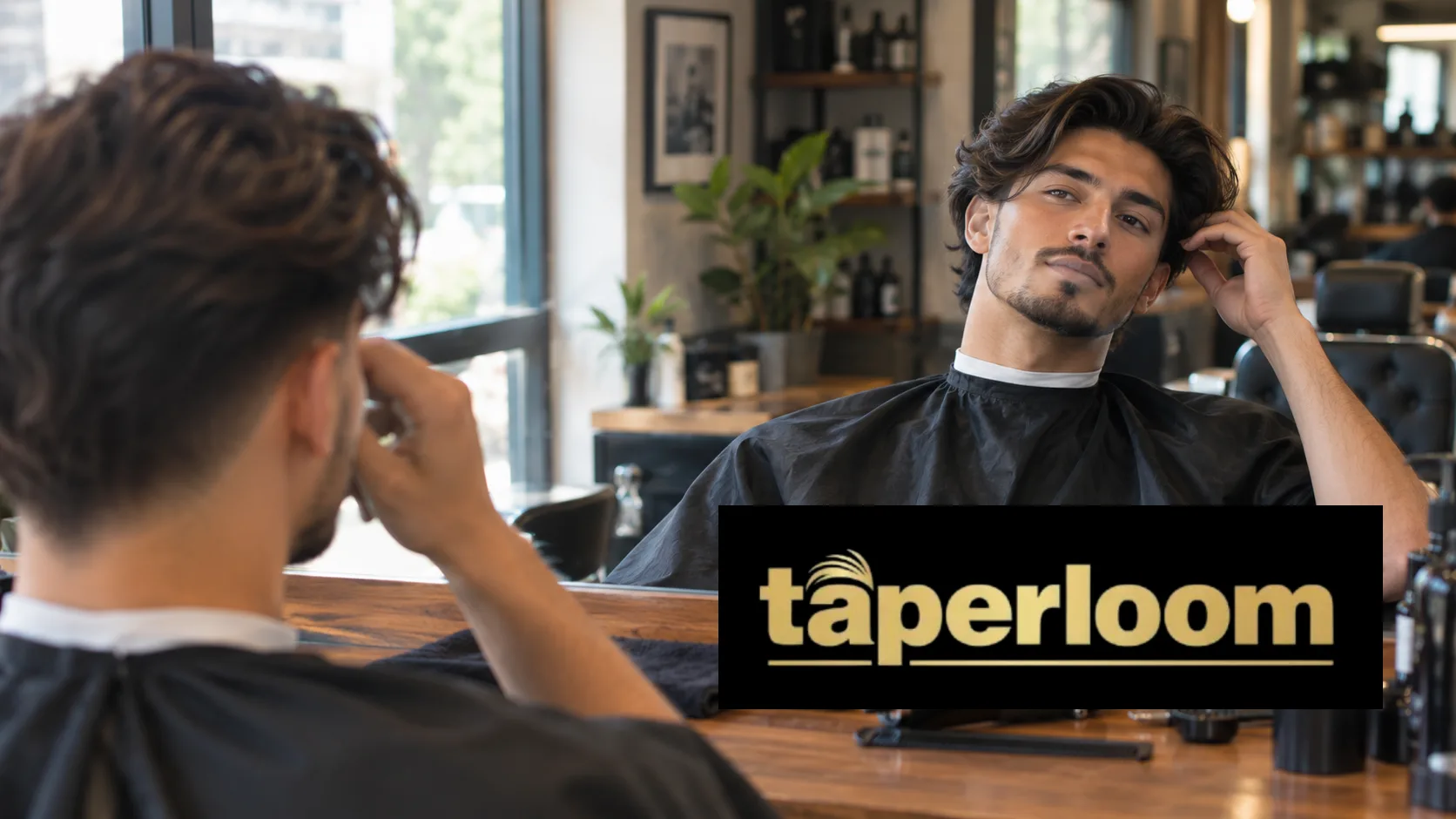
A mid taper fade for long hair is a men’s haircut where the sides and back taper gradually from the ear-line down to the neckline, while the top stays long, usually 4 to 6+ inches. It removes side bulk without cutting length, giving long hair a sharp, structured frame instead of a shapeless, overgrown look.
Growing your hair out doesn’t mean your sides have to look messy. A mid taper fade for long hair keeps the top full while the sides stay clean and controlled, so you avoid that overgrown, shapeless look that long hair tends to fall into.
This guide covers everything you need. You’ll find 30+ styles sorted by hair type and face shape, a word for word barber script, the exact clipper guards to ask for, a full styling routine, a maintenance schedule, and answers to the questions men ask most before committing to this cut.
Whether you’re just starting to grow your hair out or already sitting on 6 inches up top, this guide shows you how to make the mid taper work for you.
What Is a Mid Taper Fade for Long Hair?
A mid taper fade for long hair is a haircut where the sides and back gradually shorten starting at the ear-line, while the top keeps 4 to 6+ inches of length for styling. The “mid” refers to where the fade begins, roughly at the point where your ear meets your head, placing it right between a low taper and a high fade.
This placement gives you balanced contrast. It’s noticeable enough to look intentional, but not so aggressive that it overwhelms long hair on top. Here’s how it compares to the other common fade heights:
| Fade Type | Starting Point | Visual Effect | Best For Long Hair |
| Low Taper | Just above the ear | Soft, subtle contrast | Best for max length retention and conservative settings |
| Mid Taper | Ear-line level | Balanced, noticeable contrast | Ideal for most long hairstyles |
| High Taper | 2 to 3 inches above the ear | Bold, dramatic contrast | Works only if top hair is long enough to balance it |
| Drop Fade | Curves downward behind the ear | Unique arc shape | Great for a modern, artistic look |
For long hair specifically, the mid taper hits a sweet spot. It’s clean enough for the office, sharp enough to frame a man bun or slicked back style, and low maintenance enough that you’re not stuck at the barbershop every week.
Where the Fade Starts (Ear-Line Placement)
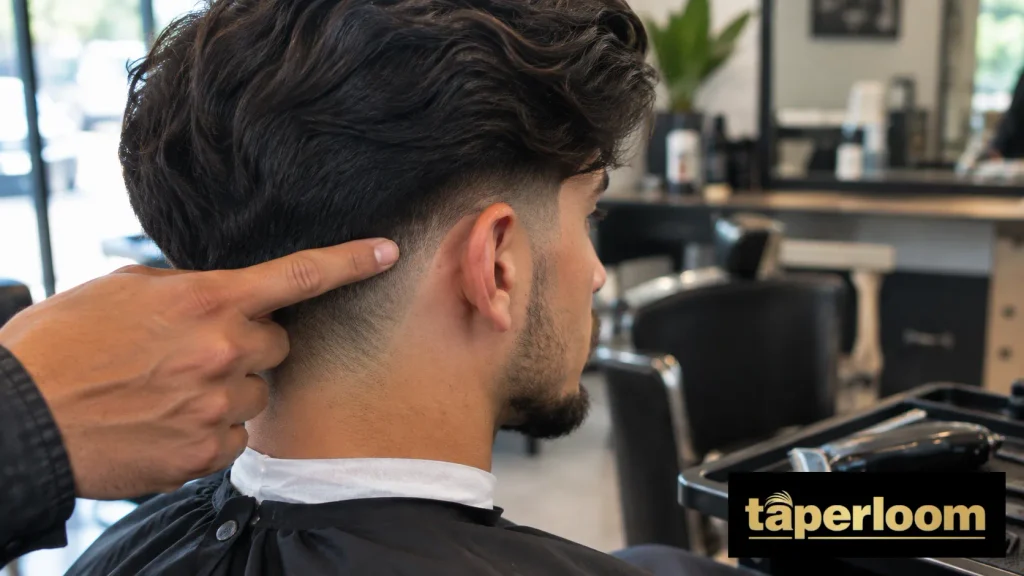
The mid taper starts at the ear-line, about 1 to 2 inches above where your ear attaches to your head. This starting point is what separates a mid taper from every other fade height, so it’s the first thing you need to get right with your barber.
Here’s a simple way to find it yourself:
- Place your index finger where your ear meets your skull
- That horizontal line across your head is your ear-line
- The fade begins right there and blends downward
Fade Zones on the Head
| Zone | Location | Role in the Cut |
| Starting Point | 1 to 2 inches above the ear | Where the taper begins |
| Blend Zone | 2 to 3 inches of vertical space | Where guards transition smoothly |
| Neckline | Base of the skull | Where the fade ends |
| Upper Boundary | 3 inches above the ear | The ridge a mid taper should never cross |
From the starting point, your barber blends the length upward toward your long top and downward toward the neckline. A skilled barber uses three to four clipper guard sizes across that blend zone so there’s no visible line, just a smooth gradient.
One thing to watch for: if the fade climbs past that 3 inch mark above your ear, it’s no longer a mid taper. It becomes a high fade, and that changes the entire proportion of the cut, especially with long hair on top.
Why It Works for Long Hair
Long hair without any structure on the sides tends to drift into a triangle or mushroom shape as it grows past 3 to 4 inches. The mid taper fixes that problem in four specific ways.
1. It removes bulk without touching your length
Tapering the sides from a heavier guard near the ear-line down to a shorter one at the neckline strips out roughly 70 to 80 percent of the side volume. Your top stays completely untouched, so you keep every inch of length while losing the weight that was dragging your style down.
2. It frames your long hair instead of competing with it
Clean, tapered sides act like a border. They pull the eye upward toward the top, which is exactly why man buns, slick backs, and curtain styles look sharper with a mid taper than they do with hair left at one uniform length all over.
3. It improves scalp airflow
Shorter sides mean better airflow to your scalp. That translates to less sweat buildup, less greasy buildup, and less dandruff, especially if you work out regularly or live somewhere humid.
4. It gives you three styles in one cut
With a mid taper, your long top adapts to whatever the day calls for. Wear it down and flowing, tie it back into a bun for the gym, or slick it back with pomade for a meeting. The sides stay sharp no matter which one you pick.
How Long Should Top Hair Be?
Your hair needs at least 4 inches on top to work with a mid taper fade in the “long hair” range. For the most styling options, 5 to 8 inches gives you the best results.
| Top Length | Classification | Styling Options |
| 1 to 2 inches | Short top | Crew cut, textured crop |
| 2 to 4 inches | Medium top | Quiff, short pompadour |
| 4 to 6 inches | Long top | Curtain hair, small man bun, slick back |
| 6 to 8 inches | Extra long top | Full man bun, ponytail, flowing styles |
| 8+ inches | Shoulder length | Pulled back styles, braids, full flow |
At 4 inches, you’ve got just enough length to tie it back into a small bun, get the curtain hair middle part look, or slick it back with pomade for a cleaner finish. Below that, most of these styles won’t hold.
If you have curly or coily hair, factor in shrinkage. Curl pattern can pull 6 inches of stretched length down to what looks like 3 to 4 inches once it’s dry and curled up. Ask your barber to leave 6 to 8 inches on top if you want your curls to read as visibly long.
Growing it out right now? Hair grows about 0.5 inches a month, so going from 2 inches to a solid 6 inches takes roughly 8 months. Keep the sides trimmed with a mid taper the entire time. It’ll make the awkward growing phase look intentional instead of neglected.
30+ Mid Taper Fade Long Hair Styles for Men
1. Mid Taper Fade with Curtain Hair
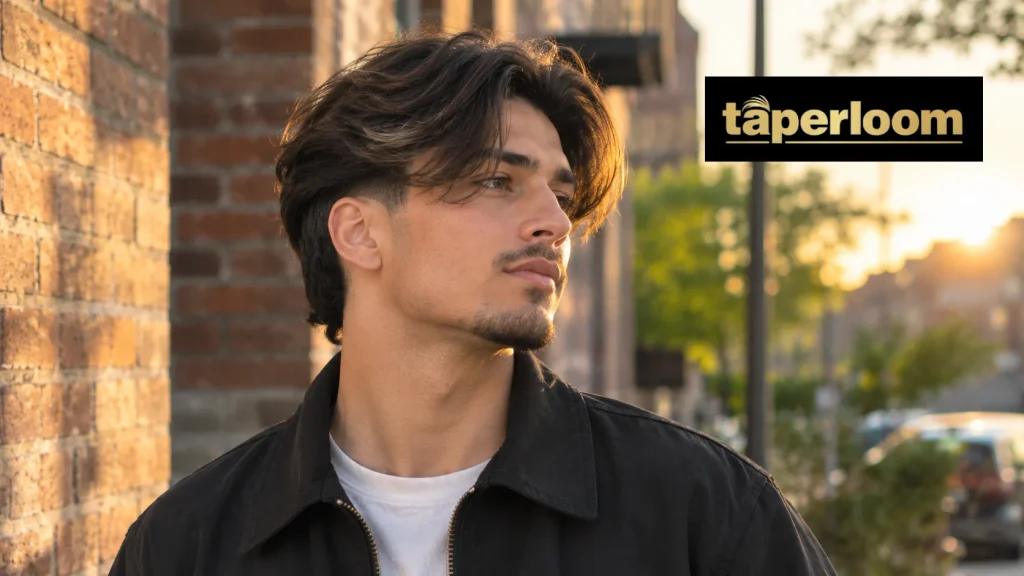
A center part with hair falling naturally to each side, framing your face like curtains. The mid taper keeps the sides sharp so the soft, flowing top stands out.
Best For:
- Hair Type: Straight to wavy, medium density
- Face Shape: Oval, heart shaped, square
- Occasions: Casual, creative work, school
Steps:
- Wash and towel dry until just damp
- Work a lightweight styling cream or sea salt spray through
- Blow dry with your fingers, pushing hair forward and out to the sides
- Part it down the center with a fine tooth comb
- Tousle with your fingers for natural separation
Products: Sea salt spray, lightweight styling cream
Pro Tip: Curtain hair needs at least 5 inches on top. Try it with anything shorter and you’ll end up with a bowl cut effect instead.
2. Mid Taper Fade with Slick Back
A polished, professional finish where the top gets brushed straight back with pomade. Pairs well with a mid taper because the clean sides make the slicked top look sharper.
Best For:
- Hair Type: Straight, wavy, thick
- Face Shape: Oval, oblong, square
- Occasions: Office, weddings, business settings
Steps:
- Start with damp hair straight out of the shower
- Run a water based or high shine pomade from roots to tips
- Comb straight back using a fine tooth comb
- Blow dry on medium heat while combing back
- Finish with a cool shot to lock the style in place
Products: High shine pomade for a formal look, matte pomade for something more modern
Pro Tip: For hold that lasts all day, layer a strong hold gel at the roots underneath your pomade.
3. Mid Taper Fade with Man Bun
The gym ready, low effort option. Gather the top into a bun while the mid taper keeps everything below it clean and controlled.
Best For:
- Hair Type: All types, straight, wavy, curly, thick
- Face Shape: Works on every face shape
- Occasions: Gym, weekends, outdoor activities
Steps:
- Brush hair back from your hairline toward the crown
- Gather it into a ponytail
- Twist the ponytail and wrap it around the base to form a bun
- Secure with a fabric hair tie, never a metal elastic
- Pull a few loose strands out at the front for a relaxed finish
Products: Matte clay or lightweight styling cream, plus a silk or fabric hair tie
Pro Tip: If your scalp feels tight after 10 minutes, the bun’s too tight and you’re setting yourself up for breakage.
4. Mid Taper Fade with Wavy Flow
Natural waves left long, usually 5 to 8 inches, and allowed to move freely. The mid taper strips the bulk off the sides so the waves on top don’t look weighed down.
Best For:
- Hair Type: Wavy, medium to thick density
- Face Shape: Oval, square, diamond
- Occasions: Casual, laid back professional settings
Steps:
- Wash with a sulfate free shampoo and conditioner
- Pat dry gently, don’t rub
- Work sea salt spray or curl cream through damp hair
- Air dry or diffuse on low heat
- Scrunch every few minutes while it dries
- Tousle with your fingers once fully dry
Products: Sea salt spray, leave-in conditioner
Pro Tip: Waves look best a little undone. Over styling flattens the texture that makes this style work in the first place.
5. Mid Taper Fade with Curly Long Hair
Natural curls left long on top with clean, defined sides. The mid taper prevents the triangle shape that curls tend to fall into without structure.
Best For:
- Hair Type: Curly, coily, afro textured
- Face Shape: Round, diamond, oval
- Occasions: Casual, creative, cultural events
Steps:
- Wash with sulfate free shampoo and a deep conditioner
- Apply curl cream or leave-in conditioner while hair is still wet
- Detangle with a wide tooth comb or your fingers
- Scrunch with your palms to encourage curl formation
- Air dry or diffuse on low heat
- Once dry, fluff with your fingers, don’t comb it again
Products: Curl enhancing cream, leave-in conditioner
Pro Tip: Sleep on a silk pillowcase. It cuts down on frizz and keeps your curl pattern intact overnight.
6. Mid Taper Fade with Ponytail
A low or mid ponytail that keeps hair off your face while staying clean and put together.
Best For:
- Hair Type: All types
- Face Shape: Works on every face shape
- Occasions: Gym, sports, outdoor work
Steps:
- Brush hair straight back
- Gather into a low or mid ponytail
- Secure with a fabric hair tie
- Pull a couple of face framing strands loose for a softer look
- Smooth flyaways with a light pomade
Products: Light pomade, fabric hair ties
Pro Tip: Switch up where you tie the ponytail day to day. Tying it in the same spot every time weakens the hair right at that point.
7. Mid Taper Fade Mullet (Modern Mullet)
A medium long top, usually 4 to 6 inches, paired with hair left longer at the back, down to collar length. The mid taper keeps it looking current instead of dated.
Best For:
- Hair Type: Straight, wavy, medium to thick
- Face Shape: Oval, oblong, long
- Occasions: Creative work, fashion forward settings, casual
Steps:
- Work matte clay or texturizing paste through damp hair
- Blow dry the top forward or to the side using your fingers
- Let it settle naturally or blow dry for extra volume
- Add sea salt spray for texture
- Finish with a tousled, undone look
Products: Matte clay, sea salt spray
Pro Tip: The mullet’s back in a big way right now. Pairing it with a mid taper is what keeps it from looking like a throwback instead of a current style.
8. Mid Taper Fade with Middle Part
A sharp center part with long hair, usually 5 to 7 inches, falling to both sides. The mid taper adds the structure that keeps this look from feeling flat.
Best For:
- Hair Type: Straight, wavy, fine to medium density
- Face Shape: Oval, heart shaped
- Occasions: Casual, creative, trendy professional settings
Steps:
- Apply a lightweight styling cream to damp hair
- Create a sharp center part using a fine tooth comb
- Blow dry each side forward and down
- Separate gently with your fingers
- Finish with a light hold hairspray if needed
Products: Lightweight styling cream, light hold hairspray
Pro Tip: Use the tail end of a rat tail comb to trace a perfectly straight part line down the center.
9. Mid Taper Fade with Side Part
A deep side part with hair swept across, creating asymmetrical volume and a more polished, deliberate look.
Best For:
- Hair Type: Straight, wavy, medium to thick
- Face Shape: Oval, rectangular, square
- Occasions: Business, formal events, professional settings
Steps:
- Apply pomade or styling cream to damp hair
- Create a deep side part with a fine tooth comb
- Comb the larger section across and the smaller section to the side
- Blow dry with a round brush in the direction of the part
- Finish with a cool shot and a light hairspray if needed
Products: Medium hold pomade, light hold hairspray
Pro Tip: Your side part looks most natural when it follows the direction your hair already wants to part on its own.
10. Mid Taper Fade with Long Textured Fringe
Forward swept bangs, usually 5 to 7 inches, cut with point texture for natural movement instead of a blunt, heavy line.
Best For:
- Hair Type: Straight, wavy, medium density
- Face Shape: Oval, square, diamond
- Occasions: Creative, fashion forward, artistic settings
Steps:
- Work texturizing paste or matte clay through damp hair
- Blow dry the fringe forward using a vent brush
- Separate with your fingers, avoid over combing
- Add sea salt spray for extra grip if needed
- Finish with a tousled look
Products: Texturizing paste, sea salt spray
Pro Tip: Ask your barber to point cut the fringe. Without it, long bangs tend to sit flat and heavy, closer to a helmet than a hairstyle.
11. Mid Taper Fade with Quiff
The front section gets blown upward and slightly back, adding height and a bit of drama to the front of the style.
Best For:
- Hair Type: Straight, wavy, thick
- Face Shape: Round, square, oval
- Occasions: Professional, social settings
Steps:
- Apply volumizing mousse to damp hair
- Blow dry the front section upward using a round brush
- Direct the dryer from underneath for maximum lift
- Apply pomade or matte clay to hold the shape
- Shape with your fingers
- Finish with a light hairspray
Products: Volumizing mousse, pomade or matte clay, hairspray
Pro Tip: Style while your hair’s still damp, not soaking wet and not fully dry. That’s the window where it’s most workable.
12. Mid Taper Fade with Pompadour
The top gets swept upward and back, creating serious height at the front for a more dramatic, vintage inspired finish.
Best For:
- Hair Type: Straight, thick
- Face Shape: Round, square, oval
- Occasions: Formal events, vintage or rockabilly inspired looks
Steps:
- Apply a strong hold gel or pomade to damp hair
- Blow dry the front section up and back using a round brush
- Roll the brush backward as you dry
- Add more pomade for shine
- Smooth with a fine tooth comb
- Finish with a strong hold hairspray
Products: Strong hold gel, high shine pomade, hairspray
Pro Tip: A pompadour needs daily upkeep. Budget 10 to 15 minutes in the morning if you’re going with this one.
13. Mid Taper Fade with Messy Textured Flow
Long layers, usually 5 to 7 inches, cut with point texture so the top moves naturally instead of sitting in one solid block.
Best For:
- Hair Type: Wavy, straight, medium density
- Face Shape: Oval, square, diamond
- Occasions: Casual, creative, low maintenance settings
Steps:
- Wash and towel dry, air drying is what makes this style work
- Work matte paste or sea salt spray through damp hair
- Run your fingers through for natural separation
- Let it air dry completely
- Tousle with your fingers for volume
Products: Matte paste or sea salt spray
Pro Tip: This “effortless” look isn’t actually effortless to cut. It takes real layering and point cutting from your barber, so don’t try to fake it with a blunt cut.
14. Mid Taper Fade with Comb Over
The top gets combed to one side, creating smooth, asymmetrical volume with a more classic, put together finish.
Best For:
- Hair Type: Straight, medium to thick
- Face Shape: Oval, rectangular, oblong
- Occasions: Business, formal, professional settings
Steps:
- Apply pomade or styling cream to damp hair
- Sweep all the hair to one side with a fine tooth comb
- Blow dry while combing in the sweep direction
- Add more pomade for shine
- Smooth with a comb
- Finish with a light hold hairspray
Products: Medium hold pomade, light hold hairspray
Pro Tip: Comb in the direction your hair naturally wants to fall. Fighting against the grain never holds as long.
15. Mid Taper Fade with Locs
Long locs on top, either left loose, tied back, or worn shoulder length, with the mid taper keeping the sides sharp underneath.
Best For:
- Hair Type: Coily, afro textured
- Face Shape: Works on every face shape
- Occasions: Everyday wear, cultural and spiritual occasions
Steps:
- Keep locs moisturized with loc oil or a leave-in conditioner
- Tie back into a bun or ponytail, or let them hang loose
- Retwist new growth every 4 to 6 weeks
- Keep the mid taper fresh every 2 to 3 weeks
- Sleep with a silk or satin wrap
Products: Loc oil, satin hair wrap
Pro Tip: Be specific with your barber about exactly how high you want the fade to sit. It’s the detail that makes or breaks this combination.
16. Mid Taper Fade with Box Braids
Individually sectioned box braids on top with clean, tapered sides underneath.
Best For:
- Hair Type: Coily, afro textured
- Face Shape: Works on every face shape
- Occasions: Low maintenance, protective styling
Steps:
- Get your box braids installed by a professional
- Keep the mid taper fresh every 2 to 3 weeks
- Keep braids moisturized with a braid spray
- Sleep with a satin or silk wrap
- Re-braid your edges every 6 to 8 weeks
Products: Braid spray or oil, satin hair wrap
Pro Tip: Box braids typically last 6 to 8 weeks. Plan your barber visits for the fade around that window so both stay fresh together.
17. Mid Taper Fade with Long Afro
Natural afro textured hair worn long on top, 4 to 6 inches with curl shrinkage accounted for, framed by clean, faded sides.
Best For:
- Hair Type: Coily, afro textured, tight curls
- Face Shape: Round, oval, diamond
- Occasions: Cultural events, everyday wear
Steps:
- Wash with a sulfate free shampoo and deep conditioner
- Apply leave-in conditioner and curl cream to wet hair
- Detangle with a wide tooth comb or afro pick
- Air dry or diffuse on low heat
- Use an afro pick to lift and shape for volume
- Keep it moisturized daily
Products: Leave-in conditioner, curl cream, afro pick
Pro Tip: This pairing is sometimes called an afro fade. Whatever you call it, tell your barber exactly how much shrinkage to plan around so the length reads right once it dries.
18. Mid Taper Fade with Blow Back
The top gets blown backward and upward for a windswept, voluminous look with more movement than a slick back.
Best For:
- Hair Type: Thick, straight, wavy
- Face Shape: Oval, square, oblong
- Occasions: Fashion forward, creative, social settings
Steps:
- Apply volumizing mousse to damp hair
- Blow dry backward using a vent brush
- Direct the dryer from front to back, lifting at the roots
- Apply matte clay or pomade for hold
- Shape with your fingers
- Finish with a hairspray
Products: Volumizing mousse, matte clay, hairspray
Pro Tip: Think of this as the more casual cousin of the pompadour. Less structured, less daily upkeep, same amount of height.
19. Mid Taper Fade with Faux Hawk
A centered strip of long hair, 5 to 7 inches, styled upward to mimic a mohawk without shaving down the sides.
Best For:
- Hair Type: Thick, straight
- Face Shape: Oval, square, diamond
- Occasions: Edgy, creative, statement looks
Steps:
- Apply strong hold gel or clay to damp hair
- Blow dry the center strip upward using a round brush
- Shape it into a centered ridge with your fingers
- Add more product to lock in the hold
- Smooth the sides down with pomade
- Finish with a strong hold hairspray
Products: Strong hold gel or clay, hairspray
Pro Tip: This is a high maintenance style. Set aside 10 to 15 minutes every morning if you want it looking sharp by lunch.
20. Mid Taper Fade with Half-Up Style
The top half gets tied back into a small bun, while the bottom half flows loose underneath it.
Best For:
- Hair Type: Straight, wavy, medium to thick
- Face Shape: Works on every face shape
- Occasions: Versatile, casual, creative settings
Steps:
- Brush the top half back from your hairline
- Gather it into a small ponytail or bun at the crown
- Secure with a hair tie
- Let the bottom half flow naturally
- Add sea salt spray to the loose section if you want texture
Products: Sea salt spray, fabric hair ties
Pro Tip: Some barbers call this a samurai bun or top knot. Either way, it gets you two looks out of one cut, tied up for the day and loose for the evening.
21. Mid Taper Fade with Side Swept Long Hair
All the hair gets swept dramatically to one side, creating asymmetrical volume with a bold, styled finish.
Best For:
- Hair Type: Straight, wavy
- Face Shape: Oval, heart shaped, diamond
- Occasions: Fashion forward, creative, artistic settings
Steps:
- Apply styling cream or mousse to damp hair
- Blow dry all the hair to one side using a vent brush
- Keep brushing in the sweep direction as it dries
- Apply pomade or matte clay to hold the shape
- Separate with your fingers
- Finish with a light hold hairspray
Products: Styling cream, pomade or matte clay, hairspray
Pro Tip: Sweep toward the side where your hair already has the strongest natural part. It holds longer and looks less forced.
22. Mid Taper with Drop Fade (Long Top)
The fade curves downward behind the ear instead of running in a straight line, creating a distinctive arc while the top, 5 to 7 inches, stays untouched.
Best For:
- Hair Type: All types, especially curly and wavy
- Face Shape: Oval, square, diamond
- Occasions: Modern, artistic, trendy settings
Styling: Style the top to suit your texture. The drop fade itself is the structural element here, not something you style day to day.
Products: Depends on your top style, pomade, curl cream, or sea salt spray
Pro Tip: A drop fade adds real visual interest if you want something that reads as different without changing your top length at all.
23. Mid Taper with Burst Fade (Long Hair)
A semi-circular fade that bursts around the ear instead of running straight down. The long top, 5 to 7 inches, can be styled forward, to the side, or center parted.
Best For:
- Hair Type: Curly, coily, afro textured
- Face Shape: Oval, round, diamond
- Occasions: Cultural expression, creative, trendy settings
Styling: Style the top according to your texture. Like the drop fade, the burst fade is structural, your barber does the work here.
Products: Curl cream or matte clay
Pro Tip: The name comes from the bursting, sunburst shape it creates around the ear. It takes a genuinely skilled barber to execute cleanly, so don’t try this with someone new to fades.
24. Mid Taper Fade with Blonde Long Hair
Color combined with structure. The top, 5 to 8 inches, goes blonde while the mid taper keeps the sides clean and low key underneath.
Best For:
- Hair Type: Straight, wavy, any density
- Face Shape: Works on every face shape
- Occasions: Fashion forward, creative, trendsetting settings
Steps:
- Use a purple shampoo weekly to keep brassiness under control
- Apply a heat protectant before any blow drying
- Style according to your cut
- Use shine enhancing products to keep the color looking fresh
Products: Purple shampoo, heat protectant spray, shine cream
Pro Tip: Blonde hair is more fragile than your natural color. Add a deep conditioning treatment once a week or the ends will start to feel straw like fast.
25. Mid Taper Fade with Permed Long Hair
Naturally straight hair permanently waved or curled, giving you texture without needing to style it every day. The mid taper keeps the sides clean underneath.
Best For:
- Hair Type: Straight, becomes wavy or curly after perming
- Face Shape: Oval, square, heart shaped
- Occasions: Low maintenance texture, trendy settings
Steps:
- Avoid washing for at least 48 hours after getting permed
- Use curl cream or a leave-in conditioner
- Air dry or diffuse on low heat
- Scrunch with your fingers
- Skip the brush, use your fingers or a wide tooth comb only
Products: Curl cream, leave-in conditioner, diffuser
Pro Tip: A digital or Korean perm gives you softer, more natural feeling waves than a traditional perm does.
26. Mid Taper Fade with Highlights
Lighter streaks added to the top, 5 to 7 inches, for dimension without going through a full color change. The mid taper keeps the sides simple so the color does the talking.
Best For:
- Hair Type: All types
- Face Shape: Works on every face shape
- Occasions: Fashion conscious, professional with an edge
Styling: Style according to your cut, just stick to color safe products so the highlights don’t fade fast.
Products: Color safe shampoo, shine enhancing cream
Pro Tip: Ask for balayage or babylights instead of chunky highlights. They grow out far more naturally between salon visits.
27. Mid Taper Fade with Hard Part
A razor cut line creating a sharp, defined part. The top, 4 to 6 inches, gets styled to one side off that line.
Best For:
- Hair Type: Straight, wavy
- Face Shape: Oval, square, rectangular
- Occasions: Bold, trendy, fashion forward settings
Steps:
- Apply pomade or styling cream to damp hair
- Comb in the direction of the hard part
- Blow dry for structure
- Add more product for hold
- Keep the hard part maintained every 2 to 3 weeks
Products: Medium hold pomade, light hold hairspray
Pro Tip: Some barbers call this a hair tattoo or surgical line. It’s sharp, but it needs upkeep every couple weeks or it starts looking blurry.
28. Mid Taper Fade with Beard Combo
Long hair on top, styled however you like, paired with a well groomed beard that blends directly into the fade.
Best For:
- Hair Type: All types
- Face Shape: Works on every face shape, a beard reshapes the jawline regardless
- Occasions: Everyday wear, grooming conscious settings
Steps:
- Style your hair according to preference
- Trim the beard every 1 to 2 weeks
- Use a beard oil or balm
- Keep the mid taper fresh every 2 to 3 weeks
- Ask your barber to line up the beard neckline with the fade
Products: Styling product of your choice, beard oil or balm, beard trimmer
Pro Tip: Tell your barber upfront that you want the beard faded into the hairline. Left as two separate cuts, it looks disconnected instead of intentional.
29. Mid Taper Fade with Disconnected Long Top
A deliberate gap between the fade and the top, so the long hair sits almost like a separate piece instead of blending gradually. Bolder and more editorial than a standard mid taper.
Best For:
- Hair Type: Straight, wavy, thick
- Face Shape: Square, oval, diamond
- Occasions: Fashion forward, creative industries, statement looks
Styling: Style the top however suits your texture, slicked, textured, or swept back. The disconnect is what carries the look, not the top style itself.
Products: Depends on your top style, pomade or matte clay work well
Pro Tip: This isn’t a beginner request. Bring a clear reference photo, since “disconnected” means different things to different barbers.
30. Mid Taper Fade with Wolf Cut
Heavy layers and shaggy texture on top, usually 5 to 7 inches, combined with a mid taper for a 2026 take on this trending shape.
Best For:
- Hair Type: Wavy, curly, medium to thick density
- Face Shape: Oval, round, square
- Occasions: Casual, creative, fashion forward settings
Steps:
- Apply texturizing paste or sea salt spray to damp hair
- Blow dry with a diffuser or air dry for natural shag texture
- Scrunch layers with your fingers as it dries
- Separate pieces for a shaggy, undone finish
- Touch up flyaways with a small amount of matte clay
Products: Texturizing paste, sea salt spray, matte clay
Pro Tip: The wolf cut lives or dies on layering. Make sure your barber heavily layers the top, or it just reads as long hair, not a wolf cut.
Mid Taper Fade for Long Hair by Hair Type
Does a Mid Taper Fade Work for Straight Hair?
Yes, a mid taper fade works exceptionally well for straight long hair. Straight hair lays flat and blends smoothly into the fade, which creates clean contrast and makes slick backs, side parts, and curtain hair look polished instead of flat.
Why it works:
- Straight strands blend seamlessly with no frizz to fight
- Contrast between the fade and top makes hair appear fuller
- Prevents the flat, lifeless look straight hair can fall into when left at one length
Best styles: Slick back, side part, curtain hair, comb over
What to tell your barber: “I have straight hair and want to keep it long on top. Use scissor over comb to blend the top into the fade, and point cut the top for texture.”
Does a Mid Taper Fade Work for Wavy Hair?
Yes, the mid taper is one of the best matches for wavy long hair. It strips the bulk off the sides that makes waves look chaotic, letting the natural movement on top show without fighting a pyramid shaped silhouette underneath.
Why it works:
- Waves create natural volume on top that needs clean sides to balance it
- Faded sides stop the triangle shape wavy hair tends to grow into
- Pairs especially well with curtain hair, flow styles, and textured looks
Best styles: Curtain hair, wavy flow, textured side sweep, messy quiff
What to tell your barber: “I have wavy hair and want to keep the natural texture on top. Taper the sides to remove bulk, and point cut the top for movement.”
Does a Mid Taper Fade Work for Curly Hair?
Yes, a mid taper fade suits long curly hair well. It frames the curls with clean, defined sides and stops the afro triangle shape that curls often fall into without any structure underneath.
Why it works:
- Removes the extra curl volume sitting on the sides
- Puts the focus on the curls up top, where you want it
- Balances the overall silhouette instead of letting it grow wide
One thing to factor in: shrinkage. Curls that stretch to 6 inches might only read as 3 to 4 inches once dry. Ask your barber to leave 6 to 8 inches on top if you want the length to actually show once your curls settle.
Best styles: Natural curly flow, curly man bun, defined curls with a clean taper
What to tell your barber: “I have curly hair and want to keep length on top, please account for shrinkage. Taper the sides tightly but blend it smoothly into the curls.”
Does a Mid Taper Fade Work for Coily and Afro Textured Hair?
Yes, and it’s one of the most popular fade pairings for coily and afro textured hair. The tight taper gives the top room to hold its shape and volume without the sides overwhelming it.
Why it works:
- Coily hair holds volume naturally, so tapered sides keep proportions balanced
- Creates a sharp, defined edge that afro textured hair styles well against
- Works with protective styles like locs and box braids just as well as a loose afro
Best styles: Long afro, locs, box braids, afro fade
What to tell your barber: “I have coily hair and want the sides tapered tight while keeping full volume on top. Be specific about how high you want the fade to start since it makes a big difference with this texture.”
Does a Mid Taper Fade Work for Thick Hair?
Yes, a mid taper fade is ideal for thick, long hair. It cuts a large amount of bulk from the sides, which creates sharp contrast and stops thick hair from looking like it’s just growing out with no shape.
Why it works:
- Removes roughly 70 to 80 percent of side bulk
- Keeps all your length on top intact
- Needs texturizing on top or it can look heavy and block like
Texturizing matters here: ask your barber to use thinning shears or point cutting on top to remove internal weight. Without it, thick hair sits heavy and loses movement fast.
Maintenance note: thick hair usually needs a top trim every 4 to 6 weeks to manage weight, alongside a fade touch up every 2 to 3 weeks.
Best styles: Slick back, quiff, man bun, textured flow
What to tell your barber: “I have thick hair and need internal texturizing to remove weight on top. Use thinning shears and point cutting for movement, and taper the sides tightly.”
Best Mid Taper Fade for Your Face Shape
Choosing the right variation for your face shape comes down to visual balance. The goal is to create proportions that read as more oval, since that’s the shape most styles are designed around.
| Face Shape | Recommended Variation | Volume Placement | What to Avoid |
| Oval | Any style in this guide | Versatile, no fixed rule | Nothing specific |
| Round | Quiff, pompadour, styles with height | Crown, to add length | Too much volume on the sides |
| Square | Textured top, wavy flow | Crown, to soften angles | Very short top length |
| Heart Shaped | Quiff, pompadour, crown volume | Crown and forehead area | Too much width near the sides |
| Diamond | Volume on top, tapered sides | Around the cheekbones | Sharp, angular styling |
| Oblong | Curtains, side sweep, side volume | Sides, to add width | Excessive height at the crown |
Oval Face: An oval face is the most balanced shape, with proportional forehead, cheekbones, and jawline. That means almost every style in this guide works, so focus on what you actually like rather than worrying about compatibility.
Round Face: Go for styles with height and volume on top, a quiff, pompadour, or blow back. Round faces read wider and fuller, so adding vertical height elongates things and creates a leaner looking silhouette.
Skip flat styles like curtain hair or messy flow, since they add horizontal width you don’t need.
Square Face: Soft, textured styles work best here, think wavy flow, messy textured top, or curtain hair. A square jawline is already strong and angular, so soft movement on top balances it out.
Avoid overly structured looks like a slick back or hard part, since they tend to sharpen features that are already sharp.
Heart Shaped Face: Look for volume at the crown, a quiff, pompadour, or man bun all work well. Heart shaped faces usually carry a wider forehead and a narrower chin, so building volume up top helps even out that proportion.
Diamond Face: Combine volume on top with tapered sides, a quiff, blow back, or textured flow. Diamond faces have narrow foreheads and jawlines with wider cheekbones, so height on top balances out those narrower points.
Oblong or Long Face: Styles with side volume work best, curtain hair, side sweep, or wavy flow. Long faces are already stretched vertically, so adding width at the sides brings things back into balance. Skip high quiffs or pompadours here, since more height only stretches the face further.
How to Ask Your Barber for a Mid Taper Fade with Long Hair
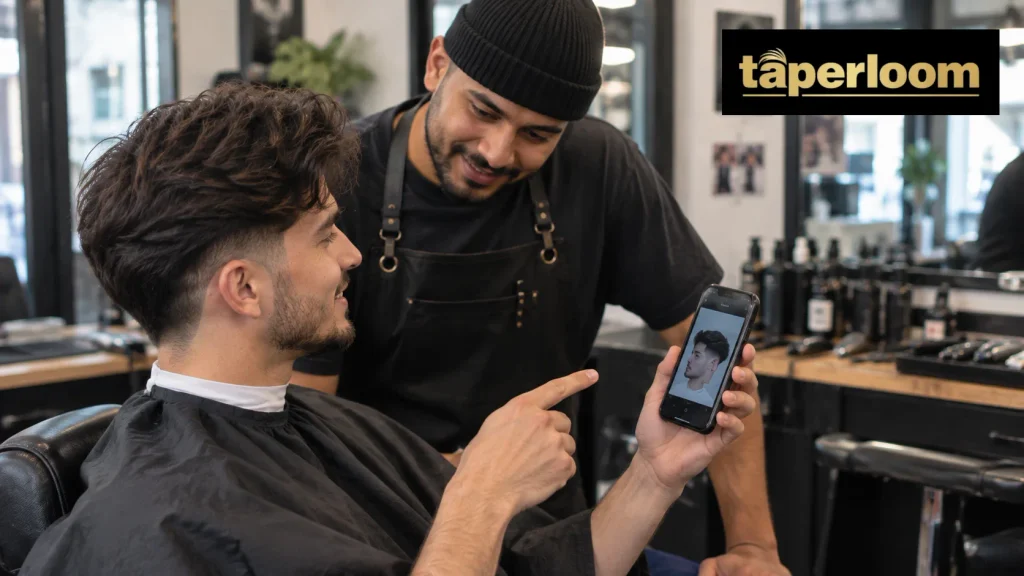
Most disappointing haircuts come down to one thing: vague instructions. “Just clean it up” tells your barber almost nothing. Walk in with this script, and you eliminate the guesswork entirely.
Step 1 — Set the Fade Height:
“I want a mid taper fade that starts at the ear-line, not higher.”
Step 2 — Specify the Top Length:
“Leave 5 to 6 inches on top.” (Adjust this number based on what you currently have or want to reach.)
Step 3 — Describe the Blend:
“I want a smooth, seamless blend where the fade meets the long hair on top, no visible line and no gap.”
Step 4 — Set the Neckline:
“For the neckline, I want a [rounded / tapered / squared] finish. Keep it clean and precise.”
Step 5 — Beard Integration (if you have a beard):
“Can you blend the fade into my beard line so the transition is seamless?”
Step 6 — Bring a Reference Photo:
“I also brought a reference photo of exactly what I’m going for.”
Step 7 — Ask for Styling Advice:
“Can you show me how to style this before I leave?”
Quick Reference — The Full Script in One Breath:
“I want a mid taper fade starting at the ear-line, with 5 to 6 inches left on top. Blend it smooth with no visible line, keep the neckline [rounded/tapered/squared], and if you can, blend it into my beard too. Here’s a reference photo of the look I want.”
What Clipper Guard Numbers Are Used for a Mid Taper Fade?
Clipper guards are numbered by how much hair they leave behind. The higher the number, the more length stays on your head.
| Guard Number | Length Left Behind | Where It’s Used on a Mid Taper |
| #0 / Skin | 1/16 inch | Skin fades only, not typical for a mid taper |
| #0.5 | Between skin and #1 | Optional base for a more aggressive fade |
| #1 | 1/8 inch | Neckline up to the start of the blend zone |
| #1.5 | 3/16 inch | Transition between #1 and #2 |
| #2 | 1/4 inch | Mid section, approaching the ear-line |
| #3 | 3/8 inch | Upper section, right at the ear-line where the fade starts |
| #4 or longer | 1/2 inch+ | Occasionally used on top for shorter styles, not relevant for long hair |
What to tell your barber: “Use a #1 at the base, blend to a #2 in the middle, and finish with a #3 at the ear-line.”
Most experienced barbers work with 3 to 4 different guards on a single mid taper, blending between them with the clipper lever rather than switching guards in sharp jumps. That’s what creates the seamless gradient instead of visible steps.
Quick way to check your barber’s work: run your hand from the neckline up toward your ear. If you can feel distinct ridges or steps rather than a smooth incline, the blend needs more work.
How to Style Long Hair with a Mid Taper Fade
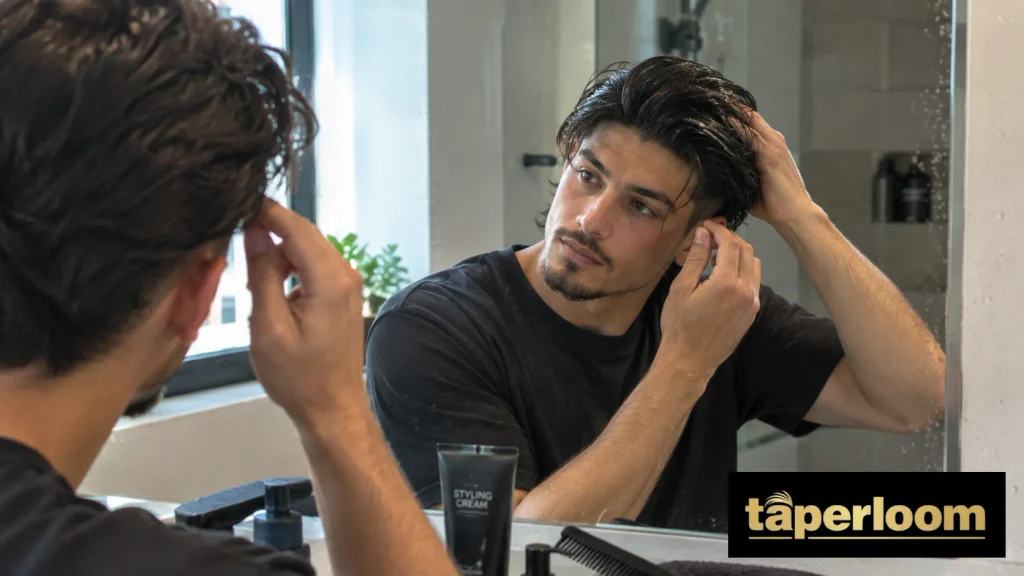
Getting the cut right is only half the job. What you do at home between barber visits decides whether your style still looks sharp on day 12 or falls apart by day 3.
Step 1 — Start with damp, not wet, hair. Towel dry after washing until your hair’s about 70 to 80 percent dry.
Step 2 — Pick your product based on the style you’re going for:
- Sleek styles (slick back, side part, comb over): high shine pomade or gel
- Textured styles (curtain hair, messy flow): matte clay, paste, or sea salt spray
- Curly or wavy styles: curl cream, mousse, or leave-in conditioner
Step 3 — Choose your drying method:
- For structure: blow dry with a vent brush or round brush, shaping in the direction you want
- For natural texture: air dry wavy or curly hair for a more effortless look
Step 4 — Shape it. Use your fingers for textured styles, a comb for sleek ones.
Step 5 — Lock it in (optional). A light hold hairspray at the end keeps things in place without stiffening everything up.
Step 6 — Refresh between washes. On non wash days, spray a light curl reviver or a touch of water on dry hair and scrunch gently.
Best Products by Style Type
| Style Type | Primary Product | Secondary Product |
| Slick Back | High shine pomade | Hairspray |
| Curtain Hair | Sea salt spray | Lightweight cream |
| Man Bun / Ponytail | Light pomade or cream | Fabric hair ties |
| Wavy Flow | Sea salt spray | Leave-in conditioner |
| Curly Long Hair | Curl cream | Leave-in conditioner |
| Quiff / Pompadour | Volumizing mousse + pomade | Hairspray |
| Textured / Messy | Matte clay or paste | Sea salt spray |
The four products every man needs on hand: sulfate free shampoo, leave-in conditioner, a styling cream or curl cream suited to your hair type, and a diffuser attachment if you have wavy or curly hair.
One rule that saves most men from bad styling days: start with less product than you think you need. A dime sized amount goes further than expected.
How to Maintain a Mid Taper Fade with Long Hair
Your mid taper won’t look the same on day 3 as it does on day 25. Knowing what to expect at each stage helps you decide when it’s time to book your next visit.
| Timeline | What’s Happening | What to Do |
| Week 1 to 2 | Fade is crisp, sharp lines, long hair sits well on top | Stick to your daily styling routine |
| Week 2 to 3 | Fade line starts softening slightly | Use a refresh spray daily, clean up the neckline at home if comfortable |
| Week 3 to 4 | Growth is noticeable at the fade line | Start thinking about booking your next barber visit |
| Week 4 to 5 | Fade line looks visibly soft | A barber visit is recommended for a full touch up |
| Week 5 to 6 | The fade looks stepped, transition zone is blurry | You’ll need a full reshape to restore the original structure |
General rule: book your fade touch up every 2 to 3 weeks. If you’re growing your top length out, leave it completely untouched and only trim the sides during these visits.
One thing you can safely do at home: clean up stray hairs at your neckline between visits. What you shouldn’t do is try to raise the fade line yourself or adjust the gradient with a trimmer.
Common Mistakes to Avoid
1. Letting the fade start too high. This quietly turns your mid taper into a high fade. Always specify the ear-line as your starting point.
2. Cutting the top too short. Once your top drops below 4 inches, you lose most of your styling options.
3. Using heavy gels or wax on long hair. Heavy products flatten natural movement. Stick with curl cream and lighter hold products for length.
4. Skipping moisturizing products. Long hair dries out faster and shows frizz and breakage quickly without regular moisture.
5. Waiting too long between fade touch ups. Past the 4 week mark, the fade loses its crisp lines.
6. Cutting curly or wavy hair while it’s wet. Wet hair sits longer than it will once it dries, so the fade line often ends up sitting higher than intended.
7. Leaving the beard unblended. An unblended beard line looks disconnected even when the haircut itself is done well.
8. Giving vague instructions. “Just clean it up” leaves too much open to interpretation.
9. Skipping the reference photo. Words alone leave room for miscommunication, even with a detailed script.
10. Not accounting for shrinkage on curly hair. Ask for shrinkage adjusted length so what looks long wet doesn’t read as medium once dry.
11. Switching barbers without explaining your history. A new barber doesn’t know how your last fade was blended or how your hair’s been growing out.
12. Over washing long hair. Washing daily strips natural oils your long top actually needs to stay manageable. Two to three times a week is usually enough.
How Much Does a Mid Taper Fade Cost for Long Hair?
Pricing varies a lot depending on where you live and whether you’re going to a standard barber or a specialist who works specifically with long hair and fades.
| Region | Standard Barber | Specialist Barber |
| United States | $30 to $45 | $50 to $75 |
| United Kingdom | £15 to £25 | £30 to £50 |
| Canada | CAD $25 to $40 | CAD $45 to $70 |
| Australia | AUD $30 to $45 | AUD $50 to $80 |
| Pakistan | PKR 300 to 800 | PKR 1,000 to 2,500 |
| India | INR 150 to 400 | INR 500 to 1,200 |
Monthly Cost Breakdown (US Example)
| Cost Factor | Standard Barber | Specialist Barber |
| Per cut cost | $30 to $45 | $50 to $75 |
| Time in the chair | 25 to 35 minutes | 35 to 60 minutes |
| Visit frequency | Every 2 to 3 weeks | Every 2 to 3 weeks |
| Monthly product cost | $15 to $30 | $30 to $60 |
| Estimated monthly total | $60 to $120 | $130 to $210 |
Why specialist barbers charge more: deeper technique knowledge for blending long hair into a fade, longer time in the chair since each section needs individual attention, more precision required for the fade placement to look right with length on top, and experience across a wider range of hair textures.
Practical tip: stretching your visits from every 2 weeks to every 3, combined with basic neckline maintenance at home, can cut your monthly spend by roughly 30 percent without hurting how the cut looks.
Growing-Out Roadmap: From Short to Long
Growing your hair out is the part most men quit halfway through. But a mid taper fade makes every stage of this process look intentional instead of like you just forgot to get a haircut.
Full timeline: 6 to 9 months from short to long, depending on your starting point and hair growth rate.
| Phase | Top Length | Timeframe | What to Do |
| Phase 1: Starting Point | 1 to 2 inches | Month 0 | Get a mid taper now, clean sides make even short hair look styled |
| Phase 2: Awkward Phase | 3 to 4 inches | Month 3 to 6 | Keep sides trimmed every 2 to 3 weeks, never touch the top |
| Phase 3: Medium Long | 5 to 6 inches | Month 6 to 9 | You’ve reached long hair territory, most styles in this guide are now possible |
| Phase 4: Full Long Hair | 7+ inches | Month 9 to 12 | Full man buns, ponytails, and flowing styles are all on the table |
Getting through the awkward phase (month 3 to 6): push hair back with a light pomade instead of letting it sit however it falls, wear a hat or headband on days it looks more “in progress” than styled, and keep your fade sharp, it does most of the heavy lifting during this phase.
Rules that actually matter while growing out:
- Don’t trim the top, not even a little. Every trim sets you back 4 to 6 weeks of progress.
- Trim the sides religiously. This is what makes the whole process read as intentional rather than neglected.
- Use a leave-in conditioner daily. Growing hair is more fragile and needs the extra moisture.
- Expect to want to quit around month 3 or 4. Almost everyone does. Sticking with it past that point is what separates a finished long hair look from a haircut that never quite got there.
Growth math: hair grows about 0.5 inches a month on average, so going from 2 inches to 6 inches takes roughly 8 months with zero top trims.
Frequently Asked Questions
Is a mid taper fade good for long hair?
Yes. It removes side bulk while keeping full length on top, which prevents the pyramid shape long hair falls into without structure.
What’s the difference between a mid taper fade and a mid fade?
A mid taper blends down without going to skin, while a mid fade goes fully bald at the base. Taper is softer, fade is sharper.
How long should hair be on top for a mid taper fade?
At least 4 inches to qualify as long hair. For full styling versatility, aim for 5 to 8 inches.
Which long hairstyles pair best with a mid taper fade?
Curtain hair, slick back, man bun, ponytail, wavy flow, and curly top are the most popular combinations.
How often should a mid taper fade be trimmed?
Every 2 to 3 weeks for the fade. The top only needs a trim every 6 to 8 weeks to remove split ends.
What products work best for long hair with a mid taper fade?
High shine pomade for sleek styles, matte clay for texture, and curl cream for wavy or curly hair.
Which face shapes suit a mid taper fade with long hair?
All of them. Oval works with any style, round and diamond faces benefit from height on top, and square or oblong faces do better with side volume or soft texture.
Does a mid taper fade work for curly or coily hair?
Yes, but factor in shrinkage. Ask your barber to leave extra length on top so it reads as long once your curls settle.
Read Next : Mid Taper Fade Styles for Black Men: 40+ Best Looks, Barber Scripts & Cost Guide (2026)

Muhammad Kaleem is a content creator who writes about hair care, hairstyles, grooming, and everyday hair trends. He enjoys turning hair-related topics into simple, practical, and easy-to-understand content that helps readers make informed choices about their hair and personal style.